

Hello everyone, I'm Xingchen. Welcome to our 'First Lesson of Crypto Survival'. This series took me a month to carefully craft, divided into 10 lessons, spanning about five weeks. It will take you from complete beginner to safe entry, with the goal at this stage being not to learn how to make money, but to learn how not to lose money!
Before we begin, I’d like you to take out a paper bill from your wallet, or open your Alipay app, and look at the number on the screen. Ask yourself: Why do we believe this piece of paper, this number, has value?
Is it because it's beautifully printed? Or because it can buy things?
Neither. We believe in it because we believe in the issuer behind it—the bank and the government.
From the very first transaction in human history, 'trust' has been the foundation of money. But what if that foundation were to crumble one day?
Today, I won’t talk about code or technology. Let’s spend ten minutes traveling through thousands of years of history—from seashells to gold, to the financial crisis that shook global confidence. You’ll understand Bitcoin—the true origin of this great monetary revolution—just like reading a captivating story.
1. The Story of Money: Why Do We Trust a Piece of Paper? 📜
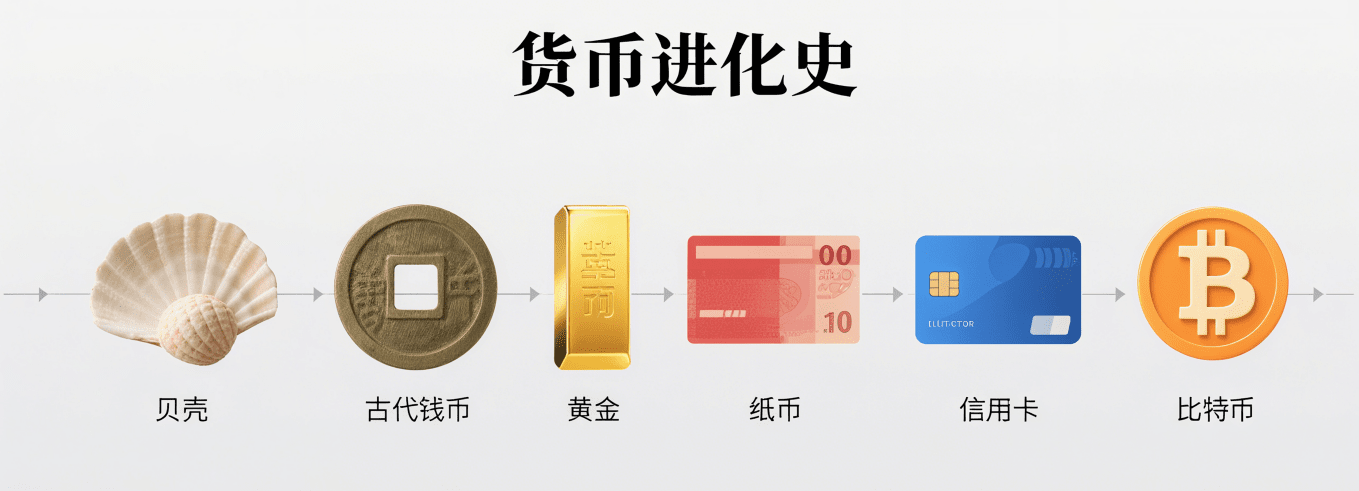
Long, long ago, we used seashells, feathers, and salt for trade. Why? Because everyone thought they were rare and attractive, and willing to accept them. This was trust based on 'collective consensus'.
Later, we discovered gold and silver. They shine, are scarce, easy to divide, and don’t rust. Their value came from their inherent scarcity, greatly increasing trust. But carrying a bag of gold to buy groceries? Too heavy, too dangerous!
So clever people invented paper money. You deposit gold into a 'vault' (the precursor to banks), and the vault gives you a piece of paper as proof. The paper itself has no value, but it represents an equivalent amount of gold, redeemable at any time. At this point, we trust the gold behind the paper.
Later, even gold was decoupled. The money we use today is called 'fiat currency,' whose value comes entirely from the backing of national credit. We trust it because we trust the institution issuing it won’t go wild.
Do you see it? The form of money has changed over time, but the core has always been 'trust'. Until 2008, that core cracked wide open.
2. The Collapse of Trust: The Storm of 2008 💥
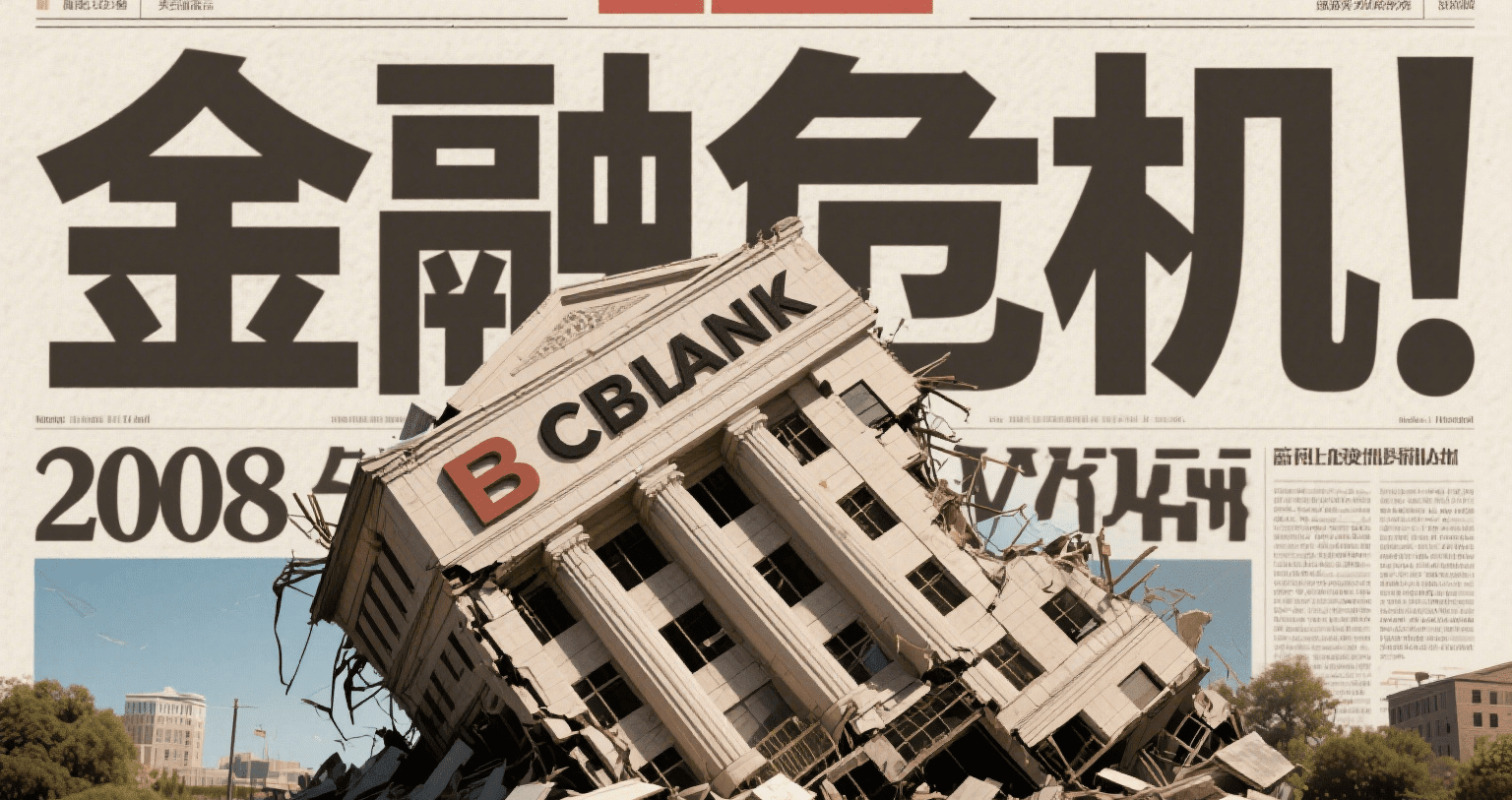
In 2008, a financial tsunami originating in the United States swept across the globe.
The banks we once trusted so completely collapsed overnight due to excessive greed and irresponsible investments. To save these 'too big to fail' financial giants, governments began printing money疯狂, injecting astronomical amounts into the market.
What was the outcome?
The banks were saved, but ordinary people's money became increasingly worthless due to excessive issuance (inflation). We suddenly realized that the fate of our wealth wasn't in our own hands, but in the hands of central institutions that might make mistakes—or even deceive us.
At that moment, our trust in centralized institutions collapsed.
The world urgently needed a new solution.
3. The Birth of Bitcoin: A 'Trust Machine' That Needs No Trust 💡
At the height of the financial crisis, a mysterious figure calling himself 'Satoshi Nakamoto' published an article online titled 'Bitcoin: A Peer-to-Peer Electronic Cash System'.
He proposed a revolutionary idea:
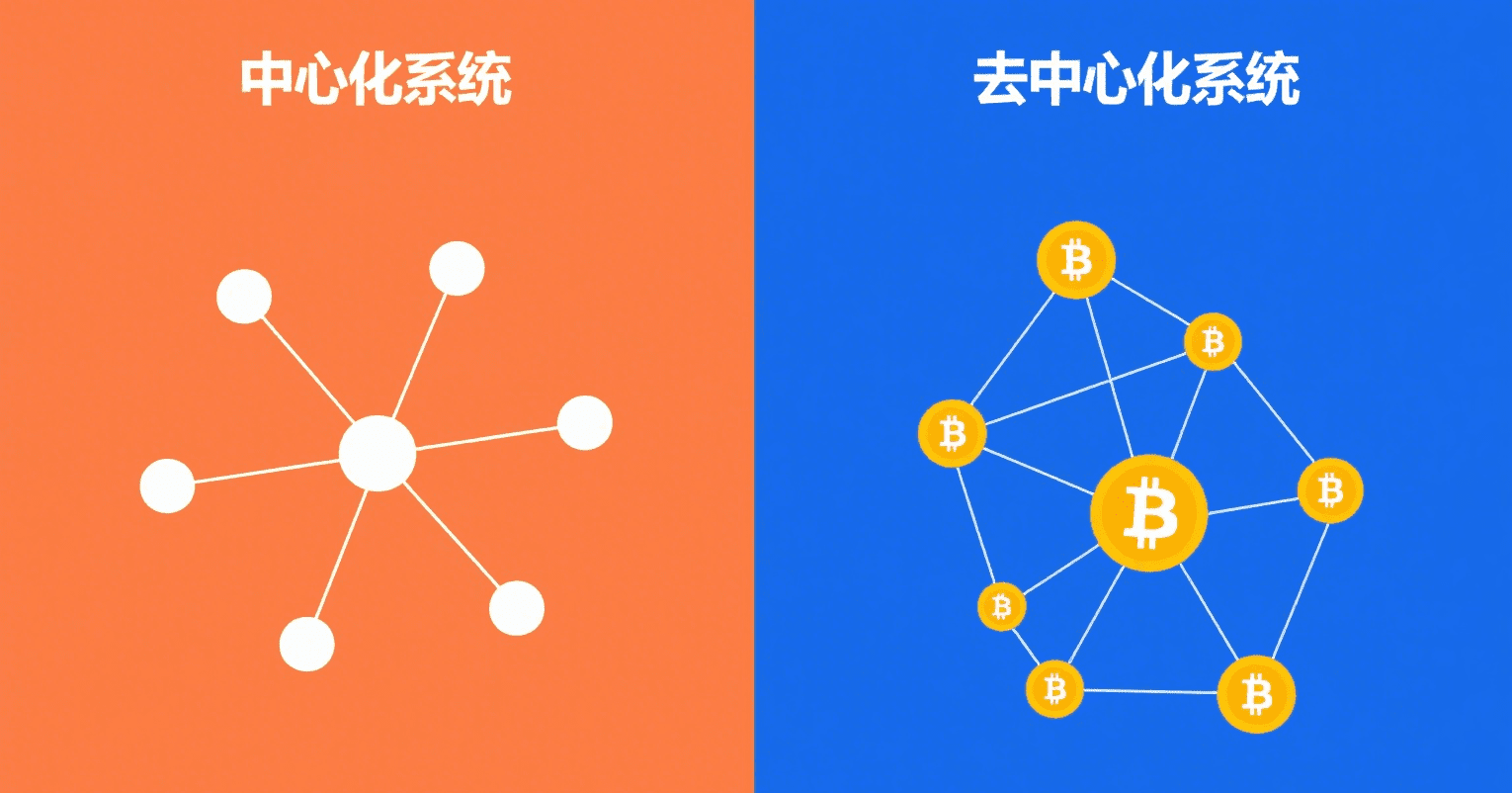
Can we create a currency that doesn’t rely on any bank or government, but runs on mathematics and code?
Its total supply is fixed—no one can increase it, just like gold in the digital world.
Every transaction is recorded on a global, public ledger that no one can tamper with.
This brilliant idea is Bitcoin.
It solved the most fundamental problem—trust. We no longer need to trust any institution, because Bitcoin’s rules are open, transparent, and hardcoded. We only need to trust mathematics and cryptography, which are absolutely rational and fair.
It’s like a 'trust machine' that creates unshakable trust in an environment where trust is not required.
📖 Course Summary:
Today we learned that Bitcoin’s creation wasn’t just a technical show-off, but a profound reflection on the crisis of trust in traditional finance—and a revolutionary solution to it.
✅ Post-Lesson Reflection:
Take a minute to think: In your daily life, what other things rely on trust in a central authority? (For example, using WeChat Pay means trusting Tencent). Feel free to share your answers and thoughts in the comments below—I’ll reply to each one and engage in discussion!
🚀 Next Lesson Preview:
If Bitcoin solved the trust issue, why did thousands of other cryptocurrencies emerge later? What exactly is Ethereum, hailed as the 'world computer'? And what role does the 'dollar' of the crypto world—stablecoins—play? In the next lesson, we'll continue exploring this fascinating world!
👉 Tip: Click my profile picture, follow my Binance Square account @星辰Bit , and you’ll get updates instantly!
Click here to view previous basic tutorials and selected articles