Yesterday I was mocked by someone trading memory sticks, telling me not to touch blockchain and to hoard memory instead. They said that the massive demand for AI is going to drive memory prices up.
To be honest, seeing such exaggerated increases in memory prices makes me want to sell a stick of memory.
However, I have to pay attention; I looked at the current market, and it's already a case of high prices with no buyers; retail investors are not stepping in at all; moreover, the DIY PC assembly volume and brand PC shipments are both plummeting.
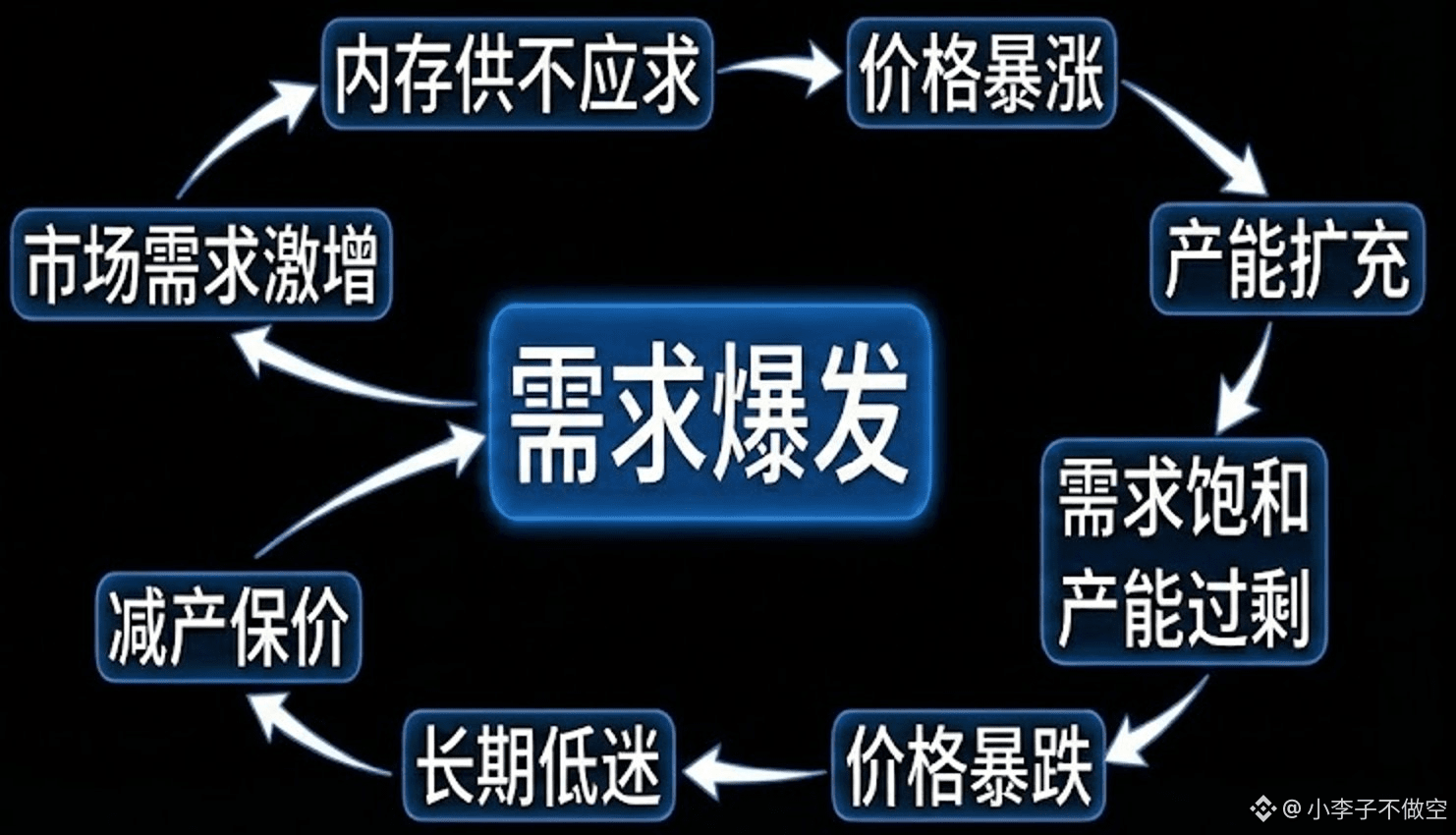
Historically, memory has gone through cycles of skyrocketing—plummeting—skyrocketing prices, and the fluctuations in memory prices are related to supply and demand as well as production capacity, in line with the principles of the Kitchin cycle (inventory cycle). I had AI summarize a few historical instances of memory price surges:
In 1992, due to the U.S. proposing anti-dumping duties on South Korea, memory prices soared by 40% within a month; then in 1993, an explosion at a Sumitomo Chemical plant caused a shortage of packaging materials, causing the price of 1MB of memory to rise from $20 to $80, an increase of 300%.
In 1999, a 7.6 magnitude earthquake in Nantou, Taiwan, led to a complete shutdown of the Hsinchu wafer fab, compounded by previous production cuts by manufacturers and a surge in PC/server demand, causing the price of 64MB memory sticks to rise from 500 yuan to 1600 yuan within a week, an increase of 220%.
After the 2009 financial crisis, several manufacturers reduced production or even went bankrupt (such as Qimonda's closure), coupled with the release of Windows 7 spurring demand for DDR2 memory, causing the price of 2GB sticks to skyrocket from 98 yuan to 345 yuan, an increase of 252%.
From 2016 to 2018, Samsung, Hynix, and Micron formed a "price increase alliance," leveraging the surge in demand from smartphones and cloud computing to push the price of DDR4 8GB memory from 190 yuan to 970 yuan, an increase of a record 400%.
Currently, the main reason for the price increase in memory from 2025 to 2026 is the boom in AI data center construction, with consumer-grade DIY accounting for only 3% of global capacity, and manufacturers need 18 to 24 months to expand production while prioritizing AI customers.
PC users, for now, will have to endure; it is estimated that prices will not drop for another three to five months. It is expected that by the end of 2026 to 2027, the expansion of production will be completed, or we will be waiting for the AI bubble to burst.