
The first thing I do when I open my eyes in the morning is check the market—Bitcoin has once again dropped below 80,000, Ethereum has fallen over 10%, and the entire market has evaporated $111 billion in 24 hours. My account has also shrunk, and it feels like the safety belt suddenly came loose while riding a roller coaster, my heart racing.
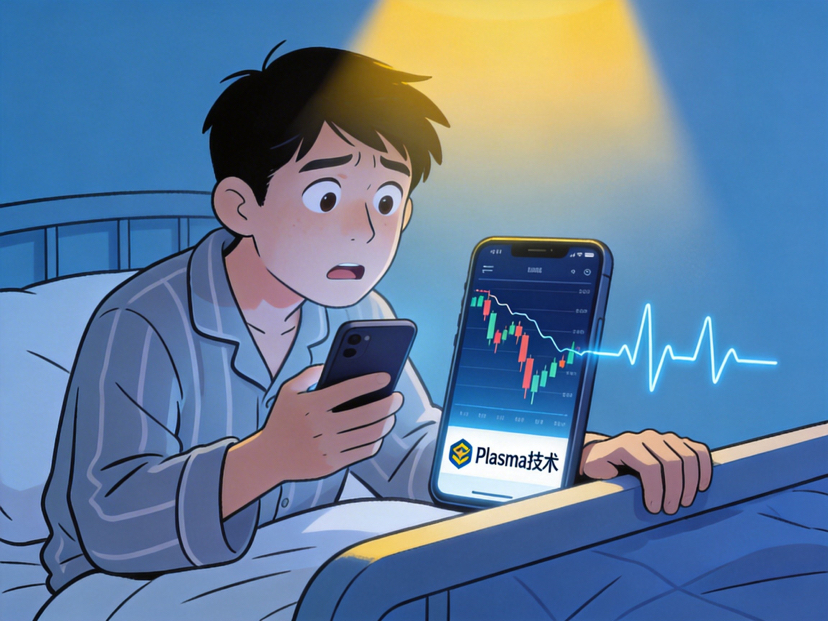 This recent plunge reminds me of the article Yi Lihua posted a few days ago. He said he is 'the person under the most pressure on the internet,' admitting that his early bullish stance on ETH was a mistake. His company, Trend Research, used circular loans to leverage long positions on ETH, resulting in a paper loss of several hundred million dollars, and the liquidation price is approaching $1800. This is quite enlightening—if even such big figures can misjudge the direction, how can we ordinary investors expect to do better?
Li Lihua is not panicking. He says, 'Position determines thought.' Although profits have been given back, he is still optimistic about future market trends. He even thinks that the four-year cycle pattern may have failed, and now is a great time to buy the dip. This calmed me down a bit. Li Lihua is bullish on ETH reaching over $10,000 in the long term; the market always fluctuates, and controlling risk is more important than guessing the direction.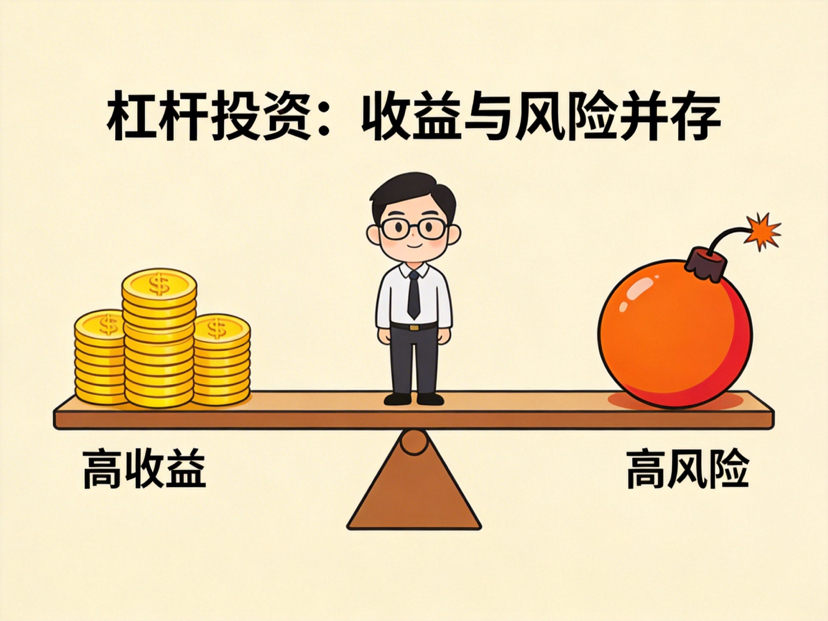
When it comes to Layer2, technologies like Plasma are actually quite resilient. When the Ethereum main chain is congested, Plasma can process transactions on the side chain, with low fees and high speed. During market crashes, the value of such technology becomes even more apparent—users need a cheap and efficient trading environment more than ever. Although Plasma is not as popular as Optimism or Arbitrum now, its design philosophy is unique, ensuring security through fraud proofs, making it suitable for high-frequency applications like gaming and social networking.
When investors encounter such market conditions, they must not be led by emotions. I think one can do this:
✅ Check your position: If the position is too heavy, reduce a bit during the rebound. Staying at the table is more important than trying to recover all at once.
✅ Observing and learning: Market crashes are actually great learning opportunities. See how the market stabilizes and which coins bounce back the fastest; it’s more useful than watching tutorials.
✅ Don't always think about buying the dip: Bottoms are discovered, not guessed. Gradual positioning is much safer than going all in at once.
✅ Focus on technological value: During market declines, projects with real technological foundations often prove to be more resilient. Layer2 solutions like Plasma will not lose their value due to price fluctuations.
That's how the market is; bull markets are born in pessimism and grow in doubt. This crash may be a process of squeezing bubbles; keep learning, stay cautious, and we are all on the way.


