


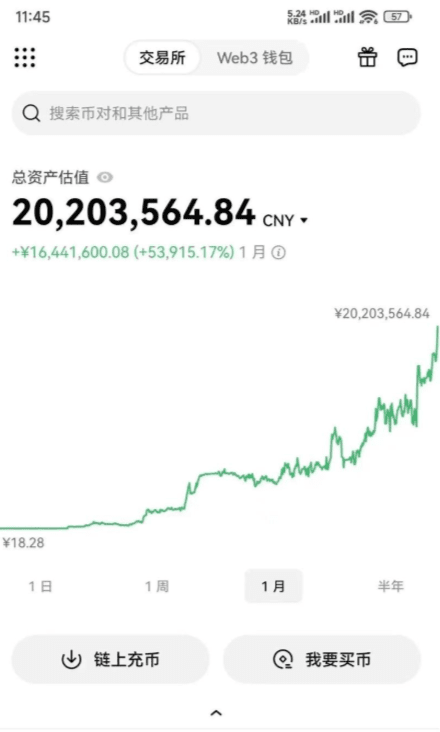
I was born in 1988, a full-time cryptocurrency trader, with assets in the tens of millions. I withdraw 200,000 RMB each month from the cryptocurrency world, feeling no impact, living leisurely and freely, without deceit or intrigue, living the life I desire. My daily routine is to wake up at 6:30 for a run, rain or shine. In the morning, I usually analyze yesterday's performance and update the evening's news, combining my positions and specific circumstances to do swing trading or short-term operations with small funds, enhancing my market sense. Then, I spend 2 hours summarizing my analysis, which is the most important task in the morning, aimed at making good profits in the evening! Then I write an investment article and publish it on Zhihu, documenting my cryptocurrency trading life, so I have a place to reminisce when I get old. When I have time, I also like to write about my investment experiences and insights, helping others as well as myself. From initially losing 85% to supporting my family with cryptocurrency trading, I have tried nearly every method. If there is something that truly helped me find my way out of confusion, it would be the ten-word mantra I summarized, which actually applies to most people. Reading it can help avoid years of detours, especially the tenth word!!!
One important word in the cryptocurrency world: Endurance.
Two important words in the cryptocurrency world: Avoid greed.
Three important words in the cryptocurrency world: Maintain discipline.
Four important words in the cryptocurrency world: Rational layout.
Five important words in the cryptocurrency world: Follow the main players.
Six important words in the cryptocurrency world: Focus on value.
Seven important words in the cryptocurrency world: Do what you understand.
Eight important words in the cryptocurrency world: The market is the best teacher.
Nine important words in the cryptocurrency world: Rational, know when to advance or retreat, and be strategic.
Ten important words in the cryptocurrency world: Good mindset, no hesitation, learning is endless.
I have summarized how to avoid risks in the cryptocurrency world by fully realizing the risks and experiencing the lessons learned from them.
Only after experiencing the bad consequences can one truly pay attention to how to avoid risks. My main experiences are as follows:
1. Do not go all in.
Since investing has very high uncertainty and significant risks, one should not go all in! If you go all in every time, there will be a time when it backfires. I am my own best example; shortly after entering the cryptocurrency world, I went all in on BTC and BNB, quickly pushing my account balance close to 10 million. However, later I went all in on Metaverse projects and contracts, nearly causing me to lose everything twice. The principle of not going all in is basic knowledge in the investment field, something many investment tycoons and books will tell you from the start. Yet, I made this fundamental mistake. New investors generally won't go all in right away; I only invested 100,000 at the beginning. The problem is that if small investments quickly yield high returns, the greedy demon within will be unconsciously released, eventually consuming rationality and leading to reckless decisions.
2. Cautiously increase leverage.
Unlike going all in, leverage should still be used when appropriate; especially in relatively certain opportunities, particularly during significant upward trends, decisively increasing leverage can elevate you several levels. Those who started borrowing to trade real estate twenty years ago belong to this category, but increasing leverage is a high-risk operation within high risks. It is even more serious when many people start to increase leverage in a specific investment field; it must be during a long-term high growth period. Everyone sees those leveraging making money, even making huge profits, while those not leveraging seem out of place, holding cash or qualifying but not borrowing, which is the height of stupidity. For decades, the real estate investment field in China has been just like this.
Such situations lead to many blindly following investors, lacking basic understanding of investing, just like I did six years ago. When you tell them about the risks of leverage, they impatiently respond that housing prices will definitely not drop. If you ask why, they simply say that China will not let real estate prices fall. Regardless of whether China's real estate will fall, the total lack of awareness about leverage risk pushes them to the edge of a cliff; when and where they fall is just a matter of time! So how do we cautiously increase leverage? I think the three most important points are:
1) Leverage in the field you are most familiar with.
First, being most familiar with something increases the success rate. Then, leveraging is a significant test of mentality for most people. If you do not understand it well, it becomes more challenging to stabilize your mindset, leading to irrational operations and compounding mistakes.
2) Before increasing leverage, you must think carefully: Can you bear it when the worst situation occurs?
Only when the answer is certain can leverage be increased! At this point, you must be absolutely rational and extremely conservative; never deceive yourself. You must not blindly follow nor have the gambling mindset! For most people, the reliable approach may be to use small positions to leverage for big gains!
3) Once you catch a whiff of risk, immediately reduce leverage or stop-loss, even if it’s just a slight indication! Losing money with leverage is far more stimulating than making money with it; those who have experienced it will remember it deeply! Finally, let me emphasize again that I do not encourage everyone to increase leverage; I am merely stressing the risks of leverage and the issues to consider when using leverage. Whether to increase it really depends on the person. As I mentioned earlier, leverage is a high-risk operation within high risks, suitable for aggressive players with strong risk tolerance. If you are not such a player, I advise against engaging.

After 10 years in the cryptocurrency world, the key to surviving until now is having strict discipline during major declines. Today, I am sharing the 'Six Major Classics' of cryptocurrency trading that I have summarized and practiced over the years. If you decide to trade cryptocurrencies for a living, it's advisable to memorize and repeatedly remember these six classics.
First point: One must understand stop-loss and take-profit.
We buy and sell cryptocurrencies for trading and speculation, not to hold forever! When you are making money, you think about making more, and when you incur losses, you are reluctant to sell. This mindset is definitely not advisable. When the trend of your position goes wrong, it is necessary to sell decisively.
Second point: Do not always think about buying at lows and selling at highs.
Because the market will only have lower and higher points. Ordinary people cannot achieve this mechanism, so do not pursue so-called highs and lows. What we really need to do is to buy and sell in the bottom and top areas.
Third point: Volume and price must perfectly match.
For those positions with no volume increase or those reaching new highs without volume, we must be cautious. They may signal that the main force cannot offload their positions, indicating potential exhaustion. Never chase; it is better to miss out than to make a mistake.
Fourth point: Be quick to react.
When information arises, we must immediately identify its beneficial sectors and companies. If we cannot keep up with the first tier, then we must act promptly; the second tier will also yield considerable gains.
Fifth point: Learn to take breaks.
As the saying goes, it takes three months to see the bottom and three days to see the top. This means that the main upward trend of a known cryptocurrency price rise has only a little time. Therefore, we need to learn to seize this main wave; the rest of the time is usually for resting.
Sixth point: The biggest benefit of the market is a crash.
After a drop, many greater opportunities often follow. When others are greedy, you must learn to be fearful; when others are fearful, we must be greedy. Therefore, when the market experiences a crash, do not be afraid; at this time, we should choose quality positions and build them promptly. These six points sound simple, but few can truly achieve them. Why? If you cannot overcome the weaknesses of human nature, you will never earn your first ten million in life!
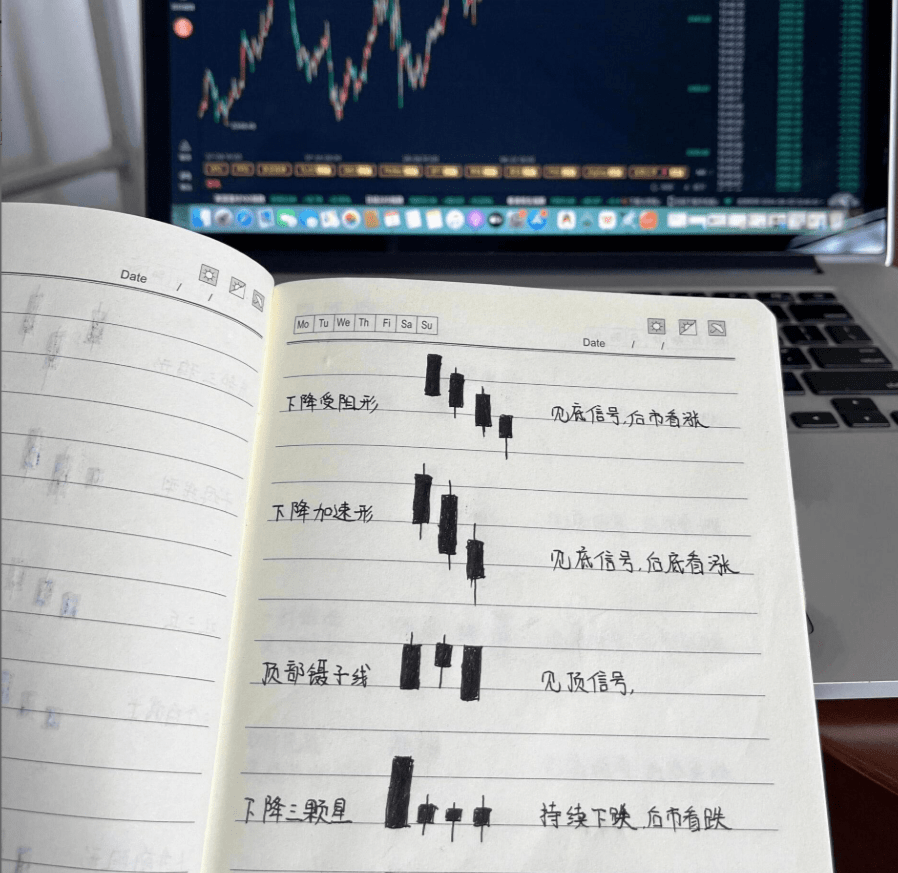
If you choose to speculate in cryptocurrencies, whether you will succeed is hard to say. Some have experienced ups and downs in the crypto market, losing everything and then regaining it. Speculating in cryptocurrencies does not depend on looks, education, or profession, but it severely tests one's mentality and ability. To succeed in the crypto world, you need solid knowledge, like mastering the internal logic of technical indicators, overcoming greed and fear, and establishing a trading system that suits you. Properly manage your capital, trends, timing, and opportunities, set stop-loss and take-profit criteria, and strictly adhere to trading discipline. Trading cryptocurrencies is like navigating the martial arts world; without solid skills, failure is inevitable. Some people gain wealth and growth in the crypto market, while others get burnt. In short, trading cryptocurrencies for a lifetime, if you can achieve stable profits, you have succeeded; otherwise, you need to reconsider. You must know the iron rules of the cryptocurrency world:
1. Asset allocation +, diversify risk.
Asset allocation is essentially also to distribute risk; you must never, like the all-in expressions popular in various cryptocurrency groups, bet all your bullets on a single coin. Another extreme is excessive diversification. This is a common mistake among many small investors who buy dozens of coins, rushing into good coins recommended by influencers, resulting in all being small holdings. Even if a few have large gains, you won't make much money; seeing just a few rise sharply can lead to frustration, and after a series of reckless operations, the average gain may not even surpass Bitcoin. The ideal number of coins to hold should be around 3 to 5.
2. Think repeatedly before buying, do not be influenced by emotions.
Consider what:
Is my position short-term, medium-term, long-term, or swing trading?
What if it drops after I buy?
Should I continue to average down, cut losses, or hold my position?
What should I do if it drops significantly?
If it rises, when should I sell?
If you do not think clearly about these issues, you are very likely to encounter the following situations.
1. It has fallen a lot, and you haven't thought clearly about the stop-loss point in advance. If it drops 20% today and you are reluctant to stop-loss, thinking it might recover a bit tomorrow before selling, but tomorrow it drops 30% again, leading to regrets for not selling yesterday. From then on, you are repeatedly trapped until you incur significant losses before choosing to cut losses. Therefore, consider your stop-loss point before buying; when the price hits, immediately sell. Stopping losses means admitting wrong decisions, avoiding greater losses, and prohibiting gambling-style averaging down!
2. After buying, if it declines or remains stagnant for a long time, and then one day it suddenly rises by dozens of points, sell immediately; afterward, there may be several days of explosive growth, and you will regret not having sold. The correct operation is to think clearly before buying whether this position is for the long-term or short-term. If it is long-term, then lean more towards value investing. Analyze how large the market is for the project you are investing in, and then judge how much market share your investment project can occupy, thereby assessing its potential valuation in 2-3 years. Based on this valuation, determine if the current price is suitable for building a position and how much growth potential remains, i.e., the return on investment. If you can see this clearly, you can average down when it drops because you are not afraid of these declines; what you focus on is future value. You should not act until it reaches your psychological estimation point, rejecting small gains!
3. Cherish life, stay away from contracts.
The first element of investing is risk aversion, and playing contracts with leverage is a behavior that increases risk, so do not touch it. Maybe sometimes luck is on your side, allowing you to gain extra returns due to leverage. But if this arouses your greed and damages your mentality, then this money will eventually return to the market. Most of my friends who have traded contracts over the years have lost everything; in summary, they earn little but lose a lot. Don’t think your operations are better than others; it’s not easy for any of the 100 leveraged users to survive two years. In the bull market of 2021, someone shorted 519 and became famous, making 30 million overnight, but two years later, not only did they lose all their gains, but they are also deep in debt! With contracts, you can win 10 times, but one failure can bring you back to square one. Making money with contracts is just a process; going to zero is the outcome!
4. Invest only spare money, do not borrow.
Whether in the cryptocurrency world or the stock market, we must only invest spare money; we cannot touch the money that our family needs. It must be spare money. The cryptocurrency market is extremely high-risk; once the money you urgently need incurs losses, the outcome is often hard to accept and can cause significant harm to your family. You must never borrow money to invest; once you borrow, your risk is 100% because borrowing has costs. If the market remains sluggish while you are at a loss and have to make repayments, you will only be forced to sell at low prices! You will be eliminated by the market! The cryptocurrency world is always characterized by long bear markets and short bull markets; those who borrow will find no place to die in the cryptocurrency world!
5. Either don't buy or buy enough.
Many people will set traps at low points, but once they see a rise, they feel they bought too little, and they keep adding positions as the price rises, which can significantly increase their average holding price. Then, when the market turns, they find themselves trapped. This is highly undesirable! In plain terms, it is greed, so next time you have a coin you are confident in, remember to either not buy or buy enough!
6. Favor value investing.
For some coins you find extremely valuable, you recognize their excellent teams, great visions, attractive promotions, and strong R&D capabilities; then stick with them. These valuable coins should be included in your mid-to-long-term investment portfolio, allowing them to slowly mature into fine wine. Even if the price drops, do not consider panic selling; hold on firmly. Let time help you become rich gradually.
7. Maintain a calm mindset.
Actually, the mentality in cryptocurrency trading is the most important. Many people know that it's not the right buying point, yet they can't help but get itchy fingers. This is a mentality issue; if they don't buy cryptocurrencies for a few days, they feel uncomfortable. They spend every day in various WeChat groups and comment sections of influencers, hoping to find the secret to getting rich, unaware that the more they watch, the more they lose, and the more they act recklessly, the less money they have. Haha. ... You must control your hands, spend the most time researching, and the least time trading! Moreover, do not chase high prices when buying cryptocurrencies; maintain the mindset that if it rises, it rises, treat the coin as if it doesn't exist. Only set traps for valuable coins at low points and wait patiently for them to bloom. Making money is not as difficult as imagined. Of course, there are countless trading disciplines; those that can be ingrained are the core genes of making money. Many things, even if you count them, if you don't make a mistake, you still won't remember. Often, during these times, you need someone else or a mentor to guide you. Trading cryptocurrencies is not that difficult, but many people always fall into misconceptions. When I first started trading cryptocurrencies, everyone, like me, spent a lot of time and energy researching various techniques, only to find that they were essentially useless. The so-called 'trading secrets' are just empty talk; what truly matters is mindset and discipline. Many people are greedy; they see a good market and frantically add positions, leading them to be carried away by market sentiment. For example, my friend, with small capital, stubbornly chased highs and cut losses, ultimately leading to a complete loss. Learn to stay in cash, especially when the market is bad; not losing is a victory. Remember, do not blindly pursue short-term profits; patiently waiting for the real opportunity is the best strategy. I once made the mistake of frequent trading, but later realized that maintaining a stable mindset is the most crucial trick. Trading cryptocurrencies is akin to life; once you understand life, you will understand the cryptocurrency world. The great path is simple, and unity of knowledge and action allows you to navigate smoothly and remain undefeated! Keep following me, and I believe you will avoid many detours! I am a sunny day, only sharing the most practical insights. If you also like it, feel free to follow Yi Yan, where multiple opinions lead to clarity, while echoing one side leads to darkness, focusing on the core technology of the cryptocurrency world! When you follow me, I will provide you with the most genuine answers!