

Statement: This article is not an advertisement, but a pure research on the potential and development expectations of this project, as well as an assessment of the cost-performance ratio of its Kaito Launchpad. Those who do not wish to read the analysis can directly refer to the summary at the end.
1️⃣ Project Positioning and Background
Billions Network @billions_ntwk was originally an identity protocol under Polygon Labs, later became an independent business named Privado ID, and Billions Network is a business line under Privado ID.
The core positioning is a decentralized identity protocol. Previously, Woldcoin used iris recognition, Humanity used palm prints, while Billions directly uses passports and ZK technology to ensure decentralization and data privacy.
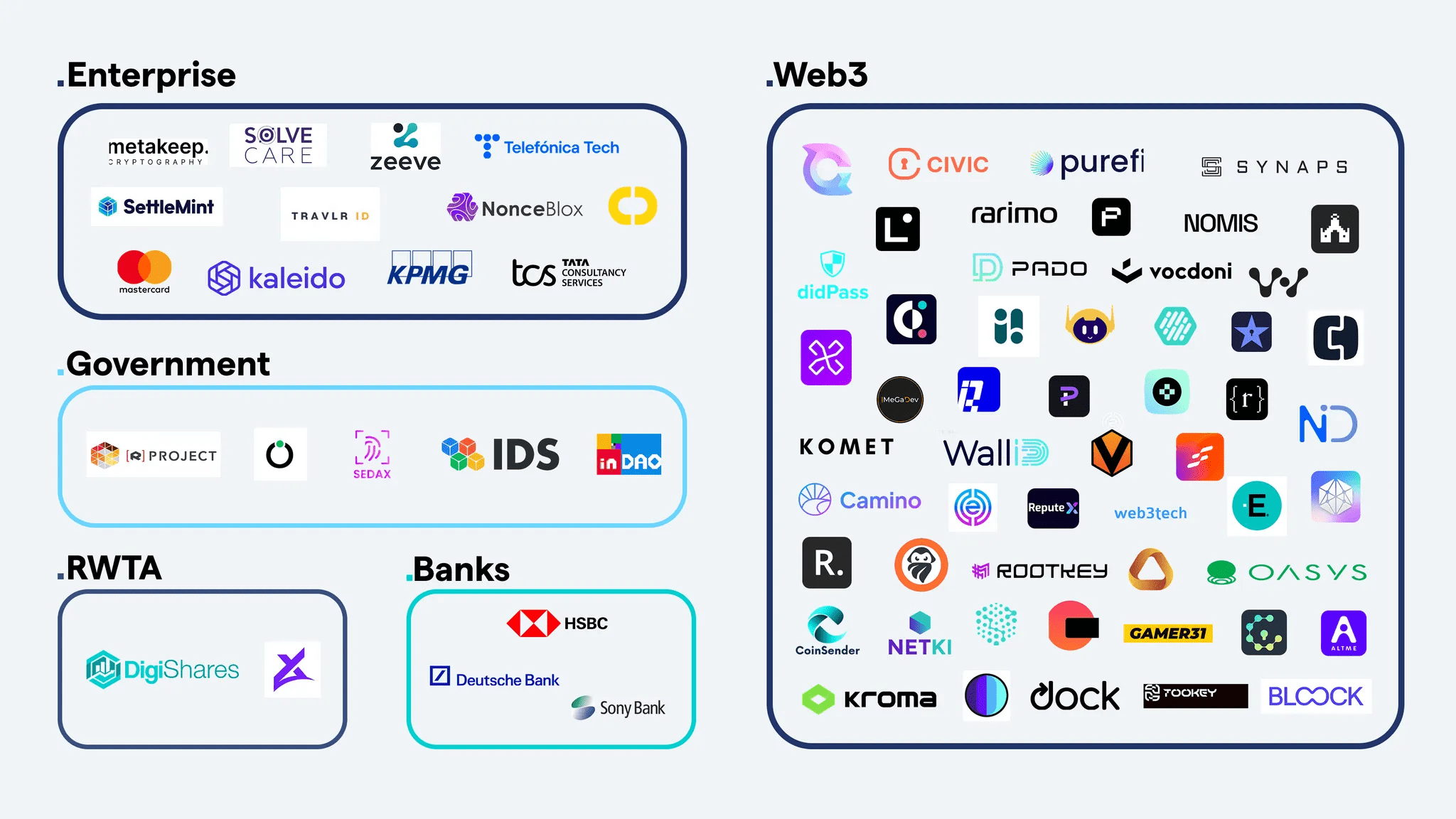
What is particularly noteworthy and competitive is that the partners include several well-known traditional financial institutions and government agencies, such as Deutsche Bank and HSBC.
2️⃣ Team Background
➣ Evin McMullen @provenauthority, Co-Founder and CEO of Billions. Previously served as Product Marketing Director at Berkshire Hathaway and project leader under ConsenSys. He is currently a co-founder or advisor for multiple companies and institutions, with extensive experience in identity protocols.
➣ David Z. @davidsrz, Co-Founder of Billions. Former project leader of Polygon ID, later became CTO and co-founder of Polygon, previously worked on related identity management protocols and also worked on decentralized zk-rollup (Polygon Hermez).
➣ Oleksandr Brezhniev @OBrezhniev, CTO of Billions. He has nearly 20 years of development experience and has designed several blockchain projects, including identity management protocols. He was the technical lead at Polygon.
➣ Ravikant Agrawal @ravikantagrawal, Growth Director of Billions. Previously responsible for strategic growth and partnerships at Polygon.
This team's background is quite good, with many years of relevant experience, and a high degree of overlap in work history, indicating a clear collaborative relationship over the years. The CEO's experience at Berkshire Hathaway and ConsenSys means they will have many resources and connections, which is why they can secure collaborations with traditional large institutions and even some government entities; the remaining core members have also worked at Polygon, including co-founders.
So, Billions can be simply understood as a project personally launched by the co-founders of Polygon, where Evin is responsible for various financing collaborations, David is in charge of overall product advancement, Oleksandr is responsible for product development, and Ravikant is responsible for product growth and partnership promotion. I believe the most crucial driver here is David.
3️⃣ Financing Background
Billions only recently completed a funding round of 30 million USD, led by Polygon, with participating institutions including Coinbase Ventures, Polychain, Liberty City Ventures, and Bitkraft Ventures. The original Privado ID did not raise funds, which can be considered an internally incubated project by Polygon.
I personally think this amount of financing is excessive for the DID track, as its primary role is more for endorsement. It's hard to say whether they will actually receive this much funding or if they will use this much money.
4️⃣ Kaito Launchpad Event Evaluation
Participation Terms: 100 million USD valuation financing 5 million USD, which corresponds to 5% of the token quantity, fully unlocked on the day of TGE.
I personally think this clause is quite favorable. If we also calculate the valuation of the investment round based on 5% of the token financing amount, it would be a valuation of 600 million USD. It's unlikely that the community round will be lower than a valuation of 100 million USD in either direction.
I personally recommend participating with spare money as a simple investment; not taking a large position is mainly due to concerns about the track.
5️⃣ Overall Evaluation
The speculative value of this project far exceeds its practical value. Although the DID track can be considered an infrastructure track, it has almost been discredited, at least in the crypto field where usable scenarios are relatively rare, relying more on B2B and B2G business operations to sustain project operations.
From the perspective of the team and investment background, I think the upper limit for Billions is still quite high. It’s an internally incubated project by Polygon, with investment from leading institutions in Europe and America. The team's background is strong in all aspects, and it will at least be a project Coinbase wants. As for Huobi and Binance, I think the probability ranking is: Bithumb > Binance > Upbit.
Bithumb is included because Humanity also ended up there, but given the differences in team and financing between the two, the probability of Billions appearing on BN and Upbit is relatively higher (from a compliance perspective). In terms of final trends, I believe there is a high probability that it won’t follow Humanity's chaotic approach; it will either proceed steadily or gradually decline.
Meanwhile, the ways to participate in such projects are too few, and the combination with the token is not close. Therefore, I personally think the cost-performance ratio of participating for the sake of profit is relatively low; it's better to just participate in the pre-sale and observe the secondary market opportunities later.