

Summary: Analyzing the key driving forces behind ETH's recent significant increase.
Author: Biteye core contributor @viee7227
Ethereum, over the past decade, has seen ups and downs. Just as the market is heating up again, ETH's price seems to be just a step away from its all-time high.
This article analyzes seven major dimensions such as institutional accumulation and ETF frenzy, changes in the foundation, K-line technical indicators, on-chain data, the rise of RWA and stablecoins, and the roadmap, suggesting that this round of Ethereum's rise may just be beginning.
First, ETH Reserve Concept Stocks
Recently, the ETH market has seen exceptionally strong buying, with many publicly listed companies and asset management institutions actively increasing their holdings, even incorporating ETH into their financial strategies. Meanwhile, ETH reserve concept stocks have surged, becoming the new favorite in U.S. stocks.
A landmark event triggering Wall Street's embrace of Ethereum was the high-profile bet on ETH by well-known Wall Street strategist and Fundstrat co-founder Thomas Lee. In 2025, he became the chairman of Bitmine, directly driving the transformation of this former Bitcoin mining company into an Ethereum asset company. Under Lee's leadership, Bitmine quickly accumulated over 600,000 ETH positions in the market, valued at over $3 billion, as a major asset for financial reserves. It was also under his marketing encouragement that Wall Street's excitement was ignited, with several publicly listed companies in the U.S. announcing their purchase of ETH as part of their asset allocation. For instance, Bit Digital previously converted its held BTC into ETH, spending $172 million to acquire 100,000 ETH, and has since accumulated over 120,000 ETH; SharpLink Gaming currently holds approximately 438,000 ETH, valued at about $1.09 billion.
This series of actions indicates that institutional investors are viewing Ethereum as a strategic reserve asset similar to Bitcoin, significantly enhancing Ethereum's market recognition and further strengthening bullish expectations.
Second, ETF
With the surge in ETH prices, large amounts of off-exchange funds have flooded into Ethereum ETFs.
According to SoSoValue data, on July 29, Eastern Time, Ethereum spot ETFs had a total net inflow of $219 million, continuing 18 days of net inflows since July 3. The spot ETF with the highest single-day net inflow was BlackRock's ETF ETHA, with a single-day net inflow of $224 million, and the total historical net inflow of ETHA has reached $9.704 billion. On July 16, the nine U.S. spot Ethereum ETFs attracted a total net inflow of over $726 million, setting a record for the highest single-day inflow since their launch in July last year.
In contrast, the U.S. Bitcoin ETF experienced a cooling period after the initial excitement at the beginning of the year, with a slight net outflow for several consecutive days in late July, indicating that some funds are being rebalanced from the BTC sector to the ETH sector, reflecting institutions' increasing confidence in Ethereum's application prospects. Currently, the market capitalization of the Bitcoin ETF accounts for 6.49% of Bitcoin's total market capitalization, while the Ethereum ETF only accounts for 4.71%. In comparison, there is still considerable growth potential for Ethereum in terms of funds flowing into ETFs.
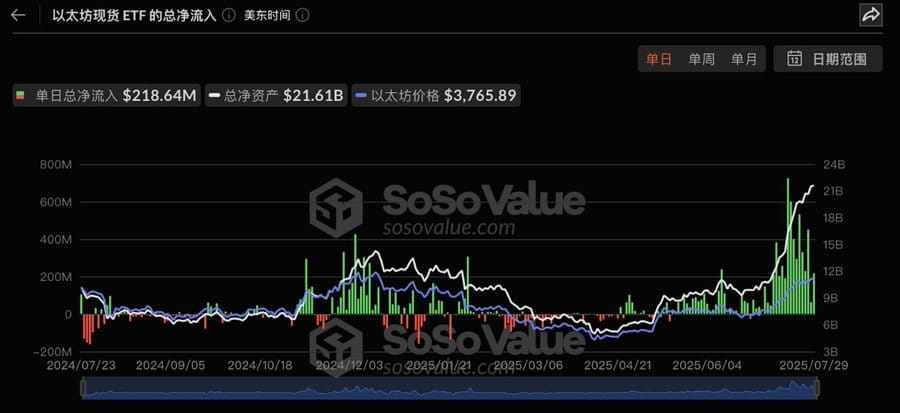
Source: SoSoValue
Looking ahead, in addition to the spot ETF, Ethereum staking yield ETFs are also on the way. On July 17, BlackRock's iShares Ethereum Trust Fund (ETHA) officially submitted the 19b-4 filing to the SEC, intending to introduce staking functionality for its Ethereum ETF. According to analysts' forecasts, the U.S. is expected to approve the first batch of ETH staking ETFs in the second half of 2025. These types of products will provide an annualized staking yield of 3-5% based on holding spot Ethereum, making them more attractive to institutions.
The ETF effect has brought the most direct impact to Ethereum, which is to enhance liquidity and demand ceilings. After institutions allocated BTC ETFs, ETH ETFs became the only choice moving forward. With ETFs, large-scale funds on the order of hundreds of billions of dollars can easily allocate assets, significantly enhancing ETH's investment attributes and market depth, which is one of the important external factors supporting a long-term bullish outlook.
Third, Ethereum Foundation
This round of Ethereum's strength is also closely related to changes in the management team.
The Ethereum Foundation has experienced management adjustments over the past year. In March 2025, Hsiao-Wei Wang and Tomasz Stańczak were newly appointed as co-executive directors of the Foundation. This dual-director model will decentralize decision-making power, reduce single-point dependency, and introduce more professional management beyond technical leaders like Vitalik, enhancing efficiency. Retaining the community-driven open-source spirit while strengthening external communication and strategic execution capabilities will facilitate positive interactions between Ethereum and institutions and regulators.
In addition, former core researcher of the Ethereum Foundation, Danny Ryan, joined the Etherealize project founded by former banker Vivek Raman, aiming to introduce ETH into the mainstream financial system of Wall Street through educating traditional institutions and market promotion. This marks the first time the Ethereum core team has proactively integrated into the traditional financial ecosystem, and the valuation logic of ETH will shift towards institutionalization, significantly enhancing long-term price support.
Fourth, K-Line Technical Indicators
Ethereum has recently shown a strong upward trend. Over the past month, ETH's price has risen approximately 60% from around $2,400, nearing the $4,000 mark in late July. The increase far exceeds the average market performance, reflecting the market's optimistic expectations for Ethereum.
From a technical indicator perspective, the ETH/BTC pair ended a long period of sideways consolidation over the past three months and broke through a key range upwards in mid-July, rising 40% in a single month, indicating that the previously Bitcoin-dominated capital preference is beginning to shift towards Ethereum, and the market's preference for risk assets is recovering.
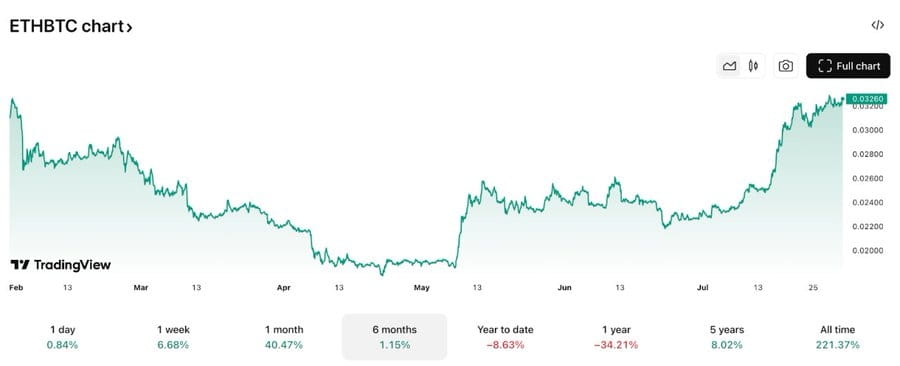
Source: TradingView
Additionally, ETH's RSI (Relative Strength Index) fell to around 30 on the weekly K-line in April, which has traditionally been viewed as a 'buying zone at the low point.' Data shows that whenever the RSI reaches this range (30-40), ETH often experiences a significant rise. For example, during the period of 2023-2024, the last occurrence of the same signal was accompanied by an increase of over 290% for ETH.
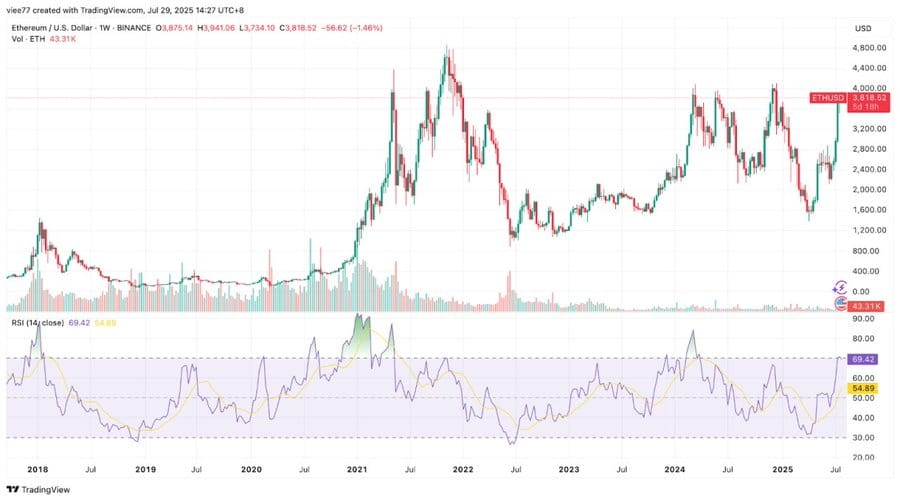
Source: TradingView
Analyst @MikybullCrypto had previously indicated a buying signal in April, predicting it to be a 'rare buying opportunity not to be ignored' and forecasted that ETH would double thereafter. He recently reiterated this view, believing that if the RSI continues to rise to high levels, Ethereum's price could explore the range of $7,000 to $10,000.
This indicates that, from a technical perspective, Ethereum's current rise may not yet be complete.
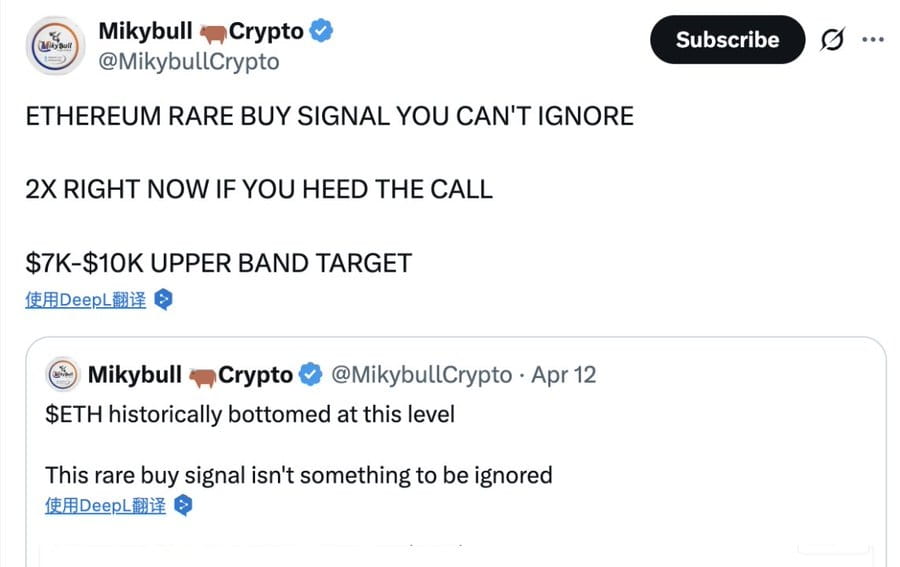
https://x.com/MikybullCrypto/status/1945580696140919266
Fifth, On-Chain Metrics
From on-chain data, Ethereum's activity has significantly increased.
Trading Activity: The average daily transaction volume on the Ethereum mainnet has remained stable in recent months, with approximately 42 million transactions in June 2025 (about 1.4 million per day), essentially unchanged from previous months. Notably, although on-chain gas fees are currently low, this may not be due to a reduction in users, but rather an increase in network processing capacity following the mainnet upgrade, leading to a decrease in unit transaction costs. According to Nansen data, the number of active Ethereum addresses grew by 16.3% over the past 30 days, and transaction numbers increased by 14.2% during the same period, reaching an average daily transaction volume of 1.62 million on July 22, setting a new high in nearly half a year. Active on-chain activities indicate that more users and applications are utilizing the Ethereum network.
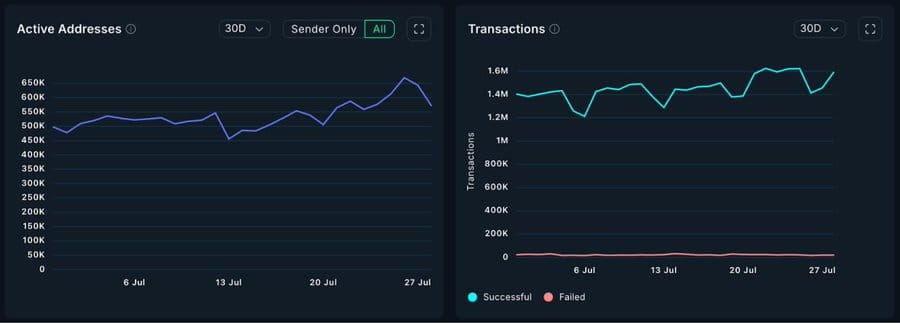
Source: Nansen
On-Chain Fees: With the recent recovery in coin prices and on-chain activities, Ethereum's fee income has also rebounded, surpassing other public chains again, returning to the second position in on-chain fee income in the second quarter of 2025. According to data from Artemis, Ethereum's total on-chain fee income in June was approximately $39.1 million, second only to Tron, reflecting the return of demand for the Ethereum network to some extent.
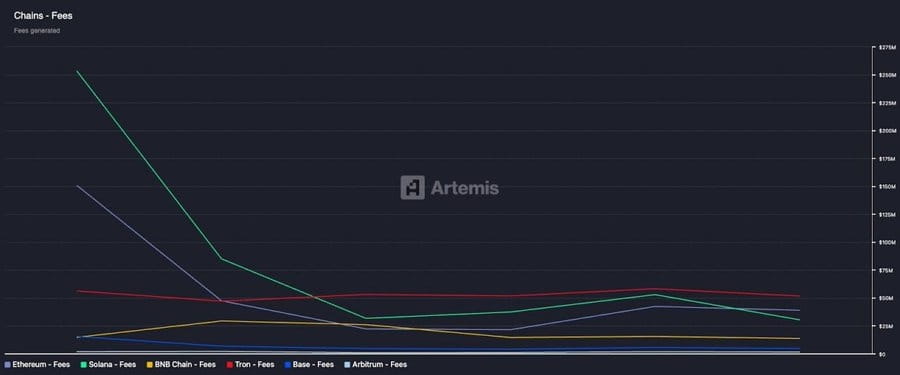
Source: Artemis
Total Locked Value in DeFi (TVL): The following DefiLlama data shows that Ethereum's TVL rose from $60.2 billion on June 28 to a three-year high of $85.9 billion on July 28, with a monthly increase of over 42%. Furthermore, the total TVL across the entire network exceeded $153 billion in late July, setting a new high for three years, with nearly 60% locked in Ethereum. However, it is worth noting that Ethereum's price growth during the same period was 59.9%, exceeding the TVL growth rate. If measured in ETH terms, the TVL growth rate shows a 1% decline, indicating that the recent TVL record high was mainly driven by the increase in ETH's price. This means that if asset prices correct in the future, the TVL metric may also correspondingly decrease.
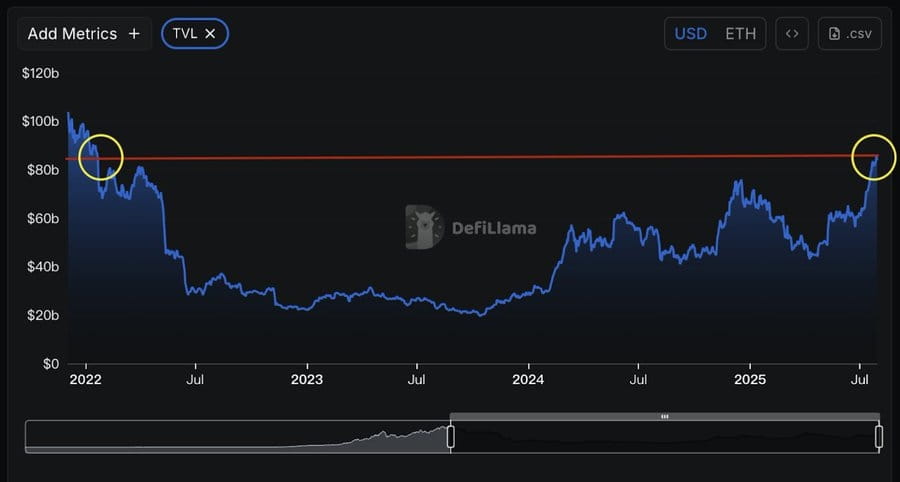
Source: Defillama (the above image shows ETH TVL)
Staking Situation: It is noteworthy that the scale of Ethereum staking has reached new highs—over 36 million ETH are currently staked, close to 30% of the total supply. These locked ETH effectively reduce the circulating supply, decreasing selling pressure from a supply-demand perspective. Although there has been an outflow of over 500,000 ETH queued for unstaking recently, a large amount of new staking has also entered, which can offset the impact of the significant withdrawals, and the price remains strong without excessive panic.
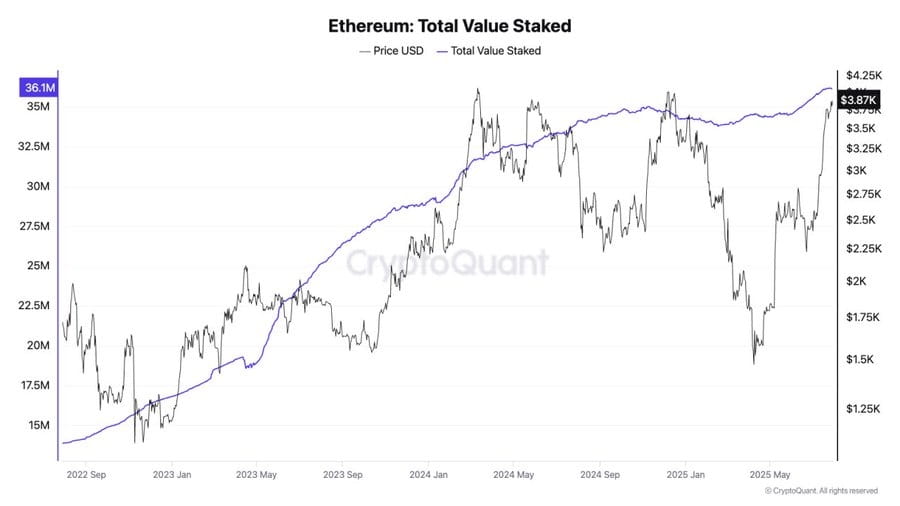
Source: Cryptoquant
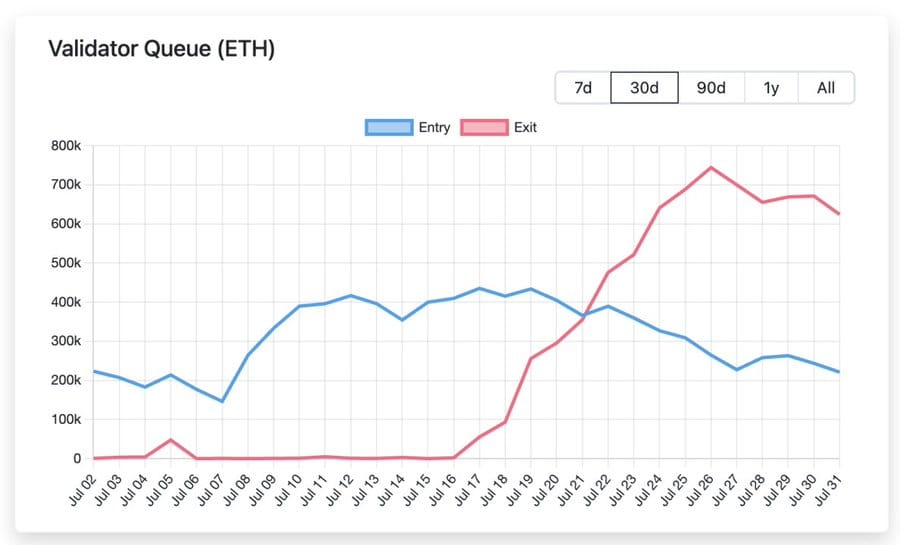
Source: validatorqueue
ETH Inflation Situation: It is noteworthy that the current Ethereum network is in a slight inflation state, with the actual inflation rate far below what is commonly recognized in the market. According to statistics, over the past three years since the merge, the annual net inflation rate of Ethereum (+0.117%) is more than 11 times lower than Bitcoin's inflation rate (+1.338%). The logic of ETH is that the more it is used, the more is burned, forming a positive cycle for network activity. This means that the traditional notion of 'ETH having unlimited inflation' is no longer valid; in recent years, ETH has experienced substantial low inflation, which may be one of the important supports in its rising logic.
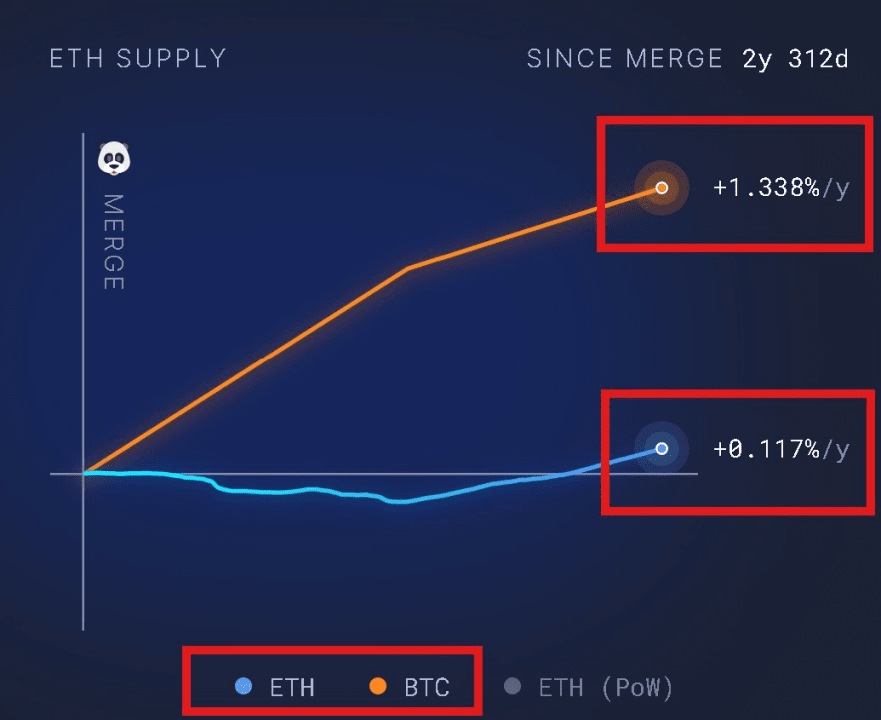
Source: ultrasound.money, @LeonWaidmann
The surge in transaction numbers + recovery of fees + staking lock-up + low inflation levels, multiple on-chain metrics jointly support the positive fundamentals of Ethereum, providing strong support for ETH's continued price strength.
Sixth, RWA and Stablecoin Narrative
Through in-depth analysis of key indicators from major on-chain networks supporting RWA (see table below), it is clear that Ethereum occupies a dominant position in the RWA and stablecoin markets.
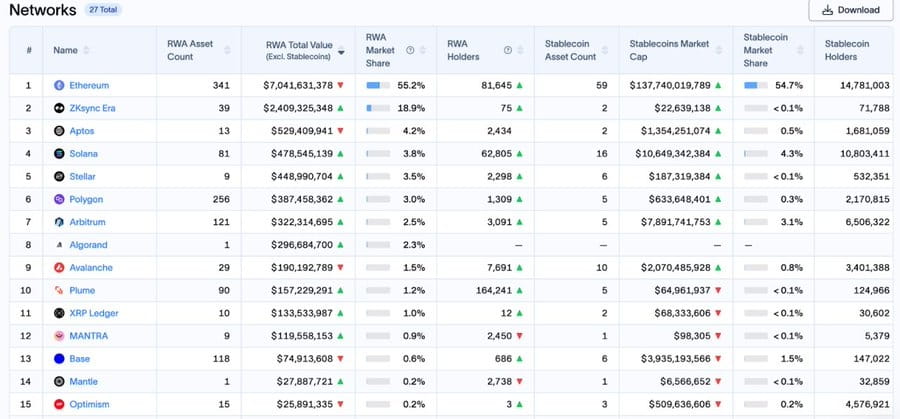
Source: RWA.xyz
RWA On-Chain: 2025 is referred to as the 'Year of RWA' by many industry insiders, as a large number of real-world assets are being tokenized through the Ethereum ecosystem. According to RWA.xyz data, as of July 29, 2025, more than 341 types of RWA assets have already been hosted on Ethereum, covering government bonds, real estate equity, private equity, etc., accounting for about 55.2% of the entire on-chain RWA market, reaching $7 billion, ranking first among all blockchains, about three times that of the second place, ZKsync. For example, the scale of BlackRock's tokenized fund BUIDL has exceeded $2.4 billion, with over 90% of the assets still hosted on Ethereum. As the market scale of RWA tokenization continues to break through in the future, Ethereum is expected to capture the largest share.
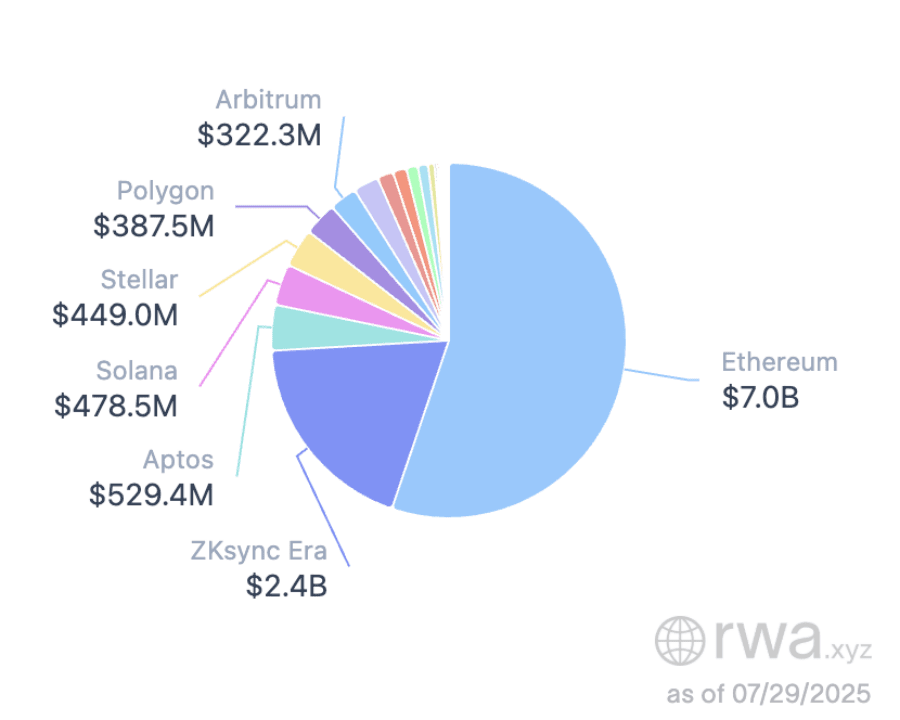
Source: RWA.xyz
Stablecoin Trend: Ethereum continues to solidify its position as the on-chain dollar carrier in 2025. As of July 29, 2025, the stock of stablecoins operating on Ethereum accounted for over 54% of the entire market, firmly ranking first among all public chains. With a total of approximately $250 billion, over $137.7 billion of stablecoins (such as USDT and USDC) are circulating within the Ethereum network.
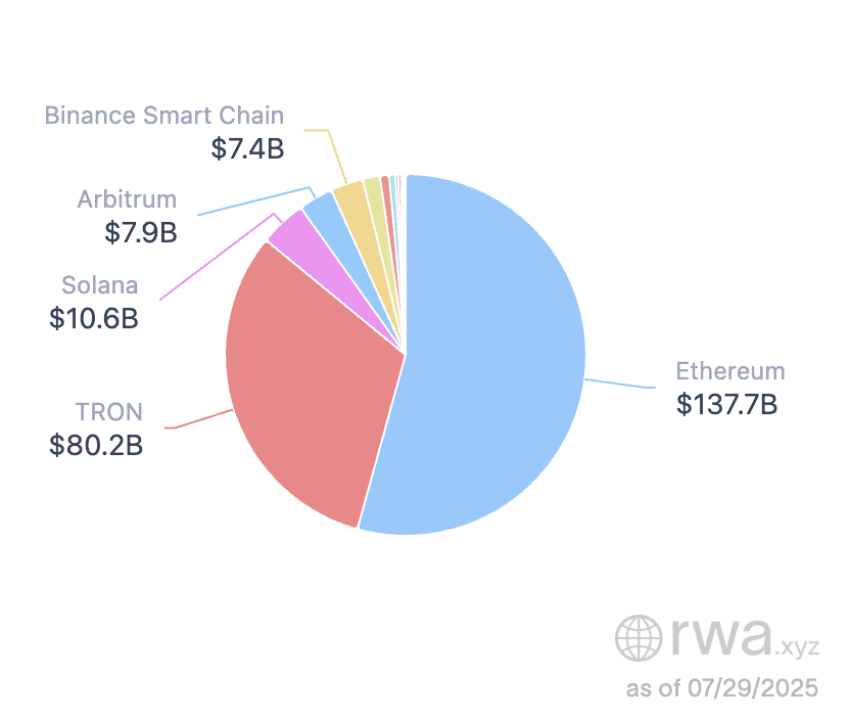
Source: RWA.xyz
It is important to emphasize that in the past, ETH was more often seen as a 'super Bitcoin' cryptocurrency, but now, with the significant accumulation of stablecoins and RWA, ETH has a broader value support. On one hand, ETH is indispensable as the 'digital crude oil' for paying gas fees; a small amount of ETH is burned for every stablecoin transfer and every RWA issuance. On the other hand, the 'productive asset' attribute of ETH is becoming increasingly prominent—staking ETH can yield native returns, similar to holding U.S. Treasury bonds for interest, which aligns with traditional capital's preference for income-generating reserve assets. As we enter a rate-cutting cycle, ETH's staking yield may surpass Treasury yields, accompanied by substantial upside potential, making ETH extremely attractive. Thomas Lee has boldly stated that Ethereum, as a platform for stablecoins and RWA, has limitless prospects, which also makes it the preferred choice for Wall Street's layout on compliant chains. Lee believes that the value of the Ethereum network is severely underestimated, and its 'fair value' should range between $10,000 and $15,000, with more than ten times the appreciation potential in the coming years.
In summary, the rise of stablecoins and RWA is redefining ETH's investment value, also giving Ethereum the opportunity to become a global digital dollar settlement network, which is one of the important reasons why institutional investors are daring to aggressively allocate ETH recently.
Seventh, Ethereum Technical Roadmap
Ethereum has continued to iterate and upgrade over the past decade, and the progress of its technical roadmap is an important internal driving force for bullish sentiment on ETH.
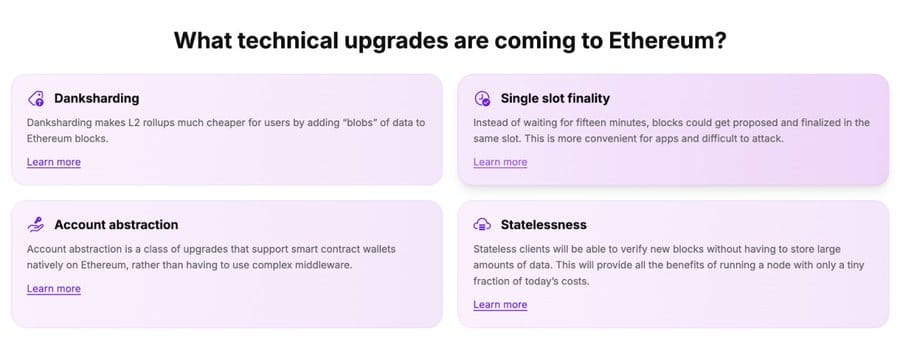
The latest major upgrade—Pectra upgrade, was successfully implemented on May 7, 2025. It integrates the Prague and Electra sub-proposals, covering changes to the execution layer and consensus layer. It introduces account abstraction (EIP-7702), increases the validator staking limit (to 2048 ETH), expands data (increased blobs), introduces a more flexible exit mechanism and BLS precompiled contracts, aiming to enhance scalability and user experience, paving the way for future sharding and Verkle trees, which is a key step in Ethereum's medium to long-term roadmap.
In the next phase, the Fusaka upgrade is expected to go live around the end of 2025, which will expand the number of data blobs per block by eight times and introduce PeerDAS technology to improve on-chain data availability.
Overall, Ethereum's development roadmap has progressed as planned in the past quarter with Proto-Danksharding, deepening account abstraction, data expansion, and validator mechanism reforms, continuously enhancing Ethereum's performance. Looking ahead, Ethereum aims to complete Danksharding full sharding, achieve Statelessness, and improve various modular aspects, which will lay a solid foundation for the long-term value of ETH.
Summary
In summary, standing at the juncture of Ethereum's tenth anniversary, we can see the resonance between internal fundamentals and external environment: core indicators are improving, continuous technological upgrades, and optimized team governance are making the Ethereum network more robust; at the same time, the emerging narratives of stablecoins and RWA, along with the incremental funds brought in by ETFs, are injecting endless upward momentum into ETH. For this reason, an increasing number of asset management institutions and analysts hold an optimistic view on Ethereum's medium to long-term prospects, believing it is likely to challenge new heights in the coming years.
Of course, challenges from other public chains and regulatory changes may still bring volatility. But it can be assured that at the starting point of the next decade, Ethereum is transitioning towards a 'new financial infrastructure', and the excitement may just be beginning.