

1.
What is artificial intelligence (AI)?
Artificial intelligence is a branch of computer science and engineering. Artificial intelligence systems use algorithms and statistical models to evaluate large amounts of data and make predictions or choices based on these analyses.
The study of intelligent machines capable of performing tasks that traditionally require human intelligence, such as speech recognition, decision-making, and language translation, is known as artificial intelligence (AI).
Artificial intelligence comes in many different forms, such as rule-based systems, machine learning (ML), and deep learning. Machine learning systems learn from data and get better over time, while rule-based systems employ an established set of rules to make judgments.
Neural networks are a set of algorithms modeled after the human brain that are used by deep learning systems (a subset of machine learning) to perform complex tasks.
Many industries, including healthcare, banking, transportation, and entertainment, are using artificial intelligence. The development of artificial intelligence raises ethical and social issues, such as the impact on employment and possible bias in decision-making, despite its ability to increase efficiency and open up new opportunities.
2.
What is an AI cryptocurrency?
AI cryptocurrency, also known as artificial intelligence coin or token, is a cryptocurrency that integrates artificial intelligence technology into its operations.
This currency serves as a dedicated platform for artificial intelligence and machine learning researchers and developers to develop and test new models, applications and algorithms in a decentralized and open environment.
Unlike traditional cryptocurrencies, AI crypto coins use machine learning algorithms and natural language processing to study market patterns, make predictions, and execute automated trades. Due to their ability to learn and adapt to market developments, investors view them as a more dynamic and responsive investment option.
Some AI cryptocurrencies are using AI technology to improve network security. For example, some coins utilize facial recognition technology to verify transactions and avoid fraud.
3.
How do artificial intelligence cryptocurrencies work?
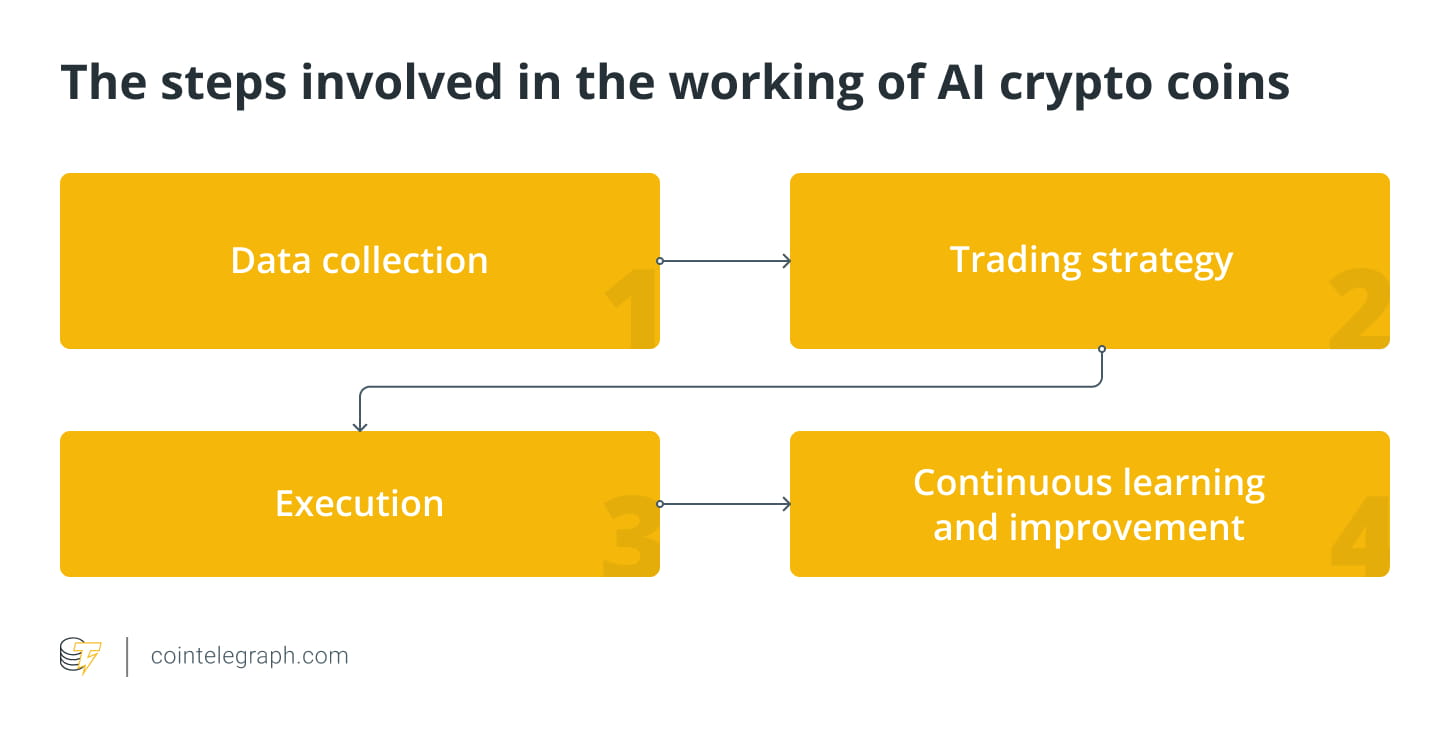
AI crypto coins harness the power of artificial intelligence to make smarter trading decisions and increase transaction efficiency on blockchain networks.
Here’s a step-by-step explanation of how the AI crypto coin works:
However, as with all cryptocurrencies, investors should exercise caution and conduct thorough research before investing in any AI crypto coin.
4.
What are the benefits of using artificial intelligence in the crypto market?
The use of artificial intelligence in the crypto market can bring multiple benefits in terms of risk management, decision-making, security, and more.
Here are some of the main advantages:
Improved decision making: AI can analyze large amounts of data, which involves discovering patterns and trends that human analysts would miss. Using this research, traders can decide when to buy, sell, or hold cryptocurrencies with more knowledge.
Increased efficiency: Numerous functions in the cryptocurrency market, including data analysis, market trend monitoring, and trade execution, can be automated through artificial intelligence. This speeds up transactions on the blockchain network and saves traders time.
Better risk management: AI can help traders better manage risk by evaluating data and identifying potential pitfalls. This can help traders make more informed choices about the assets they should invest in and the amount they should invest.
Better security: The application of artificial intelligence in the cryptocurrency market can enhance security by identifying possible security vulnerabilities and taking steps to prevent them. By doing this, you reduce the possibility of hacking attacks and other security issues.
5.
Are there any risks with artificial intelligence cryptocurrencies?
While there are many benefits to using artificial intelligence in the cryptocurrency market, there are also risks to consider, including regulatory hurdles, volatility, technical issues, and ethical issues.
Here are some of the main risks associated with AI cryptocurrencies:
Lack of Regulation: AI cryptocurrencies are still a relatively new technology and there is a lack of regulatory oversight in the market. This creates an environment where scams and fraud are more likely to occur.
Volatility: Like all cryptocurrencies, AI cryptocurrencies are subject to high volatility. Markets can be affected by factors such as government regulations, hacking attacks, and investor sentiment. Such volatility could result in significant losses for investors.
Technical issues: The use of artificial intelligence in the cryptocurrency market depends on the quality of the data analyzed. If data is inaccurate or incomplete, AI systems may make incorrect decisions. Additionally, there is the risk of technical issues, such as bugs in smart contract code, that could lead to loss of funds or security breaches.
Ethical issues: AI cryptocurrencies can raise ethical issues, such as possible bias in decision-making or the impact on employment in the financial industry. It is important to consider the ethical implications of using artificial intelligence in the cryptocurrency market and work to ensure that the technology is used in an ethical and responsible manner.
6.
How to buy AI cryptocurrency?
Buying AI crypto coins is similar to buying any other cryptocurrency.
Here are the general steps to buy AI crypto coins:
Choose a Cryptocurrency Exchange: You will need to find a cryptocurrency exchange that supports the specific AI cryptocurrency you want to purchase, which may come with hefty trading fees.
Create an account: The next step is to register with the exchange of your choice. This usually involves providing your email address, phone number and other personal information.
Fund your account: After creating your account, you will need to deposit funds into your exchange account. This can be done using a variety of payment methods, such as bank transfer, credit card or cryptocurrency transfer.
Buy AI Cryptocurrency: Once your trading account has been funded, you can use the exchange to purchase the AI Cryptocurrency of your choice. You do this by selecting the token you want to buy and specifying the quantity you want to buy.
Transfer coins to your wallet: After purchasing AI crypto coins, transfer them to a secure cryptocurrency wallet to keep your investment safe
7.
Are there any AI crypto projects available on the market?
There are several AI cryptocurrencies currently on the market, such as SingularityNET, Fetch.AI, Numerai, and Cortex.
Singularity Network (AGI)
SingularityNET is an AI-centric blockchain platform designed to create a decentralized AI economy. The platform provides a framework for building and exchanging AI applications and allows users to build and commercialize AI services.
Fetch.AI (DONE)
Fetch.AI is a decentralized network that uses AI to create a “smart ledger” for autonomous machine-to-machine communication. From supply chain management to predictive maintenance, these are just a few of the applications that can leverage the network for efficient data sharing and secure transactions.
Nuclear Magnetic Resonance (NMR)
Numerai is a decentralized hedge fund that uses artificial intelligence to make investment decisions. The platform uses unique data science competitive models to create predictive models that are then used to trade in traditional financial markets.
Cortex (CTXC)
Cortex is an artificial intelligence-based platform that allows developers to create and deploy machine learning models on the blockchain. The platform leverages blockchain technology to develop a decentralized artificial intelligence ecosystem that can be used for a variety of applications, including speech and image recognition.
8.
Are AI Cryptocurrencies Safe?
The security of AI-enabled cryptocurrencies is affected by many factors, including market sentiment, government regulations, the technology employed and existing security procedures.
While the use of artificial intelligence in the cryptocurrency industry can improve efficiency and decision-making, it does not mean security. Here are some risks associated with AI cryptocurrencies that may affect their security:
Hacking: Like any other cryptocurrency, AI cryptocurrencies are vulnerable to hacking. If hackers gain access to an AI trading system, they may be able to steal funds or manipulate markets.
Technical issues: Using artificial intelligence in digital currency markets can be difficult and requires the use of high-quality data and code. Investors may suffer significant losses due to technical issues such as coding errors.
Lack of Regulation: Since the cryptocurrency market is largely unregulated, fraud and scams may not be protected by authorized traditional financial regulators.
Volatility: There is no doubt that volatility affects any type of cryptocurrency, including AI-based cryptocurrencies. In fact, due to the use of artificial intelligence algorithms, AI coins may be more volatile than other types of cryptocurrencies. Therefore, investors who rely on AI systems to make trading decisions could suffer significant losses if the algorithms make incorrect predictions.
Therefore, investors should also consider the risks associated with specific cryptocurrencies and the security measures in place.