

Author: Morty
When talking about Web3 wallets, many people’s first reaction would be the Little Fox Wallet Metamask.
After that, wallet applications dominated by centralized exchanges such as Coinbase Wallet, OKX Wallet, and Trust Wallet invested by Binance, or wallet applications driven by new public chain ecosystems such as Phantom and Kepler appeared in our field of vision.
However, although wallets are the entrance to the Web3 world, users use wallets not to experience the wallet product itself, but to use various Web3 applications through wallets. Therefore, in order to compete for market share, wallets often optimize and enrich product functions based on their predecessors, such as launching a more user-friendly mobile version or launching more convenient and fast functions. Since the functions of wallets themselves are the same, the differences between various wallets are reflected in these improvements made to the user experience.
But no matter how things change, the essence remains the same. As the entrance to Web3 traffic, for investors in the crypto world, a good wallet application should be:
Simple and convenient: The interface is user-friendly and easy to operate, making it convenient for Web2/Web3 users to use;
Comprehensive functions: supports multiple currencies and tokens, can perform operations such as sending and receiving transfers, and supports various useful functional components to meet various needs of users;
High security: It can protect the user's private key from being leaked and is responsible for the services provided by the wallet, such as flash exchange.
Therefore, under the premise of security, a wallet that can be called "easy to use" should take "user experience" to the extreme, that is, it should be able to meet the various needs of different users in product use.
Among the many wallet applications, we see that Cwallet's current product innovation in user experience deserves special attention: while providing basic wallet functions, it is helping more users to better participate in the crypto world through lightweight functional components that fit the habits of Web2&Web3 users.
Meet Cwallet: A simple and secure multi-chain wallet
From the intuitive perspective of ordinary crypto investors, asset storage is not the top priority. Convenient on-chain operations, easy participation in various community activities or giveaway activities, and payment operations are the functions they need more.
The macro data also confirms this functional demand. We can see from the active address data on the Ethereum chain that even after experiencing several major crashes in 2022, the number of active addresses on Ethereum still remains at a relatively high level.
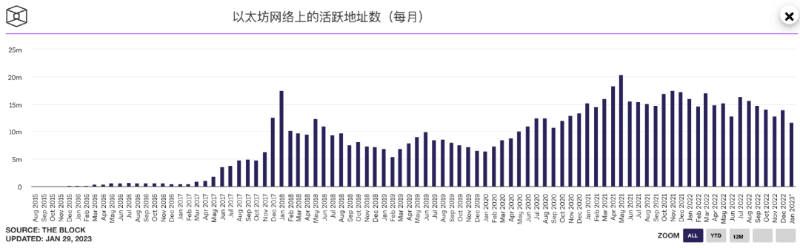
Image source: The Block
As the entry point to the chain, the importance of Web3 wallets is self-evident. As mentioned above, with the establishment of more infrastructure on the chain and more high-frequency interactive protocols such as DeFi and GameFi, ordinary crypto investors need more comprehensive Web3 wallets to perform frequent and complex on-chain operations.
In order to meet the growing needs of users, the Cwallet team has come up with a new product expansion. As a Web3 wallet, Cwallet has achieved seamless switching between centralized wallets and decentralized wallets in its product architecture to meet the different needs of different users for asset operations.
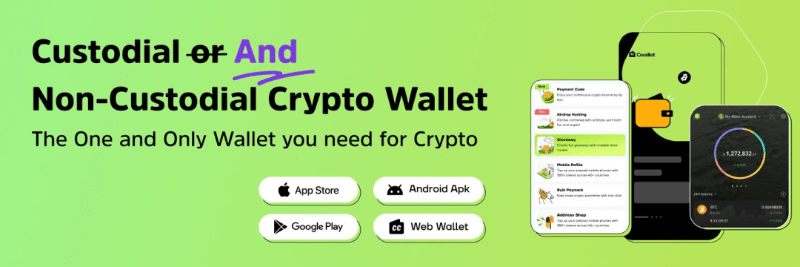
Among centralized wallets, Cwallet already supports 53 public chains and more than 800 mainstream tokens and NFTs. Whether it is IOS, Android mobile phone users or computer users, they can easily access Cwallet, and Cwallet supports binding multiple accounts at the same time. In order to ensure the security of user assets and user information, Cwallet uses two-factor authentication (2FA) and MPC cloud encryption storage technology. If you forget your password, we can easily retrieve your account, but you cannot transfer assets within 24 hours - to ensure the security of user assets to the greatest extent.
Through decentralized wallets, users can manage their own private keys and purchase crypto assets and NFTs. At the same time, Cwallet decentralized wallet supports offline mode and will help users monitor abnormal behavior on the chain in all aspects.
However, for Web3 wallets, this can only be described as “basic operation”. Most wallets on the market can meet the functions of the centralized version or decentralized version of Cwallet.
So, what makes Cwallet stand out?
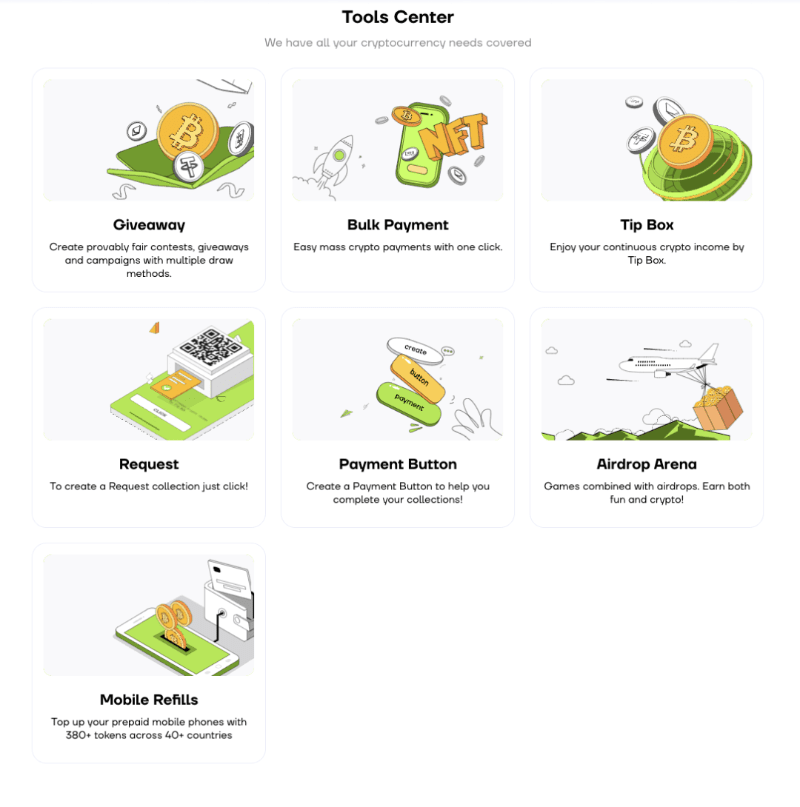
As we mentioned at the beginning, Cwallet's secret weapon is the "Lego widgets that fit the habits of Web2&Web3 users". Through these widgets, Cwallet hopes to create a "Web3 Alipay" and build more cryptocurrency application scenarios for users. These rich tool components are robots for Telegram, Twitter and Discord, flash exchange, Giveaway, Invoice, Bulk Payment, Request, Mobile Refill, and Payment Button.
As the Cwallet team mentioned in a community AMA, "As a multi-functional wallet, we want to lower the threshold for Web2 users to enter Web3 and build a bridge connecting Web2 and Web3." The Cwallet product architecture is committed to eliminating the sense of alienation between Web3 and Web2, providing Web2 users with a more familiar product experience, and ultimately making "encryption" more user-friendly and making "encryption" simpler.
How does Cwallet’s tool Lego create value?
Web3 Wallet Bots in Web2 Social Networks
Although most of the activities in the Web3 industry, which is dominated by blockchain technology, take place on the chain, the communication between people in the industry is based on Web2 social networks. The reasons are: first, the Web2 Internet has gone through years of construction, and products such as Telegram, Twitter, and Discord have been tested and have become the first choice for most users; second, despite the booming development, the Web3 industry is still growing wildly in a small range, and as a result, there has not yet been a Web3 social product that has been widely used in the industry.
Against this backdrop, Cwallet launched the “Wallet on Social Platforms” service, providing users with Twitter Bot, Telegram Bot and Discord Bot services to strengthen the connection between user-side Web2 social products and the Web3 on-chain world.
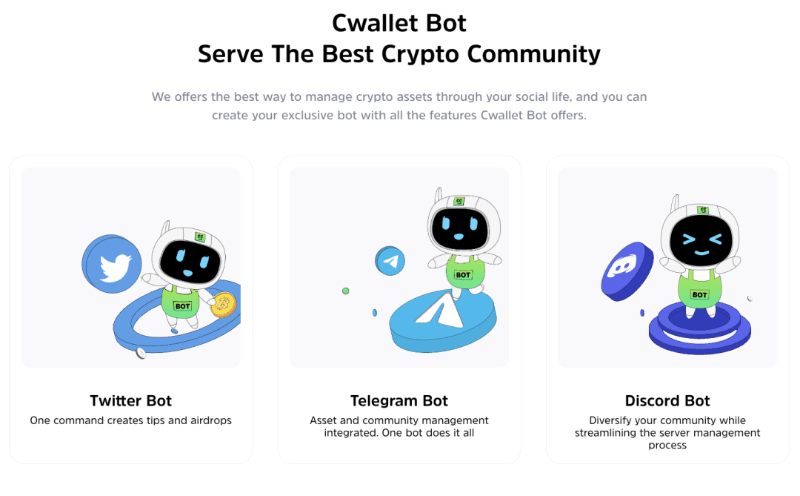
We can think of these robots as a bridge between Web2 and Web3, providing users with an easier way to communicate on and off the chain.
Cwallet Twitter Bot essentially builds a Web3 influence network based on Twitter. The bot allows influential KOLs to easily tip fans and airdrop on Twitter to reward loyal fans. Cwallet Twitter Bot provides Twitter KOLs with a more convenient and Web3-native way to increase traffic.
Telegram Bot and Discord Bot focus on the construction and operation of the Web3 community. Let’s take Telegram Bot as an example.
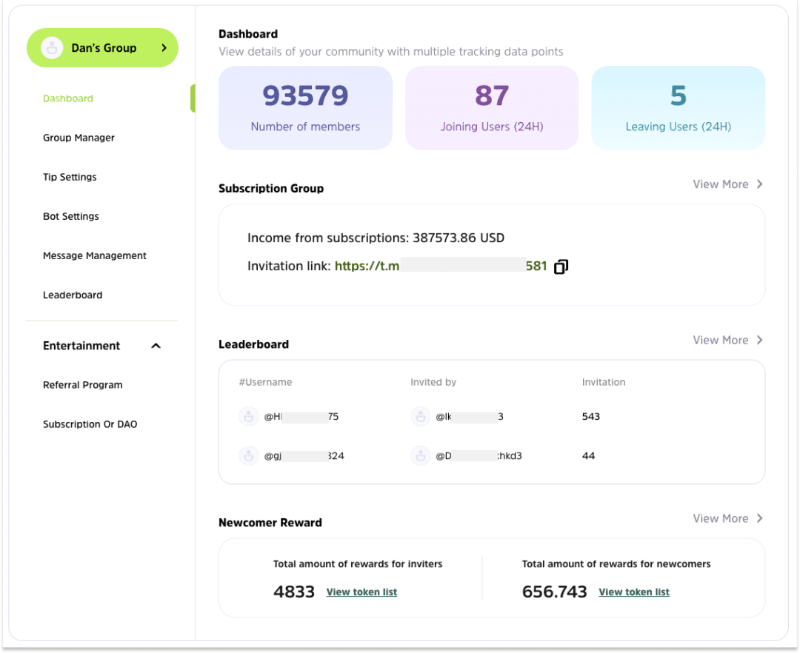
When communities are first established, they often have strong operational and customer acquisition purposes. Through the Telegram Bot provided by Cwallet, we can achieve:
Community threshold setting
The best way to build a loyal community is to set a token threshold. Telegram Bot can dynamically query the address of each member who wants to enter the community. Only if they meet the conditions of holding a certain amount of a certain cryptocurrency can they stay in the community. Once the requirements are not met, Telegram Bot will remove the member from the community.
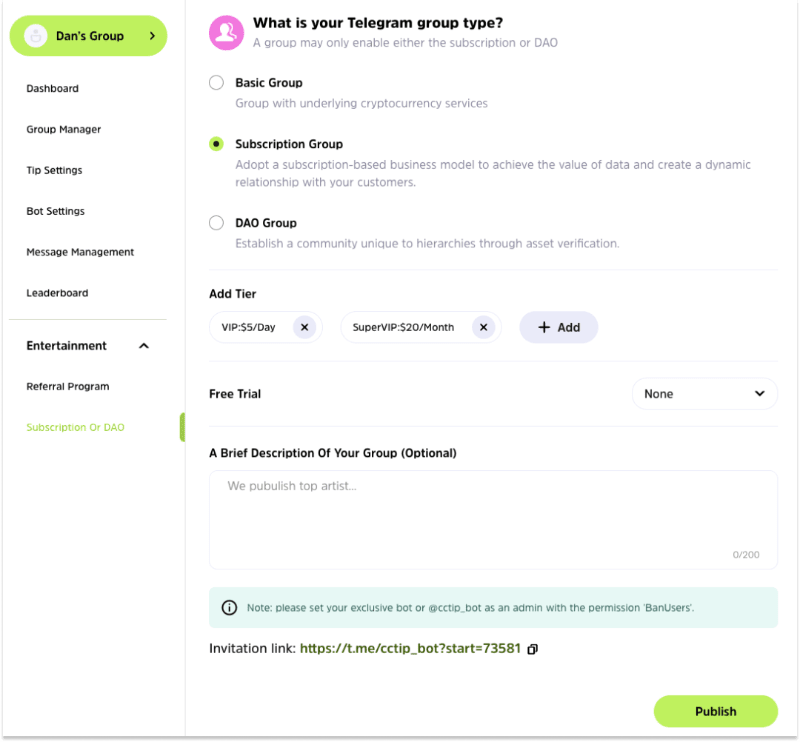
Helping content creators build a community of subscribers
Content creators can use Telegram Bot to build a community of subscribers without charging each person one by one. The bot will help the content creators complete most of the work. When establishing a community, content creators will face a lot of tedious work of attracting new members - not only do they have to verify the payment status of the corresponding members, but they also need to manually invite people to join the group. Telegram Bot solves this pain point.
Customized Referral Program
Through Telegram Bot, we can accelerate the development of the community by setting referral rewards for inviters and invitees. As shown in the figure below, Telegram Bot provides us with a variety of community incentives such as invitation rewards, daily limit rewards, keyword rewards, etc.
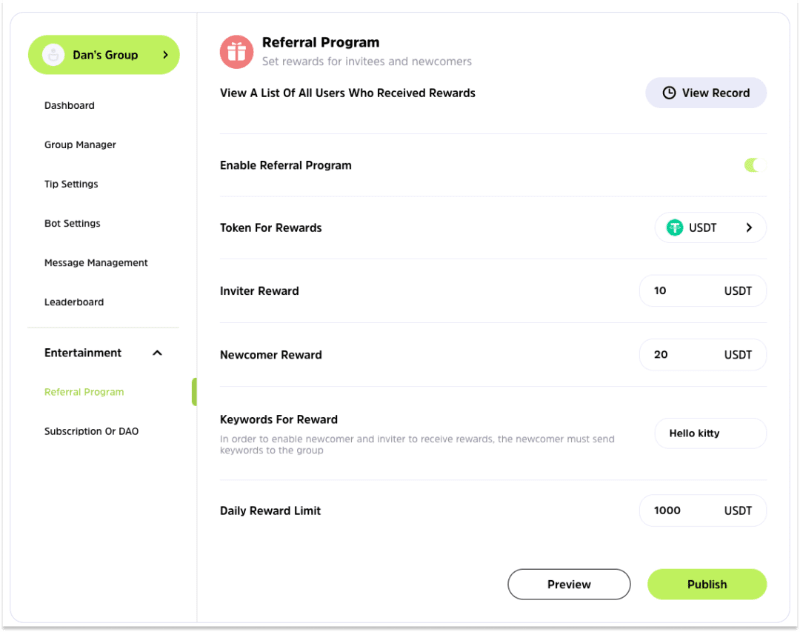
After pulling Telegram Bot into Telegram, we can use the Telegram account to log in to Cwallet and open the Dashboard for unified control. In fact, from the rich panels, we can also see that the functions mentioned above are more of a starting point. Telegram Bot also has various functions for us to use, such as multi-language settings, group announcement settings, and automatic replies. At the same time, the robot supports customization. Community operators can change the robot's name and avatar to create a unique robot image.
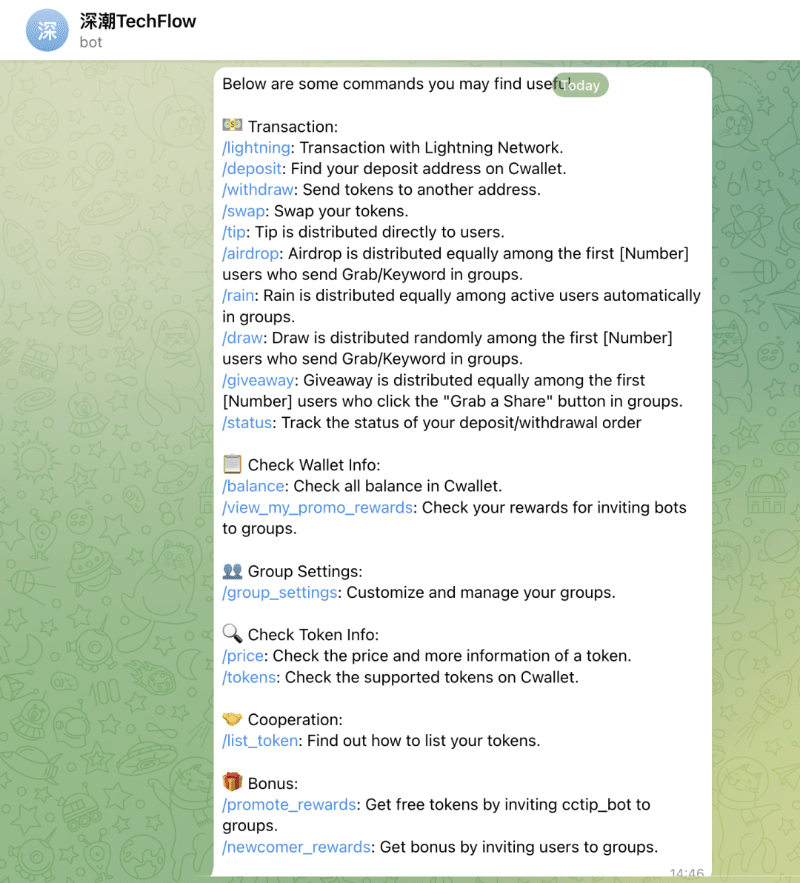
The functions of Discord Bot are similar to those of Telegram Bot. However, it is worth mentioning that since Discord Bot has become a very common thing nowadays, we can use the functions of Cwallet Discord Bot in conjunction with the functions of other Discord Bots to better manage the community.
The more profound significance of these community bots is that they integrate complex blockchain operations and community operations. We can simplify the process through dialogue with the bot, thereby saving time and effort to promote community fission growth. Therefore, whether it is setting a token holding threshold for joining the group, or conducting token incentives and airdrops, we can easily complete it through the bot. In addition, customized bots are also an important visual anchor for building community brand awareness.
Giveaway Tool
Giveaway is a very common marketing activity in Web3, and many excellent Giveaway tools such as Gleam have emerged in the market. So, what is the core competitiveness of Cwallet Giveaway tool?
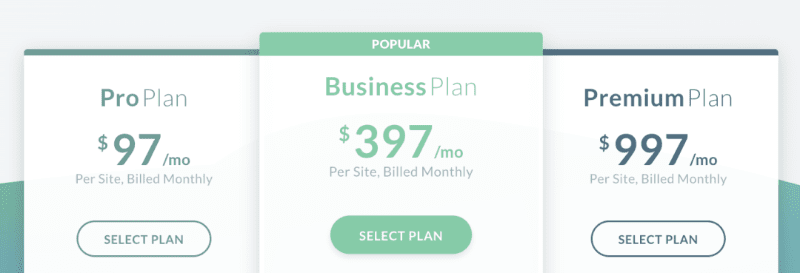
Gleam is the most commonly used giveaway tool in the crypto world. However, when we use Gleam to create a giveaway campaign, we need to face an extremely complex operation interface, and many functions such as importing videos into the event description require users to recharge the Pro Plan to unlock.
Compared to Gleam, Cwallet Giveaway simplifies the process of creating a Giveaway campaign in product design. We only need to complete three steps to easily create a Giveaway campaign:
1、Giveaway Details
In this section, the Cwallet Giveaway tool provides event organizers with three different ways to end Giveaway activities: scheduled draws, target draws (such as draws immediately after a certain number of community members/Twitter fans reach a certain number), and instant draws.
Compared with the traditional Gleam task-by-task verification method, Cwallet will verify the completion status of the task with one click after the user participates in and completes the task, without the need for tedious one-by-one checking.
In addition, since the Cwallet Giveaway event draw is based on the blockchain algorithm, it will assign an independent PID to each participant and publicize the final result, which is verifiably fair, open and transparent, and cannot be tampered with by anyone to prevent the proliferation of false participation in the event.
The fairness of Cwallet Giveaway activities is also reflected in functions such as "customizable API callback task verification", "account locking", and "precise anti-robot detection", which to a large extent reduces the behavior of wool party members brushing accounts, attracts more real traffic for the organizers of Giveaway activities, and realizes the screening of real users.
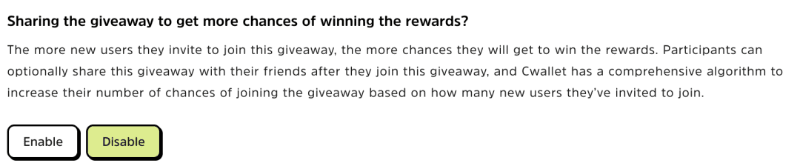
At the same time, the Cwallet Giveaway tool also provides event organizers with a new viral marketing strategy, that is, Giveaway event participants can increase their chances of winning by inviting new participants.
2、How to Enter?
In this section, we can set the conditions for participating in the Giveaway activity according to our own growth needs to achieve marketing goals.
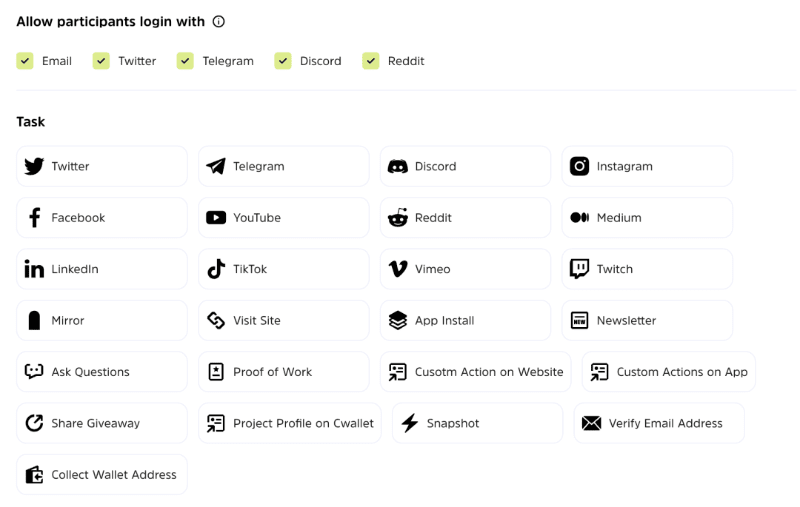
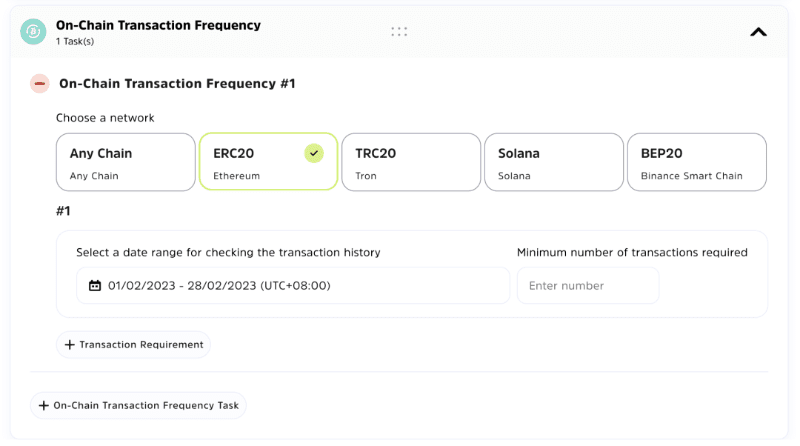
For example, if we need to increase the number of Twitter followers, or interact with a tweet, or drive traffic to an upcoming Twitter Space event, we can use Cwallet's Giveaway tool to achieve this. Alternatively, we can set more detailed conditions for participation in the Giveaway event, such as holders of specific tokens/NFTs/OAT/SBT, users with a specific on-chain transaction frequency, users who have interacted with specific smart contracts, etc., as shown in the figure below.
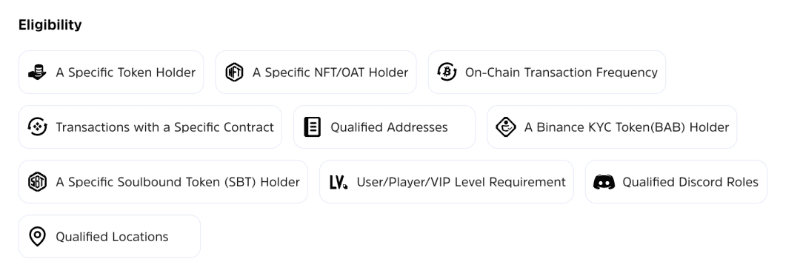
Let’s take “On-Chain Transaction Frequency” as an example. After clicking On-Chain Transaction Frequency, we can select the corresponding public chain, time range, and number of transactions to filter specific groups of people.
3、Rewards
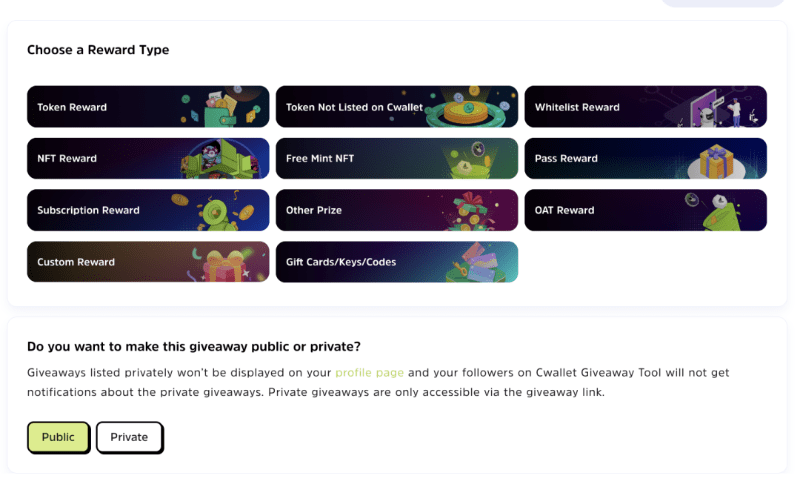
In this section, event organizers can choose different prize types and set the giveaway event to be public or private.
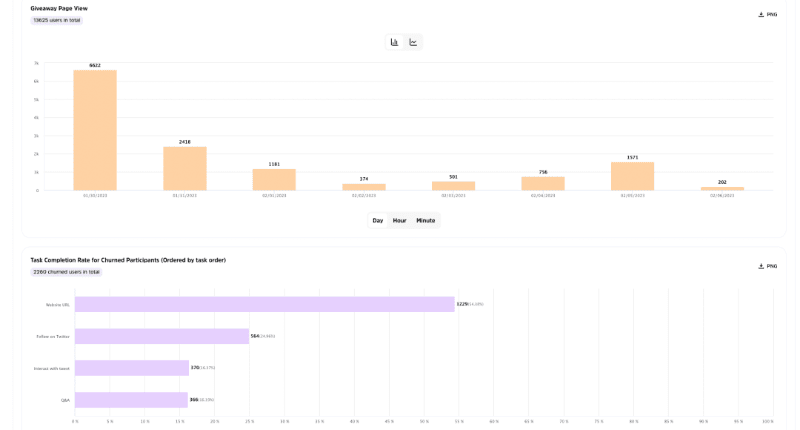
The entire Giveaway event creation process is very simple and convenient. You only need to follow the instructions, upload the data required by the Cwallet tool, and select the promotion direction to easily create a Giveaway event. As the event initiator, we can see detailed promotion data in the background.
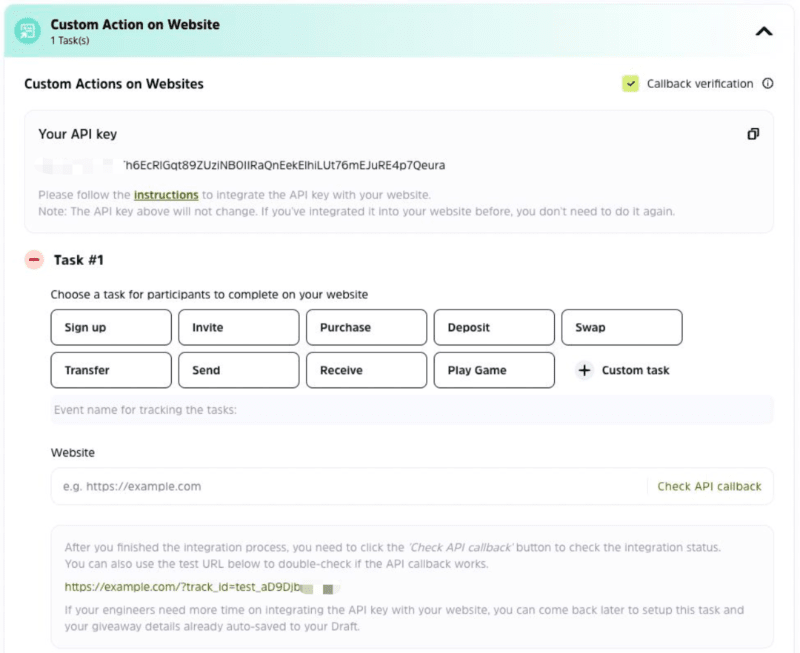
In addition, in addition to the basic task verification of each platform, Cwallet Giveaway also supports custom insertion of other tasks in the form of API. If you want to increase the number of registrations, you can add corresponding tasks in the Giveaway task section. Or it can be blockchain-related tasks, APP download tasks, etc. The authenticity of task execution will be guaranteed through API backtracking.
At the same time, compared to Gleam's complicated creation process, the Cwallet Giveaway tool, which is just as functional, is clearly more advantageous.
Most importantly, though, the Cwallet Giveaway tool is completely free, whereas running a Giveaway campaign through a tool like Gleam is obviously more expensive.
Bulk Payment
Bulk Payment allows users to make bulk cryptocurrency payments with one click. Bulk Payment helps wallet users simplify complex and tedious tasks into one-click operations. This feature has a wide range of application scenarios, such as sending community rewards, issuing cryptocurrency incentives to employees, etc.
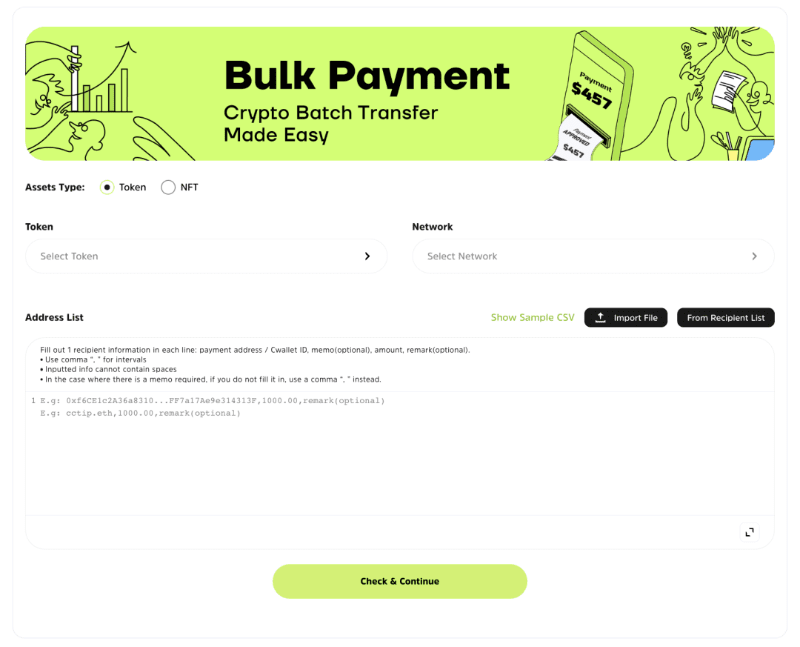
The team will also launch features such as scheduled payment in the future to promote the application of Bulk Payment in more payment scenarios such as salary distribution and financial management to meet the payment needs of future crypto organizations.
Today, the application of "payment" in the crypto field has a clear trend. Despite being in a downward channel in 2022, crypto payments still maintain strong demand. According to statistics, the average monthly crypto payments processed by crypto payment provider BitPay increased from 58,000 in 2021 to 67,000 in 2022.
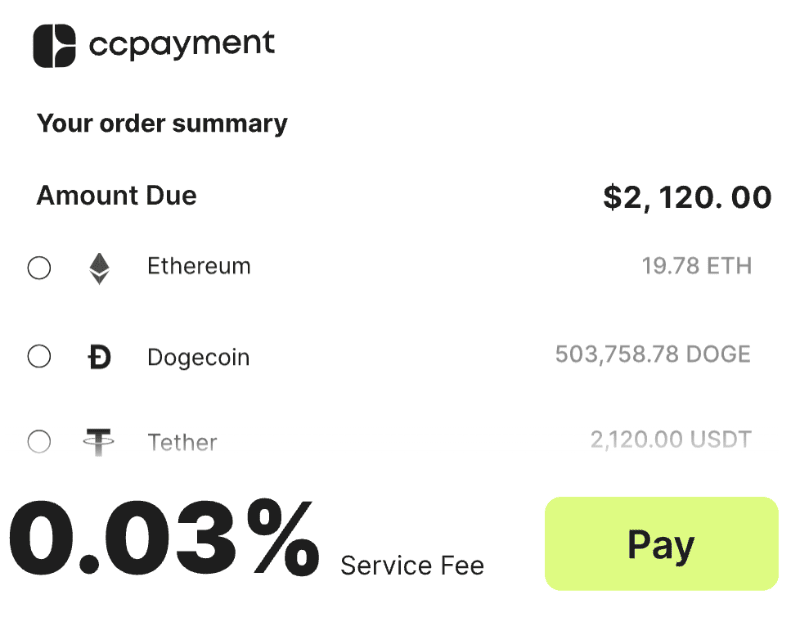
Following this trend, Cwallet launched the encrypted payment solution CCPayment, which provides free and open source API services for all kinds of individuals and merchants. Its advantages are simple access methods and rich currencies. What is more worth mentioning is that its payment fee rate is only 0.03%, which is lower than the service fee charged by any other platform on the market.
The Cwallet team has also obtained the Lithuanian Virtual Asset Service Provider (VASP) license certification and quietly listed the future legal currency trading entrance. Therefore, it is not difficult to see from these layouts of Cwallet for the future payment track that the team is currently determined and ambitious to capture the wallet market and build Cwallet into "Web3 Alipay".
Other tools
In addition to robots and giveaway tools, Cwallet also provides users with the following tools to meet the various needs of different users:
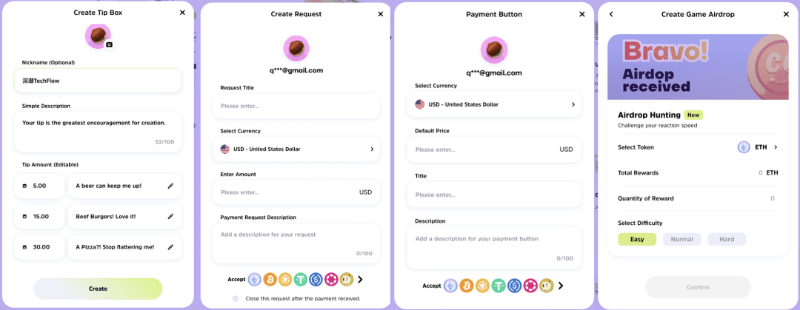
Tip Box: Allows users to receive rewards through Tip Box, which is suitable for content creators to realize content monetization and financial benefits;
Request: Allows users to use Request to receive wallet payments;
Payment Button: Allows users to create a button for payment;
Airdrop Arena: Allows users to organize airdrop events by creating airdrop hunting events;
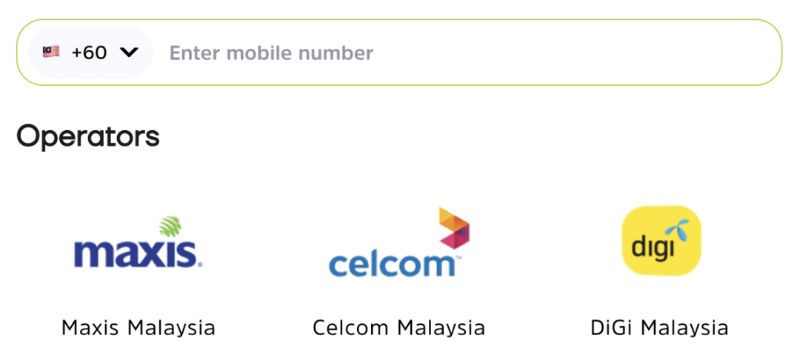
Mobile Refills: allows users to recharge their mobile phones through Cwallet. Its advantage is that it supports cross-border payments and recharges using cryptocurrencies. The service has covered more than 40 countries and supports recharges from more than 200 mobile operators. It now covers most Southeast Asian and South American countries.
How does Cwallet break through the competitive landscape of Web3 wallets?
In essence, the Web3 wallet is actually a bridge connecting the on-chain and off-chain, or it can be considered a bridge connecting Web2 and Web3. The wallet is the deposit of crypto investors' assets, and all interactive behaviors in the Web3 world need to be completed through the Web3 wallet.
Therefore, we call Web3 wallets traffic entrances. However, it is difficult for Web3 wallets to make obvious differentiation. The reason is that Web3 wallets are the infrastructure of the crypto world, and their functions are consistent. Differentiation can only be reflected in their superstructure. This is also the reason why Cwallet builds upper-layer Lego applications.
If you think of a Web3 wallet as an asphalt road, then the users are the trucks driving on the road. Each user must have a purpose when using a wallet, that is, the trucks have a clear destination. However, it is difficult for Web3 wallets to capture value just by providing the "road" service. The value of sinking can often only be captured through economies of scale.
Therefore, most asphalt roads have begun to consider the cargo on trucks - while paving the road, they also provide more convenient services for the delivery process of trucks. That is, Web3 wallets are placed in the application ecosystem through expansion. This is what Web3 wallets are doing. Traditional Web3 wallets often provide encryption-related services. But Cwallet has done a better job in service. It provides users with a wealth of Web2 services that are strongly related to Web3 based on Web3. That is, the ones we mentioned above. And this is where Cwallet shines.
The Web2 world has already provided us with a wealth of ideas for building wallet applications, such as WeChat Wallet and Alipay. In addition to the internal competition in the functions and fees of the wallet itself, the competition among Web2 wallet applications is also reflected in the application ecosystem built around it. For example, WeChat Wallet is embedded in the social application WeChat, supporting users to interact in various scenarios such as payment, financial management, O2O, insurance, life payment, city services, Tencent charity, medical health, etc.
Once wallets are scenario-based, they will be everywhere.
Normal user profiles tend to be greedy and overreaching. The rich expansion of the application layer is exactly what Cwallet is good at in the Web3 wallet competition. Just like Alipay and WeChat Wallet, it meets the needs of users in various scenarios when using the wallet, and users will take their own actions to make product choices that best suit their own interests. Wallets are a rigid demand scenario. If they can provide one-stop services such as saving money, using money, doing activities, and building communities, as a Web3 entrance, the wallet will appreciate in value.
In the future development direction, the Cwallet team hopes to upgrade the existing users and continuously add more functional modules, and finally build the Cwallet product into a new era wallet application composed of MPC wallet + traditional non-custodial fully decentralized wallet + tool center. Through the implementation of MPC wallet, Cwallet will change the traditional form of centralized wallets to keep user assets, and its user assets will become safer. The architecture of functional products such as robots and Giveaway tools will drive Cwallet to grow into a "Web3 Alipay" level wallet application.
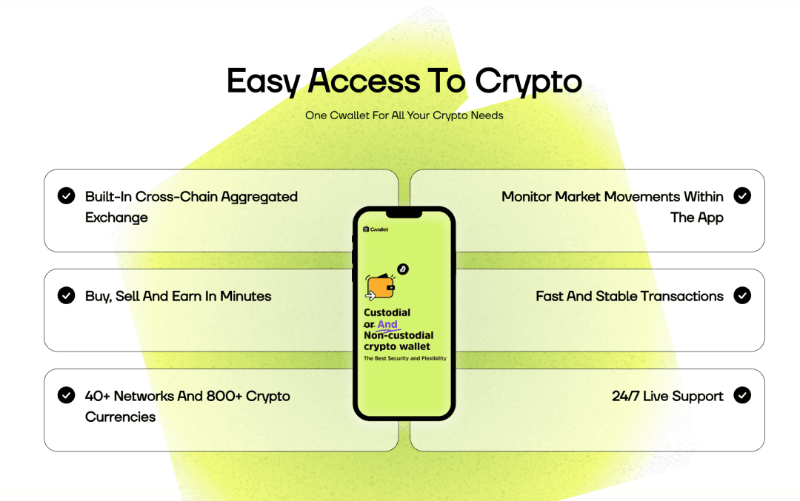
In the past few days, Cwallet has achieved more than 100,000 daily active users in Southeast Asia and South America through multi-language settings and diversified product channels. In addition, as we mentioned above, Cwallet is providing users with rich components and functions to meet the various needs of different users. Ultimately, this will increase its choice in the minds of crypto users.
What’s even more exciting is that after achieving such results, the Cwallet team has not slowed down its iteration pace, focusing on both new technology solutions and user experience. While improving user experience, it is also continuously optimizing and iterating its own products in a new technical direction, launching payment API services, and planning to launch financial management systems and fiat currency integration. Therefore, this also makes us look forward to Cwallet’s new actions and developments in the future, opening a broad door to encryption for more users from Web2.