


The Stablecoin Storm|The Crypto Conundrum of Dollar Hegemony and US Debt Crisis
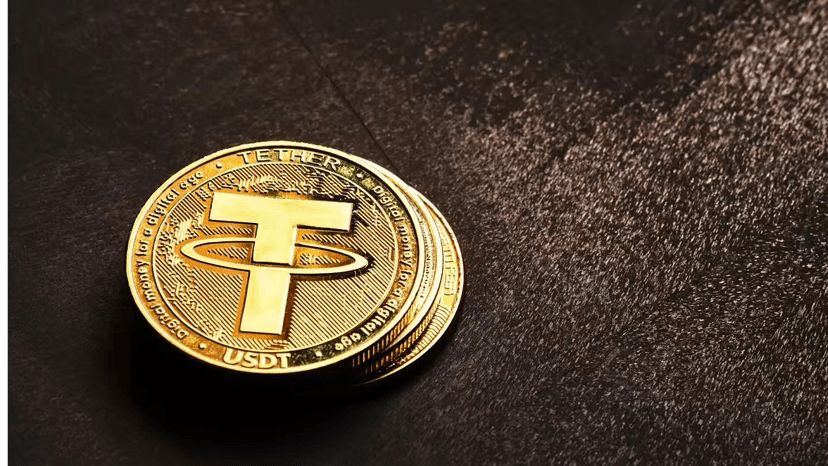
The collapse of the Bretton Woods system is a historical footnote of global central banks bailing out the US. Now, the promotion of stablecoins is a new attempt by the US to have global retail investors and informal financial institutions take on its massive debt crisis.
In May 2025, the US Senate passed the procedural vote for the (Stablecoin Unified Standard Protection Act) (GENIUS Act) with 66 votes in favor and 32 against. This marked the first time the US has built a comprehensive federal regulatory framework for stablecoins, representing not only a major transformation in financial regulation but also a strategic move for the dollar to maintain its global dominance in the digital age.
However, what exactly are stablecoins? Why has the US shifted from initial suppression to full embrace? In this struggle intertwined with technology and finance, power and trust, how should China respond?
⸻
1. What is a stablecoin and why is it so important?
A stablecoin is a type of cryptocurrency that aims to maintain a stable value. Its price is usually pegged to the US dollar, gold, or other fiat currencies, or maintained relatively stable through algorithmic mechanisms.
Unlike the volatile Bitcoin, stablecoins are named for their 'stability', with the core concept ensuring that for every stablecoin exchanged, there is an equivalent asset backing it, such as US dollars or US Treasury bonds. This '1:1 peg' mechanism makes it the 'embodiment' of the dollar on-chain, playing a monetary role in the digital economy.
⸻
2. Since it is backed by the US dollar, why not just use the dollar directly?
The answer lies in efficiency and accessibility.
Traditional cross-border payment systems like SWIFT can take 1 to 5 days for transfers, with fees as high as 5%-7%. However, through stablecoins, funds can achieve near real-time settlement globally, with transaction confirmations taking only a few seconds to minutes, and fees typically below $0.1.
This not only improves capital efficiency but also provides a low-threshold access channel to the dollar for billions of people globally who have been marginalized by the financial system.
• In countries with severe inflation like Argentina, Turkey, and Venezuela, stablecoins serve as a 'digital safe haven' against local currency devaluation;
• In sanctioned countries like Iran and Russia, stablecoins are used by governments to bypass international financial blockades;
• In gray markets and dark web transactions, stablecoins have already replaced cash, becoming the preferred tool for anonymous settlements.
⸻
3. How to ensure that stablecoins are truly 'stable'?
Many people may question: If the issuer claims to have deposited 1 dollar, why should we trust that they can issue 1 stablecoin?
The answer is: trust stems from transparency, built on auditing and regulation.
The two largest stablecoins by market capitalization—USDT and USDC—are progressively establishing market trust by regularly publishing reserve audit reports. Trust is also relative: for currencies like the Turkish or Argentine peso that can depreciate by dozens of percent a year, even if stablecoins carry certain risks, they are still a more reliable safe harbor.
With the gradual clarity of regulation in the US, stablecoins are increasingly resembling the 'Alipay' we are familiar with—visible balances, available for transfers and consumption, although they do not directly exist in banks, most people do not worry about them 'running away'.
Of course, not all stablecoins are safe. In 2022, the collapse of the algorithmic stablecoin TerraUSD (UST) caused global investors to lose up to $200 billion. The event exposed the systemic risks of non-fully-backed stablecoins, becoming a turning point for stablecoin regulatory legislation.
4. From the margins to the mainstream: Stablecoins have become the new infrastructure of global finance.
As of May 2025, the total market capitalization of global stablecoins surpassed $250 billion. In 2024, the trading volume of stablecoins reached $27.6 trillion, exceeding the combined total of Visa and Mastercard for the first time ($25.6 trillion), with a year-on-year growth of 7.68%.
Among them, USDT issued by Tether accounts for 79.7% of trading volume, followed closely by USDC issued by Circle, together monopolizing about 98% of the market share.
Once undervalued, stablecoins have now become an undeniable presence in the global financial landscape.
⸻
5. Why has the US turned to embrace stablecoins?
In 2020, the market capitalization of stablecoins was only $5 billion; in 2021 it surged to $130 billion; although it experienced the collapse of UST in 2022, the market continued to grow rapidly, quickly alerting Washington.
During the Biden administration, there was a proposal to bring stablecoin issuers under bank regulation to prevent potential systemic risks. By 2025, with Trump back in power, the Republican Party strongly promoted a strategy to 'embrace stablecoins', leading to the emergence of the (GENIUS Act).
The core provisions of the bill include:
• Reserve requirements: must be pegged 1:1 to the US dollar or high liquidity assets (such as US Treasury bonds);
• Issuance licenses: Non-bank entities must obtain federal licenses to curb disorderly growth;
• Mandatory auditing: Stablecoins with a market capitalization exceeding $5 billion must undergo regular third-party audits;
• Prohibiting interest payments: to prevent evolution into 'shadow banking';
• On-chain regulation: regulatory agencies can freeze or restrict illegal transactions in real-time.
These regulations may seem 'high-pressure', but in reality, they pave the way for compliant local players (like Circle) while placing limits on issuers like USDT without a US background.
USDC is backed by the US banking system, with clear reserves and transparent audits; while USDT still dominates, it faces regulatory pressure due to unclear reserve components and a $41 million penalty from the CFTC.
⸻
6. Those who control stablecoins control the crypto world.
In the future, the infrastructure of the crypto world will no longer be limited to trading platforms, wallets, or public chains, but will revolve around the stablecoin ecosystem centered on 'on-chain dollars'.
Before the digital dollar is implemented, stablecoins have essentially become the 'vanguard' of the dollar:
• It permeates Web3, DeFi, cross-border payments, and international settlements;
• It reshapes the financial order, penetrating the dollar into every mobile wallet globally;
• It is quietly transforming US Treasury bonds into assets 'backed' by global retail investors.
For China, stablecoins should not simply be seen as speculative tools or illegal finance, but rather there should be a heightened vigilance towards the underlying ambition of US digital hegemony, planning ahead, regulating guidance, and seeking change amid stability is key to unlocking this 'cryptographic conundrum'.