


Study finds 80% of cryptocurrency users leave blockchains within 90 days
Blockchain networks are bleeding casual users, with four out of five low-engagement accounts becoming inactive within three months, a Flipside study reveals.
A recent study reveals a harsh truth about blockchain ecosystems: most users lose interest quickly. Data from Flipside, which analyzed user behavior on networks such as Solana, Ethereum, Arbitrum, and Avalanche, shows that user retention is extremely low. The majority of users disappear within a few months unless they were already very active from the start.
Flipside carefully examined wallet behavior over time. They categorized users into three groups: low-value (scores 0-3), medium-value (4-7), and high-value (8+), based on their previous on-chain activity. They then checked each group monthly for six months, tracking how many were still active.
The retention cliff
The data shows a clear pattern: the first month is brutal. Low-value users—wallets with little or no prior activity—dropped almost immediately. According to the report, they consistently show the "lowest retention, falling below 5% after 6 months." Simply put: 95 out of 100 wallets were gone within six months.
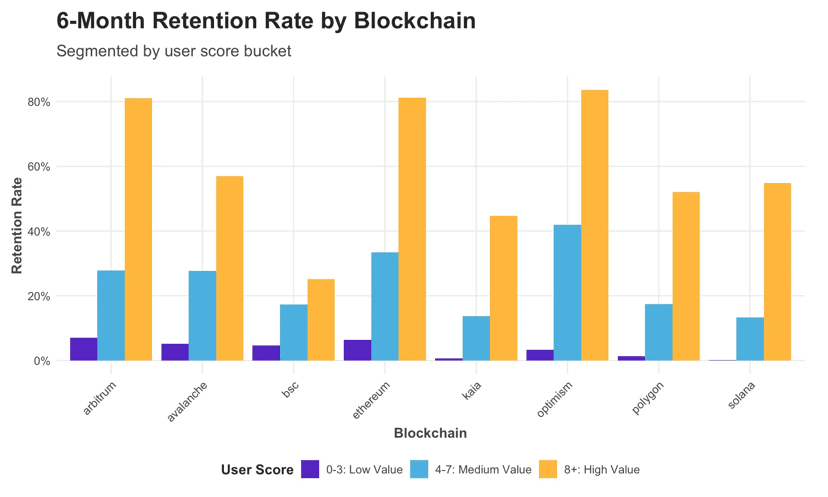
Mid-value users—regular but not power users—do better, but still decline sharply initially before leveling off, while high-value users decline slowly, losing only 5-8% of their number each month.
Some blockchains hold on to users better than others. For example, Ethereum and Avalanche have the highest retention of high-value addresses, retaining 35 to 38% of assets after six months. Solana, despite its size, lags behind, though the details of this gap remain unclear. Newer chains tend to have the steepest declines, suggesting that early growth figures could be misleading.
The metric trap
The report highlights a common problem in crypto: chains attract large numbers of users, but most of these "users" don't last. Many are just passing through: drop hunters, speculators, or bots. The data clearly shows that real, sustained activity comes from a small fraction of addresses.
“If we zoom in on the retention charts, you can see it very clearly: only a handful of addresses contribute to sustained activity or liquidity volume across the top chains studied.”
Side towards
This creates a dilemma: because blockchains want to demonstrate rapid adoption, they focus on inflating user numbers. But if most of these users disappear, the growth isn't real. The report argues that protocols would be better off targeting high-quality users from the start, even if that means slower growth in headlines.
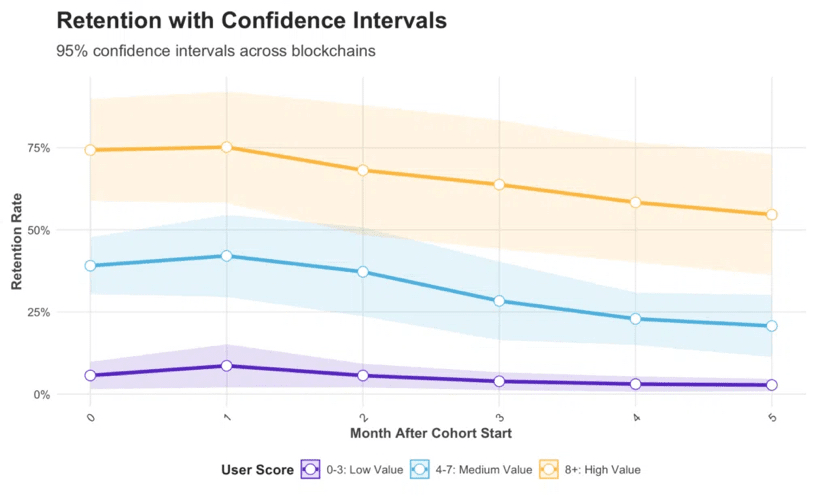
Flipside's research recommends that blockchain networks focus on low-value users. Single-action incentives may drive short-term action, but they fail to create long-term engagement.
“It’s a tough pill to swallow, but protocols that embrace this reality will outperform those that waste their incentives on addresses that won’t adopt them. The data clearly indicates that focusing on acquiring and retaining quality users—rather than inflating the number of addresses—represents the most sustainable path to ecosystem growth.”
Side towards
The report suggests that blockchain developers might consider giving more thought to designing tokenomics and reward systems that encourage longer-term participation. While short-term incentives can help stimulate initial activity, they often do not lead to significant engagement over time.
According to the data, it appears more effective to create mechanisms that reward consistent participation, which could help build a more stable and active user base. Prioritizing sustained interaction, rather than one-off actions, could offer a better path to long-term growth.