



Institutional capital flows into Bitcoin (BTC) are expected to reach $426.9 billion by 2026, according to Bitwise Investments. The amount represents around 4.2 million BTC — equivalent to 20% of the cryptocurrency’s total supply — that could be acquired by governments, large companies and asset managers by the estimated deadline.
Institutional adoption of BTC is advancing rapidly
The report highlights the progress of institutional adoption of Bitcoin. El Salvador currently holds 6,133 BTC, valued at US$521 million. China, despite the ban on trading crypto assets, holds 190,000 BTC, equivalent to approximately US$16.1 billion.
The United States tops the list with 198,012 BTC in government ownership, totaling approximately $16.8 billion in market value.
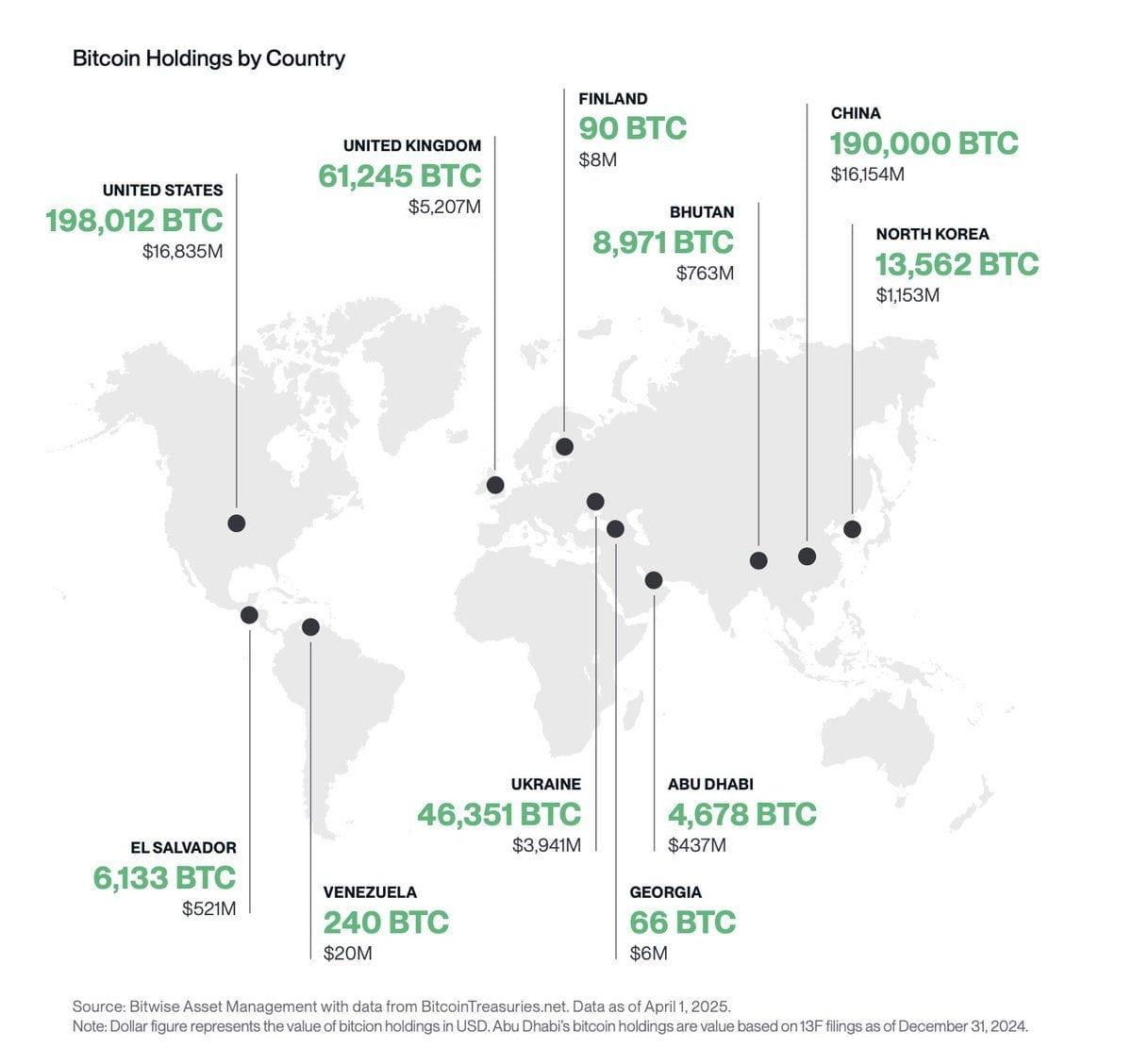 BTC ownership by country. Source: Bitwise Investments
Since 2024, major asset management platforms such as Morgan Stanley and Fidelity have stepped up their participation in the Bitcoin market. BlackRock’s ETF, the iShares Bitcoin Trust (IBIT), already manages around $71 billion in BTC.
Strategy, recognized as the largest institutional investor in Bitcoin, has increased its reserves to 576,230 BTC — equivalent to $63.7 billion. This represents approximately 2.74% of the cryptocurrency’s entire supply. The company continues to accumulate the asset at a steady pace.
Meanwhile, new entrants like Metaplanet are also looking to incorporate Bitcoin as a strategic asset into their balance sheets, broadening the institutional adoption base.
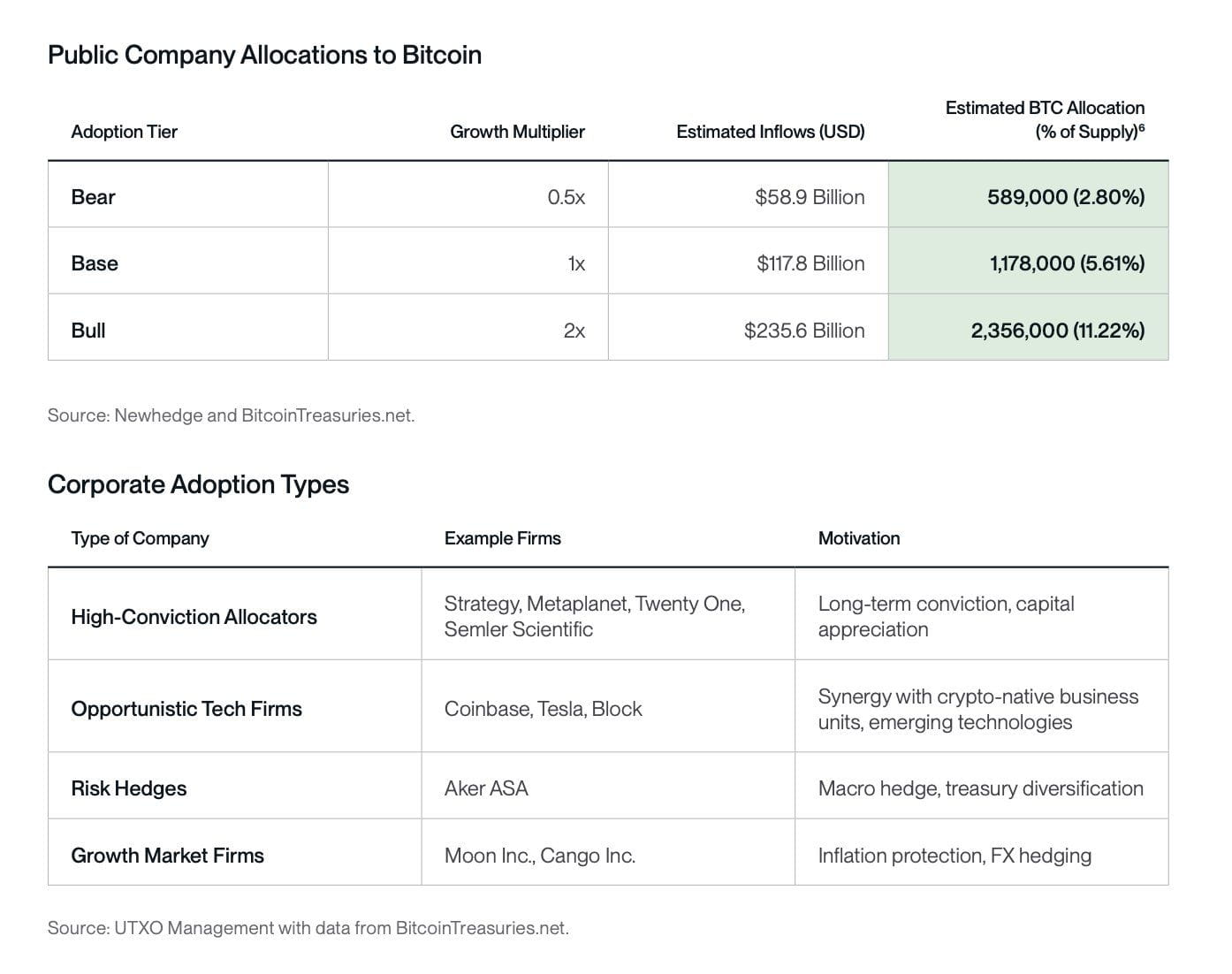 Public company allocations to Bitcoin. Source: Bitwise Investments
In the United States, states like Texas have also been making moves. The Texas Teachers’ Retirement Fund has allocated $500 million to Bitcoin ETFs. On the global stage, sovereign wealth funds like Norway’s Norges Bank and the Abu Dhabi Investment Authority have also begun testing allocations to the digital asset.
This institutional movement has put increasing pressure on Bitcoin’s supply. The projection that 4.2 million BTC will migrate to institutional investors — equivalent to 20.3% of the total supply — contrasts with the currency’s current issuance rate. After the 2024 halving, only about 164,250 BTC will be issued annually, with block rewards reduced to 3.125 BTC. The scenario points to an increasingly severe supply shortage.
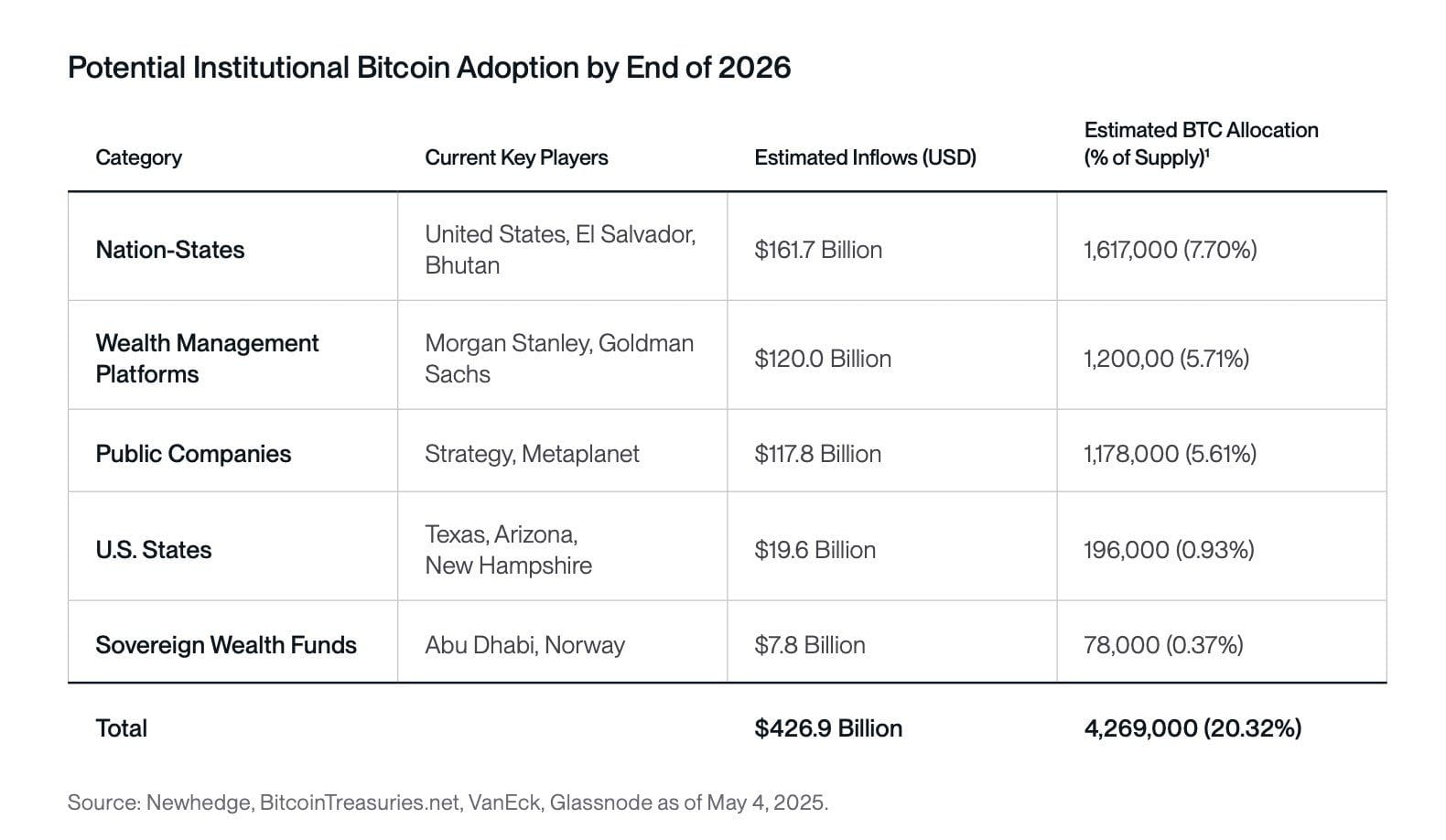 Potential institutional adoption of Bitcoin by the end of 2026. Source: Bitwise Investments
BTC’s all-time high and the risks on the horizon
The significant increase in institutional demand may have contributed to Bitcoin's all-time high price in May 2025. Driven by positive market factors and favorable on-chain indicators, the asset is now considered a candidate to reach the US$200,000 mark in this cycle.
However, this bullish movement also carries significant risks. A supply shortage could drive prices higher, but a simultaneous sell-off by large institutions could generate significant volatility. The SEC’s increased scrutiny of Bitcoin ETFs raises questions about the sustainability of institutional inflows.
Furthermore, macroeconomic factors remain on investors' radar. The Federal Reserve's maintenance of interest rates, scheduled for June 2025, may limit the inflow of capital into risky assets such as BTC, moderating the pace of appreciation in the short term.
The article Bitwise Predicts $426.9 Billion in Institutional Bitcoin by 2026 appeared first on BeInCrypto.