
pass code
29 Posts

pass code
5 Following
277 Followers
704 Liked
Posts
$客服小何 is about to tank, just like a big candlestick, get ready for the drop, time to bail!
BounceBit is a Layer 1 blockchain designed specifically to enhance the usability of Bitcoin in the DeFi space. It allows users to earn yields by staking and re-staking BTC without giving up asset custody. BounceBit's dual-token mechanism includes BB (native token) and BBTC (token pegged to Bitcoin), both of which are used for the network's Proof of Stake (PoS) consensus mechanism.
BounceBit's core vision is to bridge the gap between Bitcoin and modern DeFi applications and has pioneered a re-staking infrastructure suitable for Bitcoin—something that was not common before. Additionally, it is compatible with the Ethereum Virtual Machine (EVM), allowing developers to deploy smart contracts just as they would on Ethereum. BounceBit Prime offers institutional-grade on-chain yield strategies. BounceBit Prime is a product developed in collaboration with custodians and fund management institutions such as BlackRock and Franklin Templeton, allowing users to obtain yields from tokenized real-world assets in a compliant manner. @BounceBit #BounceBitPrime $BB
BounceBit's core vision is to bridge the gap between Bitcoin and modern DeFi applications and has pioneered a re-staking infrastructure suitable for Bitcoin—something that was not common before. Additionally, it is compatible with the Ethereum Virtual Machine (EVM), allowing developers to deploy smart contracts just as they would on Ethereum. BounceBit Prime offers institutional-grade on-chain yield strategies. BounceBit Prime is a product developed in collaboration with custodians and fund management institutions such as BlackRock and Franklin Templeton, allowing users to obtain yields from tokenized real-world assets in a compliant manner. @BounceBit #BounceBitPrime $BB
Holoworld Coin (HOLO) as an emerging project in the AI+Web3 track, combines technological innovation and ecological layout, possessing certain development potential against the backdrop of the current recovery in the AI sector, but attention should be paid to market volatility risks.
Technological and ecological advantages: Holoworld is committed to building a Web3 AI+3D entertainment social network, transforming static images into interactive AI characters through the assetization model of AI roles, and launching functions such as Agent Market (like one-click personalized templates, drag-and-drop knowledge base, 3D avatar creator, etc.), enhancing the usability of AI Agents. In addition, the project collaborates with industry participants such as Virtuals Protocol and ACT to build a technological moat and cooperation network, with the potential to become a core entry point for AI social and digital identity.
Support from industry trends: The overall recovery of the AI sector is currently leading the way for infrastructure projects. Messari predicts that by the end of 2025, 90% of on-chain transactions will be completed by AI agents, and the AI track is considered to have long-term investment value. As a fusion project of AI+Web3, Holoworld is expected to benefit from this trend.
It should be noted that the cryptocurrency market is highly volatile, and investment decisions should be made cautiously in accordance with one's own risk tolerance. @HoloworldAI #HoloworldAI $HOLO
Technological and ecological advantages: Holoworld is committed to building a Web3 AI+3D entertainment social network, transforming static images into interactive AI characters through the assetization model of AI roles, and launching functions such as Agent Market (like one-click personalized templates, drag-and-drop knowledge base, 3D avatar creator, etc.), enhancing the usability of AI Agents. In addition, the project collaborates with industry participants such as Virtuals Protocol and ACT to build a technological moat and cooperation network, with the potential to become a core entry point for AI social and digital identity.
Support from industry trends: The overall recovery of the AI sector is currently leading the way for infrastructure projects. Messari predicts that by the end of 2025, 90% of on-chain transactions will be completed by AI agents, and the AI track is considered to have long-term investment value. As a fusion project of AI+Web3, Holoworld is expected to benefit from this trend.
It should be noted that the cryptocurrency market is highly volatile, and investment decisions should be made cautiously in accordance with one's own risk tolerance. @HoloworldAI #HoloworldAI $HOLO
ZK Coin or "ZKC" is the native token of the Boundless protocol. At the core, each proof is guaranteed by ZKC: the prover must stake it as collateral to calculate a single period. As more protocols connect to Boundless, more ZKC is locked behind its proofs. In fact, ZKC is the pillar of all ZK proofs. On Boundless, builders use the native tokens of their own protocols to pay for proof fees; for example, ETH on Ethereum, USDC, or SOL on Solana, making Boundless the native ZK infrastructure for each ecosystem.
Verifiable Work Proof
PoVW is an innovative invention of Boundless, which is a permissionless incentive mechanism that allows provers to mine ZKC through their proof work. Provers generating unique zero-knowledge proofs will receive ZKC rewards. To obtain these rewards, provers must stake a certain amount of ZKC, which is proportional to their total proof work in a specific period. This mechanism enables provers to stake ZKC and acquire PoVW rewards from any market or network, thereby extending the usage of ZKC beyond infinite markets. This creates a clear loop: more proofs lead to more ZKC staking, and as operators compete for a larger share of PoVW rewards, they face ongoing pressure to improve performance. @boundless_network #Boundless $ZKC @boundless_network
Verifiable Work Proof
PoVW is an innovative invention of Boundless, which is a permissionless incentive mechanism that allows provers to mine ZKC through their proof work. Provers generating unique zero-knowledge proofs will receive ZKC rewards. To obtain these rewards, provers must stake a certain amount of ZKC, which is proportional to their total proof work in a specific period. This mechanism enables provers to stake ZKC and acquire PoVW rewards from any market or network, thereby extending the usage of ZKC beyond infinite markets. This creates a clear loop: more proofs lead to more ZKC staking, and as operators compete for a larger share of PoVW rewards, they face ongoing pressure to improve performance. @boundless_network #Boundless $ZKC @boundless_network
$DL @新手学堂天使自治社区 @币安中文社区 Shouldn't the Binance project team be responsible for a project that comes up and aggressively dumps like this? How was it audited?
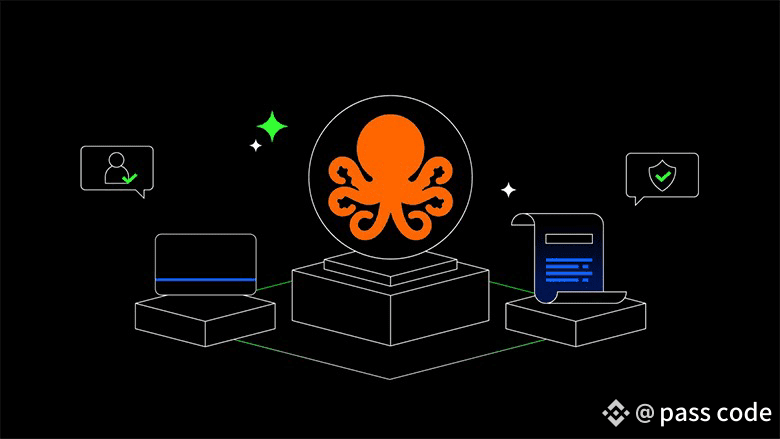
How OPEN Token Works
1. Medium of Exchange: The OPEN token serves as the primary medium of exchange on the OpenLedger platform, allowing users to pay various transaction fees.
2. Staking and Rewards: Users can support the network's operation and security by staking OPEN tokens and receive additional token rewards in return.
3. Governance Participation: Holders of OPEN tokens have the right to participate in platform governance, voting on important proposal decisions to collectively determine the future direction of the platform.
4. Cross-Chain Compatibility: OpenLedger is committed to achieving asset interoperability between different blockchains, with the OPEN token playing a key bridging role.
Features of the OpenLedger Platform
1. Decentralized Trading: The platform employs a decentralized architecture to ensure the transparency and security of all transactions, with users retaining control over their assets.
2. High Security: OpenLedger utilizes multiple security measures, including encryption technology and multi-signature, to protect user assets from attacks.
3. Rich Trading Pairs: The platform supports trading of various digital assets, providing users with a rich selection to meet different investor needs.
4. User-Friendly Interface: OpenLedger offers an intuitive and easy-to-use trading interface, allowing even novice users to quickly get started.
Future Development and Ecosystem
1. Ecosystem Expansion: OpenLedger continuously expands its ecosystem, collaborating with more projects and DApps to enrich platform functions.
2. Technological Innovation: The platform team continually pursues technological innovation, introducing new blockchain technologies and protocols to enhance platform performance and user experience.
3. Community Building: OpenLedger values community building, encouraging users to actively participate in platform governance and development through various activities and incentive mechanisms.
4. Market Collaboration: The platform actively seeks cooperation with major global institutions and enterprises to jointly promote the popularization and application of digital assets. @OpenLedger #OpenLedger $OPEN
1. Medium of Exchange: The OPEN token serves as the primary medium of exchange on the OpenLedger platform, allowing users to pay various transaction fees.
2. Staking and Rewards: Users can support the network's operation and security by staking OPEN tokens and receive additional token rewards in return.
3. Governance Participation: Holders of OPEN tokens have the right to participate in platform governance, voting on important proposal decisions to collectively determine the future direction of the platform.
4. Cross-Chain Compatibility: OpenLedger is committed to achieving asset interoperability between different blockchains, with the OPEN token playing a key bridging role.
Features of the OpenLedger Platform
1. Decentralized Trading: The platform employs a decentralized architecture to ensure the transparency and security of all transactions, with users retaining control over their assets.
2. High Security: OpenLedger utilizes multiple security measures, including encryption technology and multi-signature, to protect user assets from attacks.
3. Rich Trading Pairs: The platform supports trading of various digital assets, providing users with a rich selection to meet different investor needs.
4. User-Friendly Interface: OpenLedger offers an intuitive and easy-to-use trading interface, allowing even novice users to quickly get started.
Future Development and Ecosystem
1. Ecosystem Expansion: OpenLedger continuously expands its ecosystem, collaborating with more projects and DApps to enrich platform functions.
2. Technological Innovation: The platform team continually pursues technological innovation, introducing new blockchain technologies and protocols to enhance platform performance and user experience.
3. Community Building: OpenLedger values community building, encouraging users to actively participate in platform governance and development through various activities and incentive mechanisms.
4. Market Collaboration: The platform actively seeks cooperation with major global institutions and enterprises to jointly promote the popularization and application of digital assets. @OpenLedger #OpenLedger $OPEN
$SOMI Core Information Summary - What is $SOMI ?
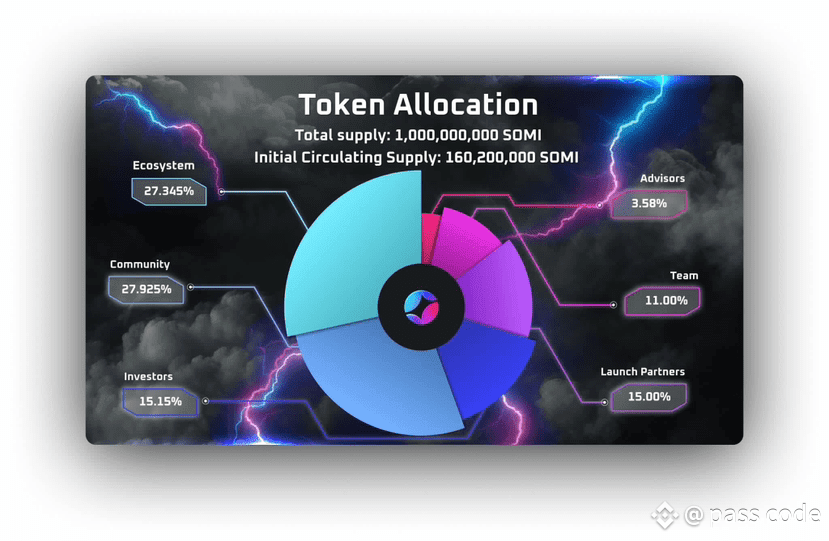
• Basic Attributes: The native token of the Somnia network, with a fixed supply of 1 billion tokens, supporting core economic activities such as network transactions, governance, staking, and participation rewards.
• Core Uses:
1. Staking: Validators stake to run nodes, and holders can delegate tokens to node providers.
2. Payment: All transactions on the network must use it to pay Gas fees.
3. Governance: It will be used for network decision-making processes in the future.
• Key Design Highlights:
◦ Deflationary Design: 50% of Gas fees are burned, and an increase in network usage will reduce the total supply, benefiting long-term holders.
◦ Gas Discount Mechanism: The more gas a contract consumes, the higher the throughput (over 400 TPS enjoys a 90% discount), and the lower the unit Gas cost, making it cheaper under load.
◦ Time-Shared Storage: Supports permanent/temporary storage, with short-term storage (e.g., 1 hour) enjoying a 90% discount, suitable for on-chain games and other scenarios.
◦ DDoS Protection: The price of Gas dynamically adjusts with block delays; when blocks exceed 95ms, validators can double the Gas price, significantly increasing the cost of attacks. @Somnia Official $SOMI #Somnia @Somnia Official
• Basic Attributes: The native token of the Somnia network, with a fixed supply of 1 billion tokens, supporting core economic activities such as network transactions, governance, staking, and participation rewards.
• Core Uses:
1. Staking: Validators stake to run nodes, and holders can delegate tokens to node providers.
2. Payment: All transactions on the network must use it to pay Gas fees.
3. Governance: It will be used for network decision-making processes in the future.
• Key Design Highlights:
◦ Deflationary Design: 50% of Gas fees are burned, and an increase in network usage will reduce the total supply, benefiting long-term holders.
◦ Gas Discount Mechanism: The more gas a contract consumes, the higher the throughput (over 400 TPS enjoys a 90% discount), and the lower the unit Gas cost, making it cheaper under load.
◦ Time-Shared Storage: Supports permanent/temporary storage, with short-term storage (e.g., 1 hour) enjoying a 90% discount, suitable for on-chain games and other scenarios.
◦ DDoS Protection: The price of Gas dynamically adjusts with block delays; when blocks exceed 95ms, validators can double the Gas price, significantly increasing the cost of attacks. @Somnia Official $SOMI #Somnia @Somnia Official
What is Mitosis
In traditional DeFi, the positions of liquidity providers (LP) are usually in a "static and unavailable" state once deposited, and high-quality yields are often seized by large capital through private placements. Mitosis solves this problem through "programmable liquidity": users deposit assets into multi-chain vaults, receive representative hub assets (Hub Assets) on the Mitosis chain, and then deploy them into yield opportunities to obtain tradable position tokens. Therefore, positions are no longer "locked" but can be split, transferred, mortgaged, or combined with other strategies.
Specifically, Mitosis divides yield participation into two standard paths: EOL (ecosystem-owned liquidity), governed by community-driven unified distribution; and Matrix, which functions similarly to a "strategy whitelist," allowing users to join under preset terms. Each path issues miAssets/maAssets as holding receipts and unifies profits, losses, and additional rewards through settlement. @Mitosis Official $MITO #Mitosis @Mitosis Official
In traditional DeFi, the positions of liquidity providers (LP) are usually in a "static and unavailable" state once deposited, and high-quality yields are often seized by large capital through private placements. Mitosis solves this problem through "programmable liquidity": users deposit assets into multi-chain vaults, receive representative hub assets (Hub Assets) on the Mitosis chain, and then deploy them into yield opportunities to obtain tradable position tokens. Therefore, positions are no longer "locked" but can be split, transferred, mortgaged, or combined with other strategies.
Specifically, Mitosis divides yield participation into two standard paths: EOL (ecosystem-owned liquidity), governed by community-driven unified distribution; and Matrix, which functions similarly to a "strategy whitelist," allowing users to join under preset terms. Each path issues miAssets/maAssets as holding receipts and unifies profits, losses, and additional rewards through settlement. @Mitosis Official $MITO #Mitosis @Mitosis Official
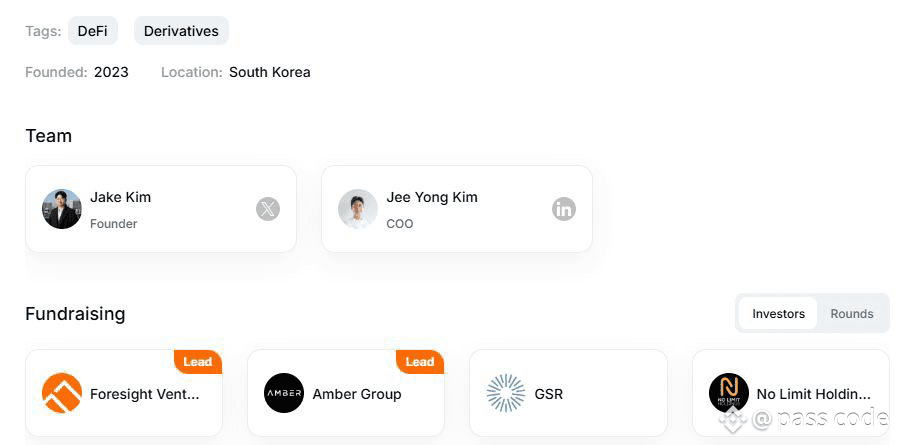
Dolomite is a decentralized currency market and decentralized exchange, currently located on the Arbitrum Layer 2 network. Dolomite provides a capital-efficient platform that allows users to optimize the returns on idle assets through margin lending, providing liquidity, and leveraged yield farming. It is used for blockchain trading while directly rewarding users instead of charging high fees.
Dolomite is a DeFi platform primarily focused on lending, initially established on Arbitrum, and later expanded to multiple blockchains including Berachain, Mantle, Polygon zkEVM, X Layer, and more. However, currently, out of its approximately $800 million total value locked (TVL), $740 million is concentrated on Berachain. Currently, Dolomite is the third-ranked protocol by TVL on Berachain, only behind Infrared Finance and Kodak. The protocol supports over 32 types of collateral assets and integrates with multiple DeFi platforms such as Harvest Finance, FalconX, Chainlink, and The Graph. The project successfully raised $2.5 million in May 2023 from Draper Goren Holm, NGC Ventures, and other funds. Dolomite is transitioning to a DAO model to enhance community governance and operational transparency.
@Dolomite #Dolomite $DOLO @Dolomite
Dolomite is a DeFi platform primarily focused on lending, initially established on Arbitrum, and later expanded to multiple blockchains including Berachain, Mantle, Polygon zkEVM, X Layer, and more. However, currently, out of its approximately $800 million total value locked (TVL), $740 million is concentrated on Berachain. Currently, Dolomite is the third-ranked protocol by TVL on Berachain, only behind Infrared Finance and Kodak. The protocol supports over 32 types of collateral assets and integrates with multiple DeFi platforms such as Harvest Finance, FalconX, Chainlink, and The Graph. The project successfully raised $2.5 million in May 2023 from Draper Goren Holm, NGC Ventures, and other funds. Dolomite is transitioning to a DAO model to enhance community governance and operational transparency.
@Dolomite #Dolomite $DOLO @Dolomite
Plume is a fully integrated modular chain focused on RWAfi. They have built the first modular, composable RWA-focused EVM-compatible chain aimed at simplifying all types of onboarding through native infrastructure and unified RWAfi-specific features. Plume is building a composable DeFi ecosystem around RWAfis, featuring an integrated end-to-end engine and a network of infrastructure partners for builders to plug and play.
The Plume team is composed of professionals with extensive backgrounds in areas such as RWA, ensuring a comprehensive approach to achieving Plume's success. Team members come from Coinbase, Robinhood, LayerZero, Binance, Galaxy Digital, Scale Venture Partners, dYdX, and several other industry-leading companies. The core team is as follows. @Plume - RWA Chain #PLume $PLUME
The Plume team is composed of professionals with extensive backgrounds in areas such as RWA, ensuring a comprehensive approach to achieving Plume's success. Team members come from Coinbase, Robinhood, LayerZero, Binance, Galaxy Digital, Scale Venture Partners, dYdX, and several other industry-leading companies. The core team is as follows. @Plume - RWA Chain #PLume $PLUME
Log in to explore more content