


To enter the cryptocurrency world, USDT (Tether), or abbreviated as 'U coin', has become the first stop for investors venturing into cryptocurrency. As one of the most widely used stablecoins, USDT is pegged at a fixed value of 1:1 to the U.S. dollar, serving a function comparable to 'U.S. dollars' in the real economy.
Despite USDT having faced multiple controversies regarding transparency and reserve assets, it has still demonstrated high stability amidst large-scale market fluctuations in the past. While USDT is not 'actual U.S. dollars', it has nonetheless earned high trust from investors, making it one of the most liquid stablecoins in the market. Many cryptocurrency trading platforms, including Binance, use USDT as the primary medium for pricing and exchanging.
However, is there no risk in purchasing USDT? Not really, because its ample liquidity makes it a tool for scammers to unlawfully profit. The market is filled with scams such as 'buying coins at low prices', 'quick arbitrage', or even scams disguised as 'love'. Investors must be careful to avoid falling into traps.
This article will comprehensively deconstruct the entire background of USDT, providing you with the most complete guide.
Quick start guide to Tether USDT.
What is USDT: Why can it be pegged to the U.S. dollar at 1:1?
Everyone will ask a question: physical U.S. dollars are issued by the U.S. government with a strict mechanism. So why does USDT from the cryptocurrency world have a value of 1:1 to the U.S. dollar?
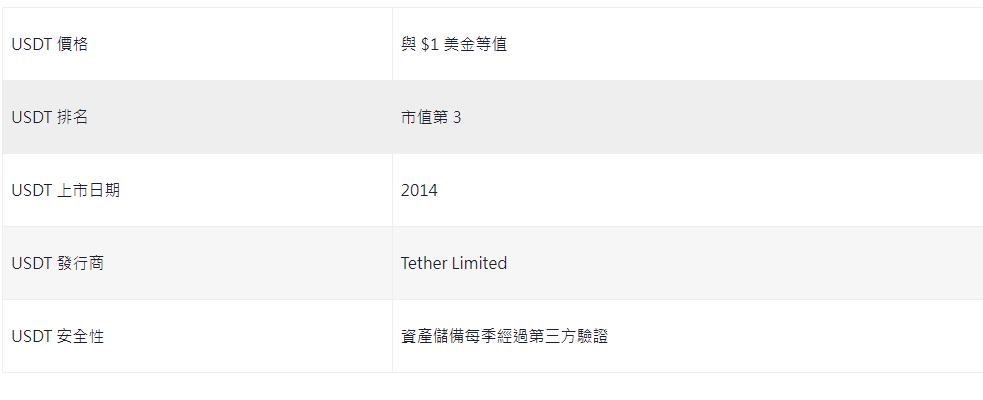
The answer is as follows: USDT (Tether) was first issued by Tether Limited in 2014, initially built on the Bitcoin network protocol.
To maintain its price stability, Tether's official information reveals that it supports the value level of USDT through various physical assets, including commercial paper, treasury bills, and cash, among other short-term liquid assets. At the same time, it commissions third-party accounting firms for audits every quarter and publicly releases related reports to prove that its asset reserves are indeed sufficient to support the circulating amount of USDT in the market.
As mentioned above, Tether is not without controversy; its held assets and the nature of those assets are also questioned by the media and analysts. However, since the launch of USDT, it has still gained high trust from market investors and is considered one of the most mainstream stablecoins.
Will Tether USDT collapse?
Another common question is whether USDT could collapse overnight, like other stablecoins.
The value mechanism of USDT is ultimately different from the U.S. dollar because we cannot assert that holding USDT is equivalent to holding U.S. dollars. However, since its issuance, USDT has maintained a high level of stability in its price, despite occasional short-term fluctuations, and it has rarely, if ever, experienced large-scale and deep decouplings.
USDT has not yet obtained legal status from major governments or regimes, but due to its high liquidity, it is considered an important trading tool in the cryptocurrency market. In recent years, some countries, including Thailand, have also limitedly recognized USDT as an 'asset' and even as a legal trading tool.
Tether continues to strengthen market trust through third-party audit reports, and this mechanism has not yet triggered a serious confidence crisis. Thus, USDT remains an important pillar in the cryptocurrency trading market.
Is Tether legal? There is no international common legal position and framework yet.
As for macro laws around the world, Tether/USDT is still in a gray area, defined according to local legal systems.
For example, in the United States, USDT has already fallen under the regulation of the SEC (Securities and Exchange Commission) and CFTC (Commodity Futures Trading Commission), but it has not yet reached the stage of 'legal currency' (i.e., there is no legal definition, nor is there a clear understanding of what deviates from legal definitions). However, looking at past attempts by the U.S. government to regulate and prosecute individuals related to cryptocurrency, U.S. courts generally agree to regard USDT as one of the circulating assets.
The situation in other countries is similar; most countries and regions have already recognized the importance of USDT in the market, especially in monitoring its role in money laundering transactions. However, most have not yet granted USDT legal status as currency, including the EU, Canada, and Japan.
Is USDT a scam: No, but it is often exploited by criminals.
USDT itself is a cryptocurrency with stable trading value and is certainly not a scam, but precisely because of its decentralization and cryptocurrency nature, it often becomes a tool for scammers and criminals.
Cryptocurrency investors must also be aware of various scam methods when purchasing cryptocurrency.
The six most common methods of USDT scams:
Romantic scams on dating apps: This is the most common method: establishing a relationship through dating platforms like Tinder, Pairs, WooTalk, and then requesting USDT under the pretext of 'investment opportunities', 'urgent loans', or 'family illnesses'. This type of USDT transaction is not regulated by banks, making it difficult to trace and becoming the preferred currency for scams.
Fake exchange websites / fake exchange apps: Scammers replicate the appearance of well-known exchanges, leading users to deposit money or purchase fake USDT, and the transaction records are also just fabricated backend numbers, which cannot be actually withdrawn. They may even use Google ads to increase credibility, so users should avoid being misled and should use authoritative websites like Coinmarketcap to confirm authenticity.
Fake investment opportunities: Attracting investments with high returns, initially providing small rebates to create credibility, after victims invest more, the scammers will disappear directly or use 'account freezes' as a reason to extract additional guarantees. In fact, legitimate exchanges only charge a small fee for withdrawing USDT and will not have high withdrawal fees.
Fake staking / fake mining: Promising 8% to 12%, or even higher, 'guaranteed high annual returns' to lure victims into depositing USDT. In contrast, the annual return rate for USDT staking at real exchanges is about 1% to 4%. Investors must be cautious and verify any investment plans with high returns.
Fake OTC (over-the-counter) / fake U merchants / fake USDT: Scammers sell USDT through platforms like Line and WeChat, claiming that exchange accounts can only accept real USDT, and then require sellers to directly transfer to the exchange account. Before engaging in OTC/P2P transactions, users should first look for reputable platforms and verify the correct USDT contract address (TRC-20, ERC-20).
Fake giveaways / fake free USDT: Using various reasons such as 'giving away cryptocurrency' or 'winning a prize' to attract users to click, which may lead to phishing websites, malicious links, or contain toxic contract authorizations. The goal is to steal exchange account passwords or assets within cryptocurrency wallets.
Looking at the current cryptocurrency scams, the methods used by scammers are often 'emotional fraud' or 'investment scams'. Regardless of who it is, if someone suddenly asks you to pay or transfer USDT, investors must thoroughly examine the other party's background to verify the possibility of fraud.
Actual cases of the six types of USDT scams:
USDT scam method 1: Fake exchange websites, fake exchange apps
Fake exchange appearances often look very real, resembling genuine cryptocurrency exchanges closely, and may even have some functions for storing/ depositing and trading cryptocurrencies, luring victims into depositing real money or buying fake USDT.
But in fact, what you see from fake apps or fake websites are numbers that the other party can change at will from the backend. No matter how much money you seem to make in the fake exchange, it does not mean you actually possess that money, and you usually cannot withdraw it for real. Not only is it a false joy, but you also lose your principal.
These fake exchanges sometimes even buy Google ads to have their scam links show up as the first entry on the Google homepage or in the app download section, misleading users into believing that these fake exchanges are popular or reliable.
At such times, you can use authoritative cryptocurrency websites like Coinmarketcap to confirm the size and security of exchanges.
Additionally, there is a type of fake cryptocurrency exchange interface that deceives users into logging in and obtaining their account passwords, then stealing assets. Therefore, besides confirming the authenticity of the exchange, it is also essential to ensure that you are using the correct exchange website/app.
USDT scam method 2: Fake investment opportunities to make money.
Fake investment opportunities sometimes come paired with fake exchange websites and apps, but there are also cases where social media is used, or physical stores open to lure victims into opening accounts for investment using USDT prepaid cards.
Initially, they may use your principal or money earned from other victims to pay you some reasonable interest, making you believe there is a real profit, further encouraging you to invest more. But no matter how much interest you receive, the amount you can withdraw is usually less than your principal. Ultimately, when you invest to a certain extent, the other party either disappears or tells you 'because of anti-money laundering, your account has been frozen' or 'is currently under illegal investigation', and you need to deposit more collateral or taxes to withdraw your money. The goal is to scam you out of more.
Please note that legitimate cryptocurrency exchanges only require very minimal and reasonable fees when withdrawing USDT, just like a bank transfer fee of 15 NT dollars, usually only requiring 1 to 2 USD in fees. Any claim of high withdrawal fees is a scam.
In such situations, although victims will be anxious to withdraw their original money, they must not put in more money, to avoid further losses.
USDT scam method 3: Fake staking, fake mining
Fake staking and fake mining usually come paired with fake exchanges. Legitimate cryptocurrencies like Bybit and Binance do indeed offer staking stablecoins to earn corresponding annual returns. However, stablecoins, due to their low price volatility, carry low risks, and the reasonable annual returns usually fall within the range of 1% to 4%. The concept is similar to banks using your fixed-term savings to invest and return the interest to you.
Many fake exchanges offer 8% or even 12% guaranteed high annual returns for fake staking and mining products, just to lure victims to actively deposit USDT into fake exchanges, stealing your USDT. In such situations, please refer to scam method 1 to confirm the authenticity of the exchange.
If you want to understand how to earn rewards by staking cryptocurrency on the real Binance exchange, feel free to read: Comprehensive guide on 7 ways to earn interest on Binance: Binance Earn / Defi / Liquidity Mining.
USDT scam method 4: Fake OTC, fake U merchants, fake coins
OTC, also known as over-the-counter trading, there are many so-called U merchants online who sell USDT to you through Line or WeChat. Whether through remittance or face-to-face transactions, after the transaction is completed, they will directly transfer USDT to your cryptocurrency wallet. These coins may appear genuine in the cryptocurrency wallet in terms of representation and quantity, but cannot be used or withdrawn because you bought fake USDT.
This situation is akin to receiving counterfeit cash, but in the cryptocurrency world, there is no mechanism to prevent counterfeiting; anyone with the relevant technology can issue their own cryptocurrency. Only by identifying the correct contract address can one ascertain the authenticity of the coin.
If you must engage in OTC, it is best to ask the other party to directly transfer to your exchange account (the exchange will only accept real USDT) or verify the correct USDT contract address to ensure you are buying the real coin.
・TRC-20 USDT address: TR7NHqjeKQxGTCi8q8ZY4pL8otSzgjLj6t
・ERC-20 USDT address: 0xdac17f958d2ee523a2206206994597c13d831ec7
However, the safest way to engage in over-the-counter trading is to use the zero-fee P2P services available on exchanges like Bybit, just like when using e-commerce platforms. After users place an order, the exchange will first hold the equivalent assets from the seller until it confirms that the user has indeed received the cryptocurrency, providing an additional layer of security.
Additionally, it is important to be aware that purchasing USDT from unknown sources online carries risks of involvement in money laundering cases; it is best to purchase through compliant channels such as exchanges: Bybit Exchange Introduction 2023 | Taiwan registration benefits, safety, reviews, fees, deposit and withdrawal tutorials.
USDT scam method 5: Fake giveaways, fake free USDT
Users sometimes see in Line groups or Telegram someone claiming they are quitting and want to give away all their remaining USDT, asking you to add their social media account for contact. Or they may tell you that you have won some prize and invite you to collect USDT rewards.
Regardless of what the other party sends you, 90% of the time, it will be a phishing link or a malicious file. Even more frightening are malicious contract authorizations. Regardless of which type, the goal is to steal your exchange account password or your cryptocurrency wallet assets; one careless mistake might even lead to your bank account password being stolen.
Originally thought to be money falling from the sky, but in the end, you are the one who sent money to the other party. Please be very careful when encountering similar messages.
USDT scam method 6: Tinder, Tantan, Pairs, WooTalk, Pikabu, Omi, and other dating app romance scams.
Cryptocurrency dating app romance scams are no different from other types of romance scams. Whether using 'investment profits', 'loan turnover', or 'family illness emergencies' as reasons, the ultimate goal is to extract something valuable from you, just that here it is replaced with USDT, which does not require bank accounts and is difficult to trace.
For more cases of cryptocurrency romance scams, you can refer to: Hong Kong & Taiwan Binance romance scam cases! Explanation of 6 common Binance scam methods!
Scammers exploit cognitive dissonance; before buying/sending USDT, stop and verify the correct channels for information.
If you encounter situations similar to any of the above scam methods, please stop operations immediately, do not invest any more funds, do not provide any personal information, and immediately report to the police or call the local fraud hotline for assistance.
Those truly interested in engaging with cryptocurrency and using it for financial investment should consider using reputable, securely verified, globally top cryptocurrency exchanges. Alternatively, join the daily cryptocurrency study Telegram group, allowing us to be your last line of defense against scams!
How to buy USDT most cost-effectively: Deposit fiat currency through local exchanges to purchase.
Finally, if you are sure that you have not encountered any of the above scams and are very clear about your purpose and motivation for purchasing USDT, feel free to read this guide on how to buy USDT: How to buy USDT in Taiwan? Can buying USDT in a bear market maintain stability?
In addition to the methods taught in the above articles, investors in Taiwan can also directly purchase USDT via credit card (exchange rates may vary) or use the P2P functions of major exchanges, including Bybit.
How to buy Tether USDT: Method 1, P2P currency exchange.
The simplest way to buy Tether is through the P2P/C2C system of different exchanges. For example, through the P2P platform on Bybit, you can exchange New Taiwan Dollars for USDT.
How to buy Tether USDT: Method 2, buy coins with a credit card
Investors can also directly buy coins with a credit card from exchanges, but be aware that buying coins with a credit card often incurs a significant fee, increasing costs.
How to buy Tether USDT: Method 3, use other cryptocurrencies for instant exchange
If you already hold cryptocurrencies like BTC/ETH, you can quickly exchange for USDT at exchanges through instant swaps.


