



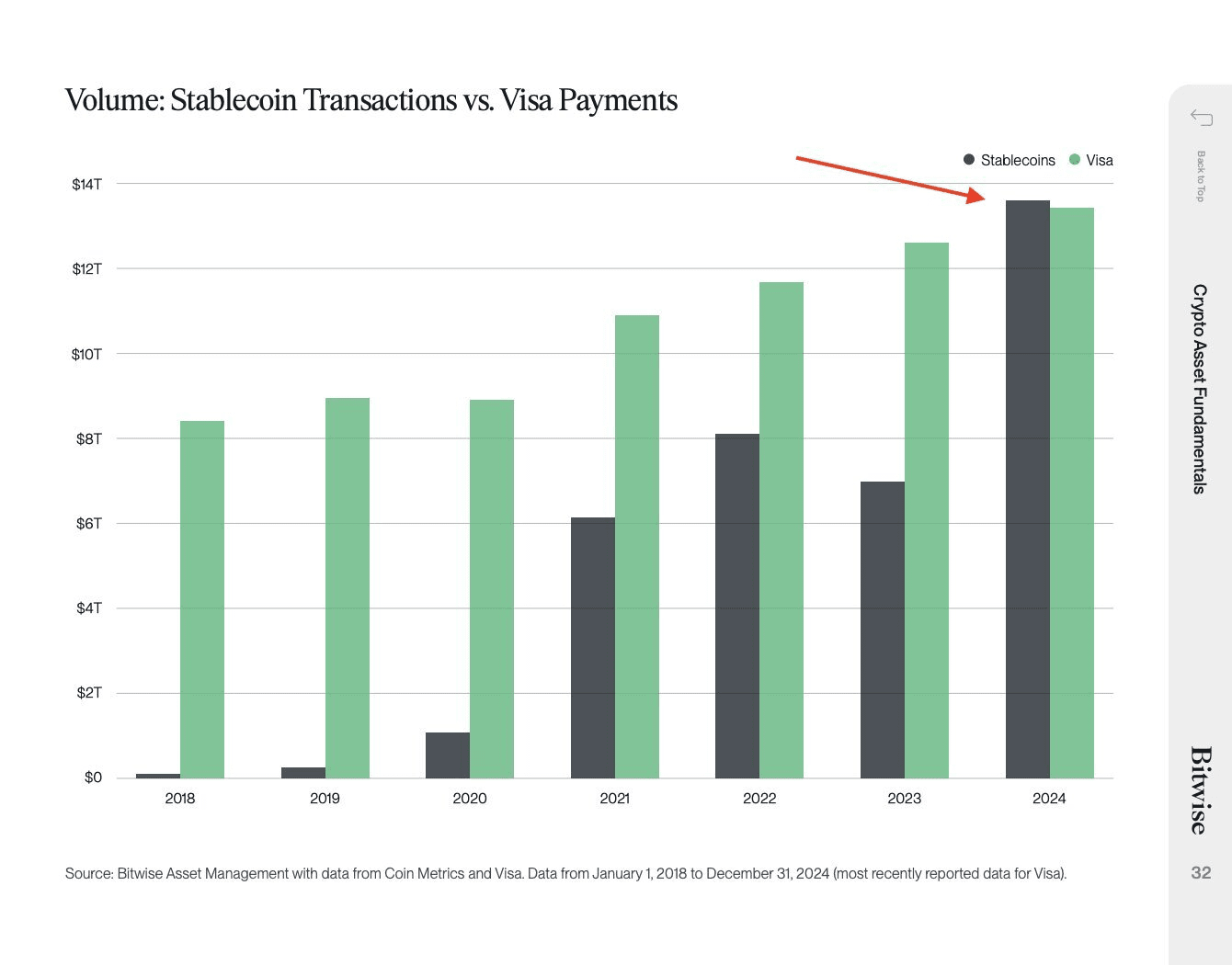
In a significant milestone, stablecoin transaction volume surpassed the total global transaction volume of Visa for the first time in 2024. A new report from Bitwise shows that stablecoins processed nearly $14 trillion in transactions last year, surpassing Visa's figure of $13 trillion. This marks a major shift in the global payment system.
What drives the growth of Stablecoins?
This record volume follows rapid growth, with stablecoin transactions doubling from around $7 trillion just a year prior. Stablecoins like Tether's USDT and Circle's USDC provide price stability unlike more volatile cryptocurrencies such as Bitcoin or Ethereum.
This stability, combined with low costs and high speed, makes stablecoins suitable for cross-border payments – a key growth area. They are proving particularly useful in regions with volatile local currencies, such as some areas in Latin America and Africa.
Major financial institutions are also showing increasing interest, driving the growth of the market. Well-known companies like PayPal, Fidelity, and Bank of America are currently exploring or actively using stablecoins.
Additionally, policymakers are currently considering stablecoins through two important U.S. bills, the GENIUS Act and the STABLE Act, both of which are actively being reviewed by Congress.
What is Ethereum's role?
Most of the activity of this stablecoin takes place on the Ethereum network. Although Ethereum itself has faced challenges with high fees and scalability, it remains a crucial backbone for these dollar-pegged digital assets.
Layer 2 scaling solutions like Arbitrum, Optimism, and Base are helping Ethereum handle this volume. These L2s, operating with Ethereum's core infrastructure, allow stablecoin payments to function efficiently and affordably on the network.