



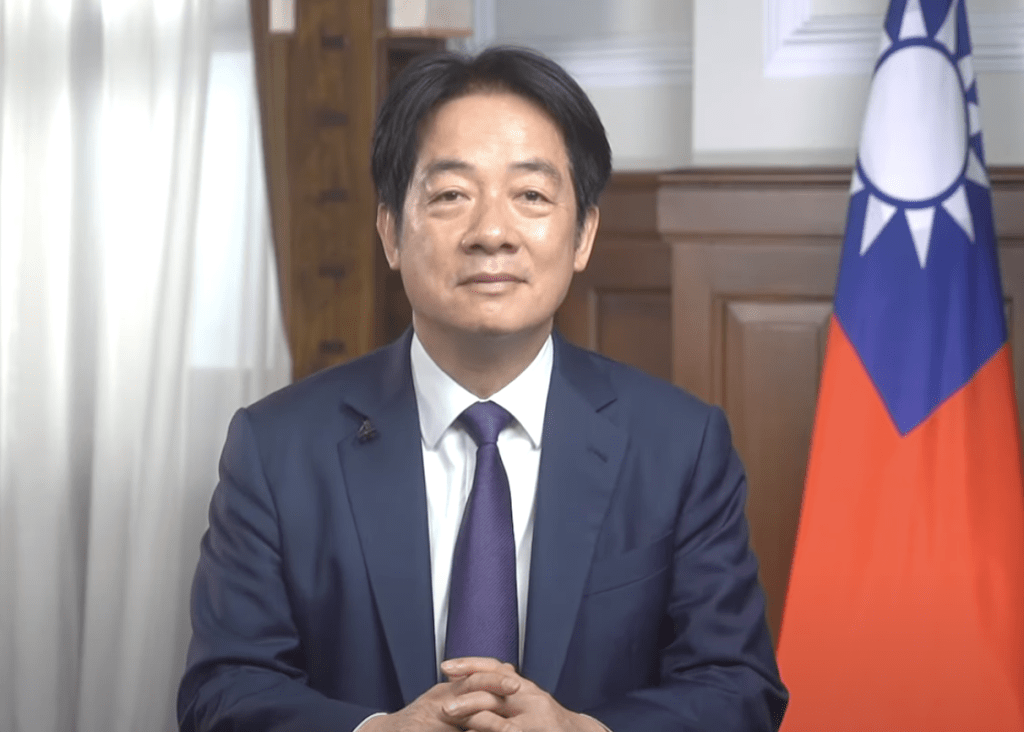
The US government recently imposed tariffs of up to 32% on several trading partners, including Taiwan, on the grounds of "reciprocal tariffs", which aroused great concern in China. President Lai Ching-te responded to this matter today (6) through a video conversation, proposing five major response strategies and emphasizing that the government will work with the private sector to stabilize the basic economic situation and turn the crisis into an opportunity. He also called on the government and opposition parties to unite, support the Executive Yuan's measures, and work together to open up broader economic opportunities for Taiwan.
The US will impose tariffs on heavy artillery, and Taiwan will inevitably be impacted
Lai Ching-te pointed out that the United States has raised tariffs on many countries around the world in the name of "reciprocity", and Taiwan is no exception. Imposing a 32% import tax will pose a major challenge to Taiwan, which relies mainly on foreign trade. Countries have successively responded and even introduced retaliatory measures, and the international economic and trade situation may undergo drastic changes.
"As an economy that is highly dependent on exports, Taiwan is struggling in the face of this wave of shocks and must respond carefully and proceed step by step," President Lai reminded the public to remain vigilant to the situation, but at the same time stressed that there is no need to panic.
Taiwan-U.S. trade overview: ICT products support half of the trade
Although Taiwan's exports to the United States account for as high as 23.4%, the president said that about 65.4% of them are information and communications technology and electronic components, which are highly competitive, reflecting that Taiwan's economy remains resilient. He believes that if the government and the public work together, there is still a chance to reduce the impact.
He further clarified that Taiwan has no plans to implement retaliatory tariff measures against the United States, nor will it change the established direction of Taiwanese companies' investment in the United States, but Taiwan will actively seek negotiation opportunities to illustrate its importance in the U.S. economic system.
Five major response strategies are launched, and the government is responding in all directions
1. Negotiate for tariff improvements and form a high-level team to strike
The government has formed a negotiation team led by Vice Premier Cheng Li-jun, which includes representatives from the National Security Council, the Office of Economic and Trade Negotiations, and industry, government, and academia. The team will work toward "zero tariffs" for both sides in accordance with the framework of the U.S.-Canada-Mexico Free Trade Agreement.
At the same time, the government has also put forward a large list of actions to reduce the trade deficit by expanding purchases from the United States, including agricultural products, energy and military equipment. Taiwan's cumulative investment in the United States has exceeded US$100 billion, creating approximately 400,000 jobs. In the future, it will also promote the two-way integration of the "Taiwan Investment in the United States Team" and the "US Investment in Taiwan Team."
In addition, eliminating non-tariff trade barriers, responding to US concerns such as high-tech exports and laundering of origin issues are also key tasks of this negotiation.
2. Launching an industry support program, with small and medium-sized enterprises receiving priority
The government will launch an "Industry Support Plan" for traditional industries and small and medium-sized enterprises affected by the new tariffs. The Executive Yuan has recently announced a plan covering nine aspects and 20 measures to provide immediate and precise assistance to help industries upgrade and transform and enhance their competitiveness.
3. Launch a mid- to long-term economic development blueprint and build an AI smart island
In the face of global supply chain restructuring and emerging technological trends, the government is simultaneously planning medium- and long-term economic strategies. In addition to strengthening cooperation and expanding markets with friendly countries, Taiwan will also leverage its strengths in semiconductors, IC design, and information and communications technology to create an "artificial intelligence island" and comprehensively develop application industries such as smart manufacturing, big health, and next-generation communications, driving Taiwan towards a smart and sustainable new economic era.
4. Shaping a new "Taiwan + 1" economic layout and strengthening cooperation with the United States
President Lai proposed adjusting the national economic strategy, upgrading "based in Taiwan, deployed globally, and marketed worldwide" to "based in Taiwan, deployed globally, strengthened in the United States, and marketed worldwide", making good use of the opportunity of supply chain transfer to assist Taiwanese companies in adjusting their overseas layout, strengthen ties with the US industrial chain, and deepen Taiwan-US cooperation.
Domestically, the government will continue to improve the investment environment, address pain points such as water, electricity, land and manpower, and encourage companies to increase investment and stay in Taiwan.
5. Launch the "Industry Listening Tour" to hear the voices of enterprises
In response to the concerns and challenges of the industry, the President and the Executive Yuan team will launch an "Industry Listening Tour" to visit various regions and industries to understand their real needs and adjust policy content in real time to ensure that the response measures hit the mark.
To turn crisis into opportunity, the president calls for unity and support from both sides of the aisle
President Lai finally emphasized that Taiwan has gone through challenges such as the energy crisis, the Asian financial crisis, the global financial tsunami, and the epidemic, and has turned crises into opportunities each time because of the unity and cooperation between the government and the people. He called on all sectors of government and opposition to support the Executive Yuan's policies and work together to build a more resilient and competitive Taiwanese economy.
"Let's work together!" Lai Ching-te made a heartfelt appeal to the people, hoping that this battle would not only be the beginning of a challenge, but also a new opportunity for Taiwan's economic upgrading.
This article Facing the challenge of the US imposing a 32% tariff, Lai Ching-te puts forward five strategies to stabilize the economic situation first appeared in Chain News ABMedia.