


Trump released a major tariff bomb in the early morning Beijing time.
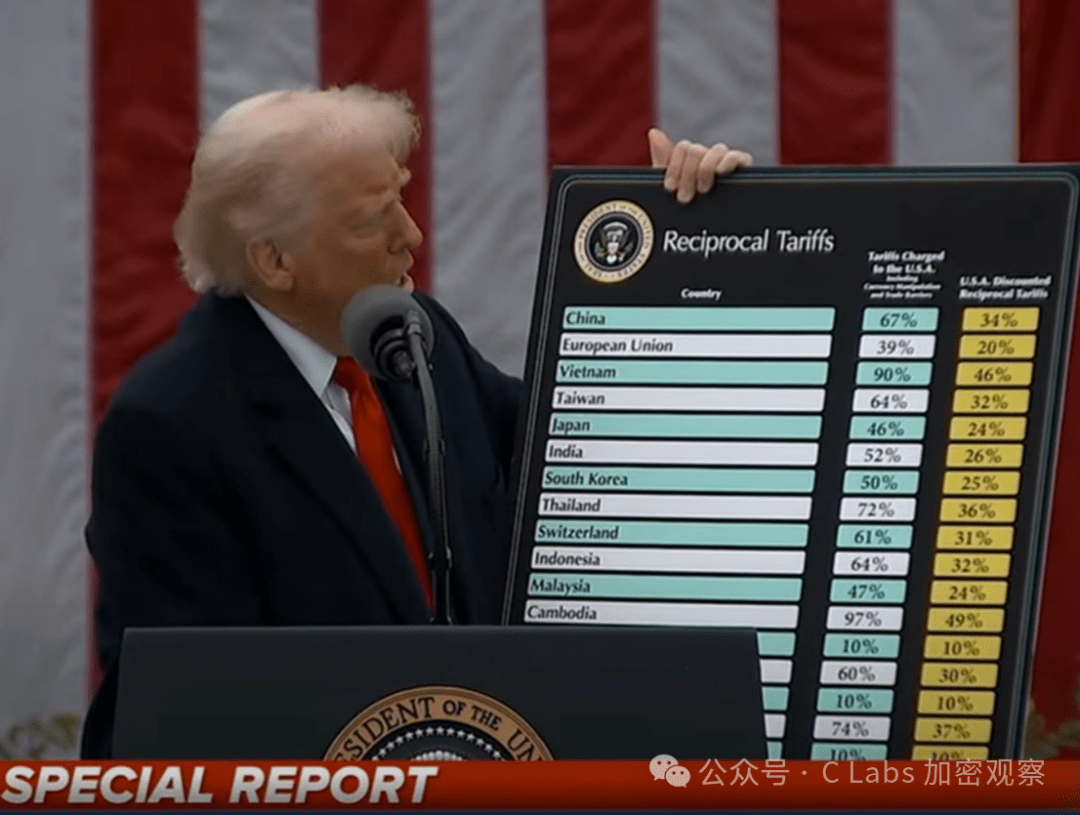
Previously, he focused on the three countries of China, Canada, and Mexico, and now he has finally turned his attention to the whole world: stating that he will impose taxes on the entire world!
The specific plan is as follows:
1. Implement a 10% base tariff on all countries, effective April 5.
2. For countries with high tariffs to the U.S., implement a '50% reciprocal tariff', effective April 9.
According to Trump's calculations, the tariffs for various countries are as follows:
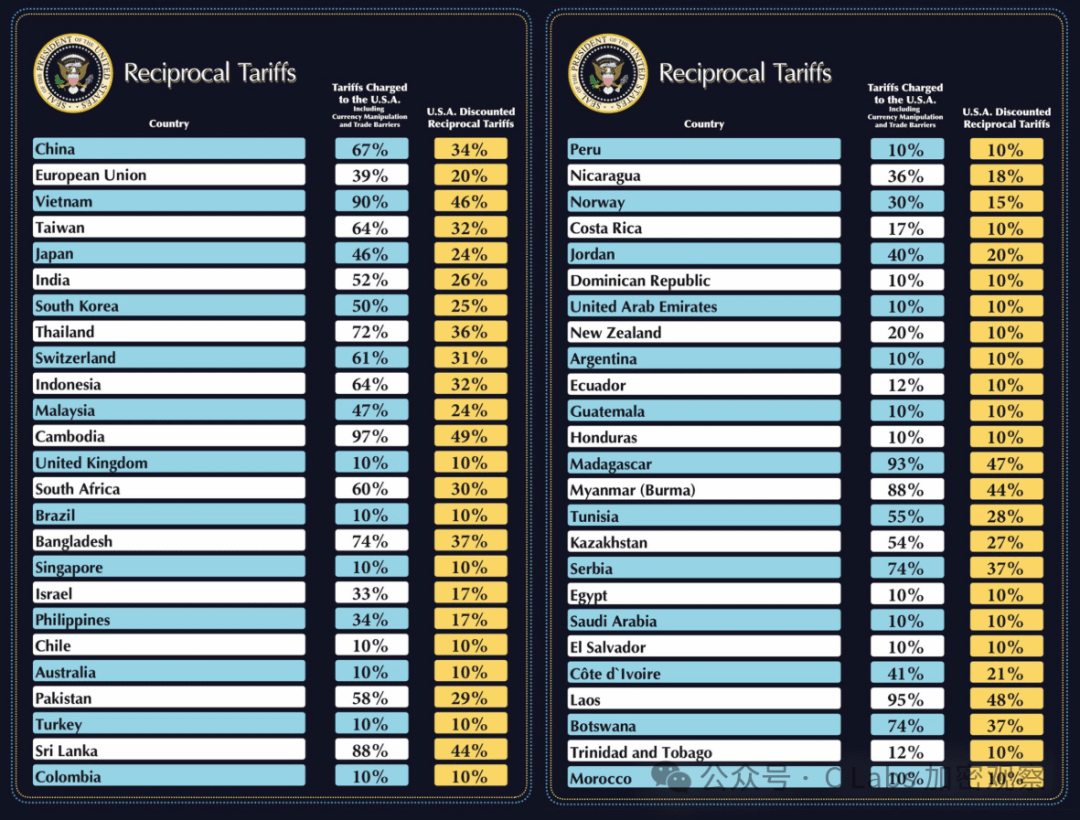
Everyone is definitely most concerned about China, and we don't know what algorithm Trump used to calculate China's tariff to the U.S. at 67%!
This algorithm may be used:

Trump has already imposed tariffs on China twice during his current term, making the base tariff from the U.S. to China 30%; during his previous term, he also levied tariffs on certain goods, so the total tariffs from the U.S. to China have reached around 34%.
Thus, Trump concluded that China's tariff to the U.S. is 67%, which is likely calculated by multiplying the U.S. tariff rate on China by 2, thereby portraying China's high tariffs to justify the U.S.'s reciprocal measures.
It is said that this 34% is an additional increase on top of the previous rates, indicating a trend to severely impact the Eastern powers!
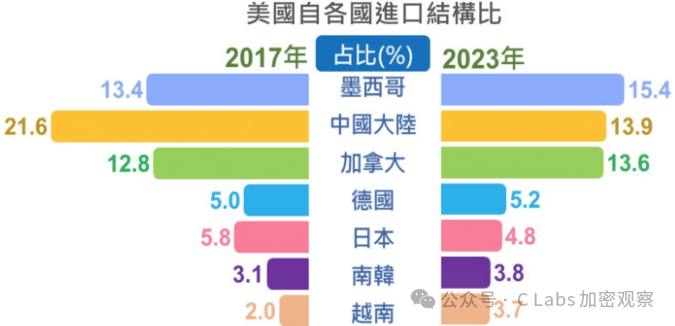
Moreover, the global reciprocal tariff table released by Trump does not include Mexico and Canada, the main countries in the trade war from previous months.
Currently, it seems that Trump's trade war against China, Canada, and Mexico may have reached a pause, as these three countries contribute nearly half of U.S. imports.
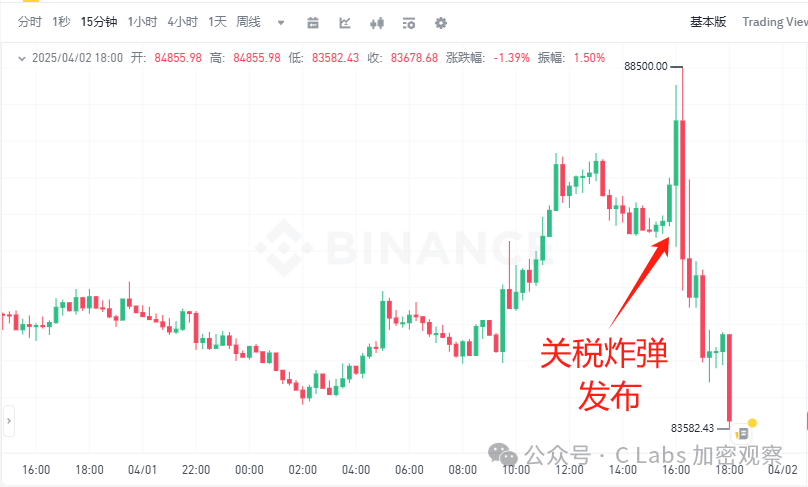
After the automatic Trump tariff bomb was released, the recovering trend of cryptocurrencies once again plummeted.
We mentioned this tariff bomb in a previous article (the cryptocurrency market is about to face a big shake-up! These two currencies can be a focus~)
But overall, the impact of this tax increase on cryptocurrencies is still short-term, as tariffs raise the value of the dollar (affecting other countries' currencies to depreciate), which may suppress the prices of Bitcoin and other cryptocurrencies in the short term.
Nevertheless, the U.S. is still printing dollars frantically, with the House just passing the federal budget framework for fiscal year 2025, which is expected to increase the deficit by another trillion dollars, pushing the deficit size over $20 trillion.
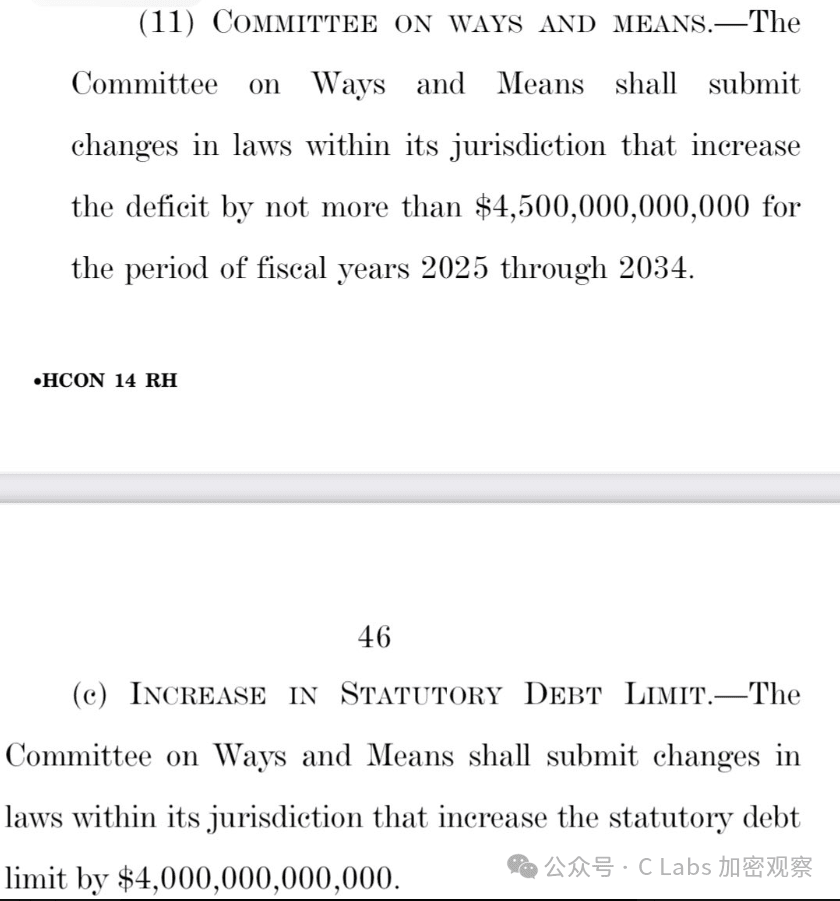
And through the so-called 'budget coordination mechanism', it allows for legislative increases in the deficit, making the U.S. government's deficit reach a maximum of $4.5 trillion.
It's worth noting that the U.S. government’s total revenue is only $6 trillion!
So in the long run, it is still beneficial for Bitcoin as a reserve asset.
It seems that after the U.S. imposes tariffs globally, Trump will begin a tax reduction wave domestically.
Because Trump's main economic policy is: 'Eliminate income tax, replace it with tariffs.'
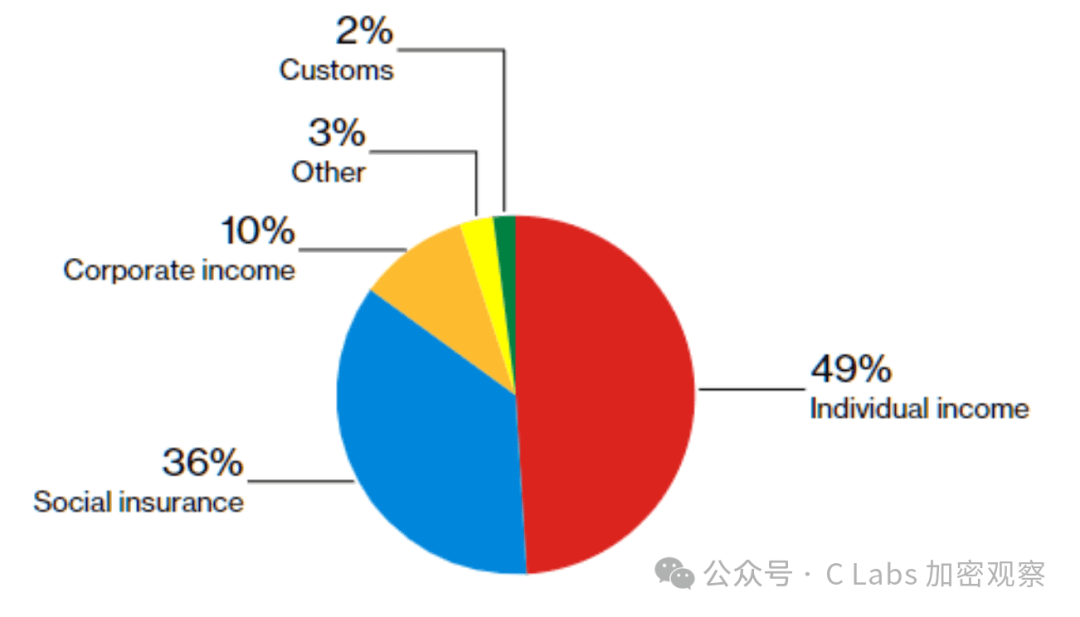
The TCJA signed during Trump's first term reduced individual income tax rates, increased the standard deduction, and adjusted corporate tax rates (from 35% to 21%), which at that time led to a massive increase in the U.S. stock market.
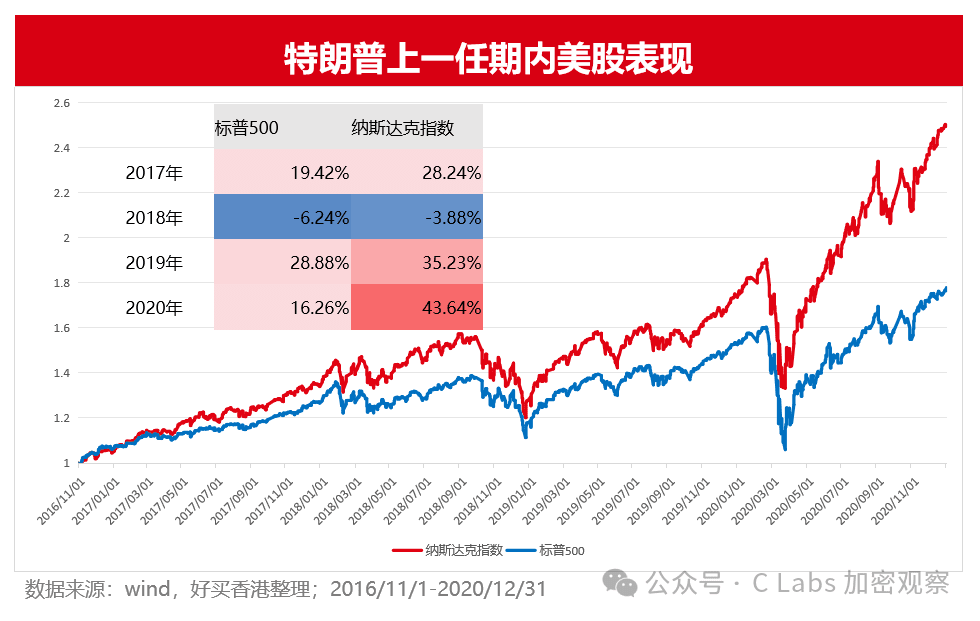
In this term, since Trump strongly supports crypto assets, it is believed that many U.S.-backed tokens will share the dividends from domestic tax cuts.