

Bitcoin is once again in the spotlight with the 'death cross'—a chart pattern that occurs when Bitcoin’s short-term moving average (like the 50-day line) crosses below the long-term moving average (like the 200-day line).
This pattern is often seen as a bearish signal. Moreover, there is a tariff issue set to take effect on April 2, which could affect market sentiment, including Bitcoin's performance. However, not everyone is selling off due to all the bad news.
Death Cross: A Bearish Signal or Just a Market Bottom Indicator?
Cryptocurrency analyst Evan Aldo explains that the death cross may not be as negative as you think. It could be a sign that Bitcoin is about to recover. Looking at the chart shared by Benjamin Cowen, he noted that this pattern has historically marked market bottoms, meaning Bitcoin could be on the verge of a major recovery.
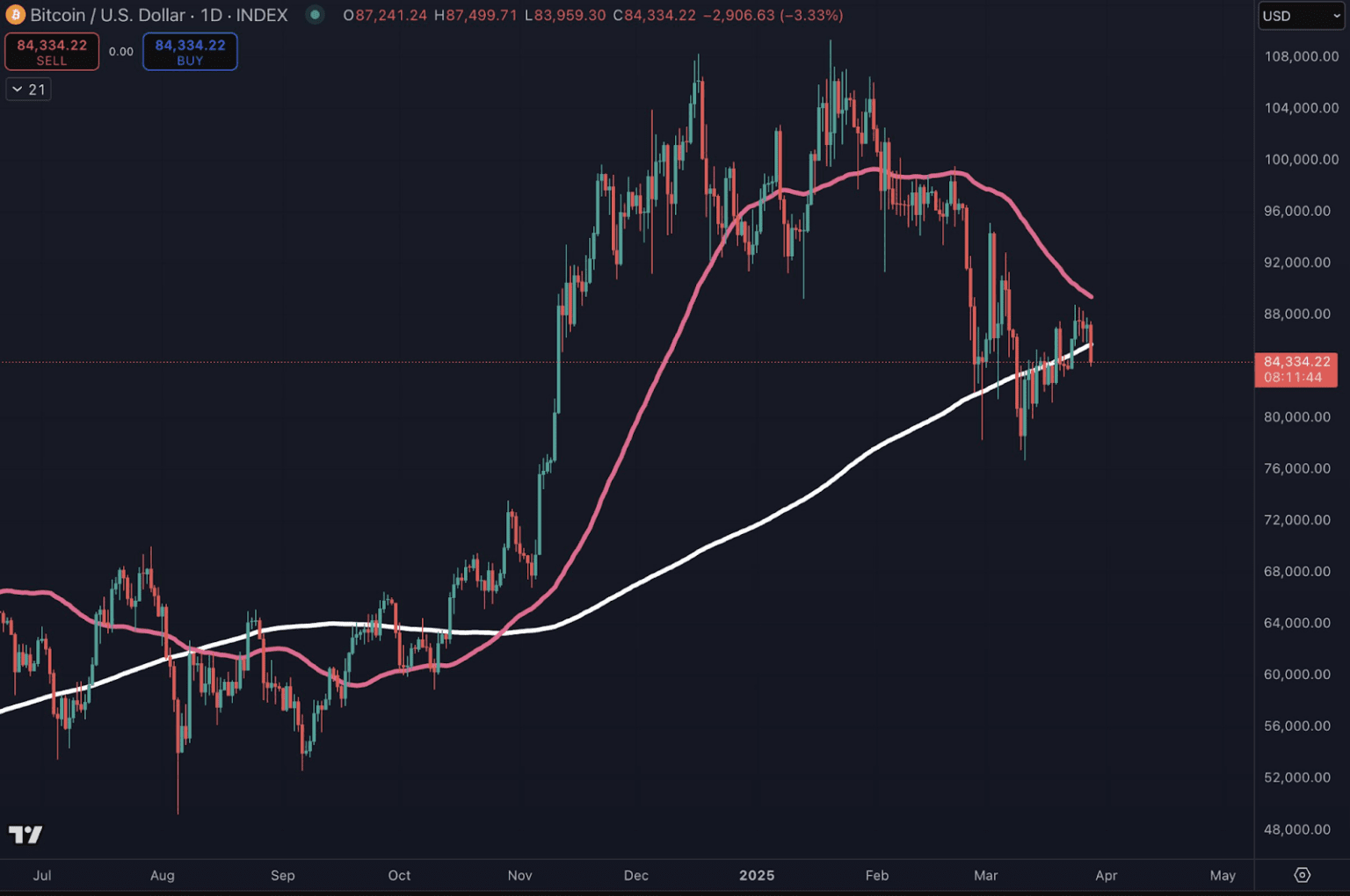
Even with the current downward pressure, he believes that if the price of Bitcoin drops to the $77,000 - $79,000 level, it will find significant support there.
A recovery is expected soon, with Bitcoin potentially reaching $119,000 to $120,000 this summer. By the end of the year, Bitcoin could reach highs of up to $150,000, driven by strong market momentum and investor interest.
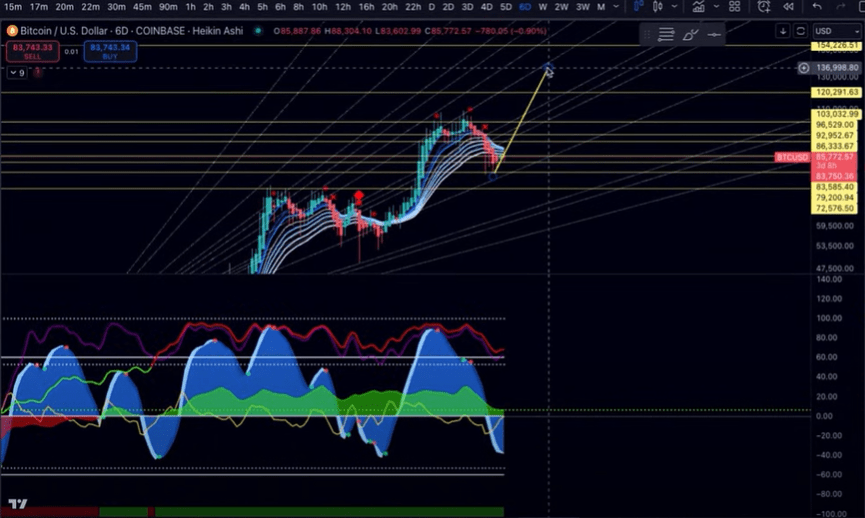
However, a drop below $75,000 would be a warning sign. The biggest concern would be if the price drops below $70,000, which would be a significant decline compared to previous market corrections after Bitcoin halving events. Historically, Bitcoin has adjusted around 30-35% after such events, so anything beyond that could signal deeper troubles.
Trump's new tariff plan shakes the market
The market was heavily impacted this Thursday after President Donald Trump announced new tariffs, including a 25% tariff on imported cars from Canada and the possibility of imposing tariffs on the EU if they cooperate against the U.S. economy.
Cryptocurrencies like Bitcoin, Ethereum (ETH), and Ripple (XRP) have dropped over 5%. Bitcoin, often seen as a hedge against traditional market risks, was not spared from the sell-off. Experts predict that the tariffs, aimed at boosting the U.S. economy, could actually stress the global market, leading to more volatility in both traditional assets and digital currencies like Bitcoin.