

The cryptocurrency market appears to be transitioning into a new era dominated by stablecoins, potentially marking the end of the traditional altcoin season. With a market capitalization exceeding $230 billion, stablecoins are increasingly being adopted and are becoming an essential pillar of cryptocurrency trading.
The unprecedented expansion of Stablecoin
According to the latest market data, the growth in stablecoin supply is not limited to giants like Tether (USDT) and Circle's USDC. Many emerging projects are focusing on creating their own stablecoins, whether synthetic or asset-backed, to generate liquidity for themselves.
Changpeng ‘CZ’ Zhao, founder of Binance, has highlighted the current trend as the number of stablecoin launches is exceeding that of altcoins. More and more startups are adopting stablecoin-based business models, seeking to create a robust decentralized financial ecosystem.
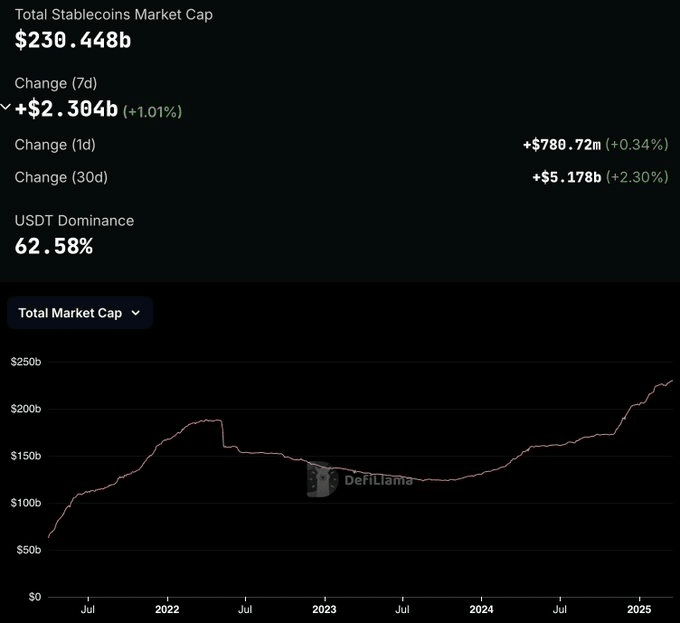
The total supply of stablecoins ranges from $229.4 billion to $236 billion, with USDT and USDC alone accounting for over $200 billion. Binance is also joining this move with FDUSD, a centralized stablecoin designed to inject liquidity into several major trading pairs on the exchange.
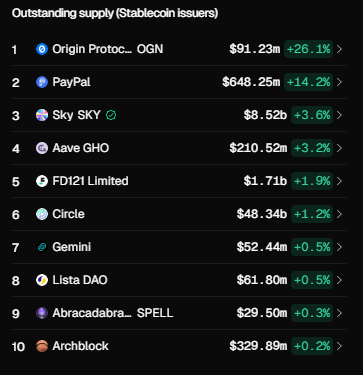
Fragmentation of the Stablecoin market
The stablecoin market can be divided into three main types:
Leading market currencies: USDT and USDC, dominating trading and liquidity in general.
DeFi stablecoins: DAI and USDe, integrated into various decentralized financial protocols.
New entrants: dozens of emerging stablecoins are still struggling to achieve significant liquidity.
With the explosion of new projects, a potential "stablecoin season" may emerge, increasing the adoption and diversification of these assets. However, this development poses challenges regarding stability and interoperability between different blockchains and trading platforms.
Risks associated with Stablecoin
Although they seem stable, stablecoins are not without risks. There are several forms of stablecoins depending on how they operate:
Over-collateralized stablecoins: Approximately $10.9 billion is currently locked in cryptocurrency-collateralized stablecoins. If the cryptocurrency market significantly declines, the value of these assets could plummet.
Algorithmic stablecoins: These are among the highest risk types. Currently, their total supply on Ethereum is just over $800 million, not including USDe from Ethena, which operates through algorithmic issuance and burning.
Synthetic stablecoins: They only represent a market worth $550 million due to high risk and a limited number of viable projects.
One of the biggest dangers lies in the repetition of a scenario similar to Terra (LUNA), where the excessive issuance of collateral-backed stablecoins overvalued led to a disastrous collapse.
Liquidity risk and accessibility
Another major issue is liquidity fragmentation. Many new stablecoins operate in isolated ecosystems, making it difficult to convert to other assets. Some projects require extended holding periods before allowing trading at a nominal price of $1, while others rely solely on limited trading pairs on DEXs, increasing the risk of losing liquidity.
Therefore, although stablecoins are expected to maintain stable prices, mass issuance does not guarantee they will be effectively adopted or successfully integrated into centralized or decentralized markets.
Dollarization of the cryptocurrency market and its consequences
Stablecoins have significantly contributed to the dollarization of the cryptocurrency market, as the dollar has become the dominant unit of account for transactions and trading. However, this dependence on the dollar exposes the cryptocurrency market to macroeconomic risks from the U.S., especially in the event of an economic crisis or U.S. debt volatility.
Chinese media has recently emphasized the spillover effects of U.S. financial risks on cryptocurrencies. Some are calling for the regionalization of stablecoins, particularly alternative currencies based on the Chinese Renminbi (RMB). However, the supply of RMB stablecoins remains limited, with only $2.9 million in circulation, while euro and British pound stablecoins are also not fully represented.
Conclusion: A new era for Stablecoin?
The rise of stablecoins marks a significant turning point in the cryptocurrency ecosystem. If their adoption continues to grow, a "stablecoin season" may emerge, profoundly changing market dynamics. However, this development will not be without challenges: risk management, regulation, and interoperability between different chains will be crucial issues to ensure a stable and sustainable ecosystem.
As new stablecoins emerge, we still need to be cautious. The recent history of cryptocurrencies shows that even assets deemed stable can be vulnerable to market cycles and structural flaws. Therefore, the biggest challenge is to ensure a balance between innovation and security to avoid past mistakes and build a resilient decentralized financial infrastructure.