

#美联储3月利率决议
The Fed's pause on this tightening action may provide the dovish signals that the market craves...
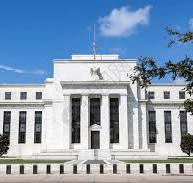
Financial markets are not only focused on the Fed's statement regarding future interest rate paths on Wednesday but are also vigilant about changes to the Fed's ongoing balance sheet reduction policy (known as 'quantitative tightening,' abbreviated QT).
During the COVID-19 crisis, the Federal Reserve purchased trillions of dollars in assets to support financial markets, causing its balance sheet to swell to nearly a record $9 trillion, after which the Fed began to slowly reduce its balance sheet.
Due to the implementation of the quantitative tightening policy, the Federal Reserve's balance sheet has shrunk to $6.8 trillion.
Currently, the Federal Reserve allows $25 billion in U.S. Treasuries to mature each month without reinvestment and allows $35 billion in mortgage-backed securities (MBS) to be removed from its books. However, economists indicate that only about $15 billion in MBS actually flows out of the balance sheet each month.
Last year, the Federal Reserve slowed the pace of asset purchases. Officials compared the current pace of balance sheet reduction to the process of a ferry slowing down as it approaches the dock.
In the minutes of the January meeting, Federal Reserve officials noted that they were considering pausing or slowing the balance sheet reduction until Congress raises the debt ceiling.
The unconventional measures taken by the U.S. Treasury to keep the debt below the debt ceiling, as well as the eventual unwinding of these measures, could cause volatility in the funding markets.
Earlier this month, New York Fed President Williams stated that pausing or slowing the balance sheet reduction is because 'the Fed does not want to accidentally reduce bank reserves below levels we expect,' as that could lead to market turmoil.
The suspense regarding this week's Federal Reserve meeting on balance sheet decisions lies in the fact that the market has not really reached a consensus.
Lou Crandall, Chief Economist at Wrightson ICAP, stated that he is unsure whether the Federal Reserve will decide to slow the pace of balance sheet reduction. He pointed out that Cleveland Fed President Harker had suggested that the Fed could respond to any signs of market stress with short-term reserve injections.
Crandall stated in a report to clients, 'We still believe that the market underestimates the duration that the Fed's quantitative tightening policy may last in the coming quarters.'
According to the Federal Reserve's latest survey in January, Wall Street firms believe the Fed will end the balance sheet reduction by mid-year.
Steven Ricchiuto, Chief Economist at Mizuho Securities, hopes the Federal Reserve will completely terminate its quantitative tightening policy on Wednesday.
He said, 'Ending the quantitative tightening policy makes sense before the economy has sufficient liquidity to maintain smooth operations in the reserve market.'
He also added, 'Although some members of the Federal Open Market Committee are not as concerned about this risk as we are, given that Trump's policies have already brought uncertainty, why take the risk of letting things get worse?'
In 2019, when the Federal Reserve first attempted a quantitative tightening policy, it had to change its policy direction due to a sharp surge in money market rates, which were seen as lacking liquidity.
Many economists believe that this time the Federal Reserve will adopt a more subtle policy.
Matthew Luzzetti, the Chief Economist for the Americas at Deutsche Bank, stated that he believes the Federal Reserve will pause the reduction of its balance sheet but will describe it as a technical move. Luzzetti mentioned that Fed Chair Powell will indicate that once the debt ceiling issue is resolved, the Fed intends to restart the plan.
Joe Brusuelas, Chief Economist at RSM, believes the Federal Reserve will not announce any adjustments to its balance sheet reduction plans before its next meeting in early May.