

Author | Álex López Translated by | Huo Huo Produced by | Vernacular Blockchain (ID: hellobtc)
2022 is an important year for the development of Play-to-Earn games. The influx of capital and users has created the glory of blockchain games, but the crypto bear market has also hit the price of GameFi hard, resulting in a large number of players leaving. Especially after the continuous blows of the collapse of Terra and FTX, the crypto market has hit the bottom.
Despite this, the development momentum of blockchain games has not diminished but strengthened. Recently, the data research platform DappRadar released its blockchain market report for January 2023. The report data showed that in January 2023, "blockchain games are still one of the fastest growing parts of the Web3 industry", with the average daily active unique wallet number (dUAW) reaching 839,436, and the proportion of the entire industry has further increased from 45.2% in December last year to 48%.
So can the blockchain game GameFi be an opportunity to turn the bear market into a bull market? How will GameFi develop in the future? (ps: Don’t forget to participate in the reward interaction at the end of the article and get a good book for the industry)
01 Entry threshold for crypto games
I would like to first talk about the entry barriers to crypto games.
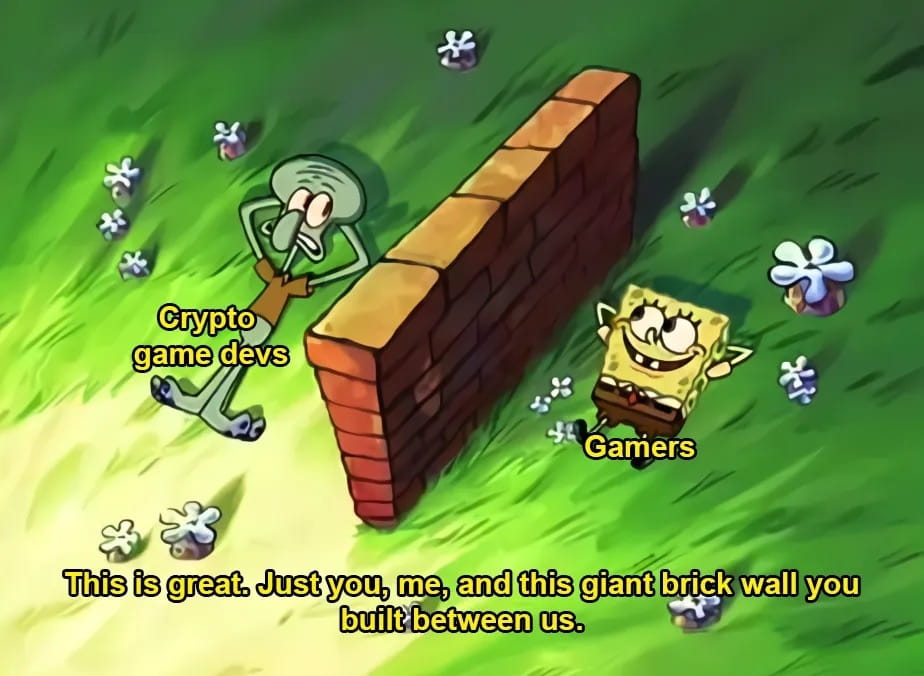
For most people, entering the crypto industry is not only difficult, but also requires a lot of capital. In the crypto industry, active assetization can effectively incentivize blockchain users. At present, the barrier to entry of capital into the crypto ecosystem is relatively low, and with just a few dollars, you can interact with almost any dApp. Of course, the cost will rise when you try to participate in other community-oriented activities-whether it is NFT or DAO, the more funds the activity requires, the more "prestigious" it is. In addition, you need to consider gas fees, poorly optimized contracts, and token swaps/locking in many cases. Of course, this assumes that you already have money on the chain. But in developing countries without good regulation, banks, or Internet infrastructure, a $5 gas fee is likely to account for a large part of your salary.
However, this is not the case with games. The gaming community is huge and very diverse, with people from all backgrounds disconnecting from the struggles of real life and enjoying a parallel virtual world. In this world, they can experience art, play sports, or just enjoy it as a social experience. The barrier to entry for playing games is getting lower and lower, and all you need is a smartphone, while enjoying the social experience. And the vast majority of people don’t need to pay a penny for the software. So the question for crypto game developers and the various VCs who fund them is: who are you catering to with your product?
02 Ideal Crypto Gamer (from a VC’s perspective)
From a VC’s perspective, the perfect gamer should have the following factors: love for games, technical knowledge, money and free time.
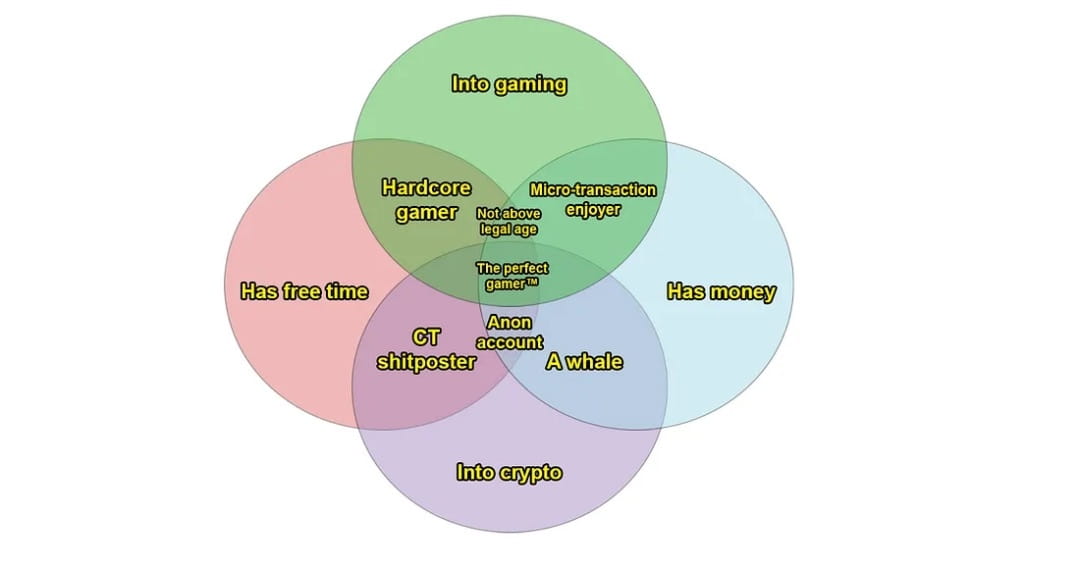
But what about the average gamer? The average person who calls themselves a gamer is a teenager with a home console, little money, and living off their parents’ income. They rarely buy games that are priced at $60 to $80 at launch, and mostly play free-to-play games. The average gamer also doesn’t have the technical knowledge, let alone the patience to learn it. The average gamer wants to turn on their console, launch their favorite game, connect with their friends via voice chat, and play the game. For them, assetization mainly comes in the form of buying in-game assets that allow them to buy skins or game items, or make their game characters more powerful. Now, let’s analyze the gamer that crypto VCs need: This person is first of all someone over 18 years old. Second, this person needs to have money on the chain to participate, and not just a little money, but a lot of money (referring to the money of the average gamer). Third, this person must be interested in the game. Fourth, they need to have free time to actually play that game.
In summary, they are catering to gamers above legal age who are crypto-savvy, tech-savvy, and have a lot of money and free time. But the number of such people is very small. Sure, you can extract maximum value from these few people who are truly into web3 gaming, but when they leave, the product is dead forever.
03 Imbalance in crypto games (from the player’s perspective)
Having explained what I think are the current challenges in actually getting someone to play crypto games, let’s now talk about the core design issues of crypto games. But first, I want to tell a little story before we get started.
Yesterday, I downloaded Fortnite. I played it a lot when Fortnite came out in 2017, and even more in the years since. I spent about $160 on in-game cosmetics. But the cosmetics I bought didn't give me any tactical advantage, nor did they make me stronger. Why, if they didn't make me better at the game or increase my chances of winning, would I spend so much money on a game that was free? Yes, those cosmetics gave me something, namely status, that can only be achieved with money, not with skill. Most of the ones I bought were expensive. When I killed another player, that player could see my skin, and I received a lot of angry messages from players. Of course, they weren't (entirely) angry that someone killed them with an expensive weapon, they were angry that someone was more skilled than them. However, in a lot of the angry messages, my cosmetics were mentioned. For me and everyone who plays Fortnite, the most important thing is to get value for money. Since money in real life doesn't determine the outcome of a game, but it can in this game, I bought a lot of cosmetics, and I think everyone else does too.
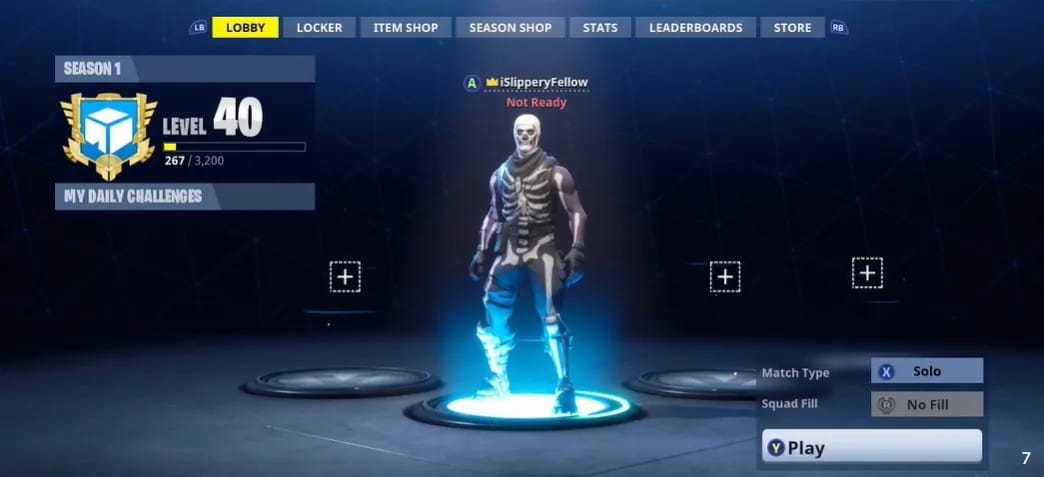
Fortnite's exclusive skins for 2018
In crypto games, this is not the case. Scarcity is added to make items more valuable, but that’s it, and it degrades the gamer experience by limiting access to certain aspects of the game. Not only that, but scarce items are not awarded to individual players with great skills and countless hours invested: they are permanently awarded to people with money and power, which is an even smaller number of people in the crypto industry. Of course, this represents an imbalance between the two main players in crypto games: active players of the game and crypto traders. Traders who make a living from playing the game extract value from people who play it purely for fun - what happens when players feel like they always lose at the end of the game? They quit. After all, they play the game for fun, why would they play if it’s not fun? When this happens, the only participants left are the traders who make a living from playing the game - and when the conditions are no longer good and all the capital has been extracted from those who exited earlier, the traders will also quit. Owning rare items in online video games is a sign of advancement and status, and it gives players a sense of accomplishment. The problem with rare items in crypto games is trying to make basic building blocks of a game available only to players with disposable income: for example, take Metaverse Land, a virtual piece of land represented by 1s and 0s on an immutable ledger, how can you artificially manipulate its scarcity limit? I’m not saying that land should be free, because after all, this is an attempt to recreate a virtual economy — but letting the cost be determined by traders and institutions in the free market makes your game simply inaccessible to the average player. If you want to provide a balanced experience for all participants, you need a monetary policy that aims to include inflation. Not inflation caused by VCs selling off their vested tokens, but inflation by game design, with prices more or less in line with the game developers’ intentions. This doesn’t mean that items and land should also have a fixed price (real-world economies have tried price controls and failed miserably), what I’m saying is that some kind of intervention is needed so that prices don’t get too outrageous.This is, of course, about items and commodities that are finite in the real world but potentially infinite in the virtual world. Don’t get me wrong: it can be fun to try to simulate certain aspects of the real world in video games, but it’s not fun when the simulation affects the virtual experience in a bad way. Items like wood and water should be infinite and available to any player without “investing” a penny. While our world is finite, the world of video games is not — things shouldn’t be scarce just to create value for VCs.
04 Issues with in-game encrypted assets
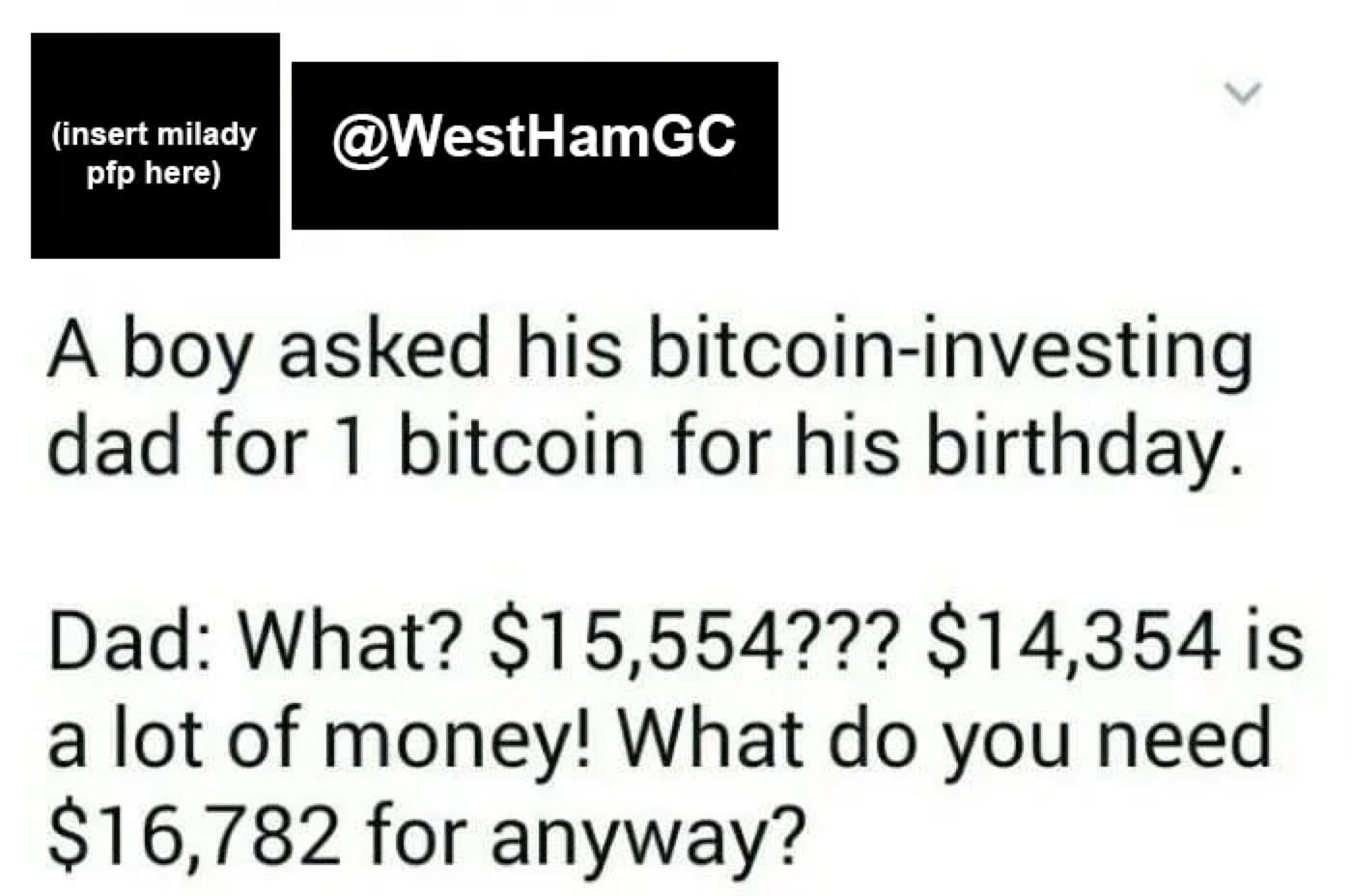
Translation: A boy asked his Bitcoin-invested dad for 1 Bitcoin as a birthday gift. Dad replied: $14354? ? ? That's a lot of money! What do you want so much money for? ?
Now, let’s talk about the problem that plagues all crypto games as far as I know: in-game assets. Let’s imagine a scenario that would most likely happen if (by some miracle) crypto games suddenly became mainstream overnight. Let’s say you have a son. He’s 12 years old and you just bought him a brand new gaming PC. You also bought him DeFi GODS (a blockchain game) and he’s having a blast. He’s been playing with his friends for a few days and so far so good, but he’s upset that his friends are making fun of him for having a default skin (remember, we’re talking about kids here). Your son comes to you in tears and asks for $25 to buy a skin from someone on the marketplace so he won’t be laughed at anymore. You reluctantly agree, swipe your credit card and get charged bank fees, gas fees, and LP fees (because you’re buying a decentralized token issued by the game developer). Anyway, your kid now owns the equivalent of $25 in $GOLD. A few hours pass and he tries to buy a skin from the in-game NFT marketplace — but to no avail. The price of the skin has gone up 2x, so he asks you for more money. You want to say no, but you can’t. So you buy more GOLD The price against the dollar halves, sellers are asking more, so… your kid asks you for more money. Do you realize how crazy this scenario sounds compared to the normal “swipe card, get coins, buy from the store” scenario? Even if the base price of the skin doubles, you don’t have to worry about the price of your asset against other assets tomorrow. But in the crypto world, short-term volatility is a big problem, and volatile crypto assets are not ideal for any economy. A currency should not be an investment, a currency should be seen as what it is - a price-stable currency.
05 Pricing Model: What did the gaming industry do right? What did the crypto industry do wrong?
Continuing on the topic of barriers to entry in gaming, I believe the gaming industry has been able to grow precisely because of its pricing model. Most AAA games are released at prices between $60 and (recently) $80. These prices have been the industry consensus since the 90s. Back then, AAA games were just technically harder to develop, but not as capital intensive as they are today. The tools we have today, combined with the ease of access to assets and information, make the working environment for video game developers much easier than it was in the 90s. So, if games are easier to develop than ever before, why do games cost more? The reason lies in the scope of the projects being undertaken. Today, video games are bigger, more vivid, and more realistic than ever before. So, if games are bigger and take longer to develop, why are AAA PS5 games released for the same price as SNES games? Don't the companies that produce them account for the past 30 years of inflation? But how do game developers maintain profit margins when the launch price of games relies on anachronistic prices, more than three decades from the 90s to today? The answer is simple: they started assetizing in-game items, like microtransactions, DLC (downloadable content) and loot boxes. Here are two examples of games released by the same publisher, with the same launch price and the same assetization strategy, but in the end one failed miserably and the other is still the number one selling game every year: I'm talking about FIFA and Star Wars Battlefront. Take FIFA as a case study, a game that relies on loot boxes to get better players (which can drastically change the outcome of a match) and has almost the worst skill grinding in all of gaming, and still sells millions of copies every year. Publisher EA wanted to repeat this model with one of the biggest IPs in history, Star Wars. Long story short, they released Star Wars Battlefront with powerful guns, power-ups and characters locked behind 700 hours of grinding or a cozy $20 in-game microtransactions (on top of the already full $60 game price), which made players and fans of the series crazy and angry, and subsequently did not receive a good response from the market.But if it works on FIFA, why shouldn’t it work on Star Wars Battlefront? The answer is that FIFA already has the strongest player base in the world. There are people who buy the latest console just to play the latest FIFA every year when it’s released, and these users don’t play any other games but FIFA. These people are the most casual type of gamers, and they don’t know any better about falling prey to a predatory assetization scheme that mimics gambling. The thing is, even if you spend $200 on FIFA microtransactions, you can’t sell them on the secondary market to get your (real) money back, nor can you transfer them to the new FIFA that’s released next year. And so on, gamblers gamble every year. Star Wars is a different type of game: it caters to a different type of gamer, the kind who is more committed to gaming as their primary hobby and willing to play more than one or two games a year. This kind of player hates unfairness, and they’re vocal about it. So much so that when EA tried to explain on Reddit why you had to spend more money to play Darth Vader in a game you already own, they were rejected, to the point that they now hold the record for the most downvoted reviews of all time. The game sold terribly, and the reviews were even worse. Most games released today come with in-game microtransactions, but these don’t affect the gameplay in a way that allows people with bigger wallets to outrank you simply because they have the biggest wallets. Most of these microtransactions are purely cosmetic. Games released today with “predatory” assetization schemes, like the Avengers games, Gotham Knights, Overwatch 2, etc., have all failed. There’s nothing wrong with adding microtransactions to full-priced games as long as they don’t affect balance. At the end of the day, cosmetics are vanity — and vanity isn’t necessarily something that’s essential to the core gameplay mechanics. In fact, there are plenty of free-to-play games that rely entirely on cosmetics to stay afloat, like Fortnite. This is where the crypto industry goes wrong: crypto developers, perhaps influenced by venture capital and their own greed, have adopted the crypto ethos of hyper-assetization, making everything cost money so they can fill their pockets through Ponzi schemes.Having items locked up by whitelisted NFT mints, secondary NFTs rising to stratospheric levels on the market, and people getting rich playing video games only to later see their “investments” collapse to zero. You can’t get people to play your game on the premise that they play your game — if you need more and more people every day to keep your tokens and games going, then when no one is there, it will collapse. This is what a “Ponzi scheme” looks like in traditional industries. If a crypto game is to succeed, it needs to be realistic in pricing and assetization. “Crypto was founded to give people more economic freedom,” it shouldn’t be hard to apply this concept to video games, but everyone who has tried has failed. Crypto has a stigma around centralization, and the most extreme forms of decentralization are praised — but video games don’t benefit from extreme decentralization, and there needs to be a balance between developer control over players, even more so in economies like crypto games are trying to create; otherwise, leaving the free market completely laissez-faire will disrupt pricing in a way that will evade most gamers. P2P trading should be encouraged, but the game should still provide enough services that someone starting from scratch can get to the top without spending a penny of their own money - either grinding countless hours or becoming a good trader. It's up to the developer how they release the game for $60-80 or for free, but they should be aware of predatory assetization mechanisms if they want to have a chance of success.
06 Possible Solutions
We discussed the barriers to entry, small audience, the imbalance caused by integrating gambling and speculation into games, artificial scarcity issues, volatility of game tokens, and wrong incentives and economic models that prevent ordinary players from participating. Next, I would like to propose some solutions, but kindly remind you that personal opinions are for reference only and do not represent 100% correctness.
Everyone should be able to play, not for wealth, but for fun. The solution to barriers to entry in gaming is simple: make the game accessible to everyone. By everyone, I mean: from whales with millions in crypto assets to Thai gamers who have never heard of Ethereum. Make the barriers non-existent by putting players on equal starting terms regardless of whether they have money or not. Not only that, but you also need to remove the technical barriers that come with custodial wallets. A few ways to achieve this are through social recovery wallets or centralized wallet systems. If players want to log in with their own wallets, the average non-technical user shouldn’t have to worry about that, and it shouldn’t be any harder than logging in with an email or Google account. Not only that, if the game is free, it should be truly free to play from start to finish. Either the game subsidizes every action worth recording to the blockchain (Validium L2 comes to mind, or something like L3s being developed by StarkNet), you run it on a centralized server, and you give the option to mint items on the blockchain once a user wants to trade on a secondary market outside of the game’s own internal market. Reducing friction on the technical side of blockchain-related stuff is critical to the user experience.
Balance between money investment and time investment Balance is not an easy task. Game developers have been trying to achieve balance for decades, but that doesn't mean it's an impossible task: it can be achieved in a way that makes all players more or less equal at the start of the game, depending on the individual skill of the player. A wealthy player shouldn't have to buy every high-powered tool, weapon or item from the start; requiring a minimum level of experience or completed levels before being able to use or trade certain items should be the norm, so that "free" players don't feel discouraged. However, you should try to limit P2P trading to a minimum; every item in the game should be able to be minted or obtained by anyone, no matter how much money they've invested - whether it's zero dollars or a thousand dollars. Don't tip the scales in favor of the top 1% just to squeeze as much value out of them as possible, because then you'll alienate free players, who basically come with the whales. Yes, legitimate investments should be able to be made in the game, like art, clothing items, bunks in prime locations, owning resources and certain items or tools. If players (or DAOs) want to build giant structures, they need to buy a lot of wood. Instead of manually chopping wood, they clear the floor of available wood on the market, making it more valuable. Players see that wood is scarce and valuable, so they start chopping and selling wood, after all it is infinite - you could say there is all sorts of arbitrage going on here. To give an example of an item as a legitimate investment/speculation tool: imagine there is a Charizard event coming up, smart players stock up on wood, knowing that Charizard will burn down the forest. When Charizard starts burning down the forest, the price of wood will spike for however long the developers think the event should last, and then when the event is over, the wood will go back to normal price. Almost like the real world, just without Charizard and other events that impact our limited resources.
Currency needs to act as a store of value, not a speculative tool If you buy a loaf of bread for $1 today, it will probably be $1 tomorrow. Of course, the price may not be the same over time due to inflation, but asset depreciation does not necessarily have to be without any benefits. Players need to always be confident that their assets are valuable and will not drop to zero tomorrow. A game cannot have an asset with the same value as the real world, and just making a wrapped stablecoin token and giving it another name is not only perfunctory and uncreative, but also makes it more difficult for developers to control the economy and issue rewards (fancy words for airdrops). So what I suggest is not a hard stablecoin, nor a volatile token. Olympus Protocol actually gives up some APY in favor of what is called range stability: OHM remains liquid, decentralized, and trades within a certain range. Such things can be done, but developers can control emissions, so that developers can not only benefit from it, but it is easier to control rewards and control supply. Who doesn't like good old quantitative easing? (*Olympus Protocol, which is responsible for issuing and managing the fully collateralized, algorithmic, free-floating stable asset OHM.)
How to generate revenue? You are creating a virtual economy where you can tax as much as you want and issue as many assets as you want before a revolution occurs. I suggest to impose a buying and selling tax on certain items in NPC and P2P transactions, the amount depends on the item and its rarity. This tax will be one source of revenue. Another source is the goods you create. That ever-expanding plot of land with random resources, let players buy the land from you for a (very small) price - the money does not come from the value of the individual plots, but from the quantity and taxes you collect. Another way to create a revenue stream is with decorations. You can issue paint for your decorations, player skins, clothes, etc. The item is first sold from your store to the player, then, people resell it and you get the tax. Not only that, but there will be some players who want to enter this new virtual economy. There should be no friction in any case where players want to do so - people are willing to pay below market price to mint your assets if it saves the hassle of creating a self-custody wallet and then transferring. In-game ads could be another way to generate revenue. As long as they are not displayed in an intrusive way, they can be a good source of revenue in the later stages of game development.
07 Summary
One of my minor complaints when it comes to crypto games is that most of them are unoriginal and repetitive. No one outside of the crypto community wants to play Ancient Crypto Gods: Tomb of Satoshi or Blockchain Game: The Legend of Vitalik. Please work on how you present your games to a general audience! I believe the industry can provide the much-needed metaverse-like experience that gamers crave, while still making it an attractive product for traders, casual players, and investors. I don't want to see crypto games fail, which is why I wrote such a long article examining the problems they have. Of course, my opinions are current and personal.
Article title: Why crypto games suck (and how to make them suck less) Article source: https://medium.com/@alexxslay/why-crypto-games-suck-and-how-to-make-them-suck-less-4dcb00a63674 Original author: Álex López Translator: Huo Huo