


Solayer is a re-stacking protocol in the Solana ecosystem. Through innovative means, users can participate in a decentralized validator network, contributing to the security and decentralization of the Solana ecosystem. Solayer plans to attract more developers and users to participate in ecosystem building through the incentive mechanisms of LAYER.
[Latest News]
According to official news, Solayer Foundation announced that the TGE claim for LAYER opened on February 11 at 20:00 and will last for 30 days until March 4, 2025, at 20:00. The official also stated that a hardware-accelerated SVM blockchain, InfiniSVM, will be launched later this year with testing and mainnet, along with more community incentive programs.

Project Introduction
Solayer is building InfiniSVM to scale Solana, a hardware-accelerated SVM connected via SDN and RDMA with a multi-execution cluster architecture that scales infinitely while maintaining atomic state, achieving 100 Gbps.
Solayer's goal is to enhance the performance of the Solana virtual machine through InfiniSVM technology, aiming to achieve millions of TPS (transactions per second) by 2025 to support large-scale applications.
Tags: Infrastructure, Layer1, LSD
Ecosystem: Solana
Established: 2024
Solayer Team and Funding
The Solayer team consists of blockchain technology experts, financial engineers, and ecosystem developers, with core members including:
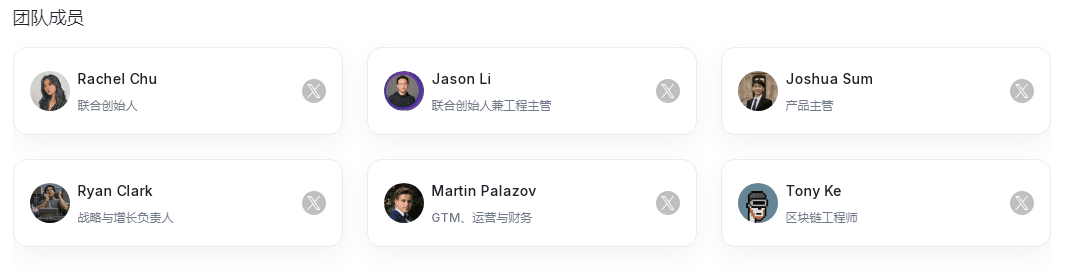
1. Rachel Chu: Co-founder of Solayer, previously a core developer at sushiswap.
2. Jason Li: Co-founder of Solayer/MPCVault. He holds a Bachelor's degree in Computer Science from the University of California, Berkeley.
3. Joshua Sum: Product Director at Solayer, co-founder of College DAO, previously a product manager at Treehouse, and Vice President of the Michigan Entrepreneurship Club. He holds a Bachelor's degree in Computer Science from the University of Michigan.
4. Ryan Clark: Head of Strategy and Growth at Solayer, previously the Chief Growth Officer at nftperp, and has worked at 1kx. He holds an MBA from the University of Texas at Austin and a Bachelor's degree in Psychology from the University of Notre Dame.
5. Martin Palazov: Works on GTM, operations, and finance at Solayer, previously the Growth Director at Astaria, co-founder of MetaQuants, and an analyst at Sygnum. He graduated from the University of St. Gallen.
6. Tony Ke: Security Engineering Director at FuzzLand, Blockchain Engineer at Solayer, previously worked at Microsoft. He holds a Bachelor's degree in Material Physics from South China Normal University and a Master's degree from the Chinese University of Hong Kong.
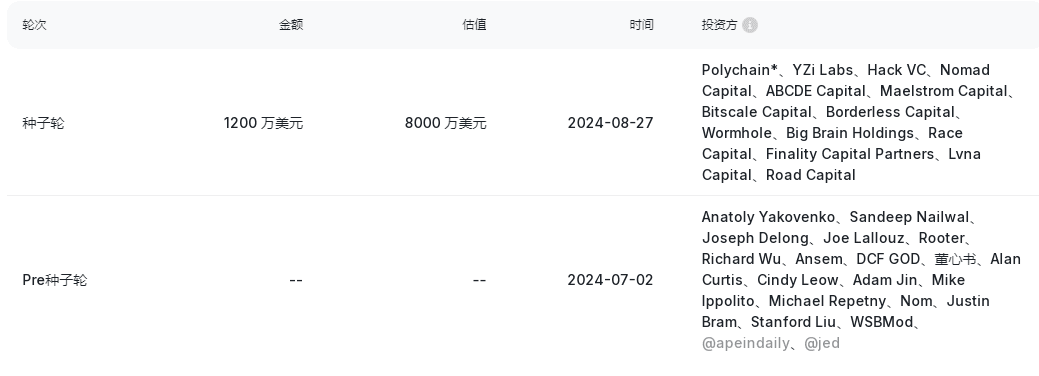
July 2, 2024: Solayer completes its Pre-seed round funding, the amount is undisclosed. Investors include Anatoly Yakovenko, Sandeep Nailwal, Joseph Delong, Joe Lallouz, Rooter, Richard Wu, and others.
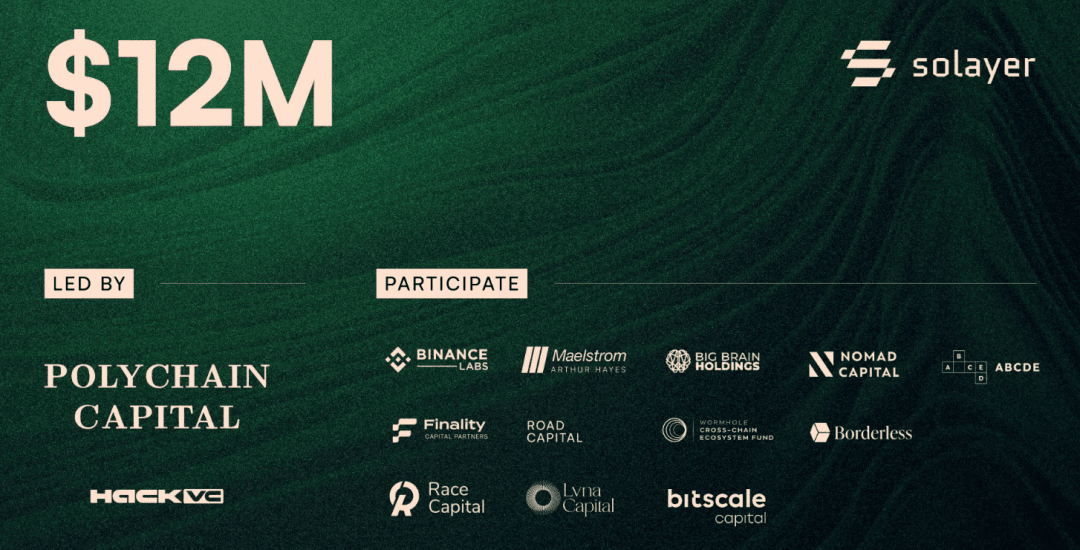
August 27, 2024: Solayer completes $12 million seed round funding with a valuation of $80 million. Polychain Capital led the investment, with participation from Big Brain Holdings, Hack VC, Nomad Capital, Race Capital, ABCDE, and Arthur Hayes' Maelstrom.
Advantages of the Solayer project
The key point of Solayer is not only to ensure the security of the Solana network but also to safeguard the security of other DeFi applications built on Solana. This shared security model brings several advantages:
Enhancing the security of DeFi applications: By leveraging Solana's robust security, Solayer ensures that DeFi applications on its platform inherit the same level of protection. This is crucial for users who are skeptical about entrusting emerging DeFi projects.
Improving scalability: Solana is known for its ultra-fast transaction speeds, and Solayer aims to maintain this efficiency for DeFi applications. By sharing resources and validator infrastructure, Solayer is expected to handle more transaction volume than independent DeFi protocols.
Providing developers with greater customization space: Solayer offers highly customizable DeFi application options for developers. They can allocate dedicated block space according to their needs, ensuring smooth operation of applications without relying on a congested mainnet.
LAYER Economic Model
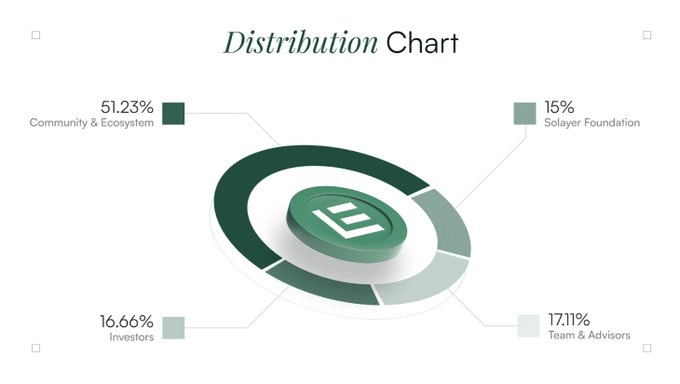
On February 7, Solayer announced the LAYER economics with a maximum supply of 1 billion tokens and an initial circulation of 220 million tokens. The specific allocation plan is as follows:
1. Community and Ecosystem (51.23%)
34.23% for continuous R&D, developer programs, ecosystem development, and other user activities
14% for community activities/incentives (12% reserved for Genesis Drop, including rewards for early adopters and other initial claiming activities)
3% allocated through Emerald Card community sales
2. Core Contributors: 17.11% allocated to core contributors and advisors
3. Investors: 16.66%
4. Foundation: 15% allocated to the Solayer Foundation to support its vertical product expansion and network development
Future Vision
Solana, as a leading high-performance public chain, faces some challenges such as outages, transaction failures, and MEV issues while enjoying ecological prosperity. If Solayer can provide greater block space and prioritized transaction processing for dApps on Solana, Solana is expected to become the cornerstone of future decentralized networks and economies.