

原文标题:What Is PayFi? The Future Of Payments With Tokenized RWAs And On-Chain Credit
Original author: Sankrit K
Original source: https://www.coingecko.com/
Translated by: Daisy, Mars Finance
What is PayFi? The future of payments based on tokenized real-world assets (RWA) and on-chain credit
What is Payment Finance (PayFi)?
PayFi, or payment finance, is a broad term that generally refers to the intersection of payment financing and decentralized finance (DeFi). It uses blockchain technology to provide faster, more efficient and potentially lower-cost financial transactions, thereby releasing the time value of funds.
Key Takeaways
PayFi's focus: Focusing on real-time settlement and connecting decentralized finance (DeFi) with real-world assets (RWA), addressing the limitations of both ecosystems.
Time Value Unlocked: PayFi helps users unlock the time value (TVM) of their money through decentralized finance, providing instant access to future cash flows for reinvestment.
Solana’s Support: Solana powers PayFi through its high performance (400ms block time), deep liquidity, and growing developer community.
Application scenarios: PayFi’s use cases include accounts receivable financing, creator monetization, and the Buy Now Pay Never model with interest payments.
Satoshi Nakamoto's white paper defines Bitcoin as peer-to-peer (P2P) electronic cash for online payments between individuals without third-party intervention. Fifteen years later, Bitcoin is still not widely used as a digital payment tool in daily activities.
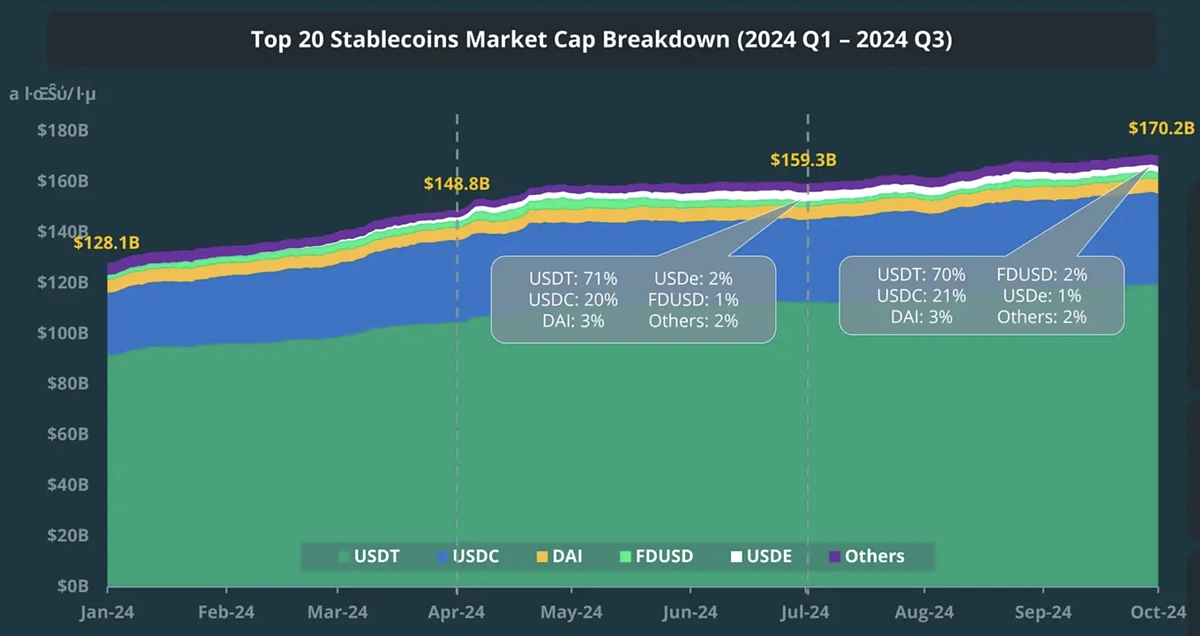
On the contrary, stablecoins seem to be more in line with market demand than primary blockchain tokens (such as BTC) and become a better choice for settlement. Since 2020, the market size of stablecoins has grown to more than $170 billion (as of October 2024).
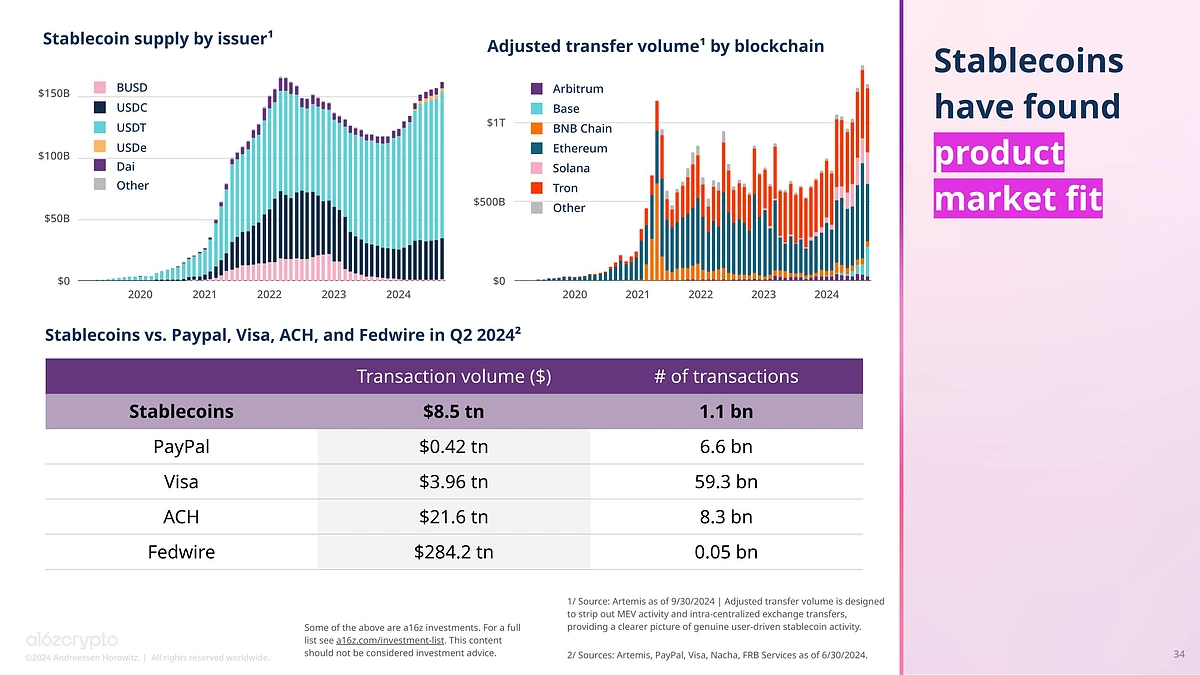
For example, according to a report from Andreessen Horowitz, stablecoin transaction volume will be more than twice that of Visa in the second quarter of 2024.
However, while stablecoins facilitate everyday transactions, they have yet to fully bridge the gap between traditional finance and the decentralized world. More importantly, they also fail to address the challenge of realizing the time value of money.
This is where PayFi comes in.
PayFi’s solutions make real-world financial transactions more efficient through innovations in cross-border payment financing and instant settlement of real-world assets (RWAs).
Understanding PayFi: When DeFi meets payment financing
According to Solana Foundation President Lily Liu, the term PayFi was coined by her to refer to a new financial market created around the time value of money. Liu emphasized that on-chain finance can unlock innovative financial products and experiences that are not possible with traditional finance or Web2 finance.

Although DeFi provides a wealth of financial services (such as staking, lending, etc.), PayFi's main focus is real-time settlement to help individuals and businesses obtain and utilize the time value of funds more efficiently.
Messari's (2025 Cryptocurrency Report) also mentioned that PayFi connects two highly promising ecosystems, real-world assets (RWA) and DeFi, by solving key problems. RWA, despite its huge value, has insufficient liquidity, while DeFi is disconnected from the real economy. These problems are expected to be solved through the efficient implementation of PayFi solutions.
Time Value of Money (TVM): PayFi’s core concept introduced from the financial industry
The time value of money (TVM) is a fundamental financial concept that emphasizes that a dollar today is worth more than a dollar in the future. This concept is particularly important in today's world because money invested now has the potential to earn higher returns, while money earned in the future will decrease in value over time due to inflation.
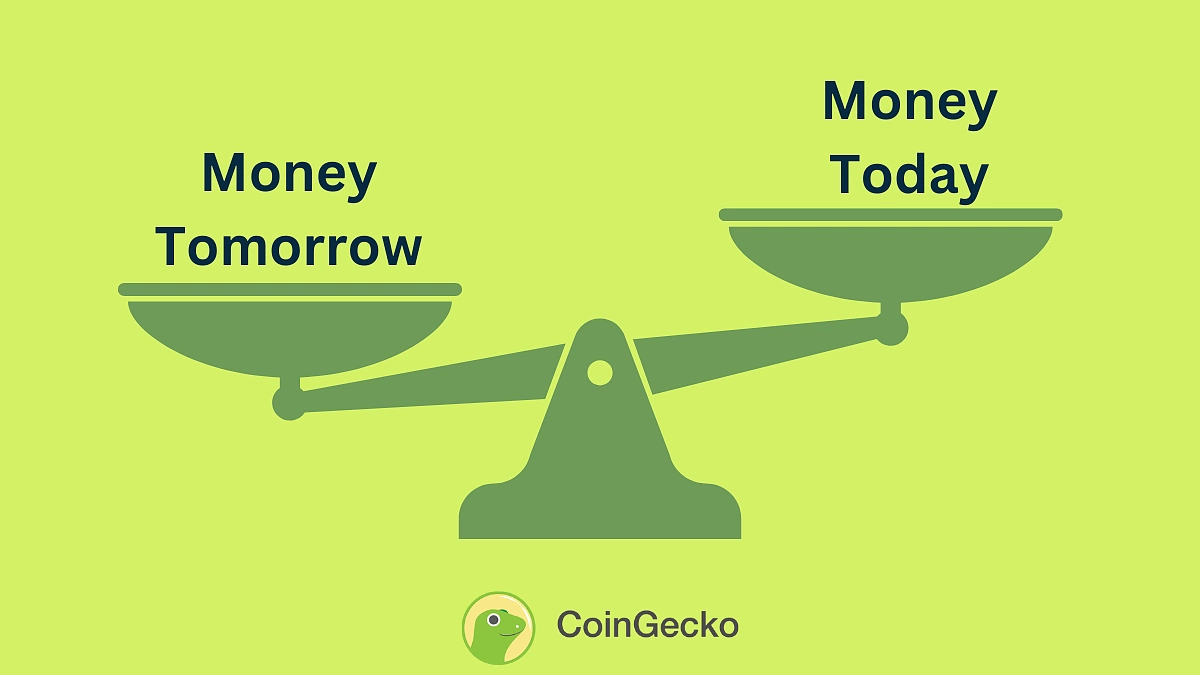
For example, suppose a person wins a $100,000 prize and needs to choose between a lump sum or monthly installments over the next five years. Based on the principle of the time value of money, a lump sum is usually more advantageous than choosing monthly passive income because the money can be invested immediately to generate a return, while future installments will lose purchasing power due to inflation.
PayFi leverages the borderless nature of blockchain to help users realize the time value of money through a decentralized money market. In addition to reducing transaction costs, users can also benefit from faster transaction speeds, allowing them to reinvest their funds or assets more efficiently.
Solana and PayFi: Transforming Global Financial Markets
According to Solana Foundation President Lily Liu, there are three key requirements that need to be met for PayFi-based applications to flourish on a blockchain network:
high performance
Adequate capital liquidity
Rich talent mobility
1. High performance
Instant settlement and T+0 time for cross-border transactions are one of PayFi’s biggest selling points. To achieve this performance, fast and reliable blockchain infrastructure is essential.
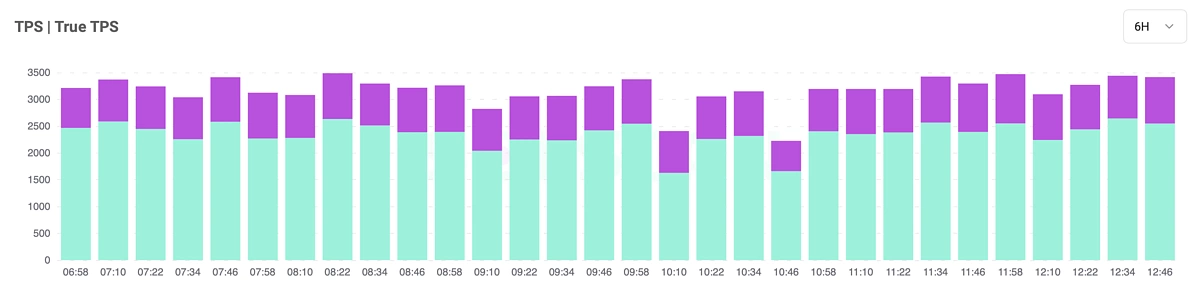
Through the Proof of History (PoH) mechanism, Solana achieves a block generation time of 400 milliseconds and can theoretically process more than 100,000 transactions per second (TPS), providing strong performance support for PayFi.
In addition to high performance, the low transaction fees of less than $0.01 per transaction makes the blockchain more attractive to users and projects, thereby encouraging more applications to try PayFi.
2. Capital liquidity
The availability of highly liquid capital is critical to the smooth operation of PayFi, including supporting real-time transactions, and the Solana ecosystem excels in this regard. With a total value locked (TVL) of over $6 billion, Solana ensures ample liquidity for PayFi transactions.
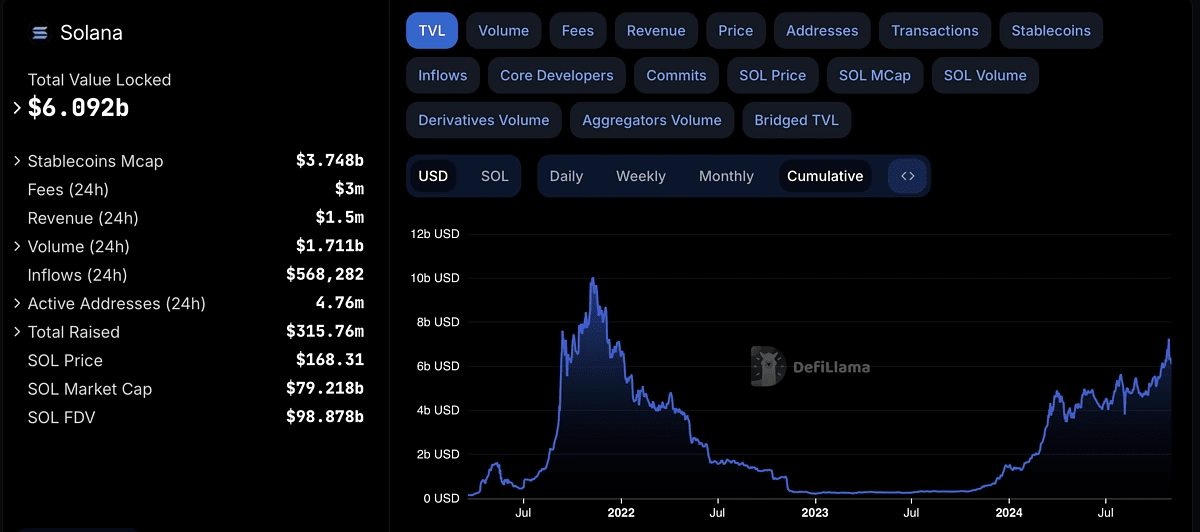
Additionally, the largest stablecoin on Solana, USD Coin (USDC), has a market cap of nearly $2.5 billion, making it a key pillar for maintaining liquidity. USDC supports PayFi networks like Huma to enable on-demand cross-border lending and remittance services.
3. Talent mobility
A strong developer community is critical to building PayFi for more crypto users. Solana continues to grow in the number of active developers in the crypto ecosystem. Notably, Solana’s total number of monthly active developers increased from 244 in April 2020 to over 3,300 in April 2024.
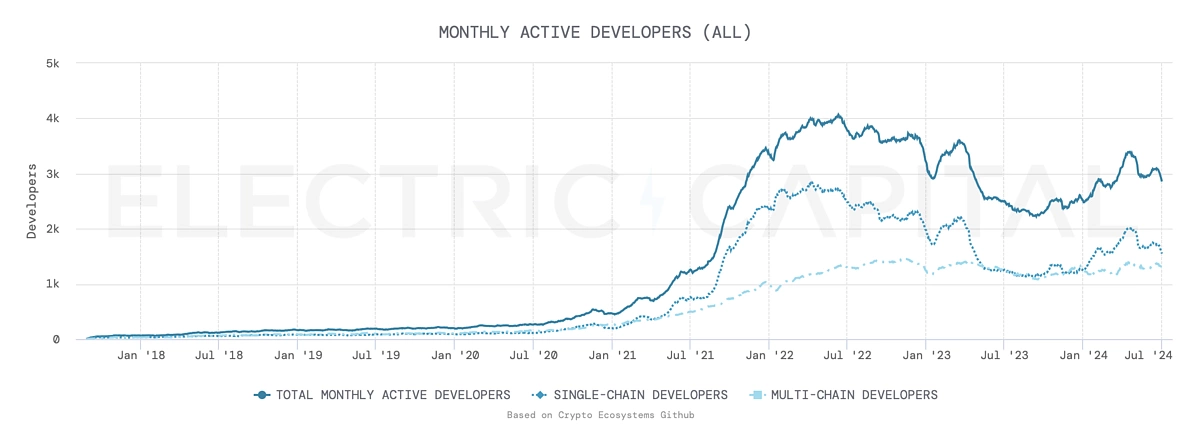
Overall, Solana is a blockchain suitable for actual PayFi use cases, with the best performance, low transaction fees, sufficient capital liquidity, and an active developer community.
Potential applications of PayFi
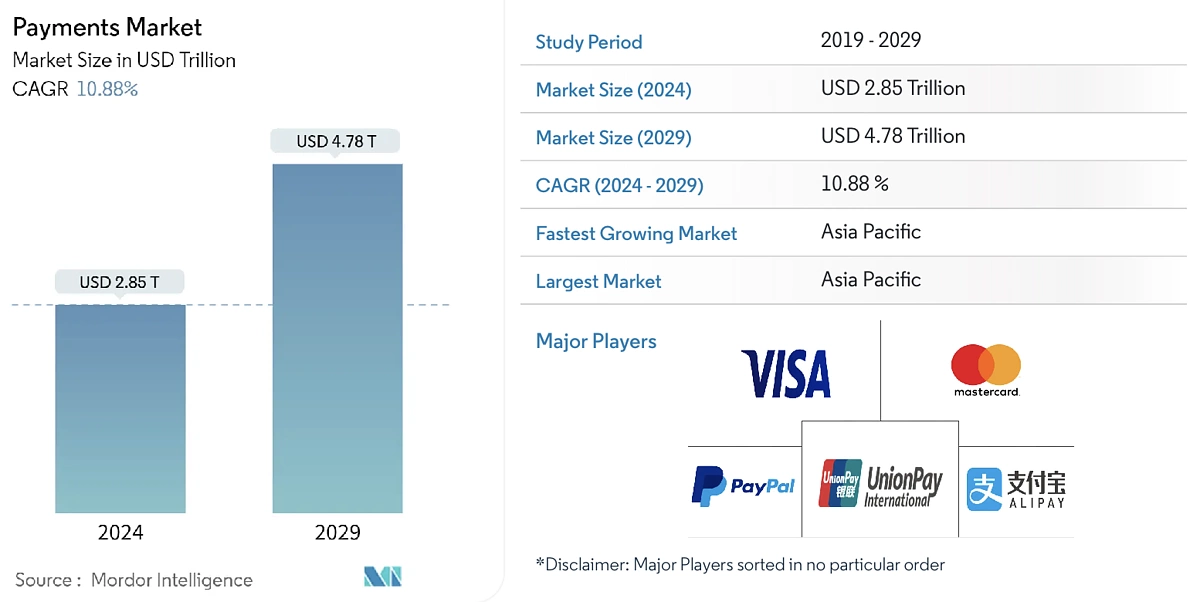
According to Mordor Intelligence, the global payment financing market is expected to reach $2.85 trillion in 2024 and grow to $4.78 trillion in 2029. Asia Pacific is expected to be the fastest-growing region and hold the largest market share during this period.
Such tremendous growth highlights the urgent need for efficient, scalable, and accessible financial infrastructure, which is exactly the solution that PayFi is committed to providing.
Here are some potential applications of PayFi that could reshape the future of finance:
Buy Now Pay Never
“Buy now, pay later” allows users to take advantage of the time value of money and purchase products or services without having to pay later. In this case, users deposit sufficient funds into a PayFi-enabled product and use the interest it generates as payment.
Imagine you want to buy a new phone that costs $1,000. Instead of paying for it upfront or taking out a traditional loan, you can use the PayFi platform to put a portion of your future income toward the purchase. Let’s say you agree to pay $100 per month from your salary.
This is where yield-generating stablecoins come in handy. These stablecoins accrue interest while you hold them. The PayFi platform can use your $100 monthly commitment to purchase these stablecoins. These stablecoins are then locked in a smart contract, automatically generating yield. Over time, the accumulated interest and principal from the yield-generating stablecoins will eventually cover the cost of the phone.
When the total amount reaches $1,000, the smart contract will automatically pay the seller the balance, and you can officially own the phone without having to pay the full amount at once.
Accounts Receivable Financing
Accounts receivable financing is a problem for most businesses that do not have excess funds or financial institutions to support them. This dilemma may even lead to operational failure due to lack of funds. According to a report by Atradius, 55% of businesses in the United States receive delayed invoice payments and 9% face bad debt problems.
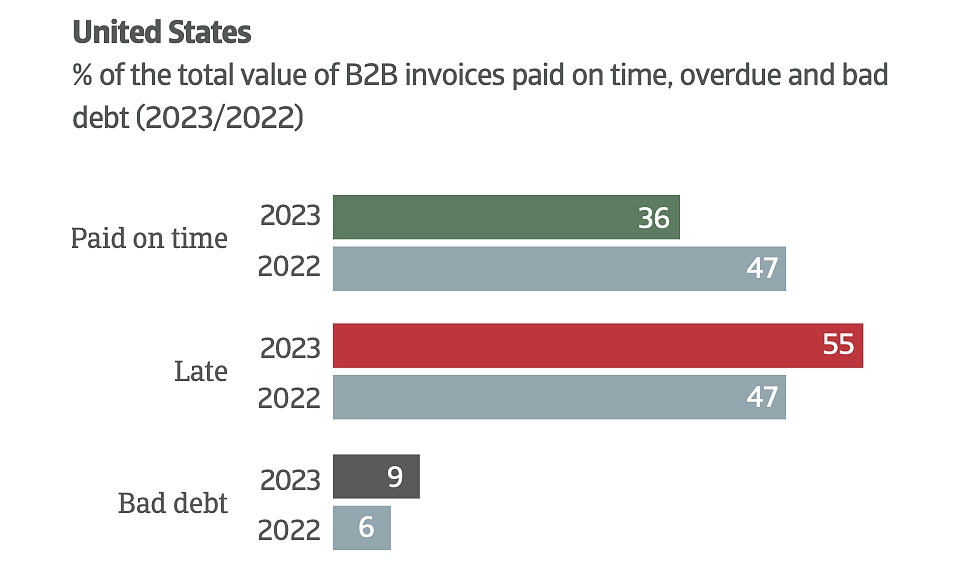
To solve this problem, PayFi introduces a decentralized and automated way to finance accounts receivable. Traditional invoice financing often relies on intermediaries such as banks or financial institutions, which can lead to delays, additional fees, and restrictive credit assessments. PayFi enables businesses to obtain instant liquidity by tokenizing invoices or accounts receivable and using them as collateral on a blockchain platform.
Faster funding availability helps businesses maintain safety cushion funds, enabling them to meet unexpected expenses or expand growth opportunities without delayed payment restrictions.
Creator Monetization
The creator economy is growing rapidly, with the global market expected to exceed $500 billion by 2030. Yet even on popular platforms, creators must wait weeks to earn revenue from their latest videos.
In this case, PayFi can help content creators with video production by providing funds in advance, allowing them to automatically repay the funds based on the returns from video playback revenue after the entire video is created.
This PayFi service enables creators, especially micro-influencers, to continue publishing videos without having to wait for the next payment.
Notable players in the PayFi space
As longer remittance and settlement times slow down business transactions, many teams are coming together to meet these challenges head-on.
Here we will introduce three well-known projects in the PayFi ecosystem:
They are Finance
PolyFlow
TLay
1. Huma Finance
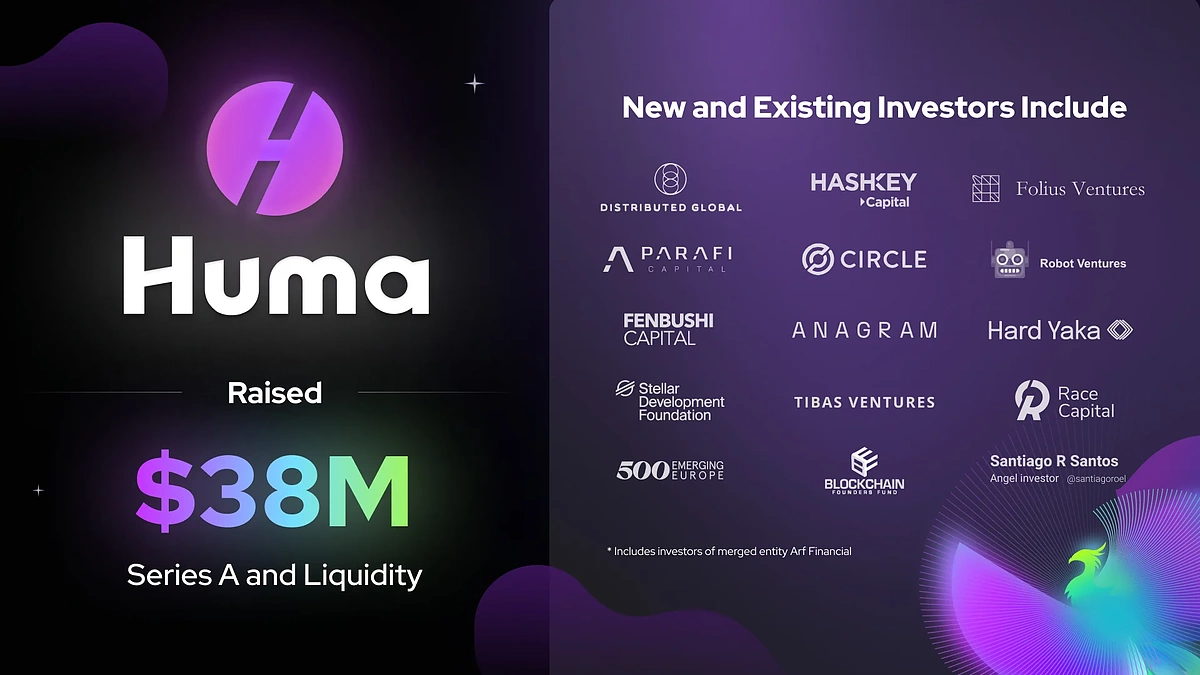
Huma Finance is an innovative platform focused on combining decentralized finance (DeFi) with real-world financial applications, specifically in income-backed lending and payment financing solutions.
The project calls itself a pioneer in the payments financing (PayFi) space, leveraging the power of blockchain to provide real-time, borderless liquidity to businesses and individuals.
Huma Finance provides an on-chain factoring marketplace that allows businesses to borrow against future revenue or invoices. This solution helps companies facing cash flow challenges by converting their accounts receivable into digital assets on the blockchain, providing immediate working capital.
The platform’s integrations with networks such as Circle, Superfluid, and Request Network demonstrate its commitment to making decentralized invoice financing more accessible and efficient, serving different stakeholders.
Huma recently secured $38 million in funding and is expanding its PayFi network to blockchains such as Stellar and Solana in partnership with Arf to expand its liquidity provision. Its approach enables faster settlements and makes financial services more accessible by moving from asset-based lending to cash flow-based underwriting.
Key Points
PayFi: Huma is a pioneer in the PayFi space, aiming to bring traditional payment financing processes to the blockchain, including invoice financing, supply chain financing, etc.
Global Lending: They facilitate cross-border lending, making it easier for businesses and individuals to access capital no matter where they are located.
Real World Assets (RWAs): Huma is working to connect real world assets to the blockchain, opening up new funding opportunities and unlocking liquidity for previously illiquid assets.
2. PolyFlow
PolyFlow is a blockchain-based infrastructure that aims to improve the payment financing (PayFi) ecosystem by combining decentralized finance (DeFi) with real-world payments and assets. Its main goal is to address the limitations of traditional payments and blockchain payments by improving compliance, scalability, and transparency.
PolyFlow introduces two key elements:
1. Payment ID (PID): This decentralized identity system securely manages transaction flows, protects user privacy through zero-knowledge proofs, and ensures compliance. PID is similar to a digital wallet, containing multiple elements such as payment methods, digital identities or NFTs, enhancing cross-functional usability.
2. Payment Liquidity Pool (PLP): This component facilitates the safe and efficient flow of funds without relying on centralized institutions. Through smart contracts, PLP automates the flow of funds, reduces settlement risks and improves the capital utilization efficiency of traditional finance (TradFi) and decentralized finance (DeFi) systems.
PolyFlow is working to create a unified financial infrastructure by decoupling the flow of information and funds traditionally managed by centralized systems. This modular framework ensures regulatory compliance and reduces custodial risk.
The project has collaborated with partners such as OKX Wallet and explored innovative use cases such as “Scan to Earn”.
Key Points
PayFi Infrastructure: PolyFlow is developing infrastructure for the PayFi ecosystem, focusing on bridging the gap between traditional payment systems and decentralized finance (DeFi).
Compliance: One of the keys to its approach is ensuring compliance. PolyFlow aims to build a system that complies with regulatory requirements while leveraging the benefits of blockchain.
Security and Efficiency: PolyFlow prioritizes security and efficiency in its design to support net settlement and micropayments on blockchain networks, embodying the original vision of Bitcoin.
3. TLay
TLay (Trust Layer of DePIN) is a decentralized infrastructure layer designed for the Decentralized Physical Infrastructure Network (DePIN). Its goal is to bridge the physical world with the digital world by providing modular tools, facilitating large-scale collaboration between machines and devices, and enabling the management of real-world assets (RWAs) through blockchain-based solutions.
TLay integrates various technologies, including trusted chipsets, Internet of Things (IoT) oracle services, and DePIN-specific application chains. The structure simplifies the development process by providing ready-made frameworks and tools for projects in the DePIN ecosystem, helping to quickly launch new applications. Developers can use these components to quickly launch innovative distributed digital financial and business solutions.
One of TLay's main goals is to ensure the authenticity, privacy, and transparency of data. For example, its BoAT3 IoT oracle service authenticates data from physical devices directly onto the blockchain, preventing data tampering while supporting privacy protection. This setup is critical to creating trust in the DePIN ecosystem, as accurate real-time data streaming is required.
TLay also works with partners such as Huma Finance to play a role in the PayFi (payment financing) innovation, ensuring trust and data security. This collaboration enables the PayFi system to use trusted on-chain data to provide credit and real-time lending solutions, driving the development of the machine economy, in which automated payments and financing are key drivers of growth.
Key Points
DePIN Infrastructure: TLay focuses on decentralized physical infrastructure networks, including wireless networks, renewable energy grids, and sensor networks.
Digital Twin Technology: They create digital representations (or “digital twins”) of physical assets on the blockchain. This makes it possible to track, manage, and monetize these assets securely and transparently.
Data Integrity: TLay uses cryptographic proofs and decentralized consensus mechanisms to ensure the integrity of data from physical assets. This is critical to building trust and reliability in the DePIN network.
in conclusion
Payment Financing (PayFi) is changing the way payments are made in the financial sector, including traditional decentralized finance. With the right implementation of PayFi solutions, users can access future capital "now" and finance other interests.
We are still in the early stages of the PayFi revolution, but the potential is huge. PayFi is changing the financial landscape by connecting real-world assets (RWAs), automating payments, and fusing DeFi and TradFi.
In addition, through events such as the 2024 PayFi Summit hosted by Solana, PayFi's influence is spreading rapidly and community growth is accelerating. Given its technical characteristics, PayFi applications will soon transcend the virtual world and affect the real world economy.

