


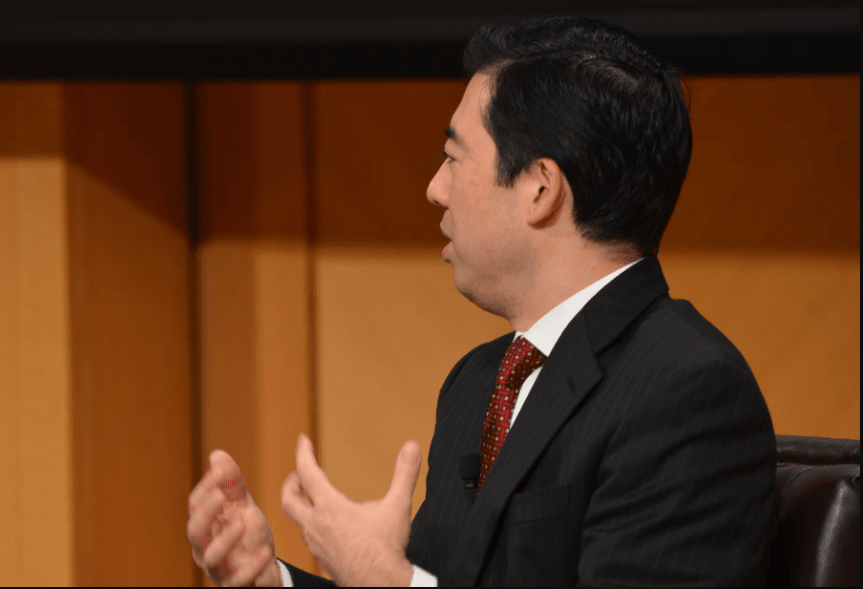
Commissioner Mark Uyeda will take over the operation of the U.S. Securities and Exchange Commission while the agency awaits Senate confirmation of President Donald Trump's nominee for the permanent position, Paul Atkins.
Acting Chairman Uyeda, who clearly supports easing the regulatory pursuit of the cryptocurrency industry alongside Republican Commissioner Hester Peirce, previously served Atkins as an advisor at the agency.
Atkins, who was officially nominated just hours after Trump was sworn in on Monday, is a former commissioner who developed a relationship with cryptocurrency in his consulting business in Washington.
Uyeda has expressed his strong views on the SEC's role concerning digital assets. He has frequently criticized much of the commission for moves to regulate cryptocurrency, such as the so-called Staff Accounting Bulletin 121 (SAB 121) that has made it difficult for banks to maintain digital asset customers. He stated that he supports its removal — a move that is currently within his authority.
The change of chair has yet to be officially announced by the agency, although the remaining commissioners — including Hester Peirce and Caroline Crenshaw — issued a joint statement regarding the resignation of former Chairman Gary Gensler.
"Although as commissioners we approach policy issues from many different perspectives, there is always dignity in our differences," the commissioners said. "Chairman Gensler was committed to bipartisan engagement and exchanging ideas respectfully, which facilitated our service to the American public."
Gensler had previously announced he would resign at noon on January 20 — the same time Trump was sworn in.
Gensler has become a major opponent of the government against the cryptocurrency industry in recent years. He pursued enforcement lawsuits, promoted controversial cryptocurrency accounting policies, supported tough rule proposals that threaten the industry's business model, and blocked — for a time — the establishment of spot cryptocurrency exchange-traded funds (ETFs). On the latter point, a court ruling against the agency forced Gensler to act, and he ultimately voted with the Republican members of the commission to clear the way for ETFs.
His agency has argued in court that current laws are sufficient to classify and regulate cryptocurrency assets. This view has been supported by some federal judges and opposed by others, and key questions are still being resolved by the courts.
Uyeda's SEC, regardless of how long he remains in office, is missing most of the senior legal officials who previously worked under Gensler, including in the enforcement division and the general counsel's office.
The acting chair has full authority to run the office, but those holding the position sometimes choose to defer to the incoming chair and await major decisions.
At the SEC's sister agency, the Commodity Futures Trading Commission, Republican Commissioner Caroline Pham has been appointed as acting chairman there, although Trump has yet to appoint a formal successor to outgoing Democratic chairman Rostin Behnam.
Unlike the CFTC, which currently has a 2-2 split between parties, the number of Republican members at the SEC is greater than the lone Democrat at 2-1.
DYOR! #Write2Earn #Write&Earn $BTC
