

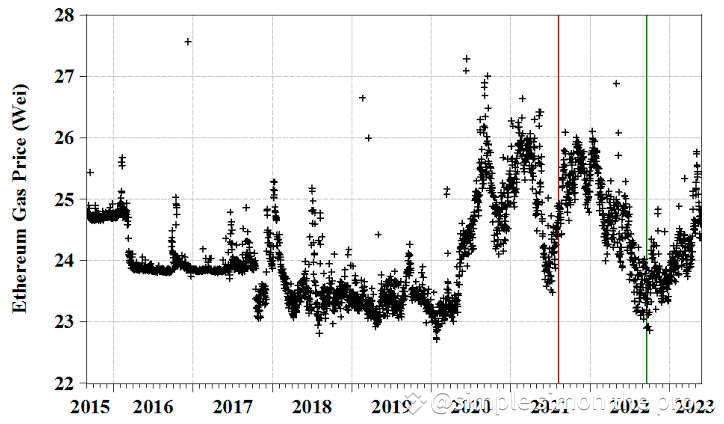
🤣🤣🤣 Oh, the memories! You think *ETH* has always been smooth sailing, right? Well, *let me shock you* – 2020 and 2021 were the *only years* ETH faced *network congestion* and *sky-high gas fees*! 🧐 I bet you didn’t know this, right? 🤣🤣🤣
Well, buckle up because I’m about to break it down for you, and trust me – you’ll be surprised! 🤯
---
*What Really Happened in 2020-2021?*
*1. The DeFi Boom 💥*
The biggest reason behind ETH’s congestion was the explosive growth of the *DeFi (Decentralized Finance)* sector. 🏦 DeFi was taking over the market, and *ETH* was the backbone of all those protocols. People were flocking to platforms like *Uniswap*, *Aave*, and *Compound*, which required *ETH for gas* (transaction fees).
As more and more users joined the DeFi craze, the *ETH network* became *clogged*, and the demand for block space *skyrocketed*. 🚀 This led to *longer transaction times* and *absurdly high gas fees* – *sometimes reaching over $50 per transaction*. 😱
*2. The NFT Explosion 🎨*
Another huge factor was the rise of *NFTs* (Non-Fungible Tokens) in 2021. Everyone wanted a piece of the *digital art market*, and platforms like *OpenSea* started booming. The demand for *ETH-based transactions* increased further, adding even more pressure on the network. 😬
*3. Ethereum’s Scalability Issues 🏗️*
While ETH had been *scalable*, it wasn’t designed for the *massive* demand we saw in 2020-2021. The *Ethereum blockchain* uses *Proof-of-Work (PoW)*, which was *slow* and *expensive* at the time. This created a *bottleneck*, where too many people wanted to use the network, but there wasn’t enough space for all the transactions. 🏃♂️
—
*The Impacts It Had on the Market 📉*
*1. High Gas Fees 🔥*
ETH’s *gas fees* went through the roof! 🏠 It wasn’t uncommon for users to pay *50+ per transaction*, which made it *unaffordable* for small traders and investors. Some *DeFi users* were paying *over $200* just to interact with a smart contract! 💸 This caused a massive *exodus* to *other blockchains* like *Binance Smart Chain* (BSC) and *Solana*, which had *lower fees* and faster transactions. 🌐
*2. Network Congestion 🛑*
Network congestion led to *delays in transactions*, and many people experienced *failed transactions* or *failed token swaps* on DeFi platforms. This led to a *loss of confidence* in the Ethereum network, and people started looking for alternatives. 😤
*3. ETH 2.0 Race 🏁*
All of this pressure on the Ethereum network *accelerated the development of ETH 2.0*. The transition from *Proof-of-Work (PoW)* to *Proof-of-Stake (PoS)* was intended to fix many of the *scalability* and *high gas fee issues*. People started looking forward to the *ETH 2.0 upgrade*, which promised *better scalability*, *lower gas fees*, and *faster transactions*. 🔄
---
*The Aftermath and the Impact on Ethereum’s Future 🌱*
Despite the *network congestion* and *high gas fees*, ETH *survived* and *adapted*. 💪
- *ETH 2.0* is now *live*, and it aims to *solve the scalability* problem by moving to *Proof-of-Stake* (PoS), which will eventually *lower gas fees* and *improve transaction speeds*. ⏩
- The *DeFi space* has *matured*, and many projects have *moved to Layer-2 solutions* like *Optimism* and *Arbitrum*, which run on top of Ethereum, but with *lower fees*. 🚀
---
*What Does This Mean For you 😇😇😇


#USJobsSurge256K #AIXBT,COOKIE,CGPTOnBinance #DOJBTCAuction #ShareYourTrade #USJoblessClaimsDrop