


DeFi is becoming one of the most prominent trends in the cryptocurrency world. DeFi represents a completely new financial system where transactions, loans, or investments are conducted through blockchain platforms without the need for intervention from banks or intermediaries. So what exactly is DeFi and why is it revolutionizing the financial sector? Let’s explore in detail in this article!
What is DeFi?
DeFi (short for Decentralized Finance) is a decentralized financial system built on blockchain technology. Instead of relying on intermediaries like banks or exchanges, DeFi allows financial services such as lending, borrowing, trading, payments, staking, and farming to operate through smart contracts.
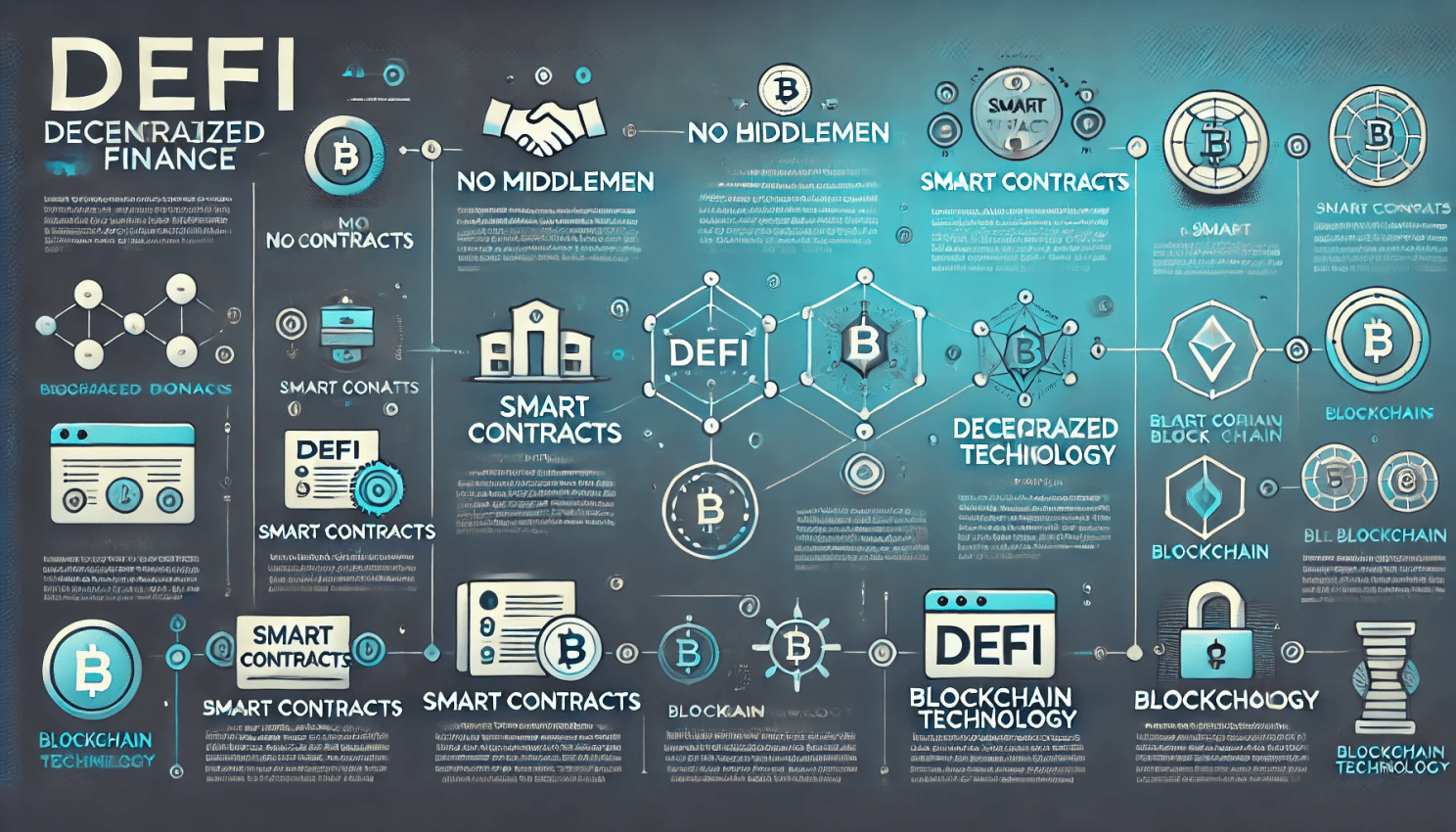
What makes DeFi special is its decentralization, giving users complete control over their assets. Without intervention from centralized authorities, DeFi opens the door to an open finance system, where everyone can participate freely and transparently.
What is the nature of DeFi?
DeFi operates based on blockchain infrastructure, inheriting all the advantages and outstanding features of this technology. This serves as the foundation for DeFi to build a decentralized financial ecosystem with the following core characteristics:
Decentralization: There is no intervention or control from third parties. Instead, transactions and financial activities in DeFi are executed automatically through pre-programmed code in smart contracts on the blockchain.
Decentralization: Transaction information is stored and validated by a network of nodes globally. This method not only ensures the accuracy of transactions but also enhances the security of the entire system.
Transparency: All transaction data and the source code of smart contracts are publicly available on the blockchain. This allows anyone to review and monitor related information.
Openness and Permissionless: Users only need an internet connection to participate in DeFi services or create new applications without providing personal information or going through cumbersome verification procedures.
Anonymity: DeFi protects privacy by only requiring users to provide their wallet address (public key). No identity verification (KYC) is needed, allowing participants to perform all transactions safely and securely.
Self-custody: Users have full control over their assets and wallets through private keys. This is a key factor that differentiates DeFi from centralized financial models.
The essence of DeFi lies not only in technology but also in how it brings financial freedom to people worldwide.
How DeFi works
DeFi operates based on rules programmed into smart contracts and functions entirely automatically on the blockchain. This means that no organization or individual has the authority to control or intervene in the system. Once a smart contract is deployed, it will operate exactly as defined without human intervention.
The special feature of DeFi lies in its transparency. Smart contracts are publicly available on the blockchain, allowing anyone to review or audit the source code. This helps ensure reliability and minimize risks from errors or fraudulent behavior.
Although all transactions are publicly recorded on the blockchain, user privacy is still protected. The identities of participants are not disclosed, but only shown through anonymous wallet addresses. This is how DeFi ensures both transparency and privacy for users.
This method of operation is why DeFi becomes an attractive alternative to traditional financial systems, providing a fair, secure, and decentralized financial environment.
What are the components of DeFi?
Decentralized applications (dApp) are a core platform in the DeFi ecosystem, often built on Layer 1 blockchains like Ethereum, Binance Smart Chain, or Solana. These dApps provide diverse services, meeting various user needs and creating a rich DeFi ecosystem with characteristic components.
Below are the core components of DeFi:
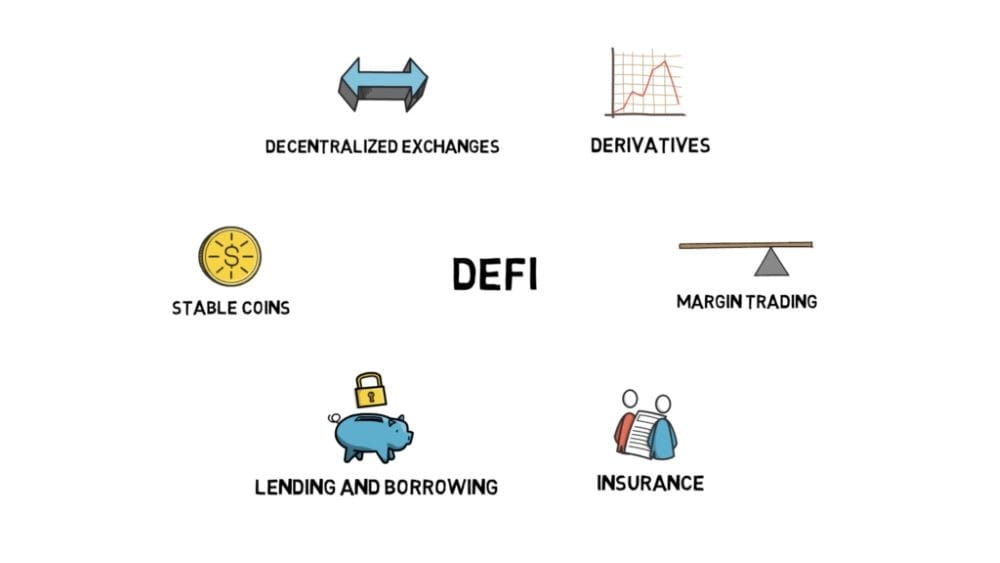
Stablecoin: This is a type of cryptocurrency designed to minimize price volatility, typically pegged to stable assets like fiat currencies (USD, EUR), commodities (gold, silver), or even another cryptocurrency. Stablecoins help maintain stability in transactions and investments.
Lending & Borrowing: DeFi platforms allow users to borrow or lend cryptocurrency assets, helping to provide liquidity to the market and optimize capital efficiency. Borrowers can collateralize assets, while lenders earn interest from their lent assets.
DEX (Decentralized Exchange): This is where users can trade, buy, sell, swap, and provide liquidity for cryptocurrency assets without intermediaries. Transactions on DEX are processed automatically via smart contracts, ensuring safety and transparency.
Wallet (Cryptocurrency wallet): A wallet in DeFi is a tool for storing and managing cryptocurrency assets. Users can send, receive, and track their coin/token and NFT balances. Wallets are secured by private keys, ensuring that users have full control over their assets.
Derivatives: These are financial contracts based on the future value of an underlying asset, such as cryptocurrency. Derivatives help investors hedge risks, price assets, or take advantage of price fluctuations for profit in decentralized markets.
Is DeFi a scam?
DeFi is not a scam but a decentralized financial market, completely different from the traditional centralized finance (CeFi) system. If CeFi is akin to a familiar traditional financial version, then DeFi is the digital transformation with superior advantages in transparency, security, and personal asset control.
However, because DeFi is an open market, there are also low-quality or fraudulent projects that may appear. Therefore, it's essential to thoroughly research projects and use trustworthy platforms to protect one's assets.
Advantages and limitations of DeFi
DeFi is increasingly gaining attention and widespread use due to its outstanding potential in redefining the global financial system. However, alongside these prominent benefits, DeFi also has several limitations that users need to consider.
1. Advantages
Unlimited financial access: DeFi opens opportunities for those who cannot access traditional banking systems to participate in financial services such as lending, trading, or saving. As long as there is an internet connection, anyone, anywhere, can use DeFi platforms without complicated procedures.
Transparency and reliability: Thanks to blockchain technology, all transactions on DeFi are recorded and made public, allowing anyone to verify and validate. This minimizes fraud risks, enhances trust, and creates transparency that traditional financial systems struggle to achieve.
Decentralized and intermediaries-free: DeFi eliminates reliance on intermediary organizations like banks. Platforms operate through smart contracts, helping to reduce transaction costs, enhance security, and provide direct asset control to users.
Flexible programming capabilities: Smart contracts allow customization to meet user needs. This opens up opportunities to create new financial products and services, such as staking, yield farming, or innovative derivative products.
Fast transactions, no time constraints: DeFi operates continuously 24/7, allowing for instant transactions, especially useful for cross-border transactions that are often expensive and delayed in traditional banking systems.
2. Limitations
Limited scalability: With the current infrastructure, many blockchains face network congestion issues, leading to high transaction fees and slow processing times. This affects the user experience, especially during periods of high system load.
Low liquidity: Compared to centralized finance (CeFi), the liquidity of DeFi is still lower, especially in new projects. Without an intermediary to guarantee, many DeFi platforms face challenges in attracting liquidity in the early stages.
Security risks: Operating on blockchain with open-source code makes DeFi susceptible to hacking attacks, from exploiting smart contract vulnerabilities to rug pulls. This poses a risk of asset loss for users.
Suboptimal capital efficiency: Although the DeFi ecosystem offers many investment opportunities, a large portion of user assets remains 'frozen' on platforms without generating real value. This is one of the motivations for DeFi to evolve into DeFi 2.0.
Unreasonable tokenomics: Many DeFi projects abuse token issuance to attract users through rewards. However, this often leads to unsustainable growth, causing losses for long-term investors when the actual value of tokens is not guaranteed.
Unsustainable business models: Some DeFi projects are only developed to chase trends, typical of GameFi projects. Many projects emerge in a short time and quickly collapse due to lack of clear development roadmaps or feasible business plans.
Overall, DeFi offers many outstanding benefits, especially global financial accessibility, transparency, and decentralization. However, users also need to be clearly aware of the risks and limitations of this ecosystem to develop appropriate usage strategies, protect their assets, and maximize the opportunities that DeFi provides.
Can DeFi replace CeFi?
DeFi (decentralized finance) offers many outstanding benefits thanks to transparency, personal asset control, and global accessibility. However, DeFi cannot completely replace CeFi (centralized finance). Instead, these two systems can coexist and complement each other in the financial ecosystem.
Why can't DeFi completely replace CeFi?
Trust and stability: CeFi is built on a legal foundation and trust in intermediary organizations. This provides a sense of security, especially in large transactions or for those unfamiliar with blockchain technology.
Risk management: CeFi has protective mechanisms such as deposit insurance, fraud monitoring, and intervention from regulatory authorities. Meanwhile, DeFi operates in a decentralized manner, requiring users to take full responsibility, leading to higher risks if losses or cyber attacks occur.
Ability to meet complex financial needs: While DeFi offers many new financial services like stablecoins or yield farming, these systems still cannot fully provide complex services such as asset management, investment banking, or large-scale credit that CeFi handles.
Liquidity: CeFi still currently dominates liquidity due to support from large organizations and traditional financial networks. DeFi, especially in new projects, often struggles to attract liquidity.
Instead of competing, DeFi and CeFi can develop in parallel and complement each other:
DeFi: Provides innovative, decentralized services such as stablecoins, staking, or non-intermediated trading. This is suitable for users seeking freedom and control over personal assets.
CeFi: Still plays an important role in providing traditional financial services with a high level of stability and safety, especially for large transactions or sectors requiring legal oversight.
DeFi cannot completely replace CeFi, but it will be an important part of the financial ecosystem of the future. Both systems play their own roles, catering to different user needs, and their combination will create a more flexible and comprehensive financial market.
The future and development of DeFi
DeFi has been and continues to develop rapidly, creating a strong wave of innovation in the financial sector. However, alongside that potential, DeFi also faces limitations, especially regarding liquidity, security, and capital efficiency. To address this, concepts like DeFi 2.0 and Real Yield have emerged, opening up new opportunities and shaping the future of this ecosystem.
DeFi 2.0 is the next stage of development, focusing on addressing existing problems from traditional DeFi:
Capital efficiency: Instead of leaving assets 'idle' on dApps, DeFi 2.0 offers solutions to optimize cash flow, helping users to better utilize the value of their assets.
Improving liquidity: Protocols in DeFi 2.0 not only attract new users but also retain them by providing sustainable benefits, reducing reliance on incentive rewards.
Integrating diverse models: DeFi 2.0 expands into other economic branches like LSTFi (Liquid Staking Token Finance), NFTFi (NFT Finance), and MemeFi (Meme Finance), creating richness in the ecosystem.
For example, at the end of 2021, DeFi 2.0 saw strong development with protocols like Olympus DAO, focusing on liquidity management mechanisms and providing higher capital efficiency for users.
Real Yield is a concept that refers to the actual profit generated from sustainable economic activities on DeFi protocols. Unlike rewards from unsustainable tokenomics, Real Yield comes from services that truly provide value to users and the ecosystem.
Activities that generate Real Yield include:
AMM DEX (Automated Decentralized Exchange): Profits come from transaction fees paid by traders. For example, Uniswap uses swap fees to pay liquidity providers.
Lending: Protocols earn profits from interest rate differentials and liquidation fees when managing borrowed/lent assets.
Blockchain (Infrastructure): Revenue from gas fees, necessary for executing transactions on the network.
Real Yield not only provides a stable source of profit but also helps projects maintain sustainable development, ensuring benefits for participants such as developers, liquidity providers, and investors.
DeFi 2.0 and Real Yield are not only solutions to current limitations but also stepping stones for DeFi to progress further in the future. The combination of technology, sustainable economic models, and scalability will shape DeFi into an indispensable part of the global financial system.