
Noirchain
66 Posts

Noirchain
Report
Block User
Crypto learner sharing simple market insights, Bitcoin analysis & risk management. Learning in public. No hype, just research. 📊
Open Trade
Frequent Trader
2.2 Years
6 Following
39 Followers
55 Liked
Posts
Portfolio
·
--
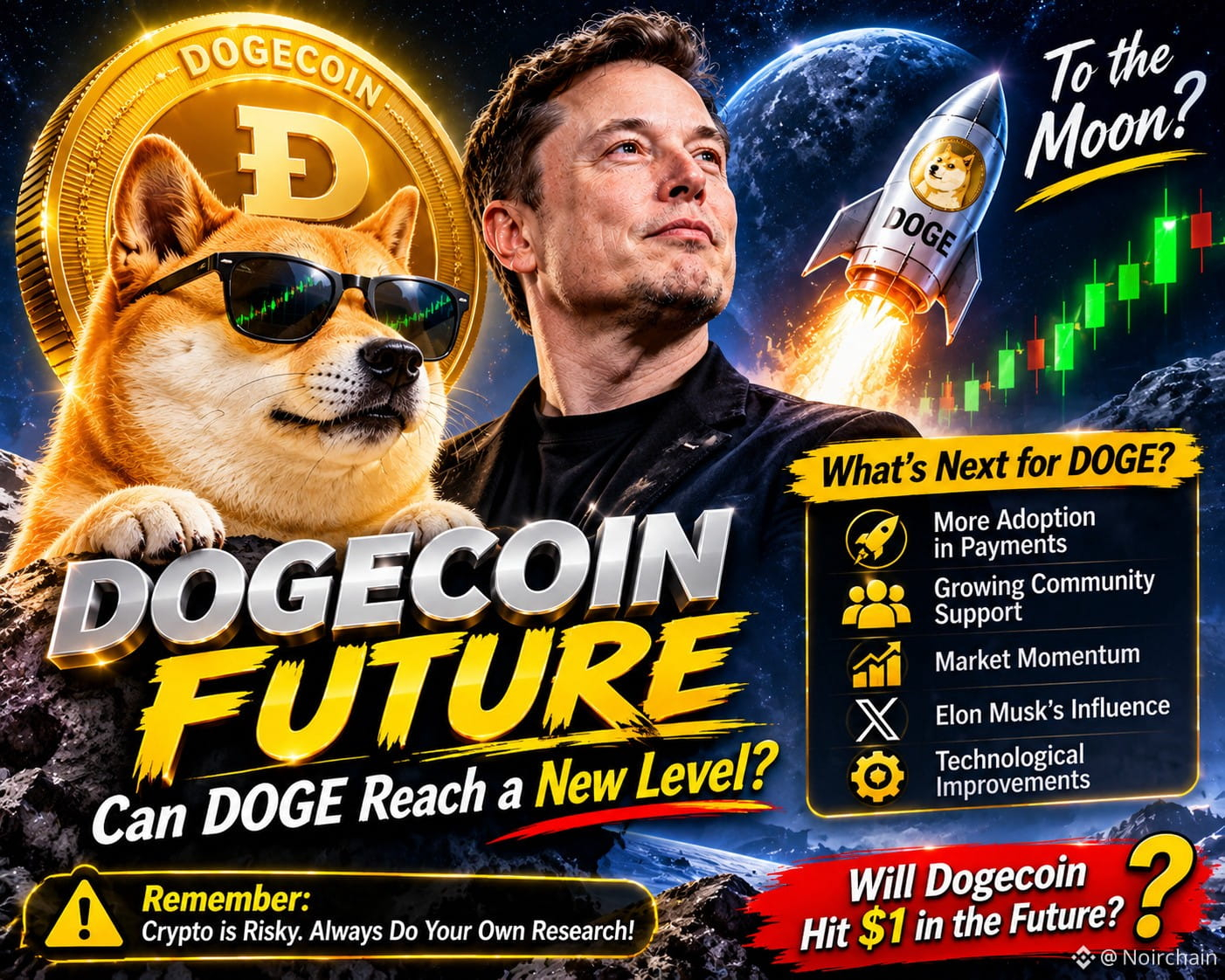
🐕🚀 DOGECOIN FUTURE: CAN DOGE REACH A NEW LEVEL?
Dogecoin is more than an internet meme. It has built a global community and gained attention from major figures in the tech industry.
🔮 What Could Shape DOGE's Future?
1️⃣ Elon Musk's Influence – Future developments involving DOGE and X could attract market attention.
2️⃣ Real-World Utility – More payment adoption could increase its practical use.
3️⃣ Community Power – Its global community remains an important part of its identity.
4️⃣ Market Trends – Bitcoin movements and overall crypto market conditions may affect DOGE.
5️⃣ Technology & Adoption – Network improvements and wider acceptance could influence long-term demand.
⚠️ Important: DOGE has unlimited maximum supply, and future price growth is not guaranteed.
🔥 BIG QUESTION:
Can Dogecoin become more than a meme coin by 2030?
🐕🚀 What's your opinion?
#DOGE #Dogecoin #CryptoFuture #MemeCoins #Bitcoin #BinanceSquare #Crypto2030
116
·
--
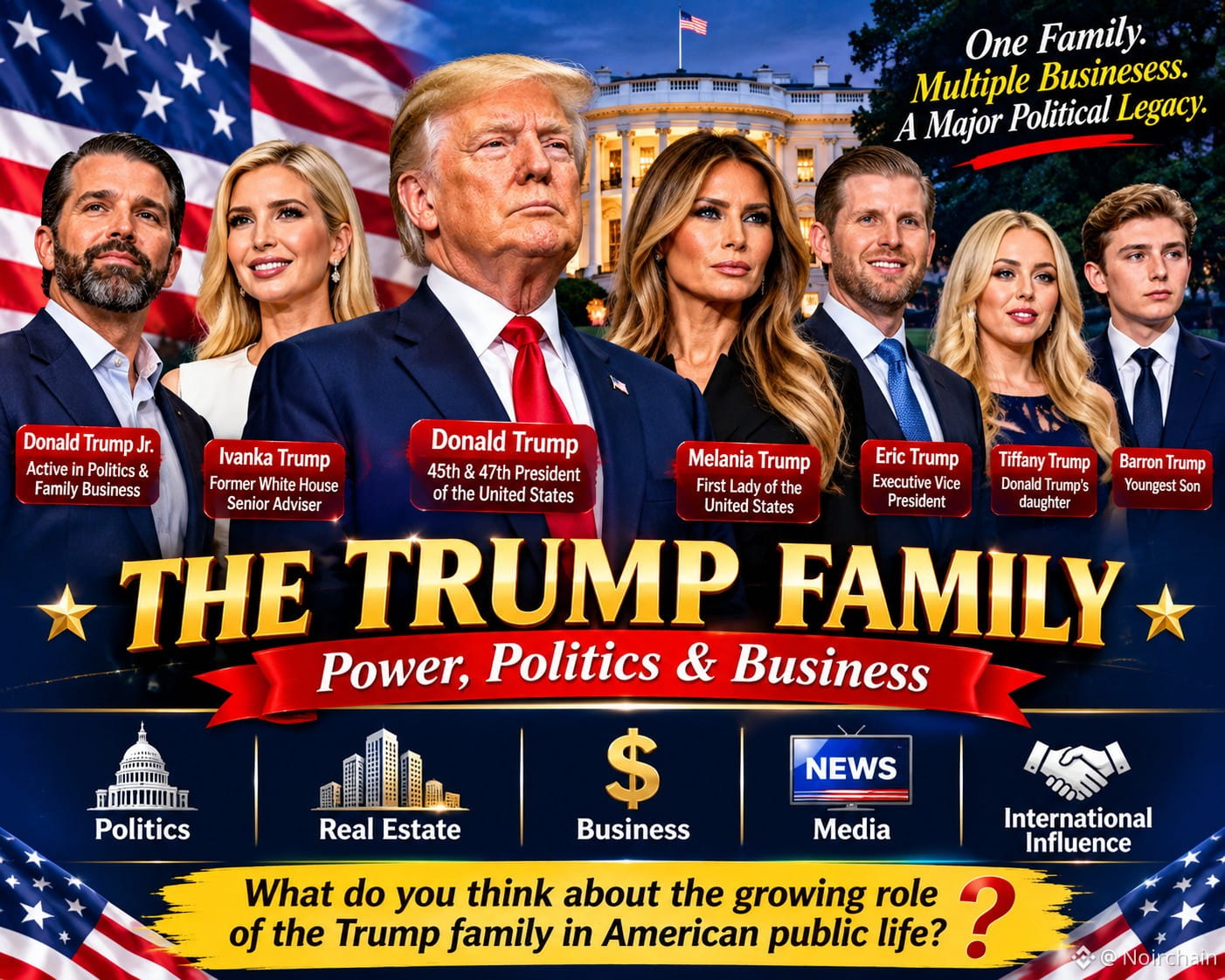
🇺🇸 THE TRUMP FAMILY: POWER, POLITICS & BUSINESS
The Trump family is one of the most discussed political families in America.
👑 Donald Trump – 45th and 47th President of the United States.
🌹 Melania Trump – First Lady of the United States.
🏛️ Donald Trump Jr. – Active in politics and family business.
💼 Ivanka Trump – Former White House senior adviser.
🏢 Eric Trump – Executive Vice President of the Trump Organization.
🎓 Tiffany Trump – Donald Trump's daughter with Marla Maples.
⭐ Barron Trump – Youngest son of Donald and Melania Trump.
The Bigger Picture
The Trump family's influence extends beyond politics into real estate, business, media and international affairs.
Their growing business activities have also raised public questions about political influence, transparency and potential conflicts of interest.
🔥 One Family. Multiple Businesses. A Major Political Legacy.
What do you think about the growing role of political families in American public life?
#TrumpFamily #DonaldTrump #USPolitics #MelaniaTrump #IvankaTrump #America #BinanceSquare
91
·
--
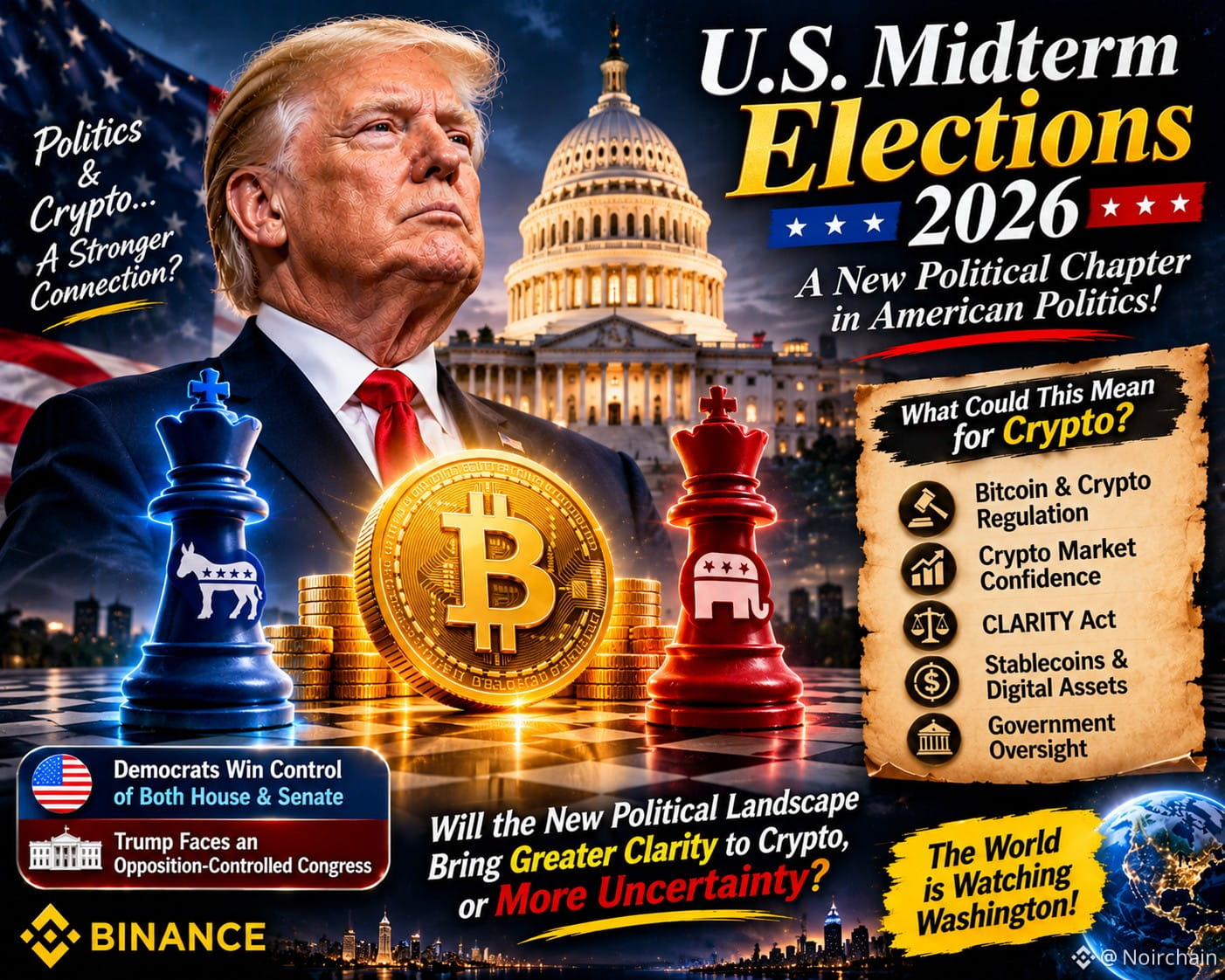
🇺🇸 A New Political Chapter in America — What Does It Mean for Crypto?
The 2026 US Midterm Elections have brought a major shift in American politics.
🔵 Democrats have won control of both the House and Senate.
🔴 President Donald Trump now faces an opposition-controlled Congress.
🌐 But what could this mean for the Crypto Industry?
The political shift could influence several important areas:
₿ 1. Bitcoin & Crypto Regulation Changes in Congress could affect the future direction of US crypto regulations.
📊 2. Crypto Market Confidence Regulatory uncertainty may influence institutional sentiment and market expectations.
🏛️ 3. CLARITY Act The future of crypto market structure legislation could face new challenges and negotiations.
💵 4. Stablecoins & Digital Assets Future policies may shape how stablecoins and digital assets are regulated.
🔍 5. Government Oversight Crypto companies and politically connected digital asset businesses could face increased scrutiny.
🚀 The Big Question:
Will the new political landscape bring greater regulatory clarity to crypto, or create more uncertainty for Bitcoin and the broader digital asset market?
Politics and crypto are becoming increasingly connected. The world is watching Washington! 🌎
#USPolitics #Bitcoin #BTC #CryptoRegulation #DonaldTrump #CryptoMarket #Blockchain #BinanceSquare
104
·
--
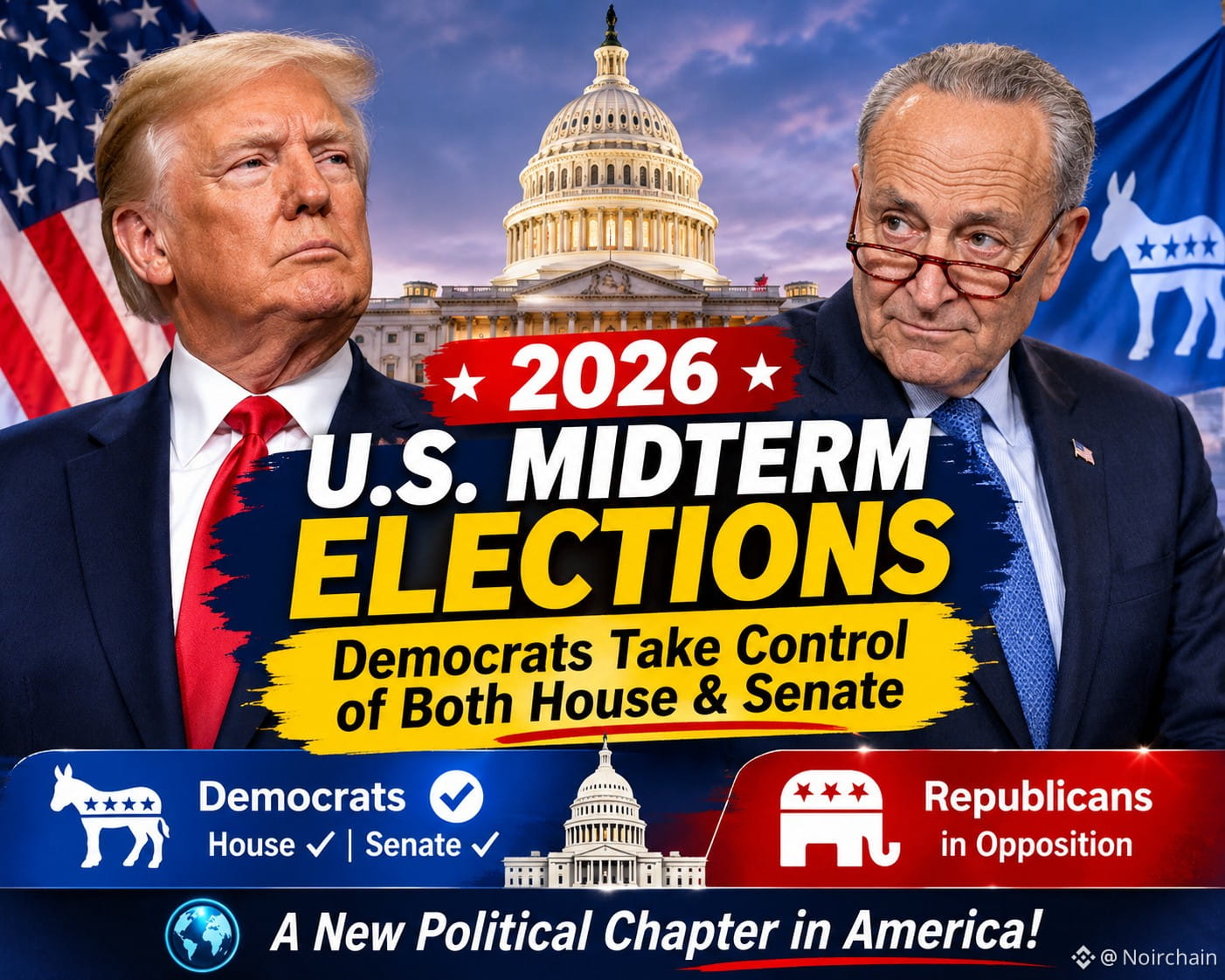
🇺🇸 A New Political Chapter in American Politics!
The 2026 US Midterm Elections have brought a major shift in American politics.
🔵 Democrats have gained control of both the House and Senate.
🔴 President Donald Trump now faces a Congress controlled by the opposition party.
What happens next could influence:
• US economic policy • International trade and tariffs • Immigration policy • Foreign relations • The future of American politics
One important question remains:
Can a divided government find common ground, or will political disagreements slow down major decisions?
The world is watching Washington. 🌎
#USPolitics #DonaldTrump #USA #Congress #MidtermElections #Politics #BinanceSquare
64
·
--
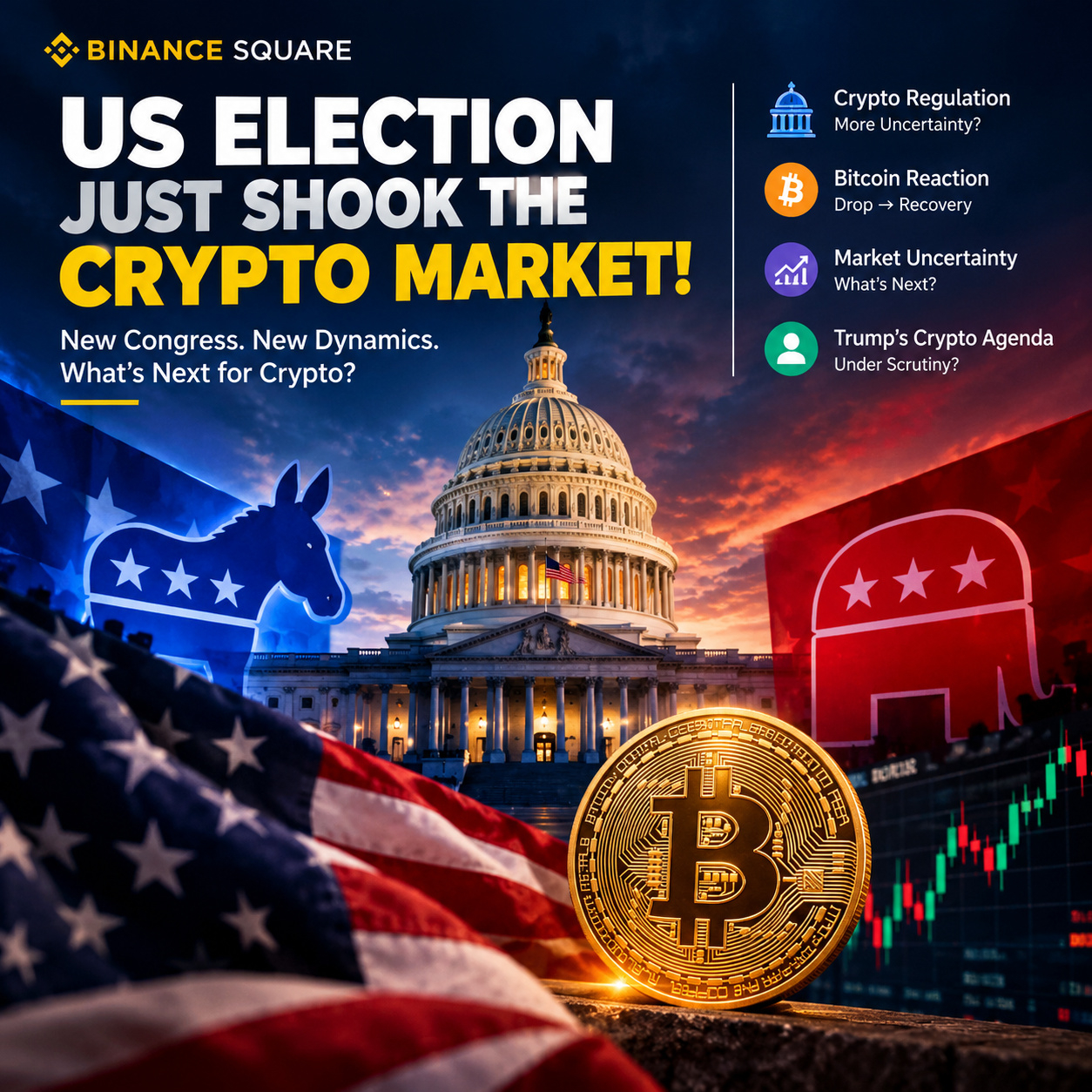
🚨 US ELECTION JUST SHOOK THE CRYPTO MARKET! 🇺🇸
The 2026 US Midterm Elections have brought a major political shift.
Democrats have secured control of both the House and Senate, changing the political landscape for President Donald Trump.
But why should crypto investors care?
Here's the interesting part:
🔹 Crypto Regulation: The future of the CLARITY Act could become more complicated.
🔹 Bitcoin Reaction: BTC initially dropped below $76K before recovering above $78K.
🔹 Market Uncertainty: Investors are now watching how the new Congress approaches crypto legislation.
🔹 Trump's Crypto Agenda: Policies introduced under the current administration may face greater congressional scrutiny.
One thing is clear: US politics and crypto markets are becoming increasingly connected.
But here's the question I want to ask:
Will this political shift slow down crypto adoption in the US, or will it push the industry toward a different regulatory direction?
What's your take? 👇
#USElection #Bitcoin #BTC #CryptoRegulation #Trump #Ethereum #BinanceSquare
91
·
--
What if Bitcoin's creator is still watching us… but nobody knows who he is? 👀
In 2009, someone using the name Satoshi Nakamoto introduced Bitcoin.
Then something unbelievable happened.
Satoshi disappeared from public communication, leaving behind one of the biggest mysteries in financial history.
Today:
Bitcoin is used worldwide.
Millions of people follow its price.
Institutions are paying attention.
But the creator's real identity remains unconfirmed.
Think about that for a moment.
A person created a financial revolution and walked away without revealing their identity.
My question is simple:
If Satoshi Nakamoto suddenly appeared tomorrow, would Bitcoin become stronger, or would it change the entire crypto market?
I want to hear your thoughts. 👇
$BTC $BNB
#Bitcoin #SatoshiNakamoto #Crypto #BinanceSquare
101
·
--
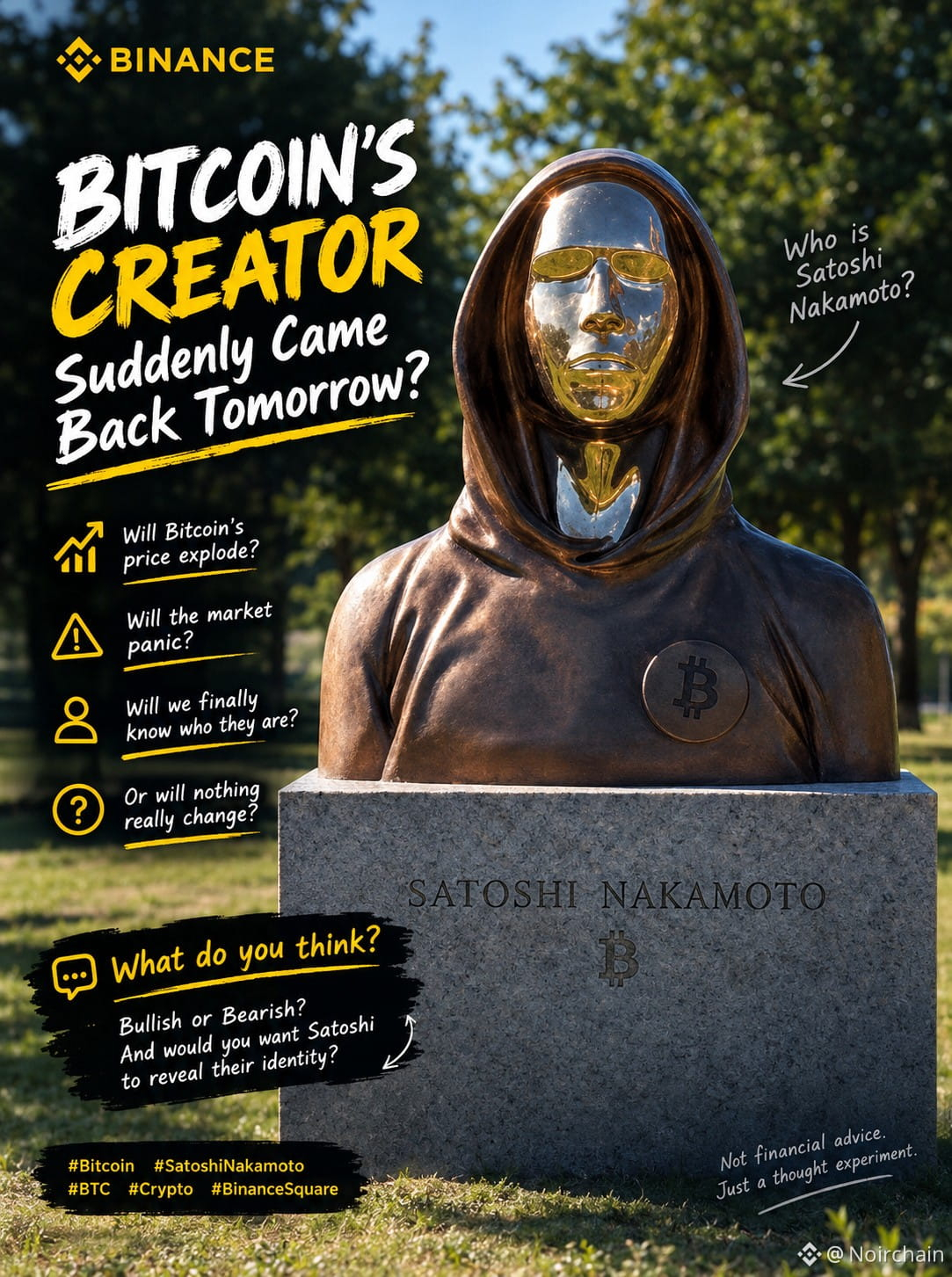
What If Satoshi Nakamoto Suddenly Came Back Tomorrow? 👀
Imagine waking up tomorrow and seeing one headline everywhere:
"Satoshi Nakamoto has returned."
The mysterious creator of Bitcoin has been silent for years.
But what would happen if Satoshi suddenly appeared online and started posting again?
Think about it:
🔥 Would Bitcoin's price explode?
😨 Would the market panic because of Satoshi's untouched BTC holdings?
🤔 Would people finally learn who created Bitcoin?
💰 Or would Satoshi's return change absolutely nothing?
Here's the interesting part:
Bitcoin was designed to operate without needing its creator.
Maybe that's its greatest strength.
Let's discuss:
If Satoshi returned tomorrow, would you consider it bullish or bearish for Bitcoin?
And would you want Satoshi to reveal their identity?
#Bitcoin #SatoshiNakamoto #BTC #Crypto #BinanceSquare
Not financial advice. Just a thought experiment.
70
·
--
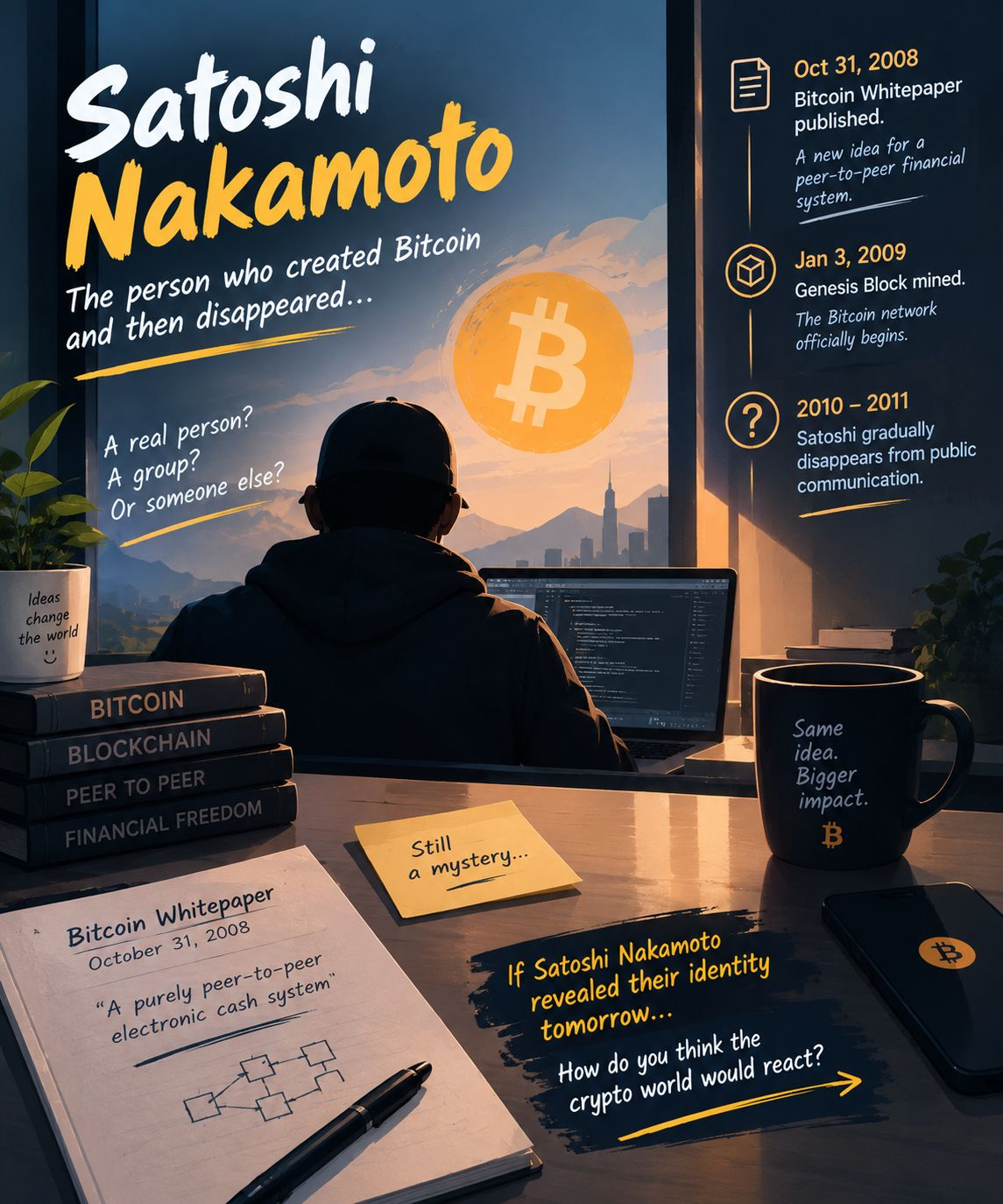
Satoshi Nakamoto: The Person Who Created Bitcoin and Then Disappeared 👀
Imagine creating something worth changing the entire financial world, and then disappearing without revealing your identity.
That's the mystery of Satoshi Nakamoto.
On October 31, 2008, Satoshi published the Bitcoin whitepaper, introducing a new idea: a peer-to-peer financial system that doesn't need a central authority.
On January 3, 2009, the Bitcoin network officially began with the mining of its Genesis Block.
But here's where the story gets interesting.
Satoshi gradually disappeared from public communication around 2010–2011. Nobody has conclusively proven who Satoshi really is.
Is it one person? A group of developers? Or someone we haven't even considered?
Bitcoin continues to operate without its mysterious creator.
One question for the community:
If Satoshi Nakamoto suddenly appeared tomorrow and revealed their identity, how do you think the crypto world would react?
I'd love to hear your thoughts. 👇
#SatoshiNakamoto #Bitcoin #BTC #CryptoHistory #Blockchain
62
·
--
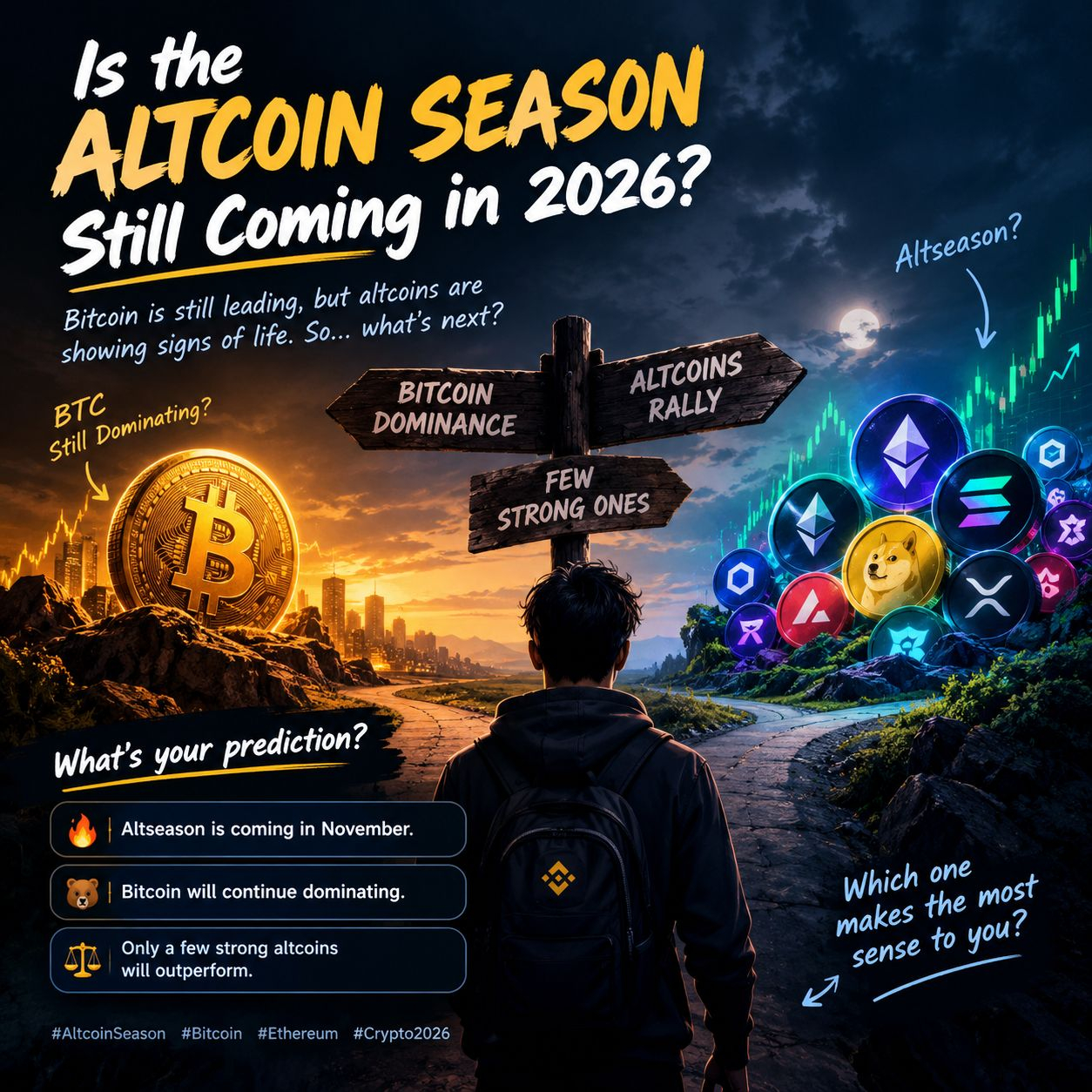
Is Altcoin Season Still Coming in 2026? 👀
Every crypto cycle has a moment when people start asking the same question:
"When will altcoins finally take off?"
Bitcoin is still dominating the market, and many altcoins are struggling to maintain strong momentum.
But here's something worth watching.
Altcoin speculation has cooled compared with September. Some analysts believe this could create healthier conditions for a potential rally.
However, lower speculation doesn't automatically mean a bull run is coming.
I think the next few weeks could be interesting. The real question is whether money will start flowing from Bitcoin into altcoins.
Let's hear your prediction:
🔥 Altseason is coming in November.
🐻 Bitcoin will continue dominating.
⚖️ Only a few strong altcoins will outperform.
Which one makes the most sense to you?
#AltcoinSeason #Bitcoin #Ethereum #Crypto2026
74
·
--
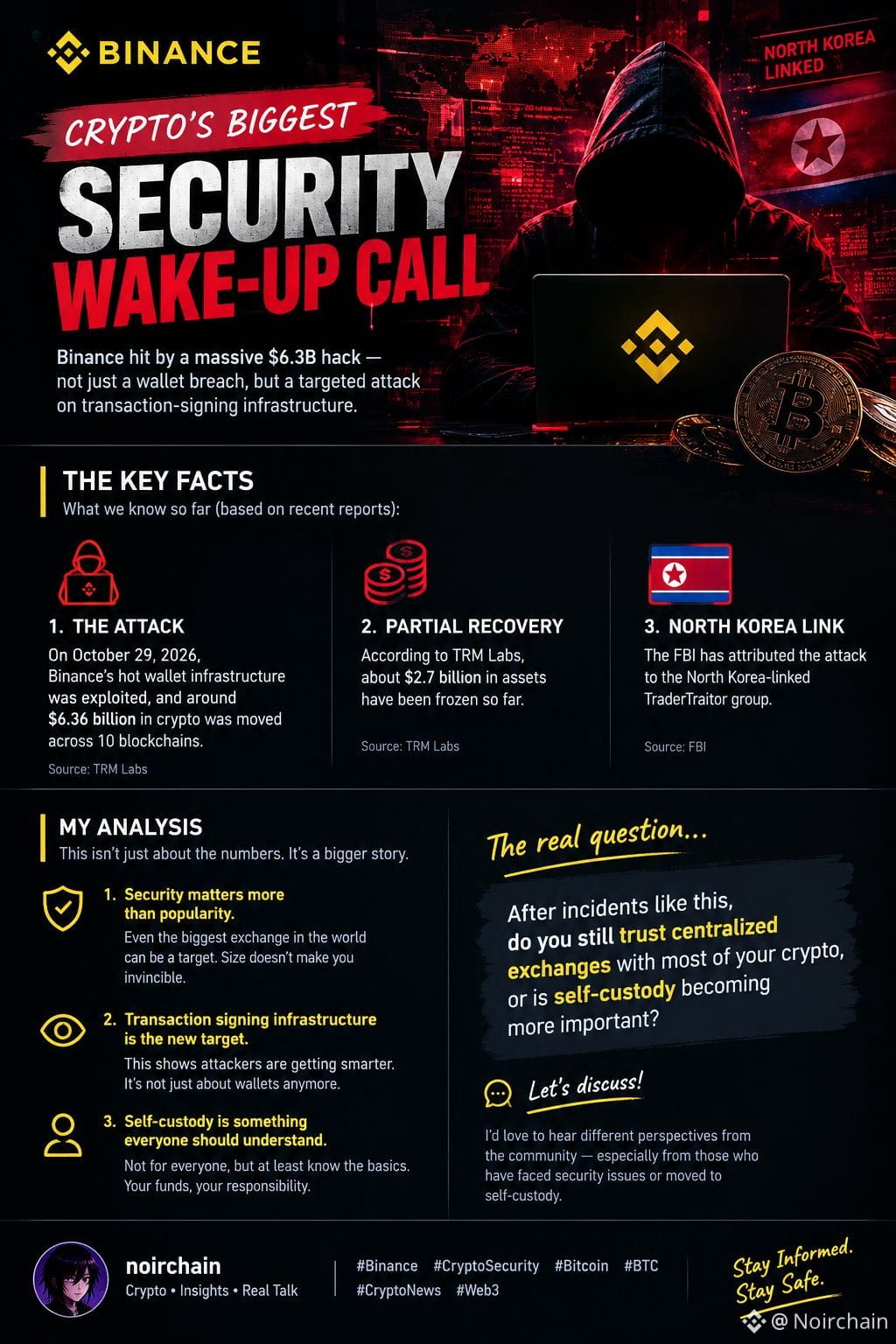
Crypto's Biggest Security Wake-Up Call: What Happens When Exchanges Get Hacked?
Honestly, the recent Binance security incident raises a question that every crypto investor should think about.
According to TRM Labs, approximately $6.36 billion in assets were moved from Binance-attributed wallets across 10 blockchains on October 29.
The FBI has attributed the attack to North Korea-linked TraderTraitor.
Around $2.7 billion in assets were frozen, according to TRM Labs.
But here's what caught my attention:
The attack reportedly targeted transaction-signing infrastructure, not simply a regular crypto wallet.
This shows that even major crypto platforms face serious security challenges.
I think this incident highlights three important lessons:
Security matters more than exchange popularity.
Holding crypto on an exchange comes with risks.
Investors should understand self-custody and wallet security.
One question for the crypto community:
After incidents like this, do you still trust centralized exchanges with most of your crypto, or is self-custody becoming more important?
Let's discuss.
#CryptoSecurity #Binance #Bitcoin #BTC #CryptoNews
92
·
--
Is It Really Possible to Trade the Future?
Crypto never stops surprising me. Just when I think I've seen everything, something new comes along.
Recently, I've been looking into prediction markets, and honestly, the idea caught my attention.
Think about it. People can now take positions on things happening in the real world, from elections and economic decisions to sports events.
It's not just about whether Bitcoin will go up or down anymore. People are also trying to predict what happens outside the crypto market.
I find this interesting, but I'm not completely convinced about it either.
Prediction markets can give us an idea of what people expect. But expectations aren't facts. A popular prediction doesn't mean it's actually going to happen.
And that's where things can get risky, especially for people who put money into every prediction they believe.
Personally, I think they're worth watching, but I'd never rely on them alone.
What about you?
Would you use prediction markets to make decisions, or do you prefer doing your own research before trusting any prediction?
Let's hear your thoughts.
#PredictionMarkets #Crypto #Blockchain #Web3

66
·
--
Binance Has Replenished 90% of Stolen Assets. But Is Trust Fully Recovered?
The recent Binance security incident has raised some serious questions across the crypto community.
According to Binance's latest update on October 31, the exchange has replenished around 90% of the stolen crypto assets. It has also confirmed that 10 major cryptocurrencies, including BTC, ETH, USDT, BNB and SOL, are now fully backed at a 1:1 ratio.
The remaining 10% consists of less-liquid tokens that may take longer to acquire. Binance says it will cover the full financial impact of the incident, so users won't have to bear those losses.
There's another important update. Binance has taken a new Proof of Reserves snapshot, and the full verification is expected by November 3. The exchange also says withdrawals are on track to resume on November 1, with further confirmation still pending.
That's certainly a positive step toward recovery.
But here's what I find more important: Can an exchange rebuild user trust through recovery alone?
In crypto, security isn't just about having enough funds to cover losses. It's also about transparency, accountability and making sure users feel safe keeping their assets on a platform.
This incident is a reminder that even the biggest exchanges need to keep proving they deserve users' trust.
What's your take?
Do you think Binance has handled this situation well so far, or will it take more than financial recovery to restore confidence?
I'd genuinely like to hear different opinions.
$BNB $BTC $ETH $SOL $USDT
#Binance #CryptoSecurity #Bitcoin #CryptoCommunity
Not financial advice. Always do your own research and manage your risk.
58
·
--
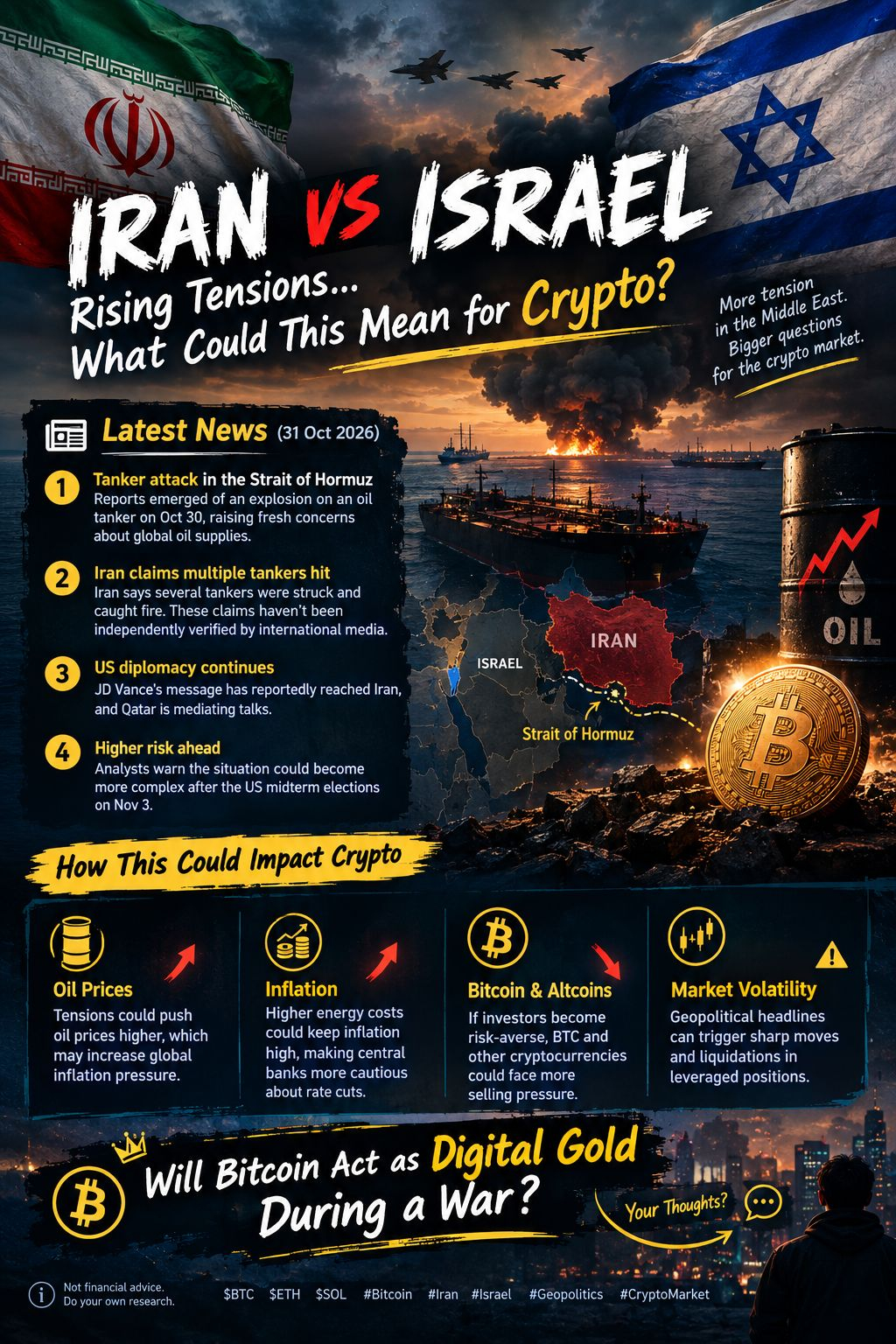
Iran vs Israel tensions are raising another important question for crypto investors.
If the conflict escalates, oil prices, inflation and global financial markets could all feel the impact.
But what about Bitcoin?
Will investors see BTC as a safe haven during geopolitical uncertainty, or will they sell it along with other risky assets?
I'm curious to hear different opinions from the community.
What do you think: Digital Gold or Risk Asset? 👇
$BTC $ETH $SOL
#Bitcoin #Iran #Israel #CryptoMarket #Geopolitics
Not financial advice. Do your own research.
118
·
--
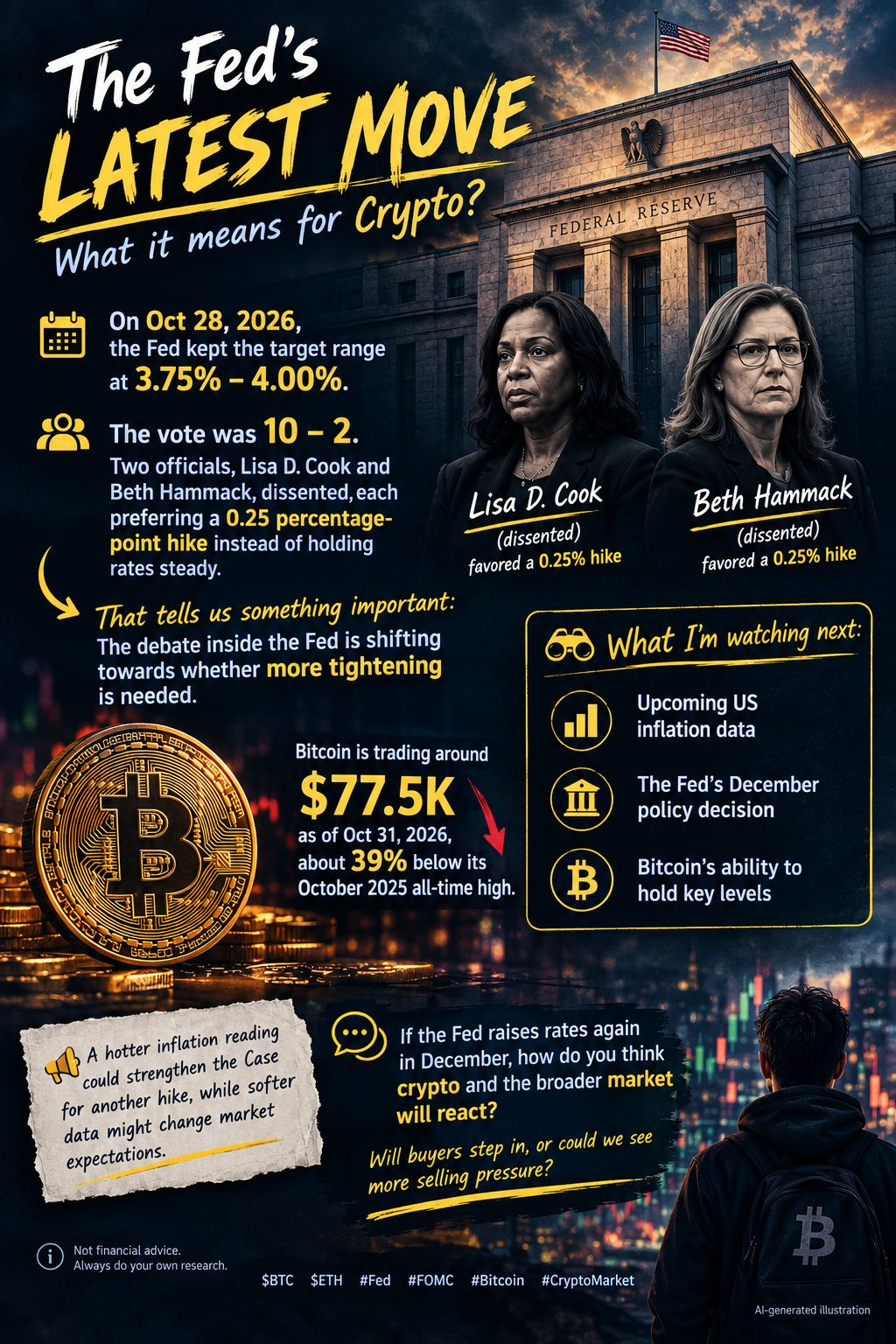
The Fed's latest decision has raised an interesting question for the crypto market.
On October 28, the Fed kept interest rates unchanged at 3.75%–4.00%. But the 10–2 vote caught my attention.
Two officials, Lisa Cook and Beth Hammack, actually wanted another rate hike instead of holding rates steady.
That tells us something important: the debate inside the Fed is shifting towards whether more tightening is needed.
Markets are now pricing in a significant possibility of another hike in December. Meanwhile, Bitcoin has fallen to around $77K, well below its October 2025 all-time high.
Here's what I'm watching next:
• Upcoming US inflation data
• The Fed's December policy decision
• Bitcoin's ability to hold its current levels
A hotter inflation reading could strengthen the case for another hike, while softer data might change market expectations.
I'm curious about one thing:
If the Fed raises rates again in December, how do you think Bitcoin and the broader crypto market will react?
Will buyers step in, or could we see more selling pressure?
Not financial advice. Always do your own research.
$BTC $ETH #Bitcoin #Fed #FOMC #CryptoMarket
76
·
--
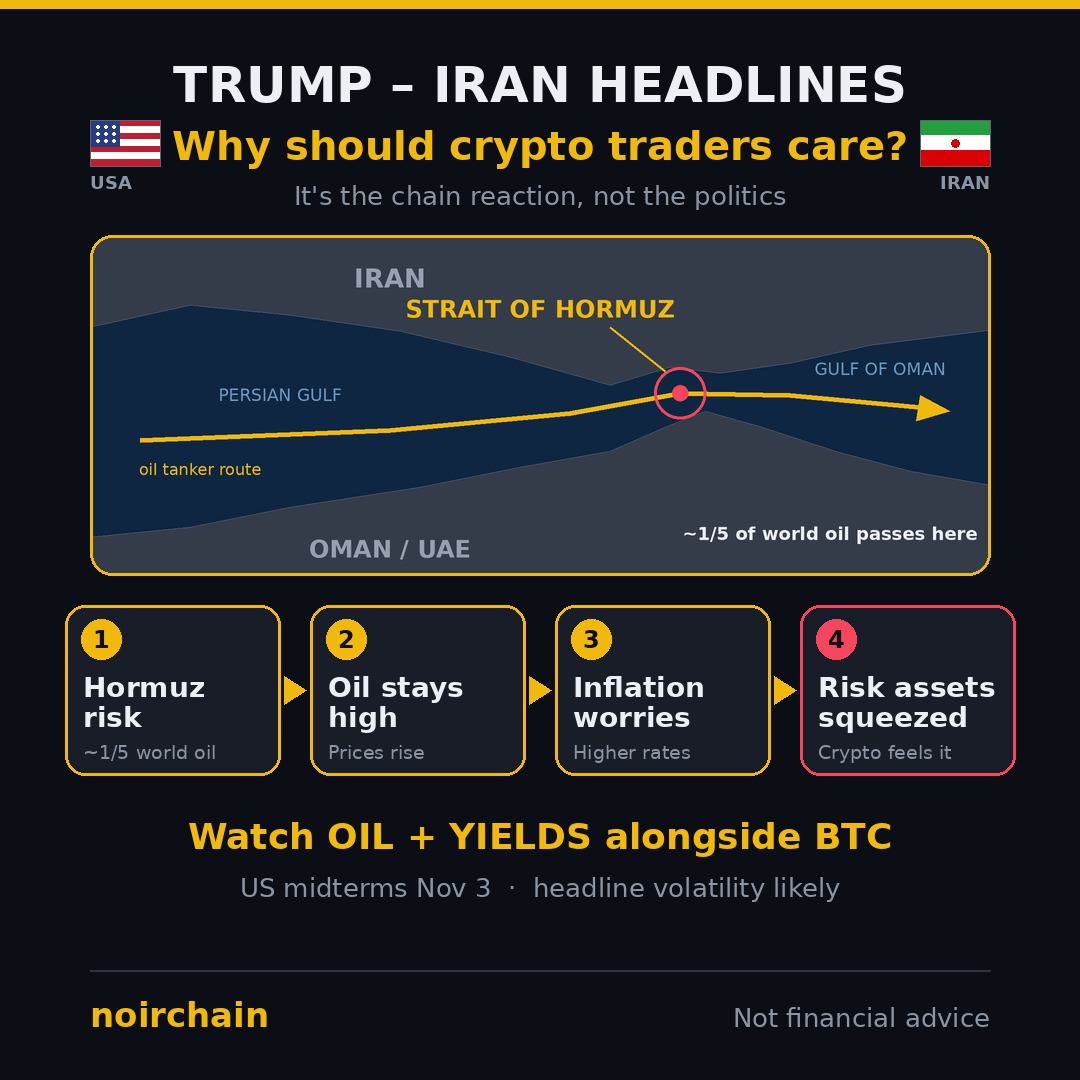
Trump + Iran headlines: why should crypto traders care? 🛢️₿
It's not about the politics. It's about the chain reaction:
🔹 Iran tensions → risk around the Strait of Hormuz (roughly 1/5 of the world's oil passes through it)
🔹 Oil stays high → inflation worries
🔹 Inflation worries → markets price in higher-for-longer rates
🔹 Higher rates → pressure on risk assets, crypto included
We've already seen BTC dip on days when Hormuz tensions flared. 📉
⚠️ The key point: crypto is no longer trading only on crypto news. Oil, yields, and the Fed matter too.
📅 With the US midterms on Nov 3 and diplomacy still uncertain, headline volatility is likely. Watch oil and Treasury yields alongside BTC.
What's your take: does geopolitics drive crypto more than the Fed now, or is it just short-term noise? 👇
$BTC $ETH #Bitcoin #Oil #Geopolitics #CryptoMarket #BinanceSquare
Not financial advice. For educational purposes only.
185
·
--
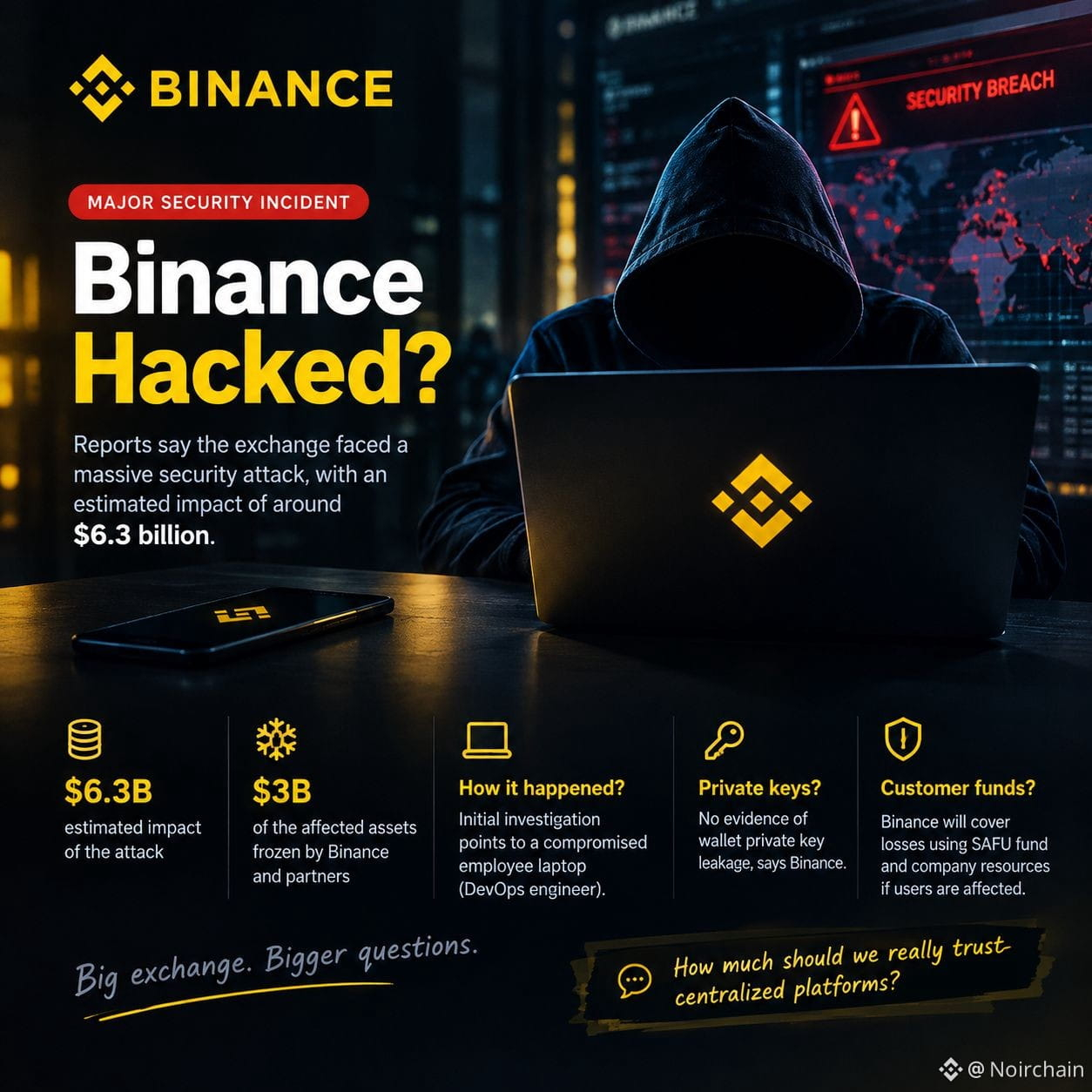
Honestly, I didn't expect to see news like this about Binance.
Reports say the exchange suffered a massive security attack, with the estimated impact reaching around $6.3 billion.
What caught my attention is that the initial investigation pointed to a compromised employee laptop. But Binance later uncovered additional points of breach, suggesting the attack was more complex than first reported.
Binance says around $3 billion in affected assets has been frozen with the help of industry partners. It also says there's no evidence of wallet private keys being leaked and that it will cover all losses.
Still, this incident raises a serious question.
If even one of the biggest crypto exchanges can face an attack like this, how much should we really trust centralized platforms?
Would you still keep your crypto on an exchange, or consider self-custody?
What's your take?
#Binance #CryptoSecurity #Bitcoin #Web3 #CryptoNews
4
·
--
Honestly, this is not a good time for the crypto market.
Bitcoin dropped below $78K, and ETH and BNB are also facing pressure.
The Binance security incident has also raised some serious questions about trust and security in centralized exchanges.
But I'm curious about one thing...
Do you still feel comfortable keeping your crypto on exchanges, or is self-custody becoming a better option?
Would love to hear what you guys think.
#Bitcoin #Binance #BNB #Crypto
89
·
--
👑 Who's the real boss of the crypto world?
Bitcoin, Ethereum, BNB or someone else? 👀🔥
Drop your favourite coin in the comments and tell us who rules the market! 🚀
#BinanceSquare #CryptoCommunity #BTC #ETH
👑 Who's the real boss of the crypto world?
Bitcoin, Ethereum, BNB or someone else? 👀🔥
Drop your favourite coin in the comments and tell us who rules the market! 🚀
#BinanceSquare #CryptoCommunity #BTC #ETH
Bitcoin, Ethereum, BNB or someone else? 👀🔥
Drop your favourite coin in the comments and tell us who rules the market! 🚀
#BinanceSquare #CryptoCommunity #BTC #ETH
1
34
·
--
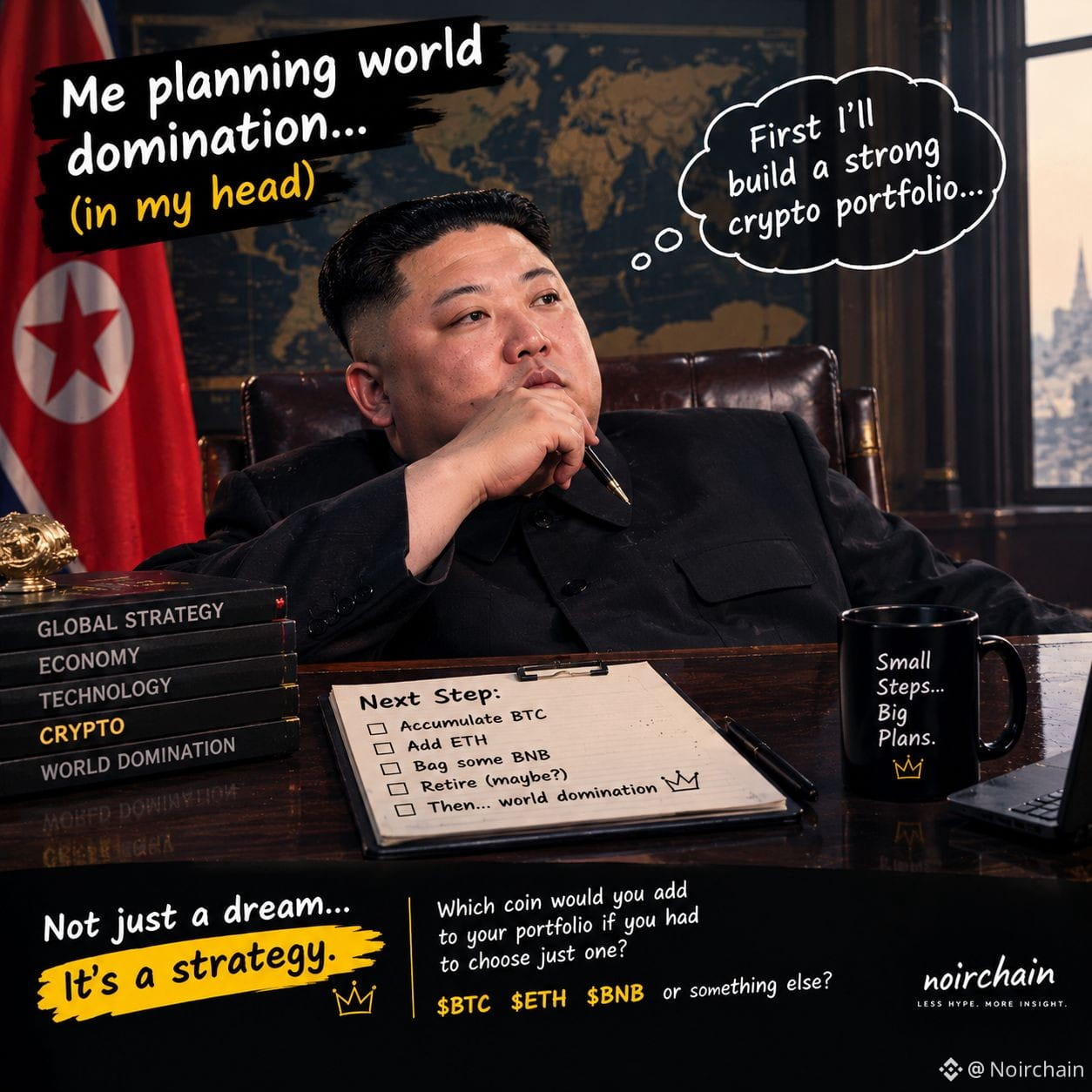
When the portfolio is small but the dreams are HUGE. 😂
What's your next crypto move?
$BTC $ETH $BNB
#CryptoMeme #noirchain
When the portfolio is small but the dreams are HUGE. 😂
What's your next crypto move?
$BTC $ETH $BNB
#CryptoMeme #noirchain
What's your next crypto move?
$BTC $ETH $BNB
#CryptoMeme #noirchain
1
61
·
--
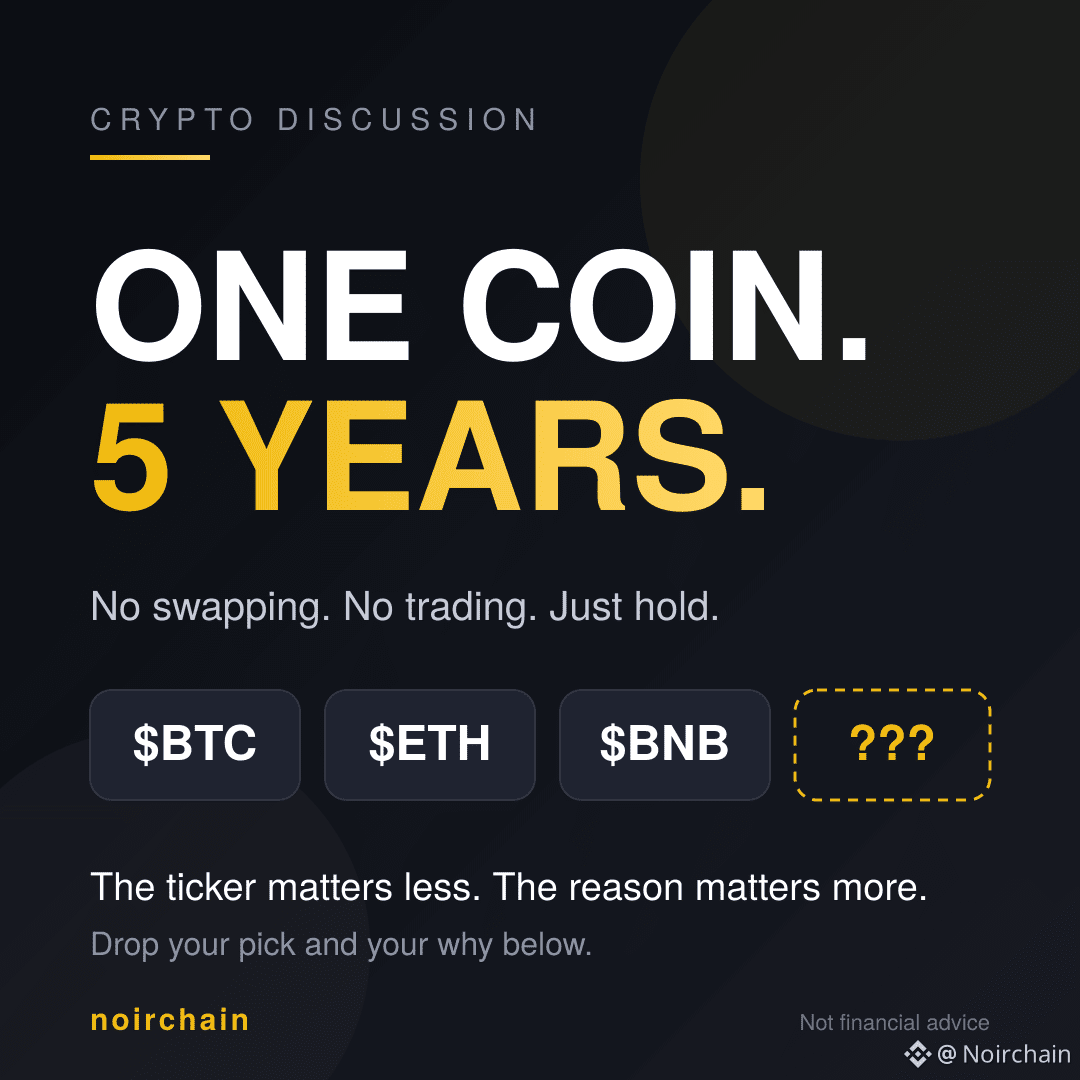
Let's have an honest crypto discussion.
If you had to hold just ONE cryptocurrency for the next 5 years, what would it be?
$BTC , $ETH , $BNB , or something completely different?
And more importantly, why would you choose it?
I'm more interested in your reasoning than just the ticker.
#CryptoCommunitys #BTC
If you had to hold just ONE cryptocurrency for the next 5 years, what would it be?
$BTC , $ETH , $BNB , or something completely different?
And more importantly, why would you choose it?
I'm more interested in your reasoning than just the ticker.
#CryptoCommunitys #BTC
1
96
Log in to explore more content
Join global crypto users on Binance Square
⚡️ Get latest and useful information about crypto.
💬 Trusted by the world’s largest crypto exchange.
👍 Discover real insights from verified creators.
Email / Phone number
Trending Topics
BinanceReopensWithdrawalsForHYPE&APT
11,603 views
285 Discussing
Binance Re-Enables Withdrawals for HYPE and APT, Extends List of Restored Assets
Binance News
·9 Likes
·5.3k views
SouthKoreaDraftLawTargets15To20%ShareholderCap
18,473 views
216 Discussing
TradFiForBeginners
126,359 views
1,327 Discussing