

Original article by: Boyd Cohen, PhD
Original source: medium
Compiled by: Baize Research Institute
DeFi (decentralized finance) took off in the summer of 2020, becoming synonymous with the last cryptocurrency bull run and the massive amount of speculation that has followed since. DeFi was born, in part, to solve the problem of banks and institutions failing to provide a transparent and inclusive financial system.
ReFi (Regenerative Finance), rooted in the theory of regenerative economics, aims to use cryptocurrency to respond to climate change, support environmental protection and protect biodiversity in a more inclusive and sustainable way, introduce incentive mechanisms, and have a positive impact on green development. Contributive behaviors are rewarded to promote social sustainability. I predict that ReFi will be even hotter than DeFi in 2023, especially at the intersection of cryptocurrencies and climate change.
Bear markets and crypto corporate scandals aside, Ethereum consolidation has dominated much of the cryptocurrency narrative in 2022. Among the merger events, what is most debated by the crypto community is that Ethereum’s new Proof-of-Stake (PoS) consensus mechanism has resulted in a significant reduction in carbon emissions, especially compared to Bitcoin’s energy-intensive consensus mechanism Proof-of-Work (PoW). .
However, this is just the tip of the iceberg when it comes to the relationship between cryptocurrencies and climate. As we enter 2023, we can already see dozens of ReFi projects leveraging cryptocurrencies to accelerate users’ path to a low-carbon economy, as well as the emergence of many new venture funds focused on investing in ReFi projects.
ReFi blockchain and projects are emerging
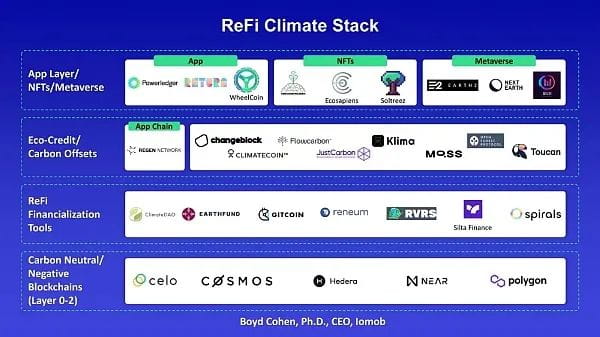
Currently, there are many Layer-1 and Layer-2 blockchains that explicitly promote and support the low-carbon economy, and even create bounties to encourage ReFi projects to be deployed on their blockchains. Including Cosmos, Internet Computer, Hedera, Topl, Polygon, Celo, Near, Algorand, etc.
However, for me, it is more interesting to explore the ReFi projects deployed on these blockchains, as they emerge, giving cryptocurrencies the potential to have a more direct impact on people and the planet.
ReFi’s top use case is climate, aiming to bring more transparency to the $270 billion global carbon offset market. The carbon offset market has long been plagued by doubts about its credibility on both the supply and demand sides.
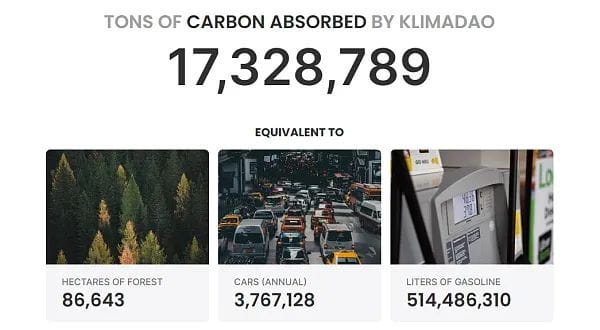
Regen Network, built on the Cosmos blockchain, focuses on helping businesses purchase, trade and recycle carbon credits on-chain. Meanwhile, Klima DAO creates a tokenized carbon offset solution that, at the time of writing, has supported the transparent removal of more than 17 million tons of carbon dioxide from the global atmosphere.
What excites me even more is that we could see the beginnings of ReFi growing outside of the blockchain and carbon offset space. Every industry and consumer activity has some kind of climate impact, and ReFi projects are emerging to address these challenges.
Similar to the introduction of carbon offsets on-chain, Reneum is leveraging blockchain technology to create greater transparency in the renewable energy credits (REC) space. Powerledger, meanwhile, has been an early player in facilitating peer-to-peer (P2P) and decentralized renewable energy trading since its founding in 2016.
I believe that at the user level, ReFi projects can adopt a gamification approach, such as through Move-to-Earn (M2E), linking M2E with low-carbon emission reduction, allowing personalized, transparent and tokenized carbon offsets to be used in 2023 becomes a reality.
ReFi Games: Impact the environment while playing games
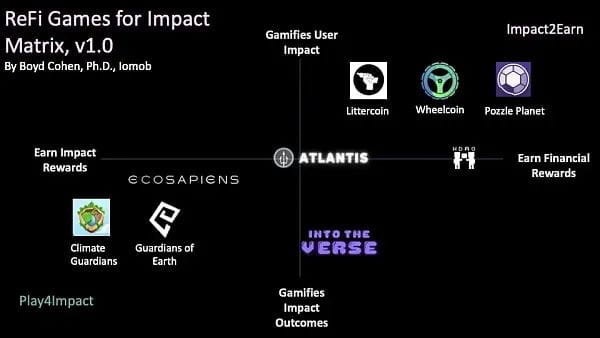
There are already dozens of games in the ReFi space that have been released or are expected to be released in early 2023. I created a chart to try to figure out how diverse the ReFi gaming space is and the types of rewards users can earn.
Reward type
Reward type is reflected on the x-axis. On the left is "Earn Impact Rewards" and on the right is "Earn Financial Rewards".
Earn impact rewards: The primary reward for users playing ReFi games is impact rewards (e.g., earning trees planted on the user’s behalf).
Earn financial rewards: The main rewards for users to play ReFi games are cash or cash-valued rewards (e.g. cryptocurrencies, cash-valued prizes, etc.).
game mechanics
The game mechanics on the y-axis reflect the main role of the game in the application. The upper part is "Gamifies User Impact" and the lower part is "Gamifies Impact Outcomes".
Gamifying user impact: Attempts to gamify user impact on areas of ReFi focus (e.g. garbage collection).
Gamify impact outcomes: Aim to make fun games that are more like traditional Web2 or Web3 games, but embed impact in some way into the outcome of the user playing the game (e.g., the winner who wins the game and gets points, can Rewards are distributed to influential organizations).
2 different types of ReFi games
There are currently two different types of ReFi games, “Play4Impact” (playing games to gain influence) and “Impact2Earn” (making money while influencing).
The main feature of Play4Impact is that the game allows players to obtain impact rewards by playing interesting games, but does not require players to have an impact in real life, just like Alipay Ant Forest.
Impact2Earn often allows players to have an impact on their lifestyle through games while receiving financial rewards, such as uploading photos of themselves collecting garbage in daily life and receiving certain rewards.
The items in Play4Impact appear to have a more advanced game design than most items in Impact2Earn. This is logical because in this category players are not just looking to win rewards, so the game has to be sticky and engaging.
Play4Impact game inventory
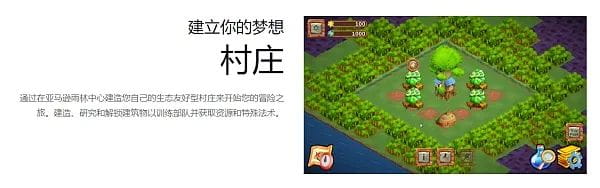
Climate Guardians: Climate Guardians describe themselves as games "played to protect the environment" and they clearly fall into the Play4Impact category. Players take part in the game, join a tribe, and fight climate change by protecting the rainforest. Players pay to acquire in-game assets, and part of the rewards earned will be automatically donated to the Rainforest Conservation Fund managed by the user community.
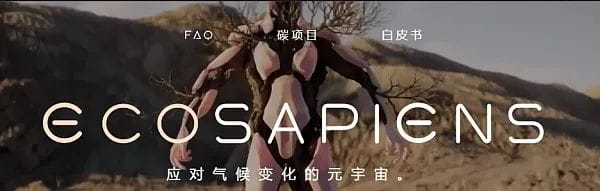
Ecosapiens: Although Ecosapiens calls itself the Impact2Earn category, I would classify it as the Play4Impact category. However, it's like a mixture of both categories. In the initial version, Ecosapiens did not have much obvious gameplay, but users contributed through carbon NFTs established by Ecosapiens, allowing users to "automatically purchase carbon at global carbon market prices and cast carbon into NFTs."
Guardians of Earth: Although this project is still a long way from launching a game, a colleague of mine who studies the ReFi space recommended it to me. Guardians of Earth blends gaming and real life to raise player awareness of environmental issues. From what I understand, players can get impact bonuses for nature conservation.
Impact2Earn game review
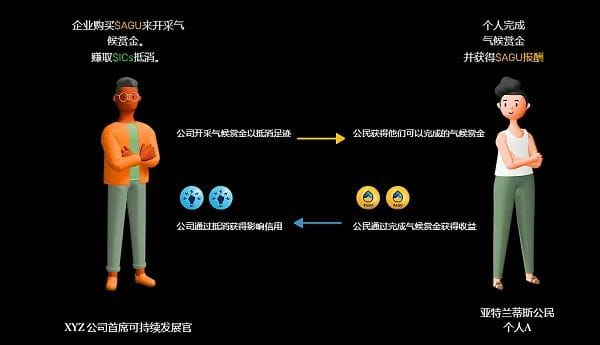
AtlantisDAO: AtlantisDAO combines all the topics covered in the chart very neatly. Companies seeking to offset their carbon emissions purchase $AGU, the reward token, and "mine" the in-game Atlantis to offset $IC, and players can choose to help companies earn $IC. In return, players will receive $AGU from the company.
HumanDAO: HumanDAO aims to use cryptocurrency to help meet the needs of the nearly 2 billion people around the world who have access to the internet but earn less than $20 a day. HumanDAO provides two ways to enable their target audience community to earn more revenue. One is Learn2Earn (learn while earning), and the other is Play2Earn (play while earning).

Into the Verse: Into the Verse is a metaverse platform based on the Celo blockchain where players live in virtual cities and own virtual banks and farms. Into the Verse is harder to classify as their rewards include both cash value tokens and impact rewards for donating to a Universal Basic Income (UBI) project, suggesting it is a mix of impact and financial rewards.

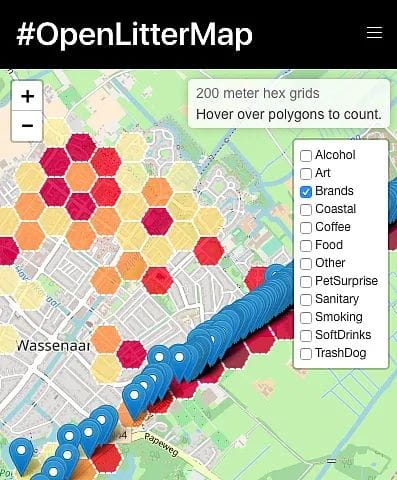
Littercoin: Littercoin is designed to raise awareness about litter, encouraging players to geotag and photograph litter as well as help with litter collection. In return, players receive Littercoin, which I originally thought was a tradable on-chain token, but I learned after the project was officially released that Littercoin can only be exchanged for fiat currency with “climate merchants.”
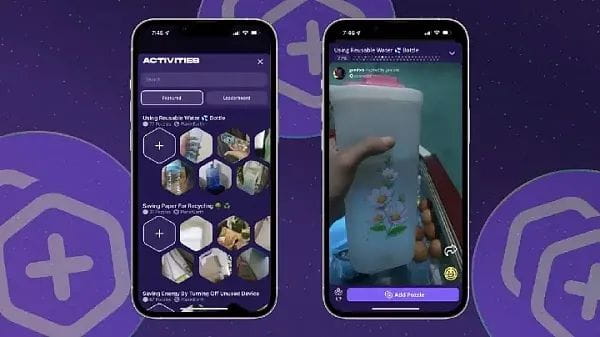
Pozzle Planet: Pozzle Planet, like Littercoin, encourages users to participate in activities that are good for the planet. In return, users will receive $POZ, a virtual currency used in the pozitive world.
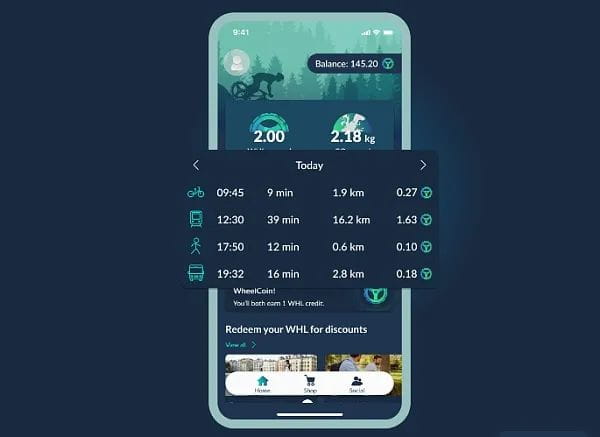
WheelCoin: WheelCoin is a Move2Earn game designed to promote green travel among players. Players will be rewarded with $WHL tokens, and 1 WHL = 1kg of carbon emissions avoided. WHL can already be exchanged for discounts on green transportation and will soon be available for acquiring NFTs.
Venture Capital and Global Initiatives
In December 2022, the World Economic Forum launched the Crypto Sustainability Alliance to focus on accelerating the adoption of ReFi. The well-known project X Prize, originally founded by Elon Musk to reward innovative solutions to combat climate change, is now entering the ReFi space as well.
In the past few months, several new venture funds and decentralized autonomous organizations (DAOs) have been launched focusing on the ReFi space, such as Cerulean Ventures, AeraForce DAO, ReFi Venture Studio, Allegory, a100x, Vanagon Ventures, Possible Ventures and Draft Ventures. Just as mainstream venture capital increasingly embraces environmental and social governance (ESG) metrics and launches sustainability-focused funds, I believe that in 2023 we will also start to see more crypto venture capital deploying ReFi themed funds.
Summarize
As ReFi heats up in 2023, ReFi projects are emerging that aim to engage companies and users in solving the world’s many problems while leveraging cryptocurrencies to tokenize their contributions and financially reward them.
I believe 2023 will be the year that ReFi gains more mainstream attention and adoption, truly proving the ability of cryptocurrencies to have a direct impact on the real world, and helping to shift the crypto narrative from the “crypto corporate crash” of 2022. Promote a more sustainable low-carbon economy.
(The above content is excerpted and reprinted with the authorization of partner MarsBit, original text link | Source: Baize Research Institute)
Statement: The article only represents the author's personal views and opinions, and does not represent the objective views and positions of the blockchain. All contents and opinions are for reference only and do not constitute investment advice. Investors should make their own decisions and transactions, and the author and Blockchain Client will not be held responsible for any direct or indirect losses caused by investors' transactions.
This article Overview of Regenerative Finance ReFi: Projects and VCs have emerged one after another, which may become the “big narrative” of Web3 this year. First appeared on Blockchain.