
The Cosmos community is in a dilemma as a major proposal to cut the maximum inflation parameter of ATOM, the network’s native cryptocurrency, has sparked heated debate among stakeholders. The proposal, if passed, would aim to cut the maximum inflation from 20% to 10%, resulting in a significant drop in the current inflation rate from around 14% to 10%. The move would also reduce the staking APR (annual percentage yield) from around 19% to around 13.4%.
The proposal is currently facing stiff opposition, with 41.4% of the votes cast against it. Voting continues until November 26, adding to tensions and speculation about the possible outcome.
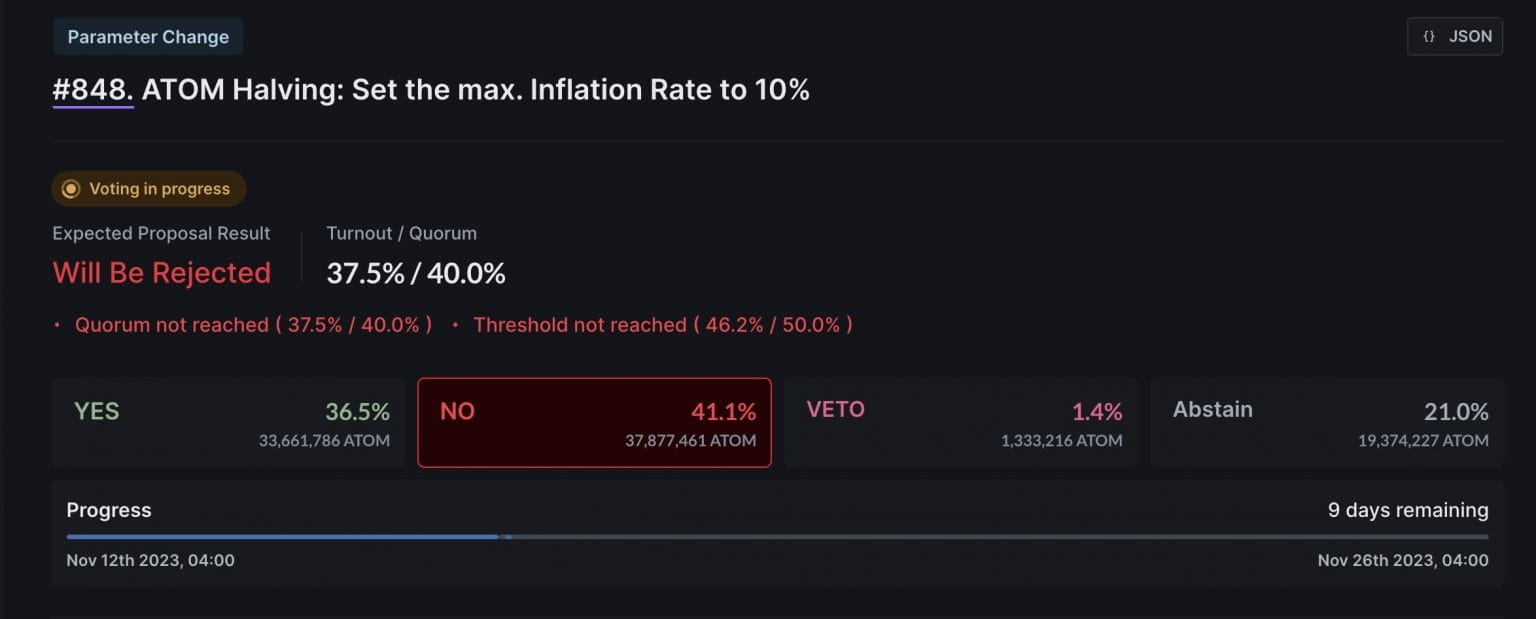
Source: mintscan.io
This proposal, which is central to the network’s dynamics, goes to the heart of ATOM’s inflation model. Cosmos uses a dynamic inflation rate that ranges from a 7% floor to a 20% ceiling, tied to the staked or guaranteed portion of ATOM. If less than 2/3 of all ATOM are staked, the inflation rate will escalate to incentivize staking and increase chain security. Currently, ATOM’s guaranteed portion hovers at 65.7%, below the critical threshold, causing the inflation rate to increase at +0.45% per year.
ATOM’s proposed reduction in inflation has broader implications, particularly in strengthening the Atom Economic Zone (AEZ) and enhancing Inter-Blockchain Communication (IBC) DeFi protocols. The AEZ, which includes platforms like Neutron and Stride, seeks to strengthen its foundation with the Cosmos Hub serving as a security backbone for emerging consumer chains. However, maintaining ATOM’s value proposition as a security provider requires ensuring sustainability and predictability of future supply.
This drop is likely to invigorate the adoption of IBC DeFi protocols and money markets across the chain. ATOM, as a highly liquid and recognizable asset in this ecosystem, is poised to function as collateral and liquidity gateway. However, its high inflation rate hinders DeFi returns, slowing down development and user adoption.
This proposal also aligns with concerns about ATOM’s network security and price performance. Historically, ATOM’s higher inflation rate relative to its peers has eroded its perceived monetary reward, contributing to persistent selling pressure and lackluster price performance. Research from Blockworks Research supports the move to a fixed supply schedule, arguing that the current dynamic inflation mechanism exceeds the necessary security requirements, ultimately harming ATOM’s value.
Furthermore, this proposal has implications for validators in the Cosmos ecosystem. At the current price of ATOM, this proposal could impact validator profitability, especially those at lower thresholds, potentially forcing them to operate at a loss or break-even point.
This proposal marks the first in a series of initiatives, with subsequent proposals expected to address the minimum inflation parameter and the rate of inflation change, signifying a broader re-evaluation of ATOM’s supply schedule.
As the community continues to vote, the outcome of this proposal will shape the trajectory of Cosmos and reverberate across the broader blockchain ecosystem. The debate continues to rage, including the critical choice between balancing network security, driving adoption, and maintaining ATOM’s value proposition in the growing decentralized finance landscape.
https://tapchibitcoin.io/cong-dong-cosmos-bi-chia-re-ve-de-xuat-giam-mot-nua-ty-le-lam-phat-cua-atom.html
