


Key takeaways
Transparency of user funds is essential to regain public and regulatory trust in the crypto sector, and to strengthen its image as a mature sector managed by responsible stakeholders.
Binance’s Proof of Reserves (PoR) system is the embodiment of our commitment to the protection of user funds and transparency.
As of November 2023, Binance's PoR system allows you to view our users' fund reserves denominated in 31 different digital assets.
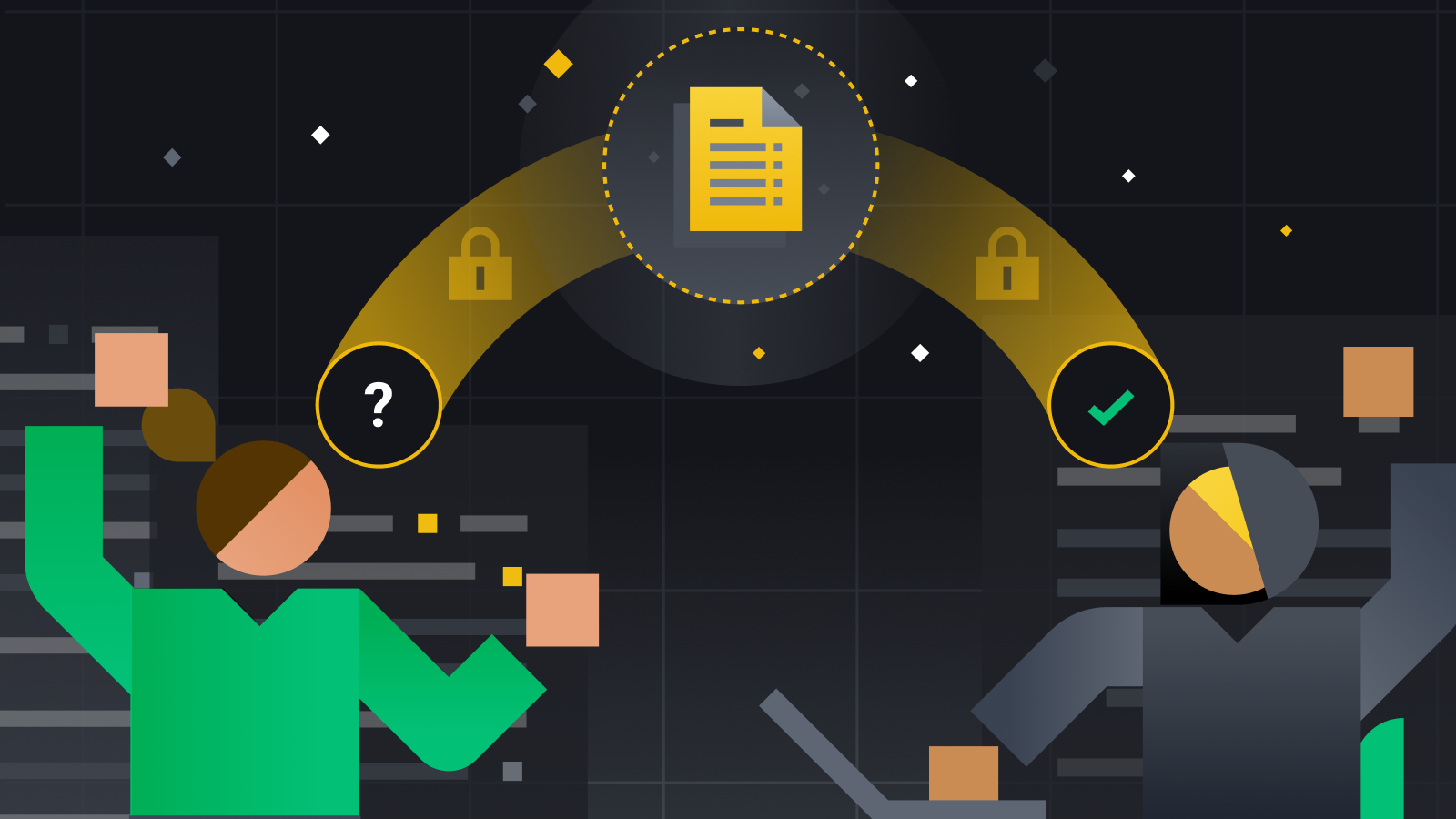
A year ago, in the midst of a crisis that severely tested public trust in crypto, Binance joined the effort by everyone in the sector to restore that trust. Words did not seem enough to us, so we tried to show that maturity and reliability are part of the very essence of the digital asset ecosystem in order to silence the criticisms that were omnipresent at the time and still very frequent today. 'today. We developed a six-part framework that could be adopted by all centralized crypto exchanges wishing to join forces to regain user trust. This approach was based on two key principles: the prominence of user funds and transparency.
Our Proof of Reserves (PoR) system implemented in November 2022 was designed to apply these two principles. The most important thing, the responsible management of user funds, was already assured: from the birth of our company, we decided never to take unnecessary risks with the assets that users entrust to us, to maintain sufficient reserves to cover the withdrawals of any amount and prioritize security. The challenge then was to find a way to make this desire more visible.
When we unveiled our system, it only allowed viewing of BTC reserves, and at the end of 2022, it was already possible to view a total of nine tokens. One year later, Binance's PoR system features named reserves in 31 digital assets that we hold for our users, more than any other major centralized exchange providing similar information. In all circumstances, it indicates that the balance of each of these 31 assets is greater than 100%. Our proof of reserves system is still under development. It has undergone numerous upgrades over the past year, and it continues to evolve with each iteration.
Transparency technology
Blockchain is the ideal environment to ensure and realize fund transparency: however, the scale of Binance's user base and operations restricts technology solutions capable of providing easy access to reliable evidence of our reserves at who wants it.
The original system relied on Merkle tree cryptography, an approach to consolidating large amounts of data into a single hash to add the data on the blockchain to our reserves. The verification process involves creating a Merkle tree encoding user IDs with the net balance of their assets held at the token level. The result of this process, called a Merkle root, acts like a cryptographic seal that “summarizes” all the data it contains. This method also gives users the ability to view specific subsets of encoded data, making it easy to ensure their own assets are stored securely.
However, this design only provided full transparency if the balances of each account were made public, which we did not want to do for security and confidentiality reasons. There is another shortcoming to conventional Merkle trees, which can potentially be manipulated by adding dummy user accounts with negative balances to distort the overall reserve status.
To address these limitations, our developers implemented zk-SNARK protocols in the February 2023 upgrade, a form of Zero-Knowledge proof layered on top of the main Merkle tree. This type of cryptographic proof allows one party to establish the validity of a statement given to another party without disclosing its content. In our situation, it allows Binance to prove that it fully backs its users' funds without revealing the balances of each person's account. Through this association of a zk-SNARK protocol with a Merkle tree, users are able to verify that their funds are included in the calculation of the total net balance of user assets.
Create hand in hand with our community
Our implementation of zk-SNARK cryptography marked the first application of this approach by a crypto organization for the purpose of designing proof of creditworthiness solutions. We wanted the rest of the industry to benefit from this innovation too: that’s why we made the code for our PoR system open source. We also asked the community for feedback to make the system even more robust, and they responded to our call.
Shortly after the February go-live, for example, a blockchain security company audited our code and reported a vulnerability in the upgraded proof of reserves solution, which we quickly fixed. This incident proves that we want to prioritize transparency of user funds industry-wide. Rather than rushing to be the first to propose a solution, we want all our colleagues from all walks of life to perform better at this, and we happily accept any external contribution that helps us do better. find ourselves in this unexplored terrain. When it comes to regaining trust by improving transparency, everyone’s efforts benefit everyone.
Binance remains committed to backing user assets at a ratio of at least 1:1 in all circumstances, as well as constantly working on innovative ways to reassure users while maintaining the transparency of our reserves. As demonstrated by the most recent iteration (the 12th) of our Proof of Reserves program launched in early November, we held enough BTC to cover 104% of our clients' net balances, 105% of our clients' ETH balances, 111% of our clients' BNB balances and over 118% of all USDT deposited by users on our platform. Your funds are safe with Binance, and you can see it for yourself at any time.
For more information
Source code of our PoR system
Binance Proof of Reserves System: What is a Merkle Tree?
Binance Academy: Improving Crypto Transparency with Zero-Knowledge Proofs
How do zk-SNARKs improve Binance’s proof of reserves system?