

Author: Jiang Haibo, PANews
With the launch of the Ordinals protocol and the creation of the BRC-20 token standard, the dynamics of the Bitcoin network have changed significantly. These innovations have led to persistently high levels of unconfirmed transactions in Bitcoin’s mempool, increasing demand for block space and thereby boosting miners’ income. Bitcoin’s computing power has grown by more than 80% this year, and these fundamental improvements may be the main reason why Bitcoin performs better relative to other cryptocurrencies before the spot ETF narrative begins.
Due to the rise of BRC-20 assets and the excellent performance of BTC prices, the Bitcoin ecosystem has received more attention, and ORDI, RUNE, etc. have performed well in this round. Below, PANews will discuss the DeFi projects of the Bitcoin ecosystem by category. The following data are all as of November 14.
DeFi projects on cross-chain or Ethereum
As the most important crypto asset, Bitcoin accounts for about 50% of the market value. One of the research directions of DeFi projects has always been to safely introduce Bitcoin to other chains (mainly Ethereum). At present, the most important BTC anchor coin is still WBTC, but the underlying BTC is centrally managed by BitGo. In the decentralized field, there are usually cross-chain and synthetic asset methods to mint Bitcoin anchor coins on Ethereum. The main decentralized BTC anchor coins include tBTC issued by Threshold, renBTC issued by Ren Protocol, sBTC of Synthetix, etc.
TBTC was introduced to Ethereum and other networks by Threshold's decentralized cross-chain bridge. The Threshold official website shows that the current issuance volume is 1662.9 tBTC, which is also the main decentralized Bitcoin anchor currency. Curve is the main application place for tBTC, and the stablecoin crvUSD also supports tBTC as collateral.
The Ren Protocol team was previously acquired by Alameda Research. Affected by the latter's bankruptcy, Ren is now in a transition period from Ren 1.0 to Ren 2.0. Currently, 304.5 RenBTC have been issued on Ethereum.
Synthetix's sBTC was once one of the main decentralized Bitcoin-pegged coins, but because the stablecoin sUSD is a more important synthetic asset in the Synthetix ecosystem, the development of sBTC has not received much attention. Currently, 391.5 sBTC have been issued on Ethereum, and there are also issuances on Optimism.
BadgerDAO, which focuses on bringing Bitcoin into DeFi, has also performed well recently. It provides automated staking services, allowing users to deposit WBTC and other assets and earn returns. In addition, BadgerDAO has a decentralized stablecoin DIGG that is pegged to the price of Bitcoin. With the development of Ethereum liquidity staking, BadgerDAO also plans to launch synthetic Bitcoin eBTC minted with stETH as collateral.
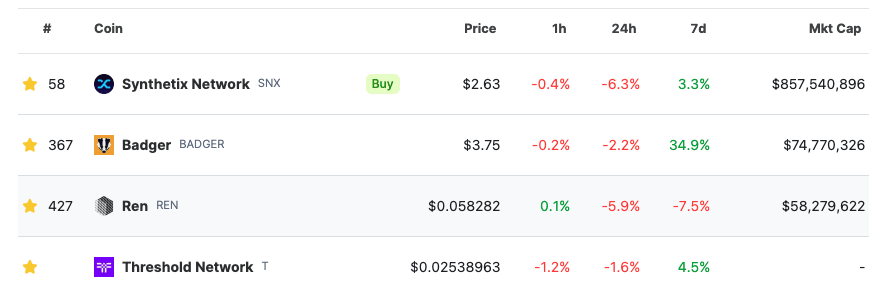
According to CoinGecko data, the native tokens of Threshold, Ren, Synthetix, and Badger among the above projects have increased by 4.5%, -7.5%, 3.3%, and 34.9% respectively in the past 7 days.
DeFi projects on Bitcoin sidechain or Layer 2
Bitcoin does not support full smart contract functionality, but only supports a limited scripting language, and does not have complex smart contract functionality like Ethereum. However, DeFi operations within the Bitcoin ecosystem can be achieved with the help of sidechains or Layer 2 solutions, including Lightning Network, Rootstock (RSK), Stacks, Liquid, MintLayer, RGB, etc. Such projects take advantage of Bitcoin's security while trying to increase transaction speeds and reduce costs.
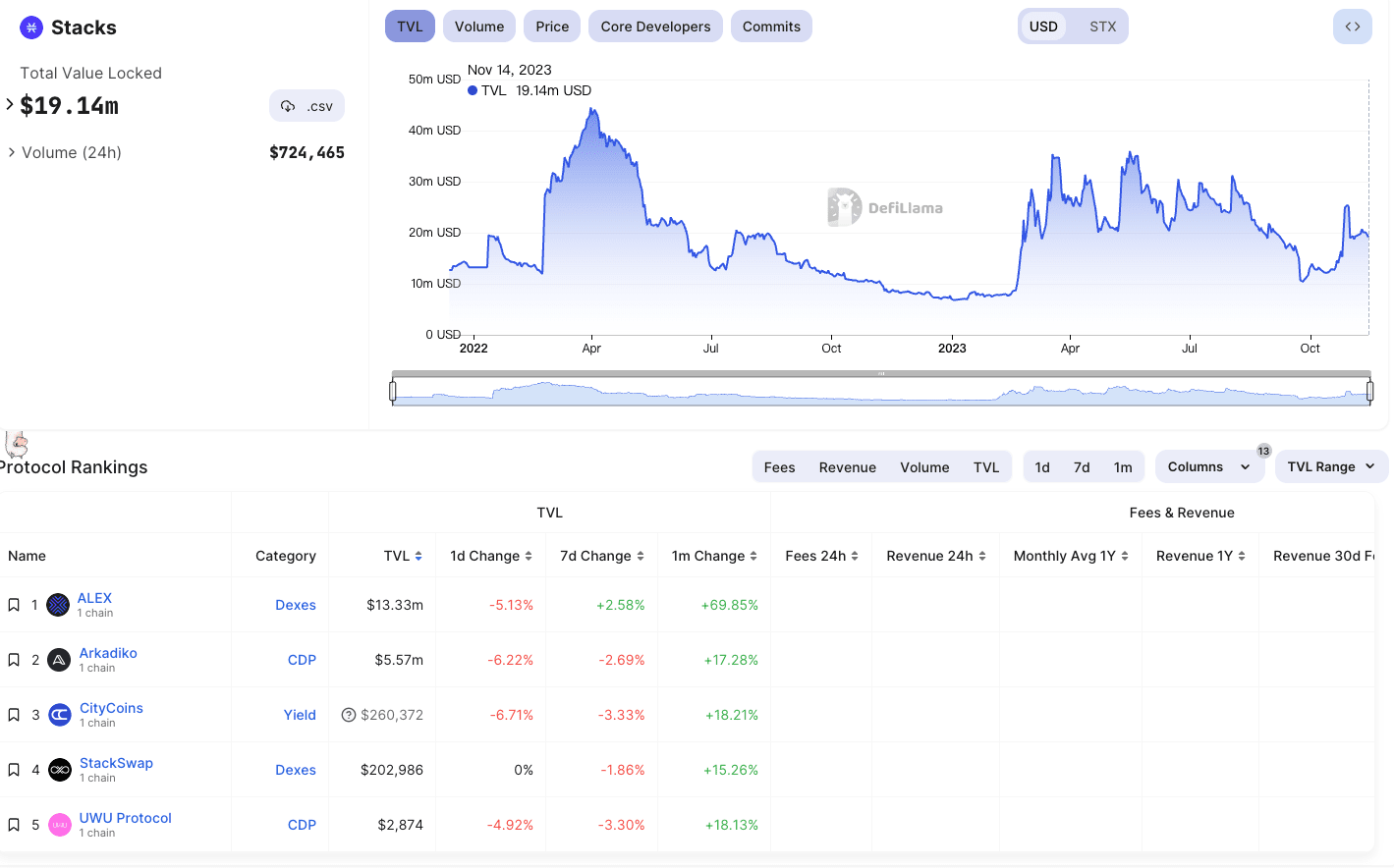
Among these Layer 2 or sidechain projects, Stacks has launched the native token with the highest market value. According to DefiLlama data, the current TVL of Stacks is $19.14 million. Among the DeFi projects on Stacks, the decentralized exchange ALEX has the highest TVL of $13.33 million, and has increased by 69.85% in the past month.
RSK is a sidechain of Bitcoin. It ensures network security by combining the Proof of Work (PoW) system of Bitcoin miners and RSK miners, achieving a two-way anchor between Bitcoin and RSK.
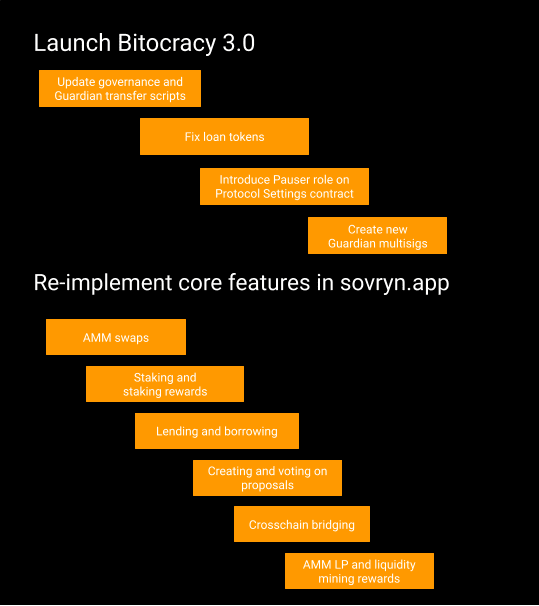
Sovryn is a Bitcoin DeFi platform on RSK, which provides almost a full set of DeFi services, such as stablecoin DLLR, Sovryn AMM for trading, lending pools, and margin trading. DefiLlama shows that Sovryn's TVL is currently $27.23 million. Money On Chain has a stablecoin DoC based on RSK's Bitcoin RBTC collateral, and a secondary investment token BPro, which allows users to redeem RBTC for an equivalent value of DOC. The current issuance of DoC is 3.69 million.
The Bitcoin Lightning Network is a second-layer payment protocol built on the Bitcoin blockchain, designed to enable fast, cheap small payments while significantly increasing the transaction throughput of the Bitcoin network. This is achieved by creating payment channels, and all transactions conducted by users within the channel do not need to be recorded immediately on the Bitcoin blockchain, but only recorded on the blockchain when the channel is opened and closed. According to 1ML data, the current funds on the Lightning Network are US$194 million, which has remained unchanged in the past 30 days; the number of nodes is 14,615, which has decreased by 1.98% in the past 30 days; the number of channels is 62,671, which has decreased by 2.4% in the past 30 days.
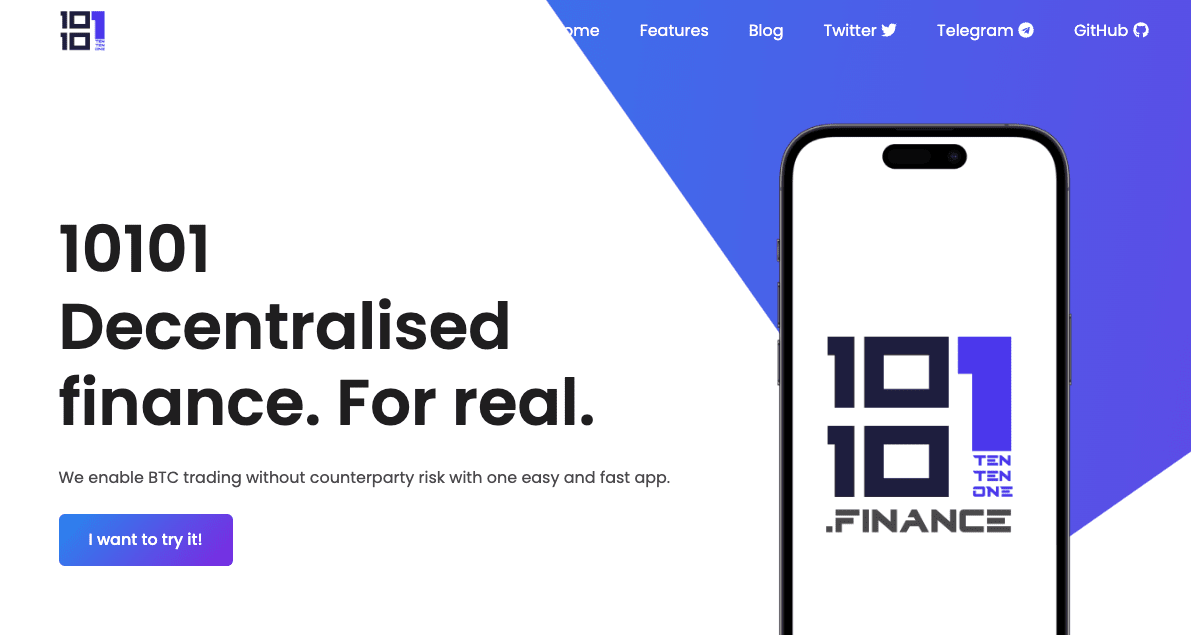
10101 Finance is a derivatives protocol built on the Lightning Network that can trade CFDs, options and other derivatives secured by Bitcoin, as well as a synthetic stablecoin. The team has previously developed multiple products based on Bitcoin, including atomic swaps between Bitcoin and Ethereum.
DeFi functions based on specific protocols such as Ordinals
Ordinals embeds data (such as images, text, etc.) directly into the witness portion of a Bitcoin transaction, thereby permanently storing non-monetary data on the Bitcoin blockchain. Based on Ordinasl, a token standard BRC-20 similar to Ethereum ERC-20 was born, which can create a unique identifier representing a specific asset or token. Through the data embedded in Ordinals, complex financial transaction methods can be performed on the blockchain without Bitcoin itself supporting smart contracts.
Based on the brc-20 protocol, Unisats has established a brc20-swap that allows users to provide liquidity and trade, and claims that this is the first native Ordinals trading module running on the Bitcoin mainnet and using the brc20 protocol. brc20-swap implements the function of an automatic market maker, and also trades according to the x * y = k formula used by Uniswap V2 and others. The fee is 0.3%, and the liquidity provider receives 5/6 of the fee, and the remaining 1/6 is used as the platform fee. The fee is collected in the form of brc-20 asset SATS.
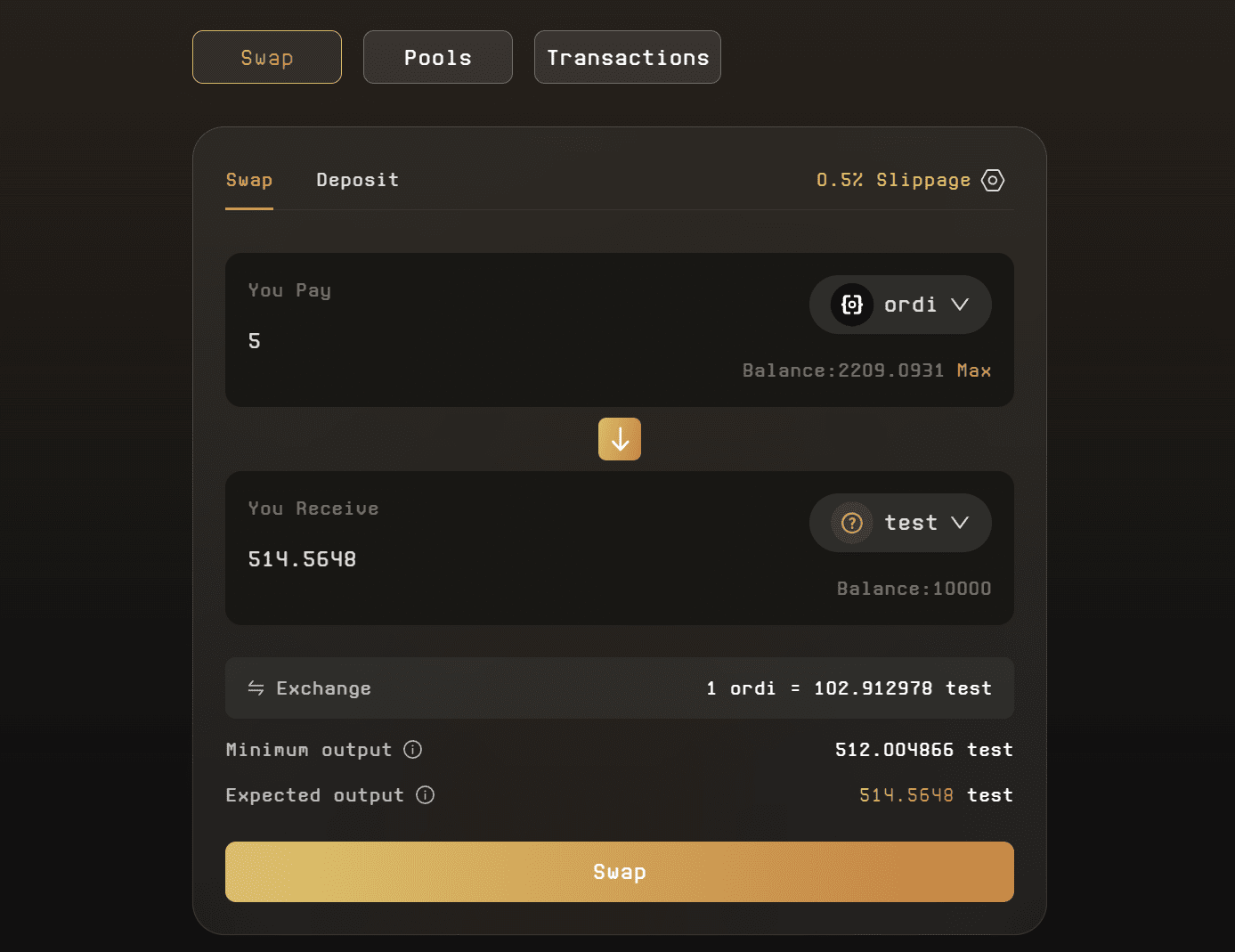
However, OKX CEO and others are also questioning the decentralization of brc20-swap, and it is difficult to achieve a completely decentralized DEX exchange. Although Unisats' brc20-swap inscription transaction supports decentralized participation and deployment in design, since the Bitcoin network itself does not support smart contracts, whether it can achieve a completely decentralized exchange remains to be discussed.
In addition, similar to Ordinals are Atomicals, Pipe, Runes, etc., which may also be able to achieve similar functions.
Other DeFi projects built on Bitcoin
In addition, there are some projects trying to implement basic DeFi functions on Bitcoin, which is an area with great challenges but great potential.
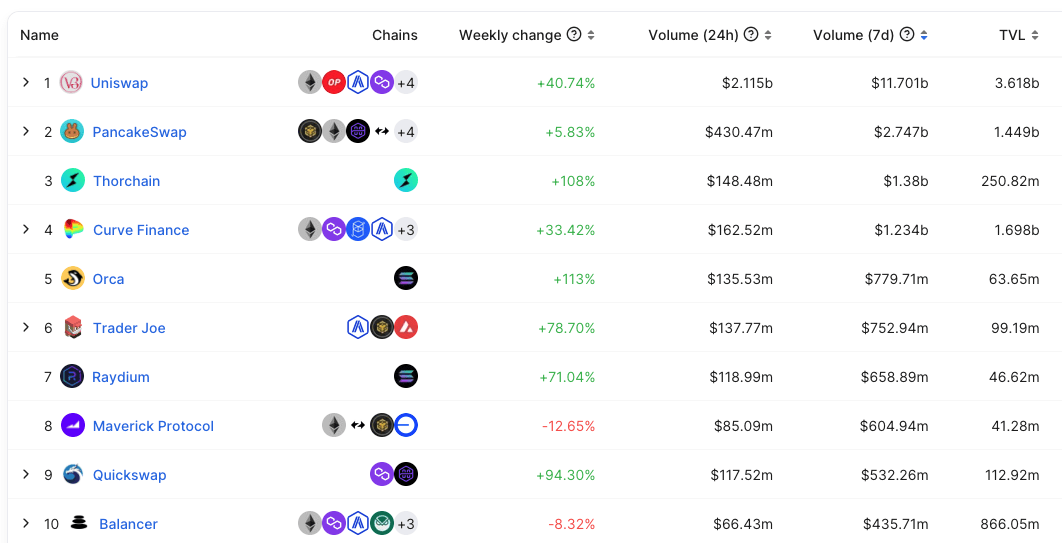
THORChain is the main venue for on-chain exchanges of native Bitcoin. It is a decentralized liquidity network with interoperable blockchains that supports cross-chain token exchanges. Its feature is that it does not anchor or wrap assets, but directly allows users to exchange tokens on different Layer 1 blockchains.
In the past 7 days, THORChain's trading volume was $1.38 billion, ranking third among all DEXs. Currently, THORChain's TVL is $250 million, up 106.7% in the past month. Its native token RUNE is also one of the best performing assets in recent times. The current price of RUNE is $4.84, up 39.3% in the past 7 days.
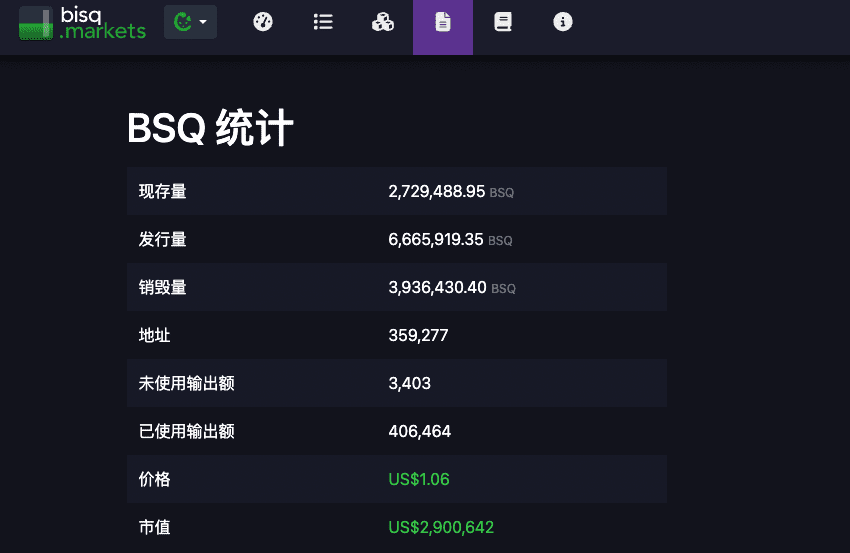
Bisq Network is a DEX that allows users to exchange Bitcoin for fiat or other cryptocurrencies. It runs in a trust-minimized manner and is operated by a DAO. Bisq issues BSQ as an incentive for contributors, and traders can also discount transaction fees by holding BSQ. The current market value of BSQ is $2.9 million.
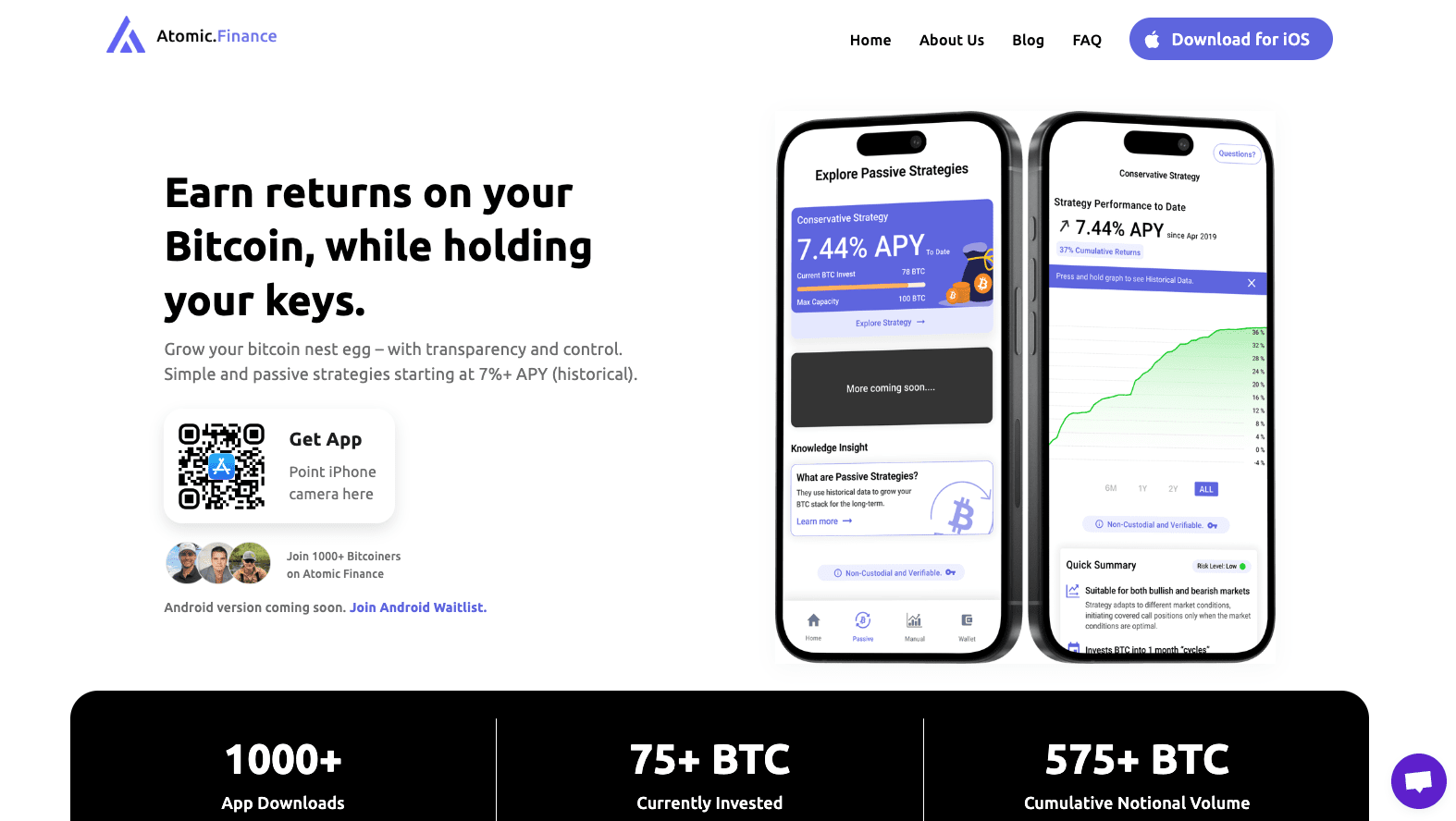
Atomic Finance combines Bitcoin's underlying technology with innovative contract mechanisms. It implements DeFi functionality on Bitcoin through Bitcoin's scripting language and discrete logarithmic contracts (DLCs). Bitcoin holders are able to use their assets more efficiently to earn returns while maintaining the security and decentralization of their assets. Currently, the App has been downloaded more than 1,000 times and the investment amount has exceeded 75 BTC.
summary
As the largest crypto asset by market value, the voices for developing applications on the Bitcoin network have never stopped. The above summarizes four types of solutions for developing DeFi applications on Bitcoin and lists some representative projects.
At present, protocols such as Ordinals built on Bitcoin account for a large number of transactions on the Bitcoin network. Other solutions, such as RGB and Taproot, are also technical routes that are favored by many people.