

Preface
In June last year, I conceived the simple idea of using a multi-factor model to select coins.
https://mirror.xyz/lucidafund.eth/UdOfxxKgD_Xuc_KrvGvsjrWZZCwKlWPAYNx991ZgmIA
nft://undefined/undefined/undefined?showBuying=true&showMeta=true
A year later, we have begun to develop multi-factor strategies for the crypto asset market and have written the overall strategy framework into a series of articles entitled "Building a Powerful Crypto Asset Investment Portfolio with Multi-Factor Strategies."
The general framework of this series is as follows (the possibility of fine-tuning is not excluded):
1. Theoretical basis of multi-factor model
2. Single Factor Construction
Factor data preprocessing
Data Filtering
Outlier processing: extreme values, error values, and null values
standardization
Neutralization: Industry, Market, Market Value
Factor validity judgment
Information ratio IC, rate of return, Sharpe ratio, turnover rate
3. Synthesis of major factors
Factor Collinearity Analysis
Orthogonality eliminates factor collinearity
Classical weighting method → Synthesis factor
Equal weight, rolling IC weighted, IC_IR weighted
Tests of synthetic factors: rate of return, group rate of return, factor value weighted rate of return, synthetic factor IC, group turnover rate
Other weighting methods (there is a nonlinear relationship between factors and returns): machine learning, reinforcement learning (due to the particularity of the cryptocurrency industry, not considered)
4. Risk Portfolio Optimization
The following is the main text of the first article *#TheoreticalFoundation#**.
1. What is a “factor”?
"Factors" are "indicators" in technical analysis and "features" in artificial intelligence machine learning, and are what determine the rise and fall of cryptocurrency yields.
Our team has classified the common factor types in the cryptocurrency field: fundamental factors, on-chain factors, quantity-price factors, derivative factors, alternative factors and macro factors.
The ultimate goal of mining and calculating "factors" is to accurately calculate the expected return of assets.
2. Calculation of “Factors”
(1) Derivation of the multi-factor model
Origin: Single Factor Model - CAPM
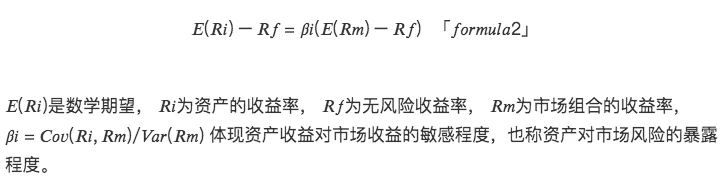
Factor research can be traced back to the 1960s, when the Capital Asset Pricing Model (CAPM) was developed. This model quantifies how risk affects a company's cost of capital and thus affects its expected rate of return. According to the CAPM theory, the expected excess return of a single asset can be determined by the following univariate linear model:
Additional understanding:
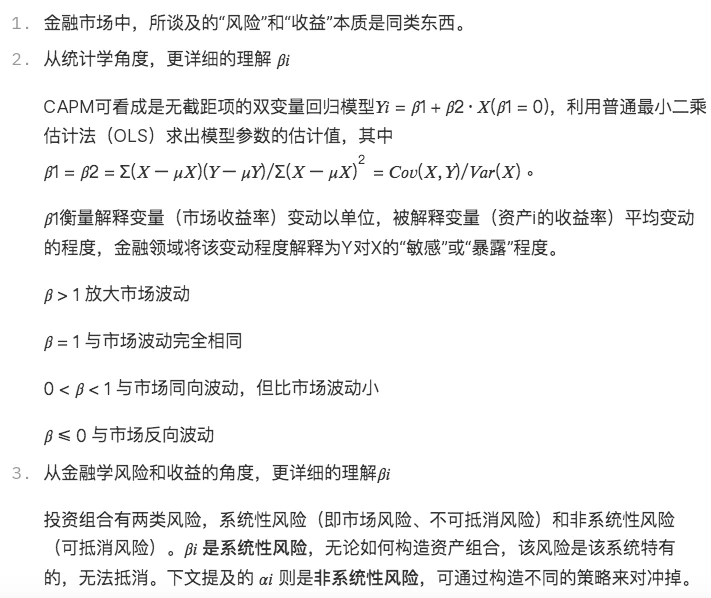
The CAPM model is the simplest linear factor model, which points out that the excess return of an asset is determined only by the expected excess return of the market portfolio (market factor) and the asset's exposure to market risk. This model lays the theoretical foundation for a large number of subsequent studies on linear multi-factor pricing models.
Development: Multi-factor model - APT
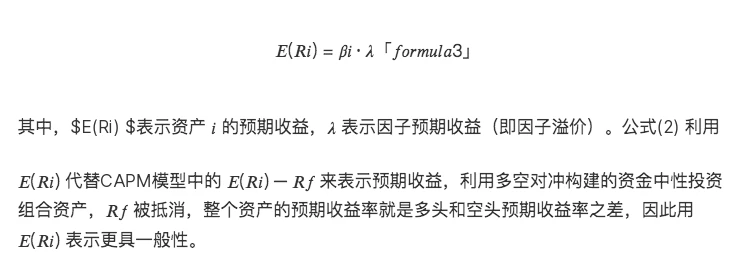
Based on CAPM, people found that the returns of different assets are affected by multiple factors. Arbitrage Pricing Theory (APT) came into being and constructed a linear multi-factor model:
Maturity: Multi-factor Models — Alpha Returns & Beta Returns
Taking into account the actual pricing errors in the financial market and the APT model, from a time series perspective, the expected return of a single asset is determined by the following multivariate linear model:
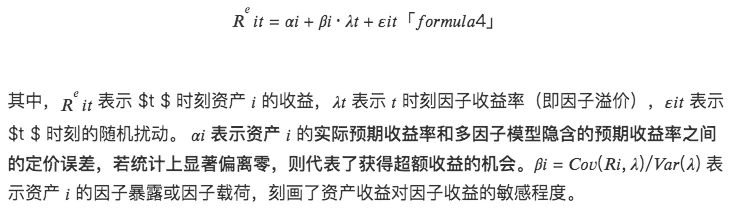
The multi-factor model focuses on the differences in the expected returns of assets in the cross section. It is essentially a model about the mean, and the expected return is the average of the return in the time series. Based on (3), the multivariate linear model from the cross-sectional perspective can be derived:

Additional understanding:
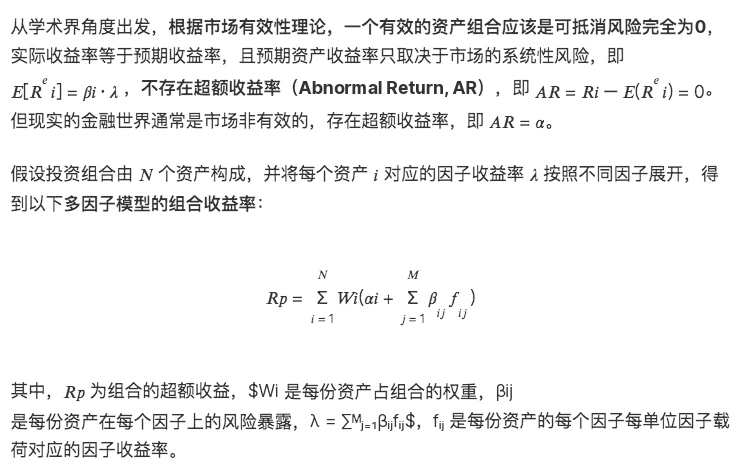
Combined with statistical knowledge, this model implies three layers of assumptions:
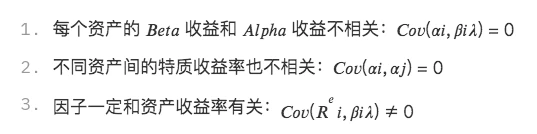
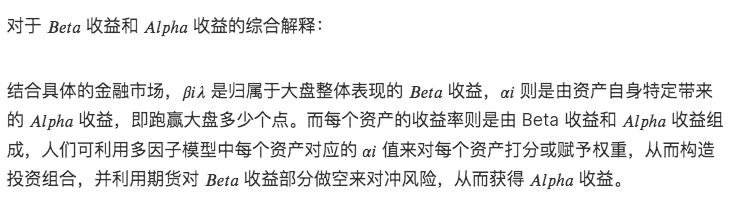
(2) Volatility of the multi-factor model
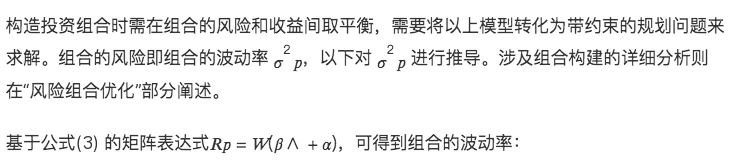
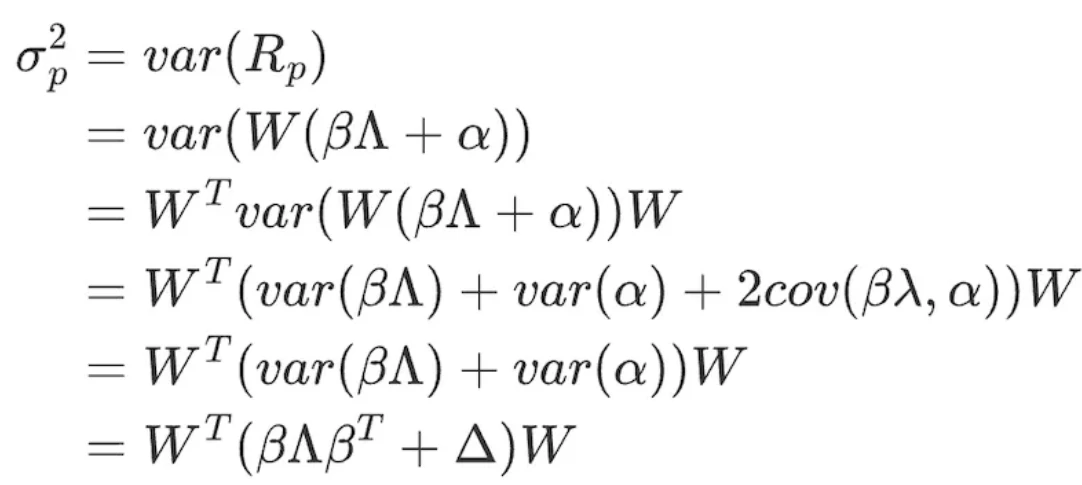
formula 7

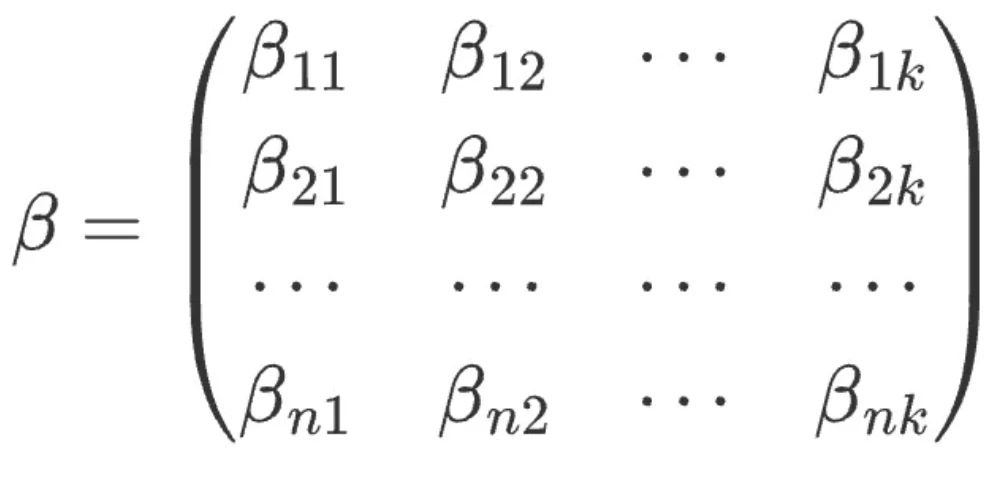
formula 8
∧ represents the factor return covariance matrix of K factors (K×K):
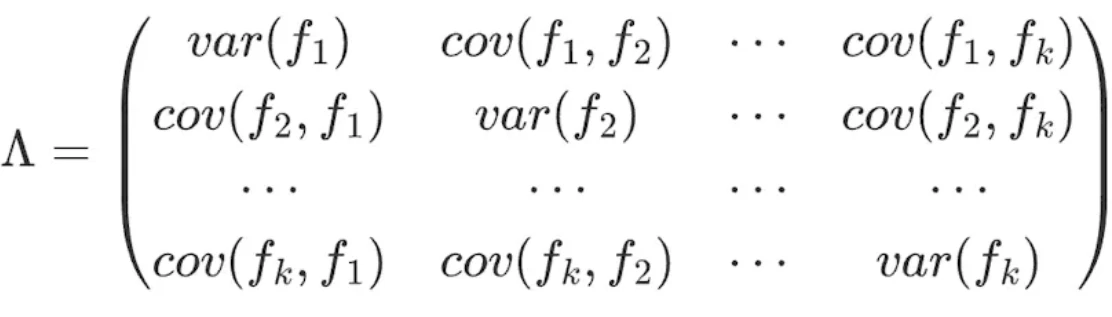
formula 9
According to Assumption 3, the idiosyncratic returns of different assets are also unrelated, and the Δ matrix is:
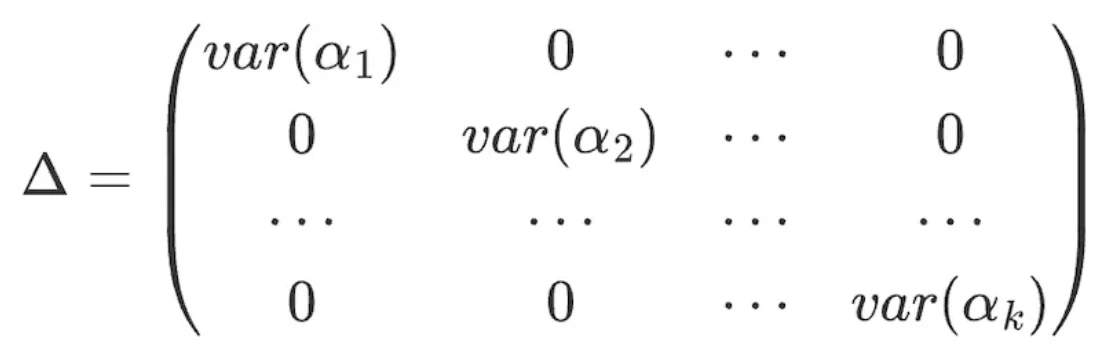
formula 10
ABOUT LUCIDA & FALCON
Lucida is an industry-leading quantitative hedge fund that entered the Crypto market in April 2018. It mainly trades CTA/statistical arbitrage/option volatility arbitrage and other strategies, and currently manages US$30 million.
Falcon is a new generation of Web3 investment infrastructure. It helps users “select”, “buy”, “manage” and “sell” crypto assets based on a multi-factor model. Falcon was incubated by Lucida in June 2022.