

Author: Spencer Noon, Source: Author's Blog; Translated by: Song Xue, Golden Finance
1. Polygon zkEVM
Polygon’s CDK stack: Usage has grown ~2x in the last 30 days.
Polygon zkEVM is built on the Chain Development Kit (CDK), a series of open source modular components for launching custom blockchains in the Polygon and Ethereum ecosystems. Polygon zkEVM (built on CDK) continues to grow in active wallets, transactions, and TVL. Compared to the previous 30 days, the 7D moving averages of active wallets and transactions increased by 105% and 83%, respectively. Its TVL increased by 14% during the same period. On November 8, Polygon's zkEVM had 15,500 daily active wallets and 56,800 daily transactions.
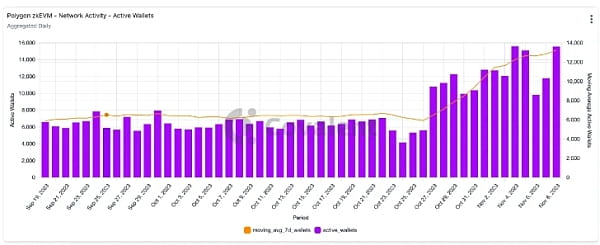
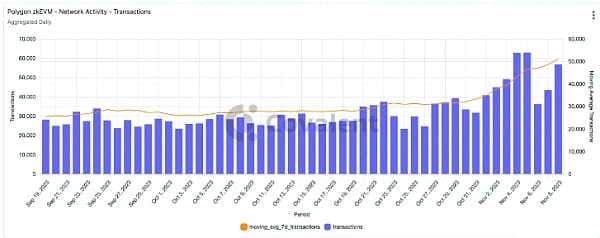
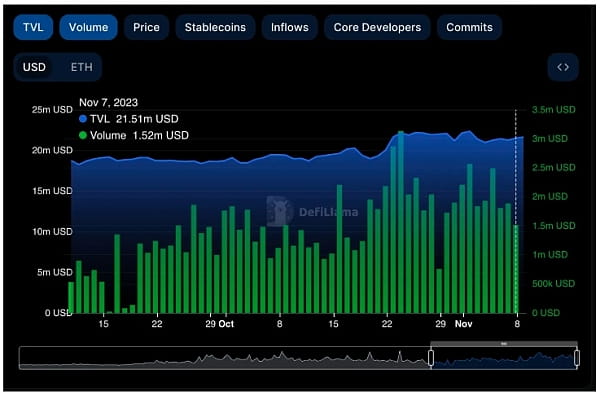
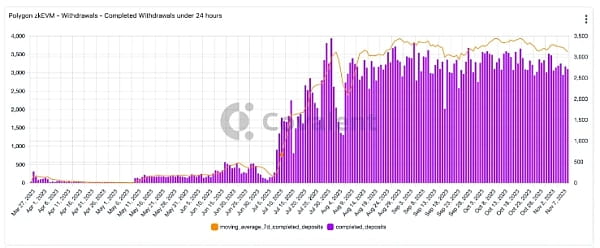
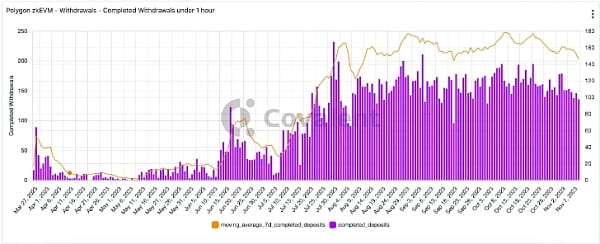
Polygon zkEVM Within 24 hours of initiating withdrawals on Polygon zkEVM, 14,000 wallets have completed 39,000 withdrawals on at least 101 different tokens on Ethereum. After July 20, the number of withdrawals within 24 hours increased significantly, making Polygon zkEVM one of the fastest native bridges.
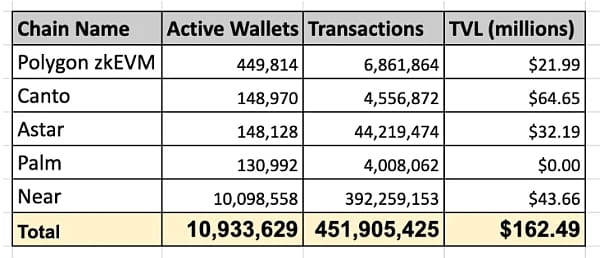
Chains leveraging the CDK stack include Astar, Canto, Near, and Palm. Collectively, these chains (including Polygon zkEVM) have had nearly 11 million active wallets and 452 million transactions since 2022. They have generated approximately $162 million in TVL for the CDK ecosystem.
Tx Level Alpha: 35 minutes. This is how long it took for this wallet to claim and receive 105.77 ETH ($224,000) from Polygon zkEVM on Ethereum via the native Polygon zkEVM bridge after initiating a withdrawal. Polygon’s CDK feature for nearly instant withdrawals makes Polygon zkEVM one of the fastest native bridges for wallets to send funds from L2 to Ethereum.
Scroll
The Scroll mainnet has accumulated over $36M TVL, over 3M transactions, and over 1M addresses in 3 weeks.
Scroll is a community-first native zkEVM built on Ethereum, designed to scale without sacrificing security, developer, or user experience. Scroll officially announced its mainnet launch on October 17, 2023, and has achieved rapid growth since then. The total value locked in Bridged has exceeded $36 million, of which about half is in DeFi protocols (this number may increase as more projects are indexed). Both transaction volume and unique addresses are on a sharp upward trend, exceeding 3 million and 1 million respectively.
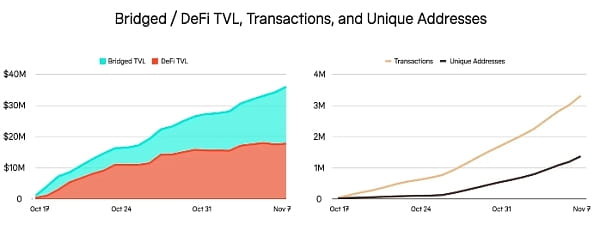 Bridge/DeFi TVL, Transactions and Unique Addresses
Since the genesis block, the average daily gas price has plummeted 84%. For zkEVM in its initial stages, transaction costs actually show a significant downward (and stable) trend as the number of users and transactions increases; this is because the fixed prover cost is amortized over more users.
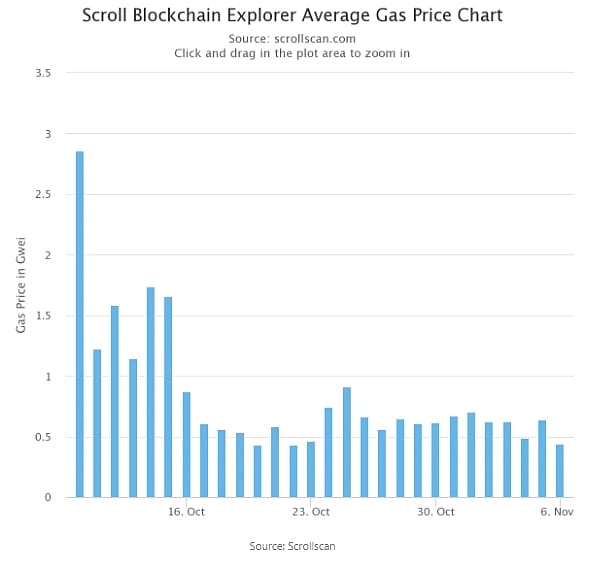 Scroll blockchain browser average gas price chart
To celebrate mainnet, Scroll announced the launch of Scroll Origins NFTs for early smart contract deployers after the genesis block on October 26. The campaign has already successfully increased deployments on Scroll, with an average increase of 92% in verified contracts since the announcement (~1,000 per day in the past few days).
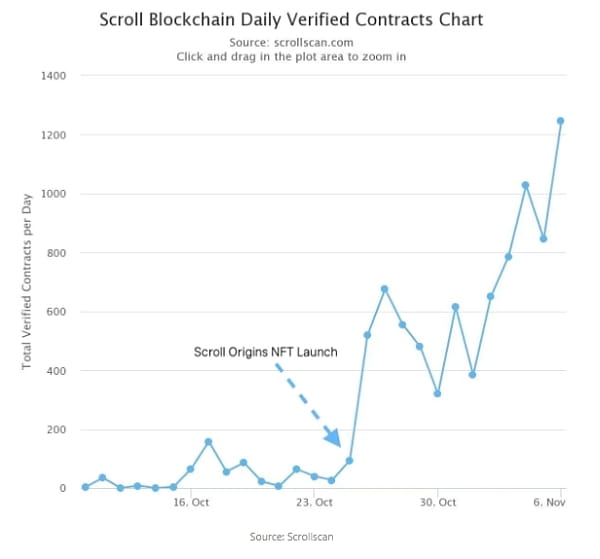
Scroll blockchain daily verification contract chart
Tx-Level Alpha: This is the creation transaction for the L2ScrollMessenger contract - eagle-eyed users noticed the 46-digit ETH balance of the contract and were confused. The way this uniquely designed contract works is that it starts with a preset ETH balance from the genesis block, which means that when ETH is deposited into Ethereum, this contract on Scroll allocates an equal amount, similar to "minting ETH". This is a more optimized method that makes deposits more cost-effective and technically simple.
Base
The Base contract deployment market share reached 40%, accounting for more than 80% of the total ETH deployment.
Base is an Ethereum layer 2 network developed by Coinbase, built on top of Optimism (the second largest L2 ecosystem after TVL Arbitrum). Sequencers on Layer 2 bundle users' transactions together and submit them to Ethereum - just like air traffic controllers. In the third quarter, Base sequencer revenue may have brought in $7 million for Coinbase, mainly due to the use of social finance platform Friend.tech. As of the end of the third quarter, Sequencer revenue has fallen 74% from its peak in August and currently generates about $200,000 to $300,000 per week.
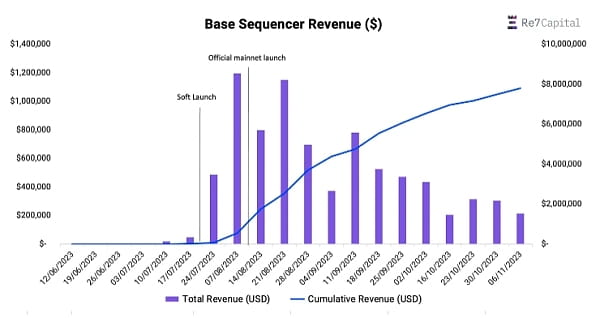
Basic sequencer income
Since its inception, Friend.tech has paid Base through transactions approximately 10-13% of the total fees paid by users to sequencers each month, with peak payments of 20+ ETH. Since September, the app’s revenue has declined in line with total sequencer fees, indicating more muted activity in the broader ecosystem.
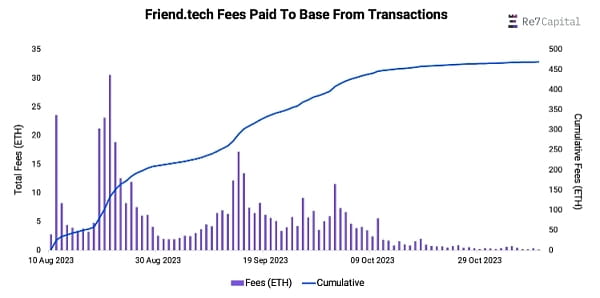
Friend.tech technology fees are reduced from transactions
Despite the decline in sorter revenue, Base has deployed more contracts than all other major L2s since its launch in June 2023, averaging 40% of the leading L2’s weekly contract deployments. Base currently deploys 80-180% of the contracts deployed on Ethereum L1, indicating a relatively strong ecosystem of developer activity.
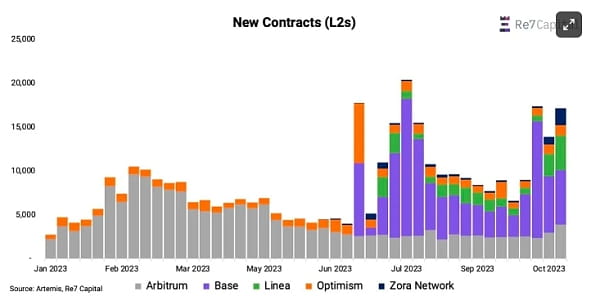
New Contract (L2)
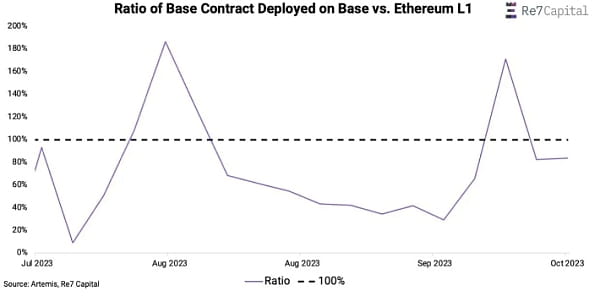
Ratio of base contracts deployed on Base to Ethereum L1
Tx-Level Alpha: This transaction was the first $500,000 USDC to flow into the Maple Finance pool. At the same time, Maple announced that they will launch on-chain capital markets on Base on November 1st, starting with a cash management pool. This is meaningful because it is the first such lending market on Base, and it can be said to mark the beginning of institutional DeFi momentum on L2.
4. zkSync
zkSync Era has completed 150,000 Paymaster transactions.
zkSync Era, a layer 2 zkEVM created by Matter Labs to scale Ethereum, is averaging about 1,000 payout transactions per day across a growing number of dApps. Paymaster is a smart contract that enables dApps and wallets to sponsor user transactions and pay gas fees in any ERC-20 token, as well as provide custom logic when users are eligible for these features. Paymasters on zkSync Era are enabled by the native account abstraction built into the protocol and do not require third-party bundlers like ERC-4337 implementations.
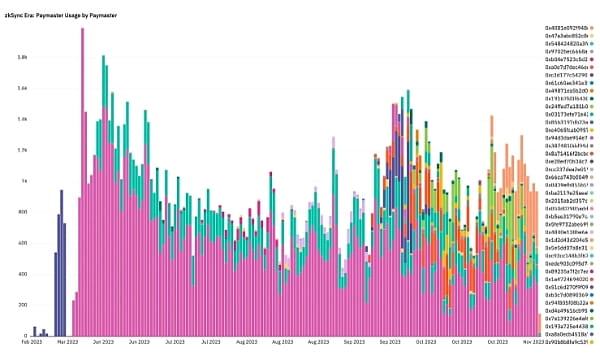
ZkSync Era: Paymaster Usage
Pudgy Penguins is expanding into physical retail through Pudgy Toys, a line of toys that serve as a gateway to Pudgy World, an open-world digital player experience on the zkSync Era. 14,216 wallets have joined Pudgy World via the QR code included with Pudgy Toys.
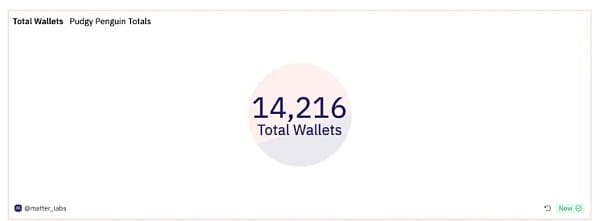 Total Pudge Penguin Wallets
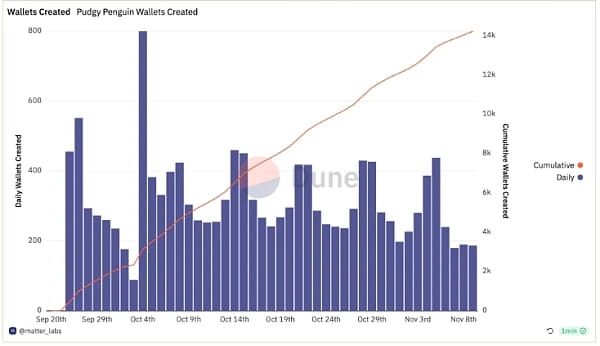 Number of wallets created: Number of Pudge Penguin wallets created
zkSync Era and Arbitrum lead in terms of daily transaction volume, both averaging 500-800K daily transactions over the past few weeks. In October, zkSync Era’s total transaction volume exceeded 150M, making it one of the most battle-tested L2s.
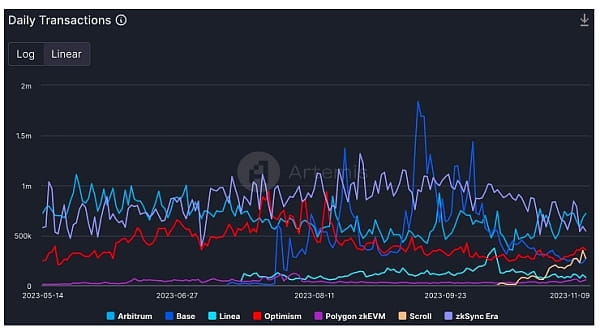
Daily Trading Volume
5. Starknet
Starknet has the highest number of active developers (515) of all L2s.
Starknet has the most and fastest developer adoption of any new ecosystem, ranking seventh among all crypto ecosystems. Over 80% of projects are native to Starknet, with some very promising projects in chain games (Loot Survivor, Briq, Influence, Dojo) and account abstraction, with Argent announcing full-time commitment to Starknet and DeFi along with companies like Ekubo and RabbitX.
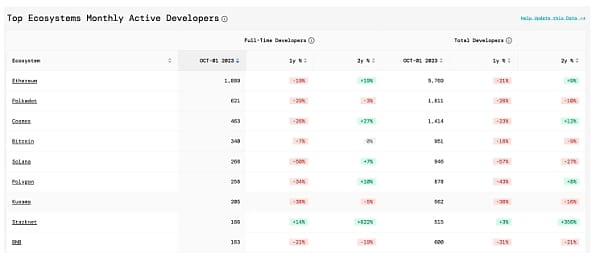 Monthly active developers in top ecosystems, Source: Electric Capital’s Developer Report (Note: Polygon’s PoS is technically a combination of sidechain and L2.)
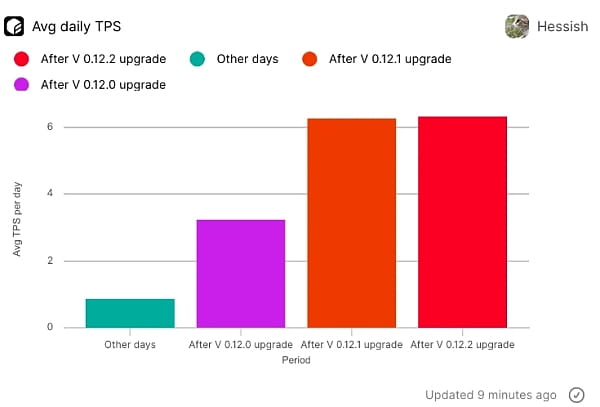
Starknet went into production with the 0.12 upgrade, called Quantum Leap, and has averaged 8.2 TPS since August. But it doesn’t tell the full story: with native account abstraction (AA), a Starknet tx is equivalent to 1.5 EVM tx, which improves user experience and security thanks to Multicall, an AA feature.
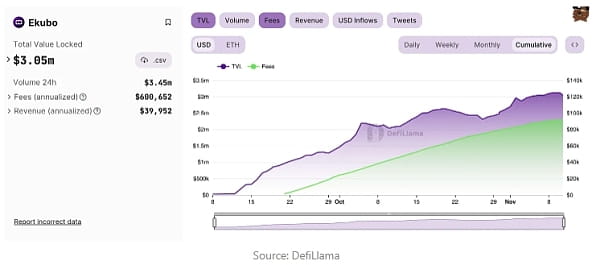
Starknet DeFi is booming, AVNU (DEX aggregator) reached $500 million in trading volume after 5 months, Ekubo (by former Uniswap chief engineer) generates $600,000 in annual fees for LPs, and the current TLV is $3 million. Despite the lack of incentives, DeFi TLV continues to grow.
Tx-Level Alpha: This is a random block on Starknet. The block consists of many multicalls, as shown in the operations. These are a direct result of the native account abstraction (also known as smart wallets). In one transaction, people can approve and exchange, which greatly improves user experience and security because the resulting proxy hack does not drain anything. This also means that TPS is flawed, which is why L2Beat is pushing UOPS (UserOps itself) as a new metric.