If we were to count the most explosive public chains in the past two years, Avalanche would definitely be on the list, and its token AVAX coin is a rare 100-fold coin in 2021.
Why does Avalanche stand out among many public chain tokens? This article will give you a deep understanding of Avalanche Coin and the Avalanche Chain ecosystem behind it.

What is Avalanche?
The Avalanche protocol was officially launched in 2020. It is a new type of blockchain featuring a new consensus mechanism, Avalanche, also known as the "Avalanche Protocol". Therefore, Avalanche is also called the Avalanche chain.
In addition, Avalanche is different from most existing public chains. It consists of three parallel public chains. The three chains perform their respective functions and jointly create a fast platform that can easily carry DeFi smart contracts.
Why is Avalanche called the Avalanche Chain? What is the Avalanche Consensus?
So what is the Avalanche Protocol? Why is it so important to the cryptocurrency community? First of all, we must understand that the consensus mechanism is the core of the decentralized system. The stronger the consensus mechanism, the stronger the blockchain; the faster the consensus mechanism, the faster the blockchain. The performance and value of the blockchain are all based on the consensus mechanism.
Avalanche is a consensus mechanism known as the "avalanche chain". It obtains multiple verification results through rapid and multiple sampling among hundreds or even more nodes. As long as a certain result is obtained in more than half of the verification nodes multiple times, the correctness of the transaction or information can be confirmed.

This verification method is faster than Satoshi Nakamoto's proof of work (PoW) that relies on brute force, more stable than the Byzantine consensus mechanism (BFTs), and more secure than proof of stake (PoS).
The whole mechanism is like an "avalanche". After it is started, the number of verification nodes accumulates like a snowball, so it is called the "avalanche mechanism". Without being restricted to a single linear chain, the Avalanche blockchain has high scalability.
The core of the Avalanche protocol: Directed Acyclic Graph (DAG)
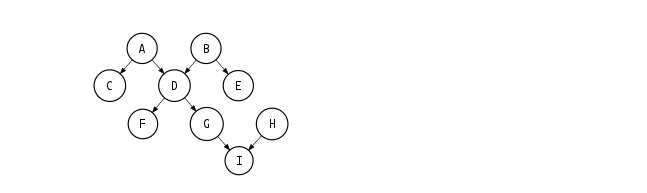
The directed acyclic graph sounds complicated, but the principle is very simple. It is actually a "no turning back" system that ensures that the path of any authentication will not be repeated, and no loop can be formed between any points. It will only move forward and complete the authentication process of the entire consensus mechanism.
What is AVAX?
In 2021, the blockchain industry entered an era of rapid expansion, attracting a large influx of capital. In the field of infrastructure, public chains such as Ethereum, BSC, and Polygon have provided strong support for the development of the industry.
As a new generation of public chain, Avalanche chain aims to create a decentralized financial platform. Riding on the explosion of public chains, the Avalanche chain's native token AVAX has experienced a sharp rise, and its ecology and users have also accumulated and grown rapidly in a short period of time.
Basic concepts and application scenarios of AVAX
Basic Concepts of AVAX Tokens
AVAX is a public chain token deployed on the Avalanche chain. It is used to ensure the security of the network through staking, trade between different tokens, pay transaction fees, and provide a basic account unit between multiple subnets of the Avalanche chain.
AVAX will be issued in July 2020. The public sale adopts three sale modes with an issue price of $0.5~$0.85. The total amount of AVAX issued is 720 million, of which 360 million AVAX tokens will be generated in the genesis block, and the remaining 360 million tokens will be minted according to the token issuance formula.
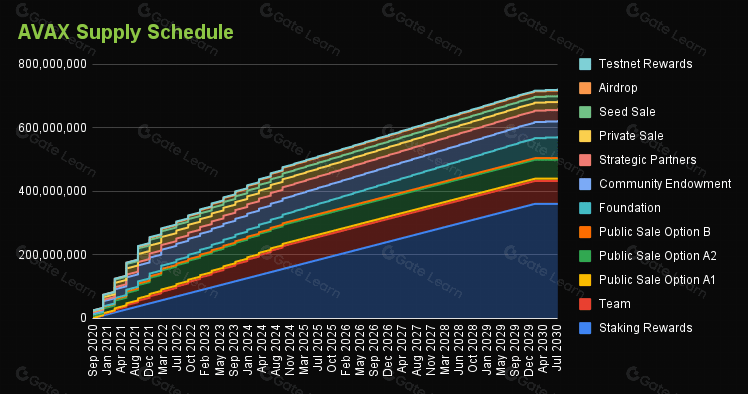
The supply of AVAX is capped at 720 million and will never be increased. A burning mechanism is also introduced, and all gas fees generated by on-chain operations will be burned. If the amount of AVAX burned exceeds the amount minted to reward validators, the total number of tokens will decrease, leading to deflation.
Three-chain architecture
Avalanche is characterized by a three-chain architecture, namely the transaction chain (X-Chain, DAG), the contract chain (C-Chain), and the platform chain (P-Chain), that is, the X + C + P three-chain parallel architecture. Avalanche allows the three to exist as its subnets at the same time, and each performs its own duties and has interoperability.
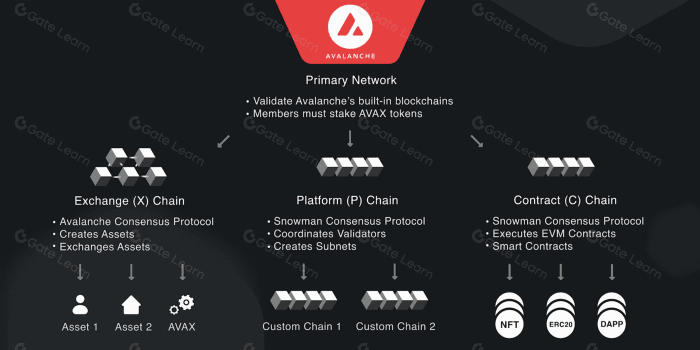
Why does Avalanche split into three blockchains?
AVAX X-Chain: responsible for establishment and transactions
X Chain: Also known as the transaction chain, it is mainly responsible for the creation and trading of assets. Most users use this chain when transferring or trading assets. It is also the chain that the exchange supports for the withdrawal and transfer of Avax tokens.
AVAX P-chain: Data, information, and verification work on the storage chain
P chain: also known as platform chain or governance chain, its main function is to store data and information on the chain, as well as to conduct verification work.
AVAX C-Chain: Responsible for Smart Contracts
C chain: also known as the contract chain, responsible for smart contract related functions. This chain is EVM compatible, so it can interact with most smart contracts and can be added to Metamask.
It is this three-chain parallel and non-interfering architecture that enables Avalanche to achieve richer functions than other public chains.
POS Mechanism
Avalanche uses a consensus mechanism of proof of stake (POS). In this way, the system economically incentivizes nodes participating in the network to take benign actions and avoid malicious behavior that may undermine the operation of the network. Nodes that wish to enter the network can freely enter the network by staking a certain number of tokens, which cannot be moved within a period of time determined by the token holder, with a minimum staking period of 2 weeks.
The network has validators and delegators. Validators are responsible for ensuring network security, creating new blocks, and processing transactions. Delegators are owners of AVAX tokens who want to participate in staking, but simply choose to trust existing validation nodes through delegation.
AVAX coin usage introduction
AVAX is one of the most widely used public blockchain coins on the market, and can provide the following functions:

AVAX Coin Uses and Functions 1. Participation in Governance and Voting
AVAX token holders can participate in governance voting to determine the direction of platform policy, including determining parameter settings such as the release rate of AVAX tokens.
AVAX Coin Usage and Function 2. Payment of Fees
Participating in on-chain operations will require paying AVAX as a fee, just as ether is required to perform operations on Ethereum. These fees will continue to be burned to maintain the scarcity of AVAX.
AVAX Coin Uses and Functions 3. Staking Tokens to Get Rewards
Holders can also receive staking rewards by staking tokens. The amount of rewards is distributed in proportion to the amount of staked tokens. The longer you stake, the more rewards you will receive. To become an AVAX staker, you must stake at least 2,000 AVAX. The minimum staking period is two weeks and the maximum is one year.
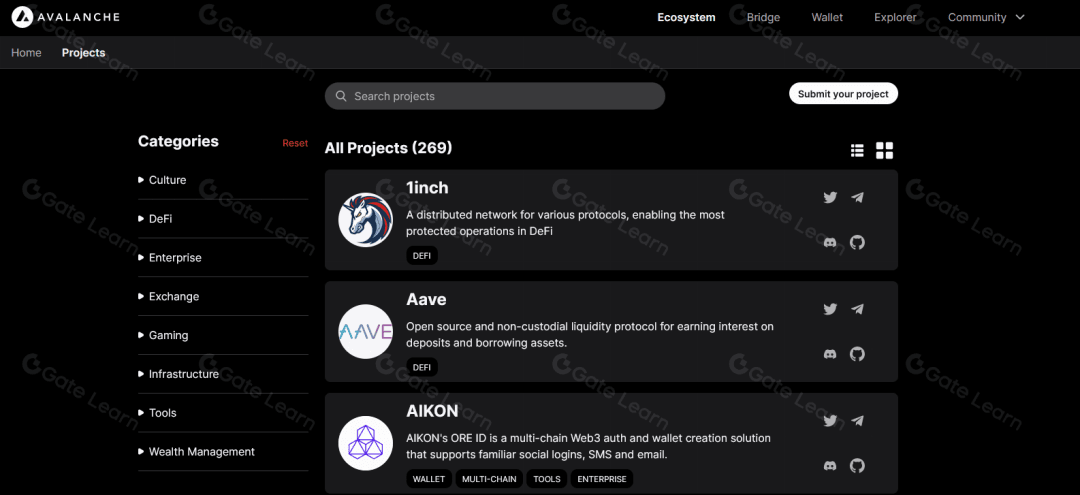
AVAX Ecosystem Overview
The Avalanche chain has attracted a large number of users and developers with its low gas fees, high transaction speeds, and EVM compatibility, and has established a powerful on-chain ecosystem centered on DeFi.
There are currently 269 applications deployed on the Avalanche chain, including native projects and projects compatible from other chains, covering many categories such as Defi, Gamefi, wallets, exchanges, cross-chain bridges, etc.
In order to solve the expansion problem of the C chain, the Avalanche Foundation also announced the launch of a $290 million incentive plan in March 2022. The foundation will provide 4 million AVAX tokens as funding to encourage the development of subnets on the Avalanche chain.
Currently, projects such as Crabada, DeFi Kingdoms, and Shrapnel have deployed subnets on Avalanche's P-chain. The parallel mode of subnets and C-chains improves the performance of the Avalanche chain and further promotes the sustainable development of the AVAX ecosystem.
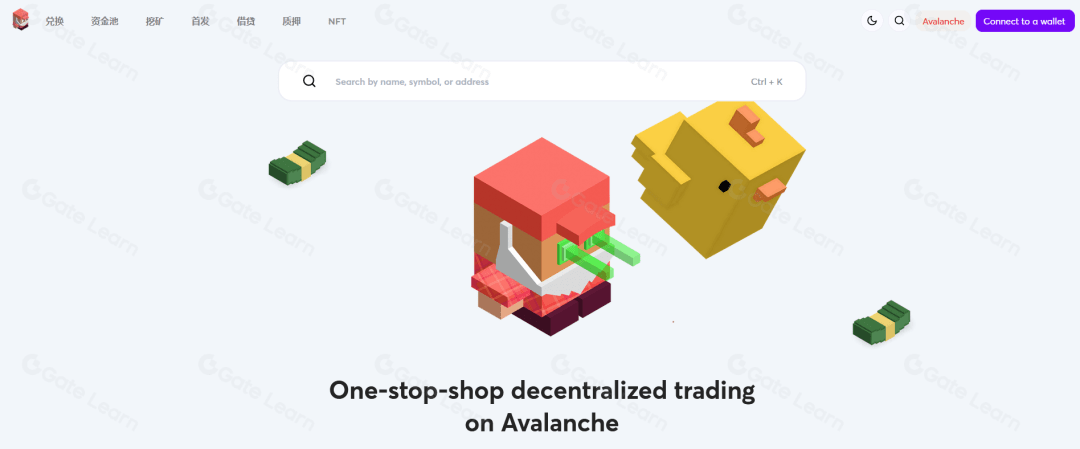
Trader Joe
Trader Joe's was launched in July 2021 and is the most important decentralized exchange on the Avalanche chain. Its status is similar to PancakeSwap on the BNB Smart Chain, UniSwap and SushiSwap on Ethereum.
Trader Joe's goal is to enable the Avalanche network to provide one-stop DeFi services for every user. As Trader Joe continues to develop, new products emerge in an endless stream. Trader Joe currently provides a variety of functions such as trading, liquidity mining, lending, staking, and yield farming.
Rocket Joe is a token financing platform launched by Trader Joe. Users can participate in Rocket Joe's token issuance by staking JOE tokens to obtain rJOE. 100 rJOE can obtain a subscription share of 1 AVAX, a new project on Rocket Joe.
BENQI
BENQI is the first liquidity market built on the Avalanche C-chain. Users can lend out their idle assets to earn interest. They can also pledge their assets on BENQI to borrow other assets, such as pledging ETH to borrow AVAX and other spot assets and pay corresponding interest.
On August 10, 2021, BENQI announced a $3 million liquidity mining K incentive plan, where users can provide liquidity on BENQI and earn QI or AVAX token rewards. This plan was subsequently incorporated into the $180 million liquidity mining K incentive plan launched by the Avalanche Foundation on August 18, and Avalanche has become the most popular public chain platform among users and funds.
SBF even joined the feast with $140 million in funds, of which $87.433 million was placed in the BENQI lending agreement for liquidity mining.
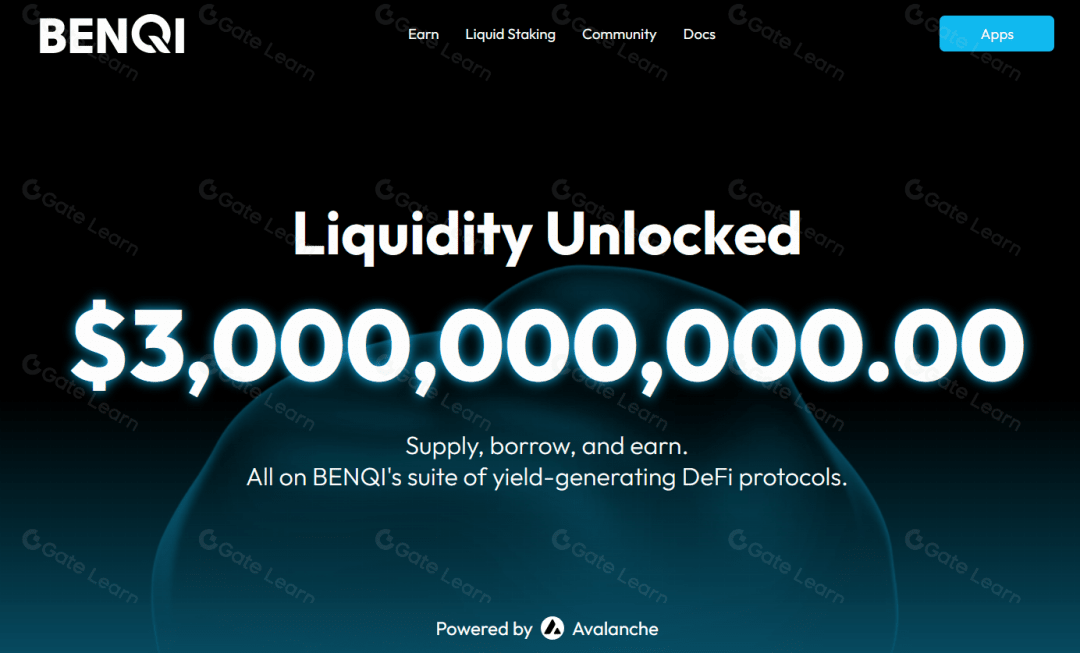
Compared with the liquid market on Ethereum, BENQI deployed on the Avalanche chain has faster transaction speeds and lower transaction fees. As of now, BENQI is the second highest locked-in project on the Avalanche chain, with a locked-in amount of US$272 million.
Platypus Finance
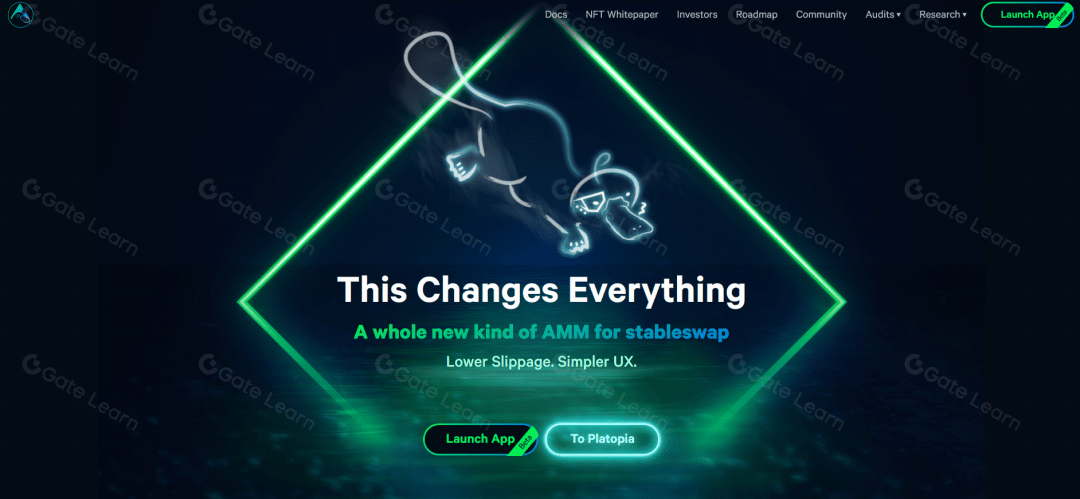
Platypus Finance is a stablecoin swap protocol that aims to reduce the slippage of stablecoin swaps and improve the efficiency of capital utilization. Its feature is that it supports unilateral liquidity provision. Users can become liquidity providers by depositing only one stablecoin, reducing the risk of impermanent loss and the risk of other stablecoins borne by users.
Platypus Finance also has an open liquidity design, and users can easily add new currencies without adding a bunch of trading pairs and categories.
Crabada
Crabada is one of the most popular blockchain games on the Avalanche chain. Crabada is a battle game with the theme of sea crabs. Players can buy and breed sea crabs. Sea crabs can mine K and earn CRA and TUS tokens. Users can also "rob" other players on the platform and steal their mining K rewards. Many people believe that Crabada is essentially an "Axie" on the AVAX chain.

Crabada once became the dominant platform on the Avalanche chain, with more users than the second place and accounting for 64% of Avalanche's transaction volume in a week. However, as the overall popularity of blockchain games has declined, Crabada is no longer as strong as it once was.
GMX
GMX was formerly the BSC on-chain project Gambit, which later migrated to Arbitrum and supports the Avalanche chain. GMX's main business is derivatives trading. Investors can trade assets such as BTC, ETH, LINK, UNI and AVAX on GMX with up to 30 times leverage, and can also conduct spot trading of these assets. The GMX exchange provides real-time prices through the Chainlink oracle.
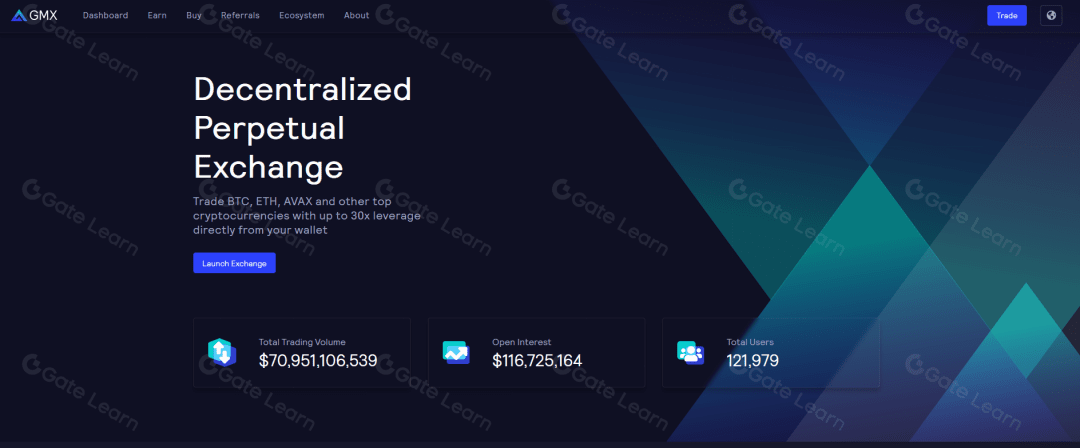
GMX adopts a global liquidity model, using GLP tokens as the carrier of assets to provide liquidity. The way for users to participate in GMX market making is to directly purchase and pledge GLP, the liquidity token launched by the GMX exchange, and the pledge income obtained is ETH, USDC and esGMX. When users make a profit, they earn GLP. If they lose money, the margin is included in the GLP pool and distributed to the pledged users.
Future Possibilities for Avalanche
1. It has a diverse ecosystem of many DeFi projects
Currently, there are a total of 170 DeFi projects under development on Avalanche, including transactions, staking, wallets, lending, NFT trading platforms and other projects, with a diverse ecosystem.
2. Becoming a strong competitor of Ethereum
Avalanche's cross-chain bridge Avalanche Bridge (AB) provides secure and high-performance cross-chain asset transfer services. Currently, the cross-chain confirmation time of Ethereum is about 5 minutes, while Avalanche is within 10 seconds. In addition, Avalanche's gas fee is one-tenth of Ethereum, and the transaction verification speed is much faster than Ethereum. It has become one of the main competitors of Ethereum, the largest blockchain at present.
3. Becoming a partner with Deloitte may be the beginning of a government use case
Avalanche's development team Ava Labs has established a partnership with Big Four accounting firm Deloitte. On November 17, 2021, Deloitte announced that it had developed a new Close As You Go (CAYG) disaster recovery platform with the help of the Avalanche blockchain's Avalanche Protocol. The platform uses a simple and easy-to-use page to help state and local governments in the United States apply for relief funds efficiently, avoiding complicated procedures.
The CAYG platform is actually a Custom Chain parallel to the C chain, which shows that the Avalanche public chain allows the use of the Avalanche consensus mechanism and verification nodes to develop a customized chain suitable for different businesses. This may also be the beginning of the Avalanche blockchain becoming a government use case.
Avalanche Disadvantages
1. Systemic problems that caused the network to stop may cause trust issues
Avalanche encountered a systemic problem on February 12, 2022, causing the Avalanche network to come to a standstill. The Avalanche team issued a statement stating that this was caused by an erroneous code in the communication between the Ethereum virtual machine and Avalanche, and emphasized that the error was caused by high demand and high usage. The situation caused the continuously rising price of AVAX tokens to usher in a wave of declines. AVAX encountered such a system problem at the beginning of its development, which may lead to a crisis of trust.
2. NFT market share is relatively weak
Compared to Solana, Avalanche obviously does not have a stronger market share in the NFT market. Although Avalanche has worked hard to develop related primary and secondary sales platforms and mechanisms, its popularity is obviously weaker and more niche than Solana. Whether Avalanche can make a breakthrough in this regard in the future remains unknown.