


IEO (Initial Exchange Offering) has become a phenomenon in the cryptocurrency world, attracting the interest of millions of investors. Unlike ICOs, IEOs are conducted directly on reputable exchanges, offering the opportunity to own tokens of potential projects right from the early stages. In this article, let’s explore in detail what IEO is!
What is IEO?
IEO (Initial Exchange Offering) is a popular fundraising model in the cryptocurrency field, where startups or blockchain projects issue and sell their tokens through a cryptocurrency exchange. Unlike ICO (Initial Coin Offering), IEO is conducted directly on the exchange's platform, acting as an intermediary to support the token sale process.
The highlight of IEO lies in the exchange's guarantee. Before organizing an IEO, exchanges usually conduct rigorous evaluations to verify the project's legitimacy and potential. This benefits both parties: businesses have the opportunity to raise funds in a professional environment, while investors are assured a certain level of safety and transparency when participating in blockchain projects.

Participating in IEO not only provides an opportunity to access tokens early but also allows investors to take advantage of favorable prices before tokens are listed on the market. If the project succeeds, the token's value can increase significantly as demand rises, creating high profit potential.
A typical example of IEO success is the Sui blockchain project (SUI), implemented through the KuCoin Spotlight platform in April and May 2023. With high expectations from the community, the IEO of Sui attracted nearly 250,000 participating investors, demonstrating the strong appeal of this fundraising model.
IEO is currently an attractive option for companies and investors in the cryptocurrency industry, especially in the context of increasing demand for quality blockchain projects.
When did IEO become popular?
IEO began to gain popularity around 2019, when the cryptocurrency market sought a safer and more transparent solution compared to ICO (Initial Coin Offering). Previously, ICO was the main fundraising method, but the explosion of fraudulent projects and a lack of regulation during 2017-2018 led to a loss of credibility for this form. Many investors suffered significant losses due to fraudulent projects, which created a demand for a more reliable solution.
IEO is developed by major exchanges as a response to the limitations of ICOs. With the direct involvement of exchanges in organizing and supervising, IEO provides a higher level of trust due to the strict evaluation process of the projects. This helps minimize risks for investors and improve the image of blockchain projects.
During this period, many countries began issuing regulations banning ICOs to protect investors. In September 2017, China and South Korea were the first countries to ban ICOs. Later, Vietnam also declared ICOs illegal through the State Securities Commission in October 2017. By 2018, financial institutions such as the Reserve Bank of India (RBI) and the Indian Central Bank continued to ban ICOs in April, along with Bolivia also implementing similar measures in July.
These strict regulations have motivated major exchanges to develop the IEO model, providing a more closely monitored environment, thus shaping a new trend in the field of cryptocurrency fundraising.
How does IEO work?
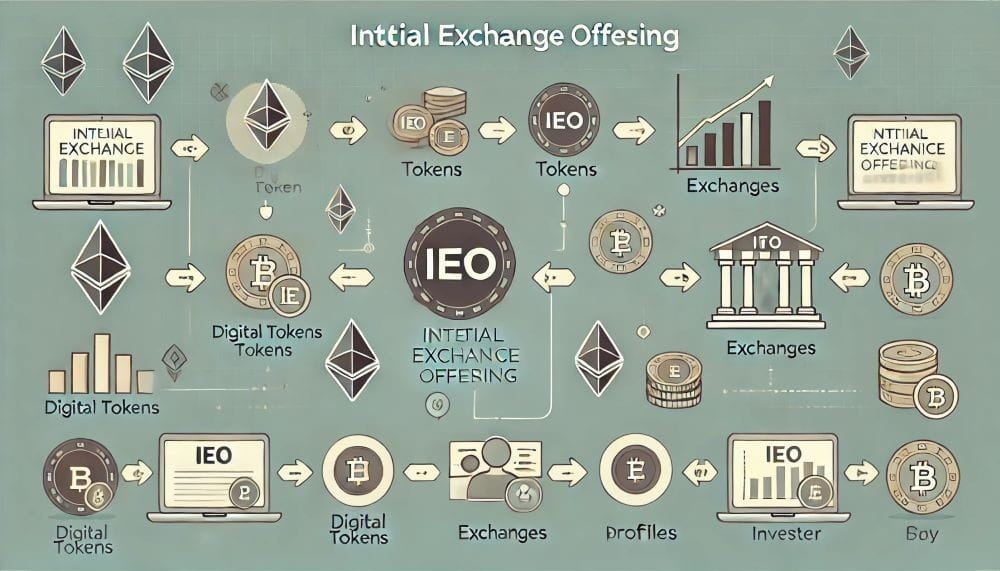
IEO operates based on the support of reputable cryptocurrency exchanges, serving as intermediaries to organize and manage the project's token sale. This process typically involves the following steps:
Choosing an exchange: Blockchain projects or startups will look for exchanges that provide IEO services to collaborate with. This exchange becomes the official platform for token sales and is responsible for managing the entire process.
Project evaluation (Due Diligence): Before launching the IEO, the exchange conducts an in-depth due diligence process to ensure the project meets the necessary criteria. This process includes assessing the development team, technology, market potential, legal compliance, and other factors to ensure the project is feasible and transparent.
Token listing agreement: After passing the evaluation stage, the exchange and the project will sign a token listing agreement. This agreement specifies conditions such as token price, issuance quantity, fundraising goals, and the duration of the IEO.
Token sale: The exchange announces the token sale date and provides detailed instructions for participants. Investors need to complete the identity verification process (KYC) before purchasing tokens with cryptocurrencies like Bitcoin (BTC), Ethereum (ETH), or even the exchange's own token.
Token distribution: After the sale process ends, the exchange will automatically allocate the purchased tokens to the investors' wallets on the platform.
Trading on the secondary market: After distribution, tokens are usually listed on the exchange for free trading. The price of tokens will fluctuate based on market supply and demand.
Project development: The funds raised from the IEO will be used to implement project development activities such as building blockchain technology, improving products, or implementing expansion strategies.
With this model, IEO not only helps projects access capital more easily but also creates a safer environment for investors thanks to the oversight and guarantees from reputable exchanges.
What are the advantages and disadvantages of IEO?
1. Advantages
For investors:
Increase credibility and reliability: Before conducting an IEO, cryptocurrency exchanges perform thorough evaluations of the project, helping investors feel more secure about safety and transparency. Chosen projects usually have high credibility, minimizing the risk of fraud.
Save time and effort: Investors do not need to research too deeply about the project themselves, as exchanges have already conducted the vetting process. This allows them to focus on decision-making instead of spending time analyzing.
For the exchange:
Increase user numbers and trading volume: IEO attracts many new users to the exchange while enhancing trading activity, thus boosting revenue and the popularity of the exchange.
Enhance professionalism: The thorough vetting process of projects helps elevate the reputation and seriousness of the exchange in the eyes of the cryptocurrency community.
For the project:
New fundraising opportunities: IEO provides an opportunity to access capital more professionally and effectively, helping blockchain projects develop products or scale up.
Strong marketing strategy: IEO is not just a fundraising method but also a way to promote the project to a large number of investors, building credibility and creating a buzz in the community.
2. Disadvantages
For investors:
No guaranteed profits: Although IEO offers high profit opportunities, it also carries the risk of loss. The token price after listing may not meet expectations if the project does not develop as planned or if market demand decreases.

For the project:
High costs: To participate in IEO, projects often have to pay a significant amount of tokens to the exchange or incur high listing fees. This can reduce profits or create financial pressure.
Limited control: The exchange plays a crucial role in determining token prices, listing times, and other terms. This can reduce the project team's control over their product.
For the exchange:
Reputation risk: If IEO projects fail or do not meet expectations, the exchange will be affected in terms of credibility, reducing the trust of the investment community.
Guide to participating in IEO investment
Investing in IEO can offer attractive profit opportunities, but it also comes with risks. Below is a detailed process to help you participate in IEO projects effectively and safely:
1. Research the IEO project
Before investing, research thoroughly about the IEO projects listed on the exchange.
Read the whitepaper to understand the project's goals, development plans, and technology.
Check information about the development team to ensure they have the capability and experience to implement the project.
Assess the growth potential and feasibility of the project in the future, while considering whether it aligns with your investment strategy.
2. Choose a reputable exchange and create an account
Choose reputable cryptocurrency exchanges with a good reputation and offering IEO services such as Binance, KuCoin, OKX,…
Register an account on the exchange and complete the identity verification process (KYC) to qualify for participating in the IEO. This is a mandatory step to ensure transparency and regulatory compliance of the exchange.
3. Deposit money into your account
Deposit funds into your trading wallet on the exchange. Typically, you will need to deposit popular cryptocurrencies like Bitcoin (BTC), Ethereum (ETH), or the exchange's own token (such as BNB on Binance).
Ensure that the amount in your account meets the minimum threshold required by the IEO project.
4. Participate in IEO
Follow the official announcements from the exchange about the IEO token sale schedule. Log in to your account and access the exchange's IEO platform.
Follow the instructions to purchase tokens, ensuring you comply with the exchange's regulations such as purchase limits or trading times.
5. Security and monitoring of tokens
After successfully purchasing, transfer tokens from the exchange to a secure personal wallet (such as a cold wallet or software wallet) to protect your assets from security risks.
Monitor the token's performance in the market, update the latest information about the project and market conditions to make appropriate investment decisions.
With the steps above, you will have a solid foundation to participate in IEO investments safely and effectively. However, always prioritize safety and do not hesitate to stop if the project does not meet your expectations.
4 criteria for choosing an IEO that brings huge profits
With the increasing number of exchanges organizing IEOs, choosing the right exchange and project to invest in is a decisive factor in achieving high profits. Below are 4 important criteria that you should consider:
The reputation of the exchange: Reputation is the foremost factor to consider when choosing an exchange to participate in IEO. A reputable exchange not only ensures a safe trading environment but also helps you avoid risks related to fraud. Therefore, choose exchanges that have a well-known name and have been active for a long time in the industry, such as Binance, KuCoin, or OKX. These exchanges often host quality IEO projects and apply strict vetting processes, providing peace of mind for investors.
High actual trading volume: An exchange with high actual trading volume often reflects good liquidity and significant interest from the community. In contrast, exchanges with inflated trading volumes can be subject to price manipulation, posing a significant risk to investors. Check the daily trading volume of the exchange through reputable websites like CoinMarketCap or CoinGecko. It is advisable to choose exchanges with transparent data and active participation from the investor community.
Quality of IEO projects: A quality IEO project is the core factor that brings profit to investors. Good projects usually have high liquidity and strong growth potential in the future. Therefore, you need to read the project's whitepaper to understand its goals, technology, and development roadmap. Evaluate whether the development team has experience and capability and assess the exchange's project evaluation process. Major exchanges often have strict vetting procedures, ensuring only truly promising projects are selected.
Well-designed tokenomics: Tokenomics is a crucial factor affecting the long-term value of the token after the IEO ends. Good tokenomics will ensure sustainability and potential price increases of the token. Check the token distribution mechanism, circulating supply, and factors that create price appreciation (such as token burn mechanisms, staking rewards). Also, prioritize exchanges with strong tokens, such as Binance with BNB, as these tokens often play important roles in the exchange's ecosystem.
What will the future of IEO look like?

Strengthening regulations: Legal regulations will be improved to ensure transparency and safety, making IEO a more official and trustworthy fundraising method.
Diversifying IEO platforms: The increase in the number of exchanges supporting IEOs will create more options for investors and projects, while also promoting competition and innovation in the industry.
Tokenizing real-world assets: IEOs can extend beyond utility tokens to include security tokens, representing real assets such as real estate or stocks, bridging traditional finance and blockchain.
Enhancing project evaluation: The increasingly stringent project evaluation process will help investors access transparent projects with solid foundations and great growth potential.
Integrating with DeFi: The combination of IEO and DeFi can offer new solutions, increasing liquidity, reducing transaction costs, and providing additional forms of participation such as staking or yield farming.
Innovating fundraising models: IEOs can develop new fundraising models, combining the advantages of IEOs, ICOs, and STOs to provide more flexible and optimal solutions for projects and investors.
FAQ: some frequently asked questions about what IEO is?
1. Is IEO safe?
IEOs are safer than ICOs thanks to the strict vetting process by exchanges. However, this does not completely eliminate risks. You still need to thoroughly research the project before investing, as not all IEO projects are successful.
2. How much money do I need to invest in IEO?
The minimum amount to participate in IEO depends on the requirements of the exchange and the project. Some IEOs only require an investment of a few dozen USD, while larger IEOs may require higher capital. Check specific information from the project before participating.
3. Which exchange should I choose to participate in IEO?
Choose reputable exchanges with experience in organizing IEOs, such as Binance, KuCoin, or OKX. These exchanges typically have strict vetting processes, offering high-quality projects and ensuring transparency.
4. Does IEO guarantee profits?
No. While many IEO projects yield significant profits, this is not guaranteed. Token prices may decrease if the project does not develop as expected or if the market fluctuates unfavorably.
5. Is IEO suitable for beginners?
IEOs can be a good choice for newcomers, thanks to support from exchanges during participation. However, newcomers need to research thoroughly before investing to avoid financial risks.
Conclusion
The above is detailed information about what IEO is. With the participation of reputable exchanges, IEO offers attractive investment opportunities for investors while providing a safer environment compared to traditional fundraising models like ICO. With strong growth potential, IEO is expected to continue being an important part of the blockchain ecosystem, opening up many new opportunities for both investors and startup projects. Start with careful preparation and thorough research to maximize the opportunities that IEO offers.