

Author: @JellyZhouishere, @GryphsisAcademy
TL;DR
The long-term value of Stacks depends on the growth of the Stacks ecosystem and the related demand for Clarity smart contracts. Currently, the construction of the Stacks ecosystem is relatively slow, and the absolute number and growth of developers and actual users are slow.
The main price drivers of Stacks are: halving narrative, the only circulating token project in BTC’s second layer, compliance narrative, upgrades, and the emotional premium brought by the popularity of the Ordinals ecosystem.
The Nakamoto upgrade is the next major upgrade of Stacks, which is expected to be launched in the first quarter of 2024 and will be a potential important catalyst for driving $STX price changes. For Stacks, the Nakamoto upgrade means achieving shared network security with BTC, launching sBTC, supporting BTC atomic swaps, fast block generation, and supporting multiple development languages.
The roadmap for the Nakamoto upgrade is divided into three phases. The second phase is currently underway, with the Nakamoto consensus being launched on the testnet; sBTC v0.1 being launched as a smart contract, and further early testing in a real-time environment. The full launch is expected in the first quarter of next year. If the progress goes smoothly, it is expected that the upgrade event will be hyped up in advance.
In summary, this is a target that, as a chain, currently has technology but no commercialization capabilities and no market popularity, has a roadmap but no ecosystem and no TVL. However, it also has many potential hype factors (upgrade, halving, compliance, and one of the most famous and influential layer2 in BTC). It is recommended to treat it as a BTC related meme/High leveraged beta.
Stacks Features
Stacks is a Bitcoin smart contract layer that aims to enable smart contracts to use Bitcoin as an asset and settle transactions trustlessly on the Bitcoin blockchain. Stacks has the following features:
Stacks has its own chain, compiler, and programming language called Clarity. It runs in sync with Bitcoin. Essentially, it builds a new chain outside the Bitcoin chain, with an independent governance structure and transaction model.
Instead of bridging assets through a cross-chain bridge, integration with the Bitcoin main chain is achieved by submitting anchor transactions on the Bitcoin main chain. These anchor transactions contain a summary of the block header information on the Stacks chain and some additional information, and are broadcast to the Bitcoin network to ensure that they cannot be tampered with.
Allows applications and smart contracts to use BTC as their asset or currency and settle their transactions on the Bitcoin main chain.
Stacks uses the PoX (Proof of Transfer) consensus algorithm: miners and transaction validators are two roles in Stacks. Transaction validators need to stake STX tokens (mine BTC), while miners need to stake BTC on the Bitcoin main chain (mine STX).
STX: Project Value Analysis
The long-term value of Stacks depends on the growth of the Stacks ecosystem and the associated demand for Clarity smart contracts because:
Due to higher transaction fees, miners can see the value of mining increase, which provides them with an incentive to obtain STX for participating in consensus.
STX is designed to pay for transaction fees and smart contract execution, and STX Stackers will be able to benefit from the growth of the Stacks ecosystem
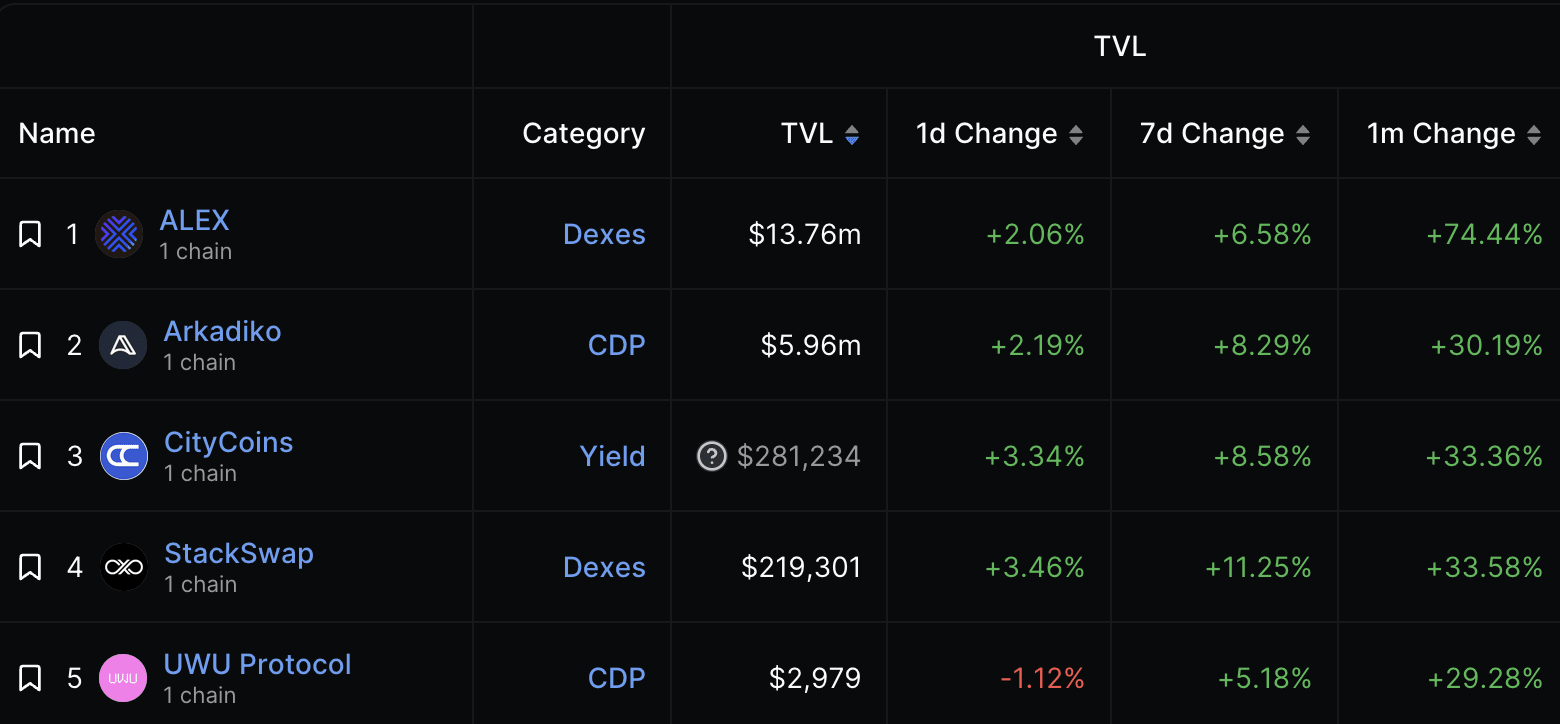
However, the current Stacks ecosystem is relatively weak, with almost no viable projects, and the absolute number and growth of developers and actual users are slow;
TVL:19.13M
Main reasons: high difficulty in technology development and low market popularity

Source: Defillama (https://defillama.com/)
Source: https://defillama.com/chain/Stacks
Stacks development history and price drivers
Looking back at the development history of Stacks, the key milestones are as follows:
The evolution of Stacks began in 2013. The project was created by founders Muneeb Ali and Ryan Shea. Stacks was the product of Muneeb Ali's doctoral thesis, which detailed an internet framework that could be built around the Bitcoin blockchain. This framework was called Blockstack.
Initial research and development was made possible by participating in the Y Combinator batch in 2014. Muneeb Ali and Ryan Shea raised funding from Union Square Ventures, Naval Ravikant, SV Angel, Winklevoss Capital, etc. in the early stages.
$47 million was raised through a token offering in 2017, and $23 million was raised through an SEC-certified US Reg A+ offering and a Reg S offering in 2019. More than 4,500 Stacks holders participated in these offerings, including USV, Lux, DCG, Winklevoss Capital, Blockchain Capital, Foundation Capital, Hashkey, Fenbushi, and others.
2018 Q4 Mainnet launch
2018 Q4 Release of official wallet Hiro Wallet
2019 Q2 Submitted $50 million to the SEC to apply for compliant token issuance
2019 Q2 Stacks 2.0 white paper released
2019 Q2 Introducing Clarity contract development prediction
2019 Q3 Became the first SEC-compliant public offering project
In 2020, Blockstacks was renamed Stacks.
2020 Q1 Implement the Proof of Mining Transfer (POX) consensus mechanism
2020 Q2 Stacks 2.0 testnet launch
2020 Q2 Submit development report to SEC
After Stacks 2.0 goes live in Q4 2020, STX will no longer be considered a security regulated by US law (the SEC has not publicly agreed with this view)
In January 2021, the Stacks 2.0 mainnet was launched and is compatible with the Clarity smart contract.
2021 Q2 Release Stacks Accelerator Ecosystem Development Project
2021 Q2 Release Stacks expansion solution Hyperchain
Audit of Clarity contract in Q4 2021
2022 Q2 Release 2.05.0.2.0
2023 Q1 Stacks 2.1 released
Hiro developer platform will be launched in Q1 2023
2023 Q4 Major update, Nakamoto network release
2023 Q4 Major update, sBTC release
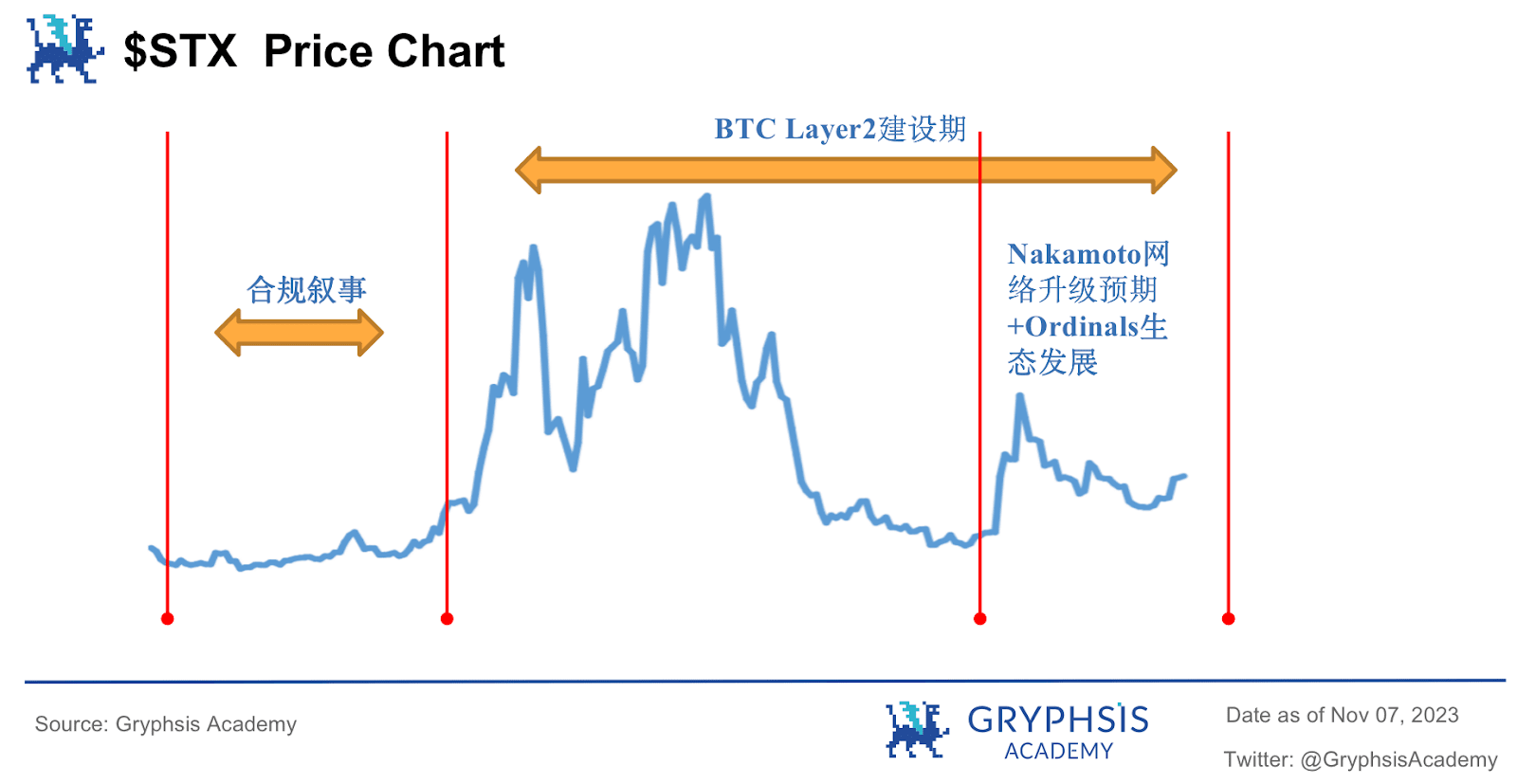
Combining the development history of Stacks, it is not difficult to find that the main price drivers of Stacks are as follows:
Halving: The BTC halving will occur in about a year. Its security after the halving will bring more attention to the BTC second layer. At the same time, the market is also looking for trading opportunities related to the halving and with higher volatility.
The only circulating token project in BTC Layer 2: STX is currently the most complete BTC Layer 2. It is also the only circulating token project in BTC Layer 2, and its market value is still very small compared to Ethereum's L2.
As network utilization efficiency improves and block space becomes more valuable, the BTC cost that miners need to pay will also increase accordingly, simultaneously increasing the rate of return for STX stakers.
Compliance Narrative: SEC's First Compliance Qualification Token Issuance
upgrade
The popularity of Ordinals ecosystem brings capital and sentiment premium to BTC layer2
Nakamoto Upgrade
The Nakamoto upgrade is the next major upgrade of Stacks, which is expected to be launched in Q4 2023 and will be a potential important catalyst for driving $STX price changes. For Stacks, the main significance of the Nakamoto upgrade is as follows:
(1) Shared network security with BTC: Transactions are settled on the Bitcoin network. This feature makes Stacks transactions more secure and reliable, and becomes a true Layer 2 rather than a side chain with its own independent state.
(2) Launching sBTC: The introduction of the Bitcoin-pegged asset sBTC enables smart contracts to run faster and cheaper, and can easily transfer BTC into or out of Stacks L2. This is conducive to the development of the Bitcoin DeFi market.
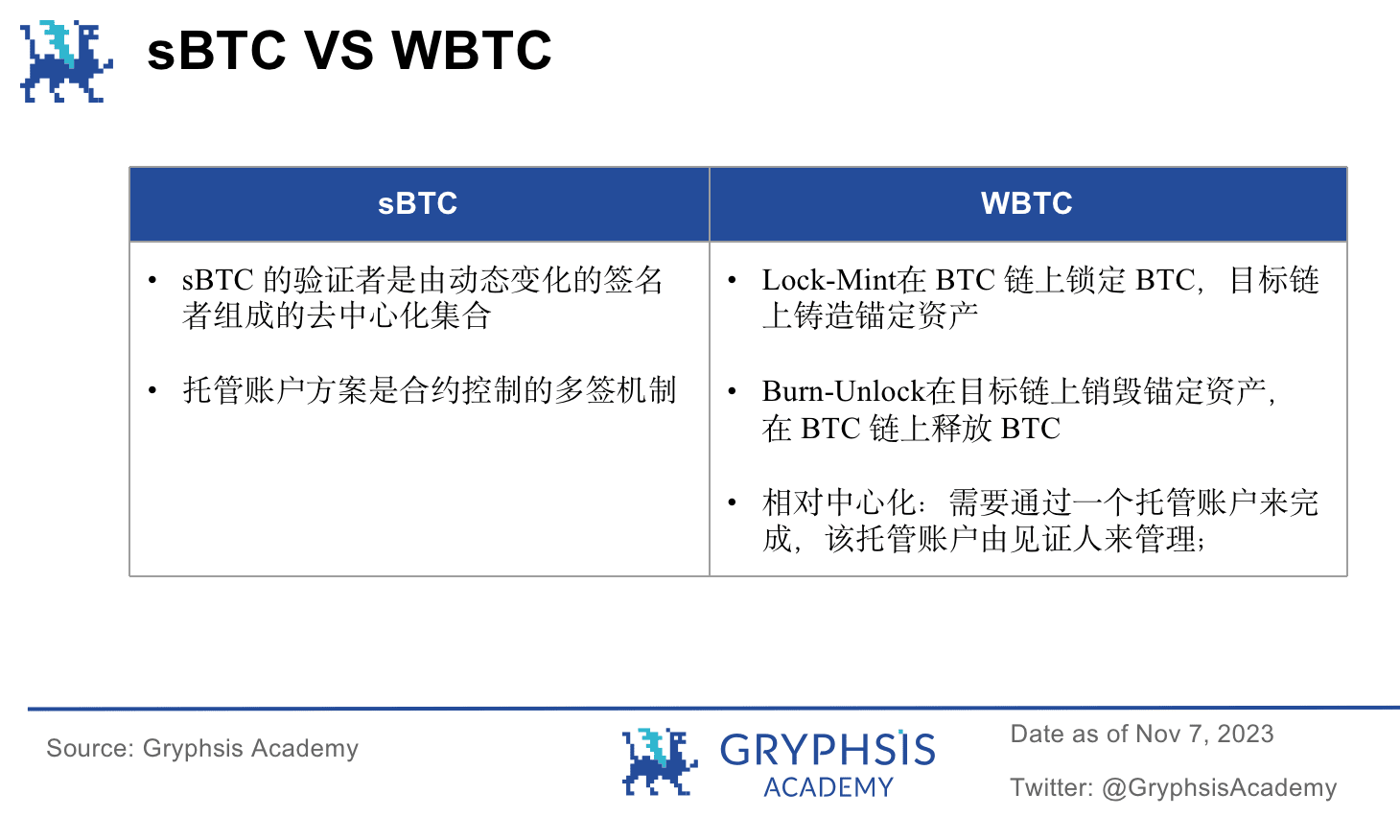
When BTC is converted to sBTC: BTC is sent to a multi-signature address and a transaction is initiated on the Stacks network, triggering a smart contract that sends BTC to the multi-signature address and creates a corresponding amount of sBTC assets on the Stacks network.
Convert sBTC back to BTC: Send a message to the smart contract and initiate another transaction on the Stacks network, triggering another smart contract that destroys the corresponding amount of sBTC assets and sends the corresponding amount of BTC to the user.
The comparison between sBTC and WBTC is as follows:
(3) Support for BTC atomic swaps, Bitcoin addresses can own and move assets defined on the Stacks layer, such as STX, stablecoins, and NFTs, and transfer them through Bitcoin L1 transactions.
(4) Clarity language: can greatly improve the security of on-chain smart contracts
(5) Bitcoin status reading: It can read the data of the Bitcoin chain completely, support reading Bitcoin transactions and status changes, and execute smart contracts triggered by Bitcoin transactions. The Bitcoin reading function can keep the Bitcoin L1 layer network data and L2 layer network data synchronized.
(6) Fast block generation: The current block generation time is 10 minutes. After the upgrade, the block generation speed can reach 4-5 seconds, breaking the 10-minute block generation limit of BTC. The transaction hash is written into Bitcoin every time a block is generated to ensure network security.
(7) Customized subnets support multiple development languages: Scalability layers such as subnets can make different trade-offs in performance and decentralization than the Stacks mainnet. Subnets can support other programming languages and execution environments (such as Ethereum's Solidity and EVM), which allows all Ethereum smart contracts to use Bitcoin-anchored assets and settle on the Bitcoin chain.
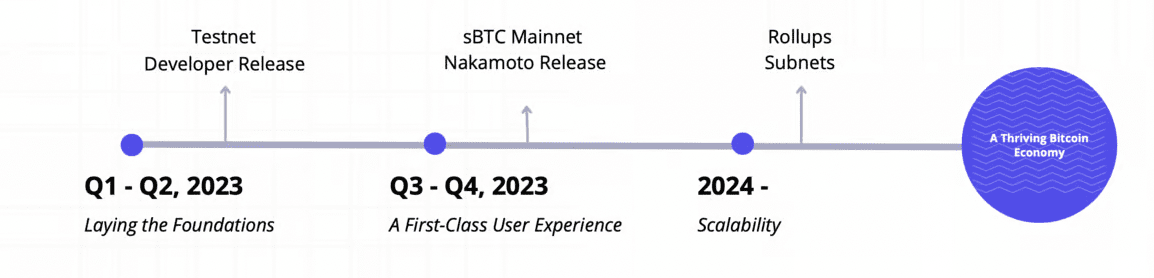
The roadmap for Nakamoto upgrade is as follows:
The sBTC that will be launched in this upgrade will be divided into three phases, and the second phase is currently underway.
Source: https://www.stacks.co/explore/events
Test page:
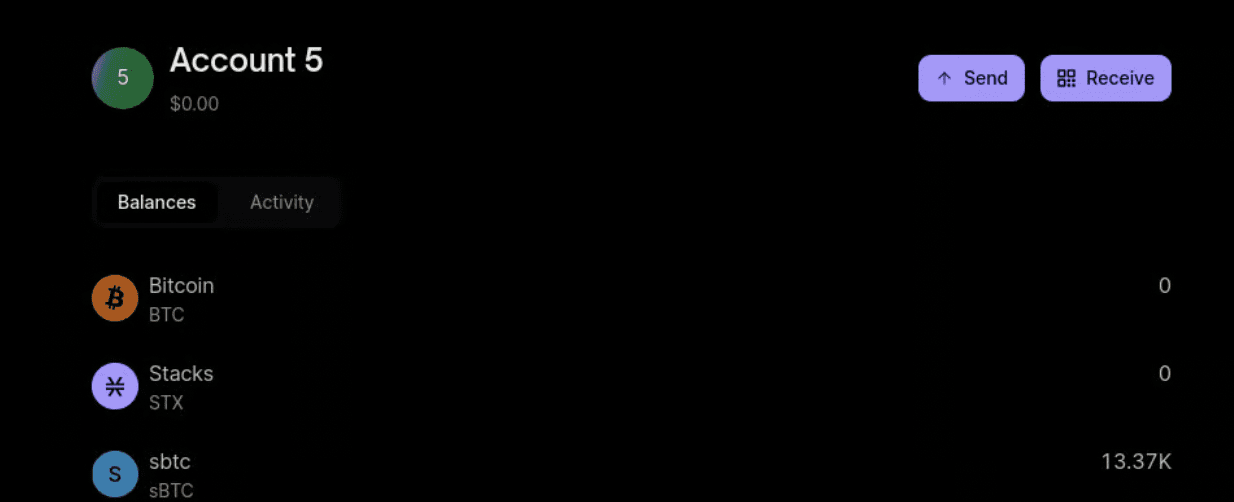
Source: https://www.stacks.co/explore/events
The first phase is to lay the foundation for the upgrade, launch the sBTC MVP product on the testnet, and deploy the developer version to the mainnet and testnet, which will take 6 months; the second phase is to implement the sBTC mainnet activation and the Satoshi network release, which is expected to take 6 months; in the third phase, the focus will shift to scalability, building a flywheel for the application ecosystem, and further expanding the Bitcoin economy, which is a relatively medium- to long-term task.
Currently, sBTC has been launched and has begun early testing in a real-time environment. The full launch is expected to be early next year. If the progress goes smoothly, it is expected that the Stacks upgrade event will start to be hyped in advance.
in conclusion:
First let's talk about the project itself:
As an old project that can be traced back to 2013, Stacks has great popularity and influence in the BTC core community and the Western cryptocurrency circle.
Technology: It has a unique set of technologies, with its own chain, compiler and programming language, running synchronously with Bitcoin. In essence, it builds a new chain outside the Bitcoin chain, with an independent governance structure and transaction model. The disadvantage is that the technical development is relatively difficult;
Ecosystem construction: relatively lagging behind, the TVL of the entire chain is 19M, and most of the time since its establishment, it has not exceeded 10M;
There is a lack of representative projects, and the absolute number and growth of developers and actual users are slow;
The commercial sensitivity is low, and the popularity of Ordinals and Brc20 has not brought any real benefits to the Stacks ecosystem; although Stacks has clearly expressed its interest in Ordinals afterwards;
The development progress is slow, and the pace of the entire ecosystem construction is very slow;
Future construction focus: Bitcoin DeFi, BTC NFT, and other applications; currently, infrastructure is still being slowly built;
Secondly, about $STX:
Keeping pace with BTC, it has been the beta of the market most of the time; there was a small period of alpha at the beginning of this year to hype the Nakamoto upgrade expectations at the end of the year;
Hype Points:
Halving: BTC halving will occur in about a year. Its security after halving will bring more attention to BTC Layer 2. At the same time, the market is also looking for trading opportunities related to halving and with higher volatility.
Nakamoto network upgrade;
It is one of the few coin-issuing projects in the BTC second layer and is currently the most complete BTC second layer;
As network efficiency improves and block space becomes more valuable, the BTC cost that miners need to pay will also increase accordingly, simultaneously increasing the rate of return for STX stakers.
Compliance narrative: The first SEC-compliant token was issued. There was a lot of hype about compliance narratives 21 years ago: In Q3 2019, it became the first SEC-compliant public offering project. After Stacks 2.0 went online in Q4 2020, STX was no longer considered a security regulated by US law (the SEC did not publicly agree with this view and acquiesced). Currently, compliance narratives are rarely mentioned;
Finally, about the Nakamoto upgrade:
What to upgrade:
Improve Stacks performance and security;
Launch of Bitcoin-pegged asset sBTC
Support for multiple development languages: Subnets can support other programming languages and execution environments (such as Ethereum’s Solidity and EVM), which allows all Ethereum smart contracts to use Bitcoin-anchored assets and settle on the Bitcoin chain.
Roadmap:
Nakamoto is currently live on the testnet, and the full launch is expected to be early next year. If all goes well, it is expected to start hype before the network upgrade is launched (progress needs to be tracked and confirmed)
In summary, this is a target that, as a chain, currently has technology but no commercialization capabilities and no market popularity, has a roadmap but no ecosystem and no TVL. However, it also has many potential hype factors (upgrade, halving, compliance, and one of the most experienced, famous, and influential layer2s in BTC). It is recommended to treat it as a BTC related meme/High leveraged beta.
Reference:
https://www.stacks.co/explore/events
https://forum.stacks.org/t/sBTC-updates-weekly-megathread/14860/13
statement:
This report is an original work by @JellyZhouishere, a contributor to @GryphsisAcademy. The author is solely responsible for all content, which does not necessarily reflect the views of Gryphsis Academy or the organizations that commissioned the report. Editorial content and decisions are not influenced by readers. Please be aware that the author may own cryptocurrencies mentioned in this report. This document is for informational purposes only and should not be relied upon in making investment decisions. You are strongly advised to conduct your own research and consult with a neutral financial, tax or legal advisor before making an investment decision. Remember that the past performance of any asset does not guarantee future returns.