


Author: Austin King, Co-founder and CEO of Omni Network
Compiled by: Felix, PANews
Few people know that just 2 companies create 90% of Ethereum blocks. However, even fewer know the behind-the-scenes story that led to this monopoly.
Here is the lesser-known story of Titan, over $40 million in hidden profits, and how chain abstraction will bring greater opportunities.
Beginning
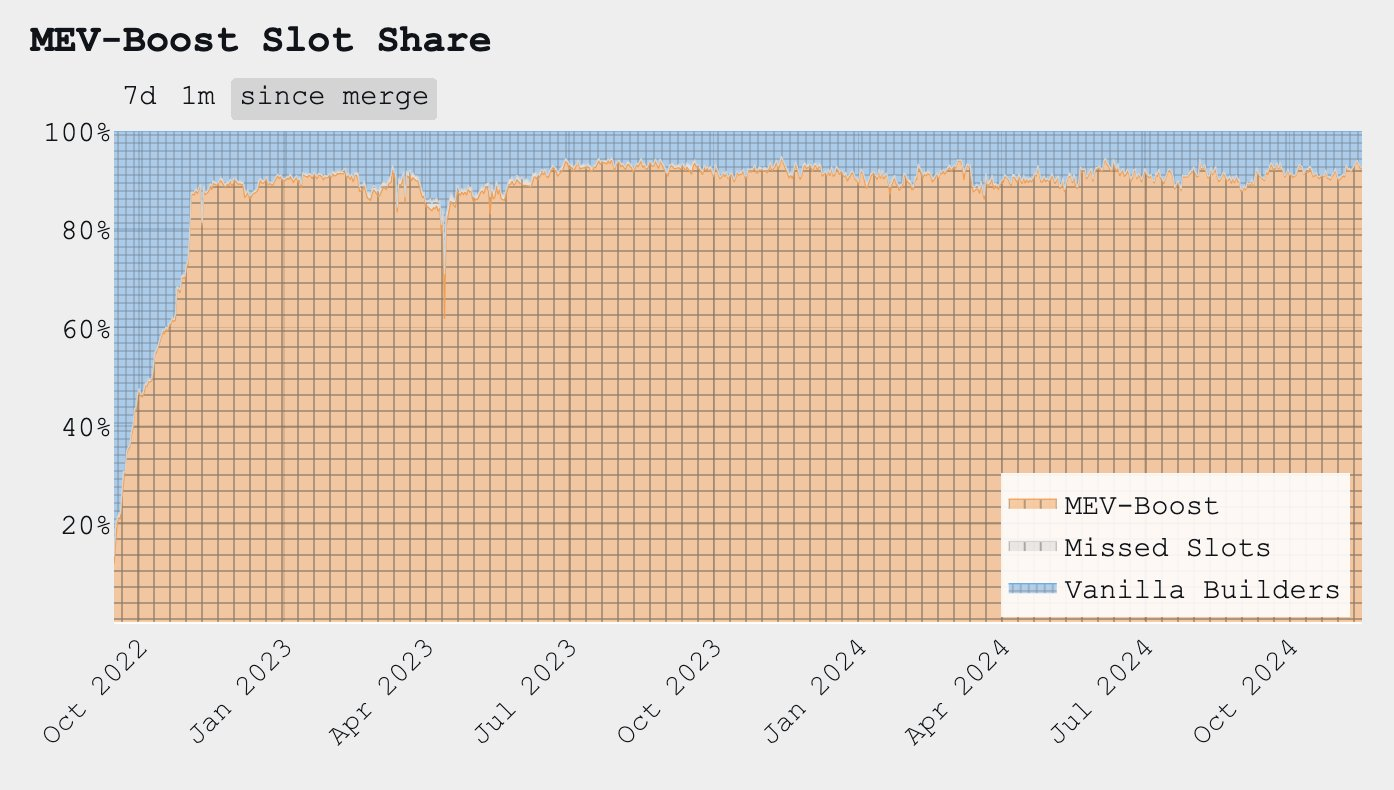
It all started at the end of 2022 when Flashbots created MEV-Boost, a software that allowed Ethereum L1 validators to obtain transaction blocks from third parties (called Builders, who specialize in MEV extraction), enabling validators to earn more money. After this, almost all Ethereum L1 validators quickly began running this software:
Refer to the diagram below, initially (#1) Flashbots (pink) was the only running 'Builder', and six months later there was intense competition (#2). Now, there are only 2 major builders (#3): Beaver and Titan.
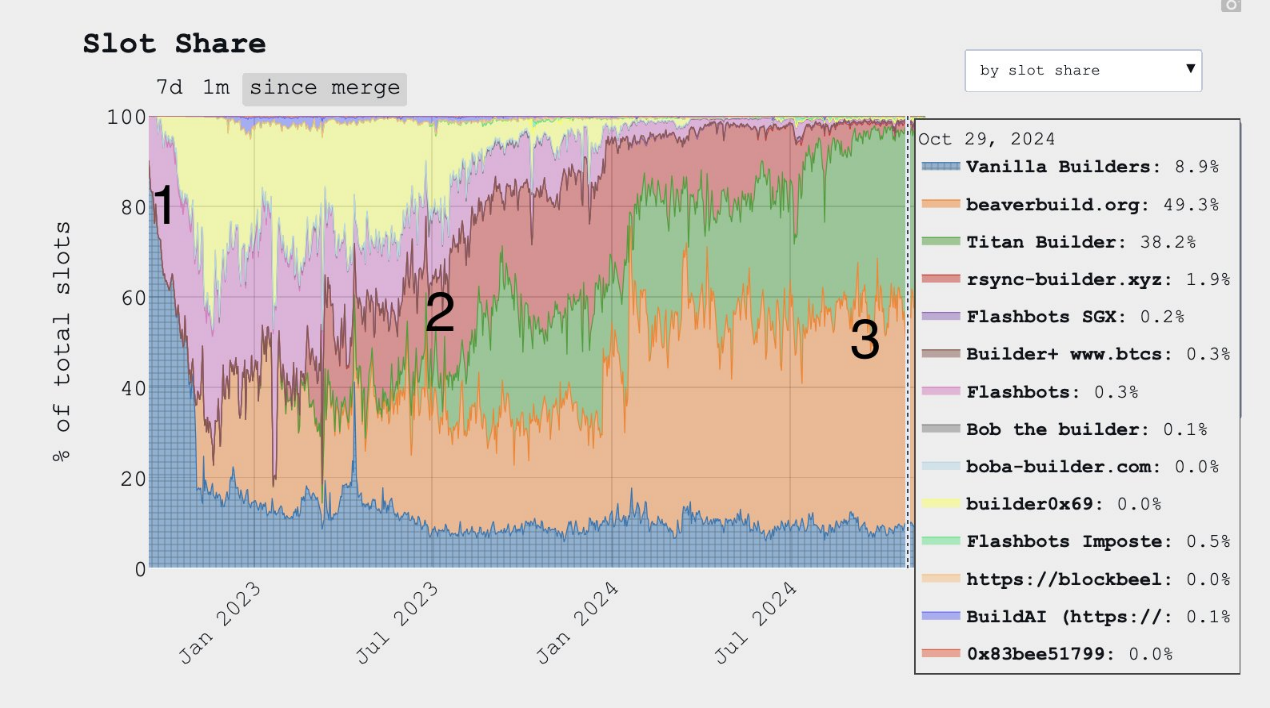
Clearly, many things happened during this period, but one of the most influential events was in April 2023, when Titan reached an exclusive order flow (EOF) agreement with Banana Gun—Banana Gun later became a top Telegram trading bot. After this EOF deal occurred, Titan had the opportunity to build blocks more profitable than any other builder because they had exclusive access to trades that offered higher rewards.
After that, over 90% of Ethereum L1 transactions came from two companies (Beaver and Titan).
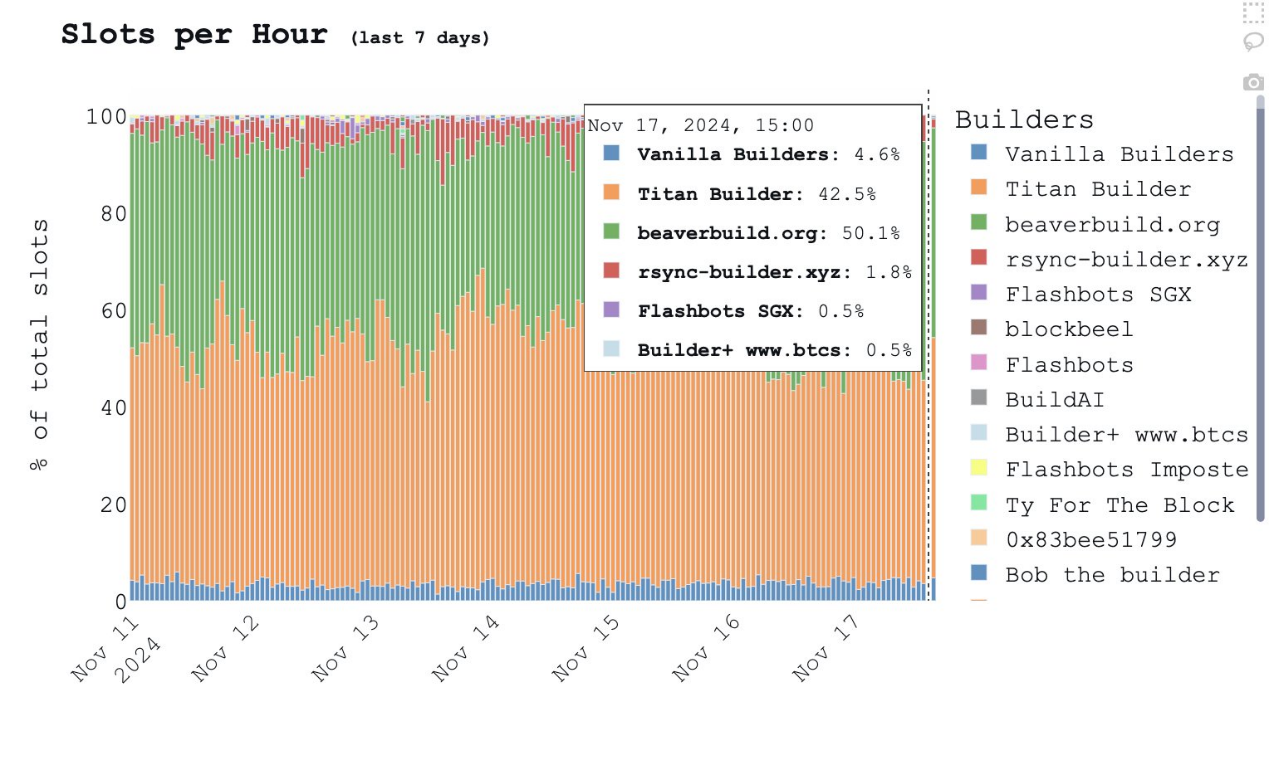
Interestingly, as of August this year, the profit statistics are:
Flashbots
Created approximately 550,000 blocks
Profit 16.7 ETH
Titan
Created approximately 600,000 blocks
Profit 13,151 ETH
At today's prices, the difference is $44 million.
Although this data is public, some interesting questions remain a mystery:
Why did Banana Gun choose to route almost all of its bundled services to Titan with less than 1% of market share?
Did Titan make a multi-million dollar deal with the Banana Gun team at the beginning to increase market share?
Did Titan promise to provide kickbacks to the Banana Gun team, thereby harming its users' interests?
Specific circumstances are unknown, and few people may know this information.
As the co-founder and CEO of Omni Network, why does Austin King take the time to think deeply about such deals?
Because chain abstraction will unlock greater profit opportunities. The current market is quickly shifting towards focusing on the crypto user experience (users won't consider Gas, transaction submission, which chain the transaction is on, etc.), the next wave of users will be far less 'complex' than today's crypto users. New users simply won't care how all this happens, and this downstream abstraction will have more such opportunities, allowing various networks to gain significant revenue streams.
Today, the 2 core primitives of OMNI (EVM + Interop) are destroyed when used. However, what is rarely understood is that there is a business opportunity when revenue opportunities in the order flow supply chain are directly introduced into the core model of the token.
Related reading: Vitalik proposed a new concept of block building aimed at reconstructing the Ethereum ecosystem?