

Original author: Kaori, BlockBeats
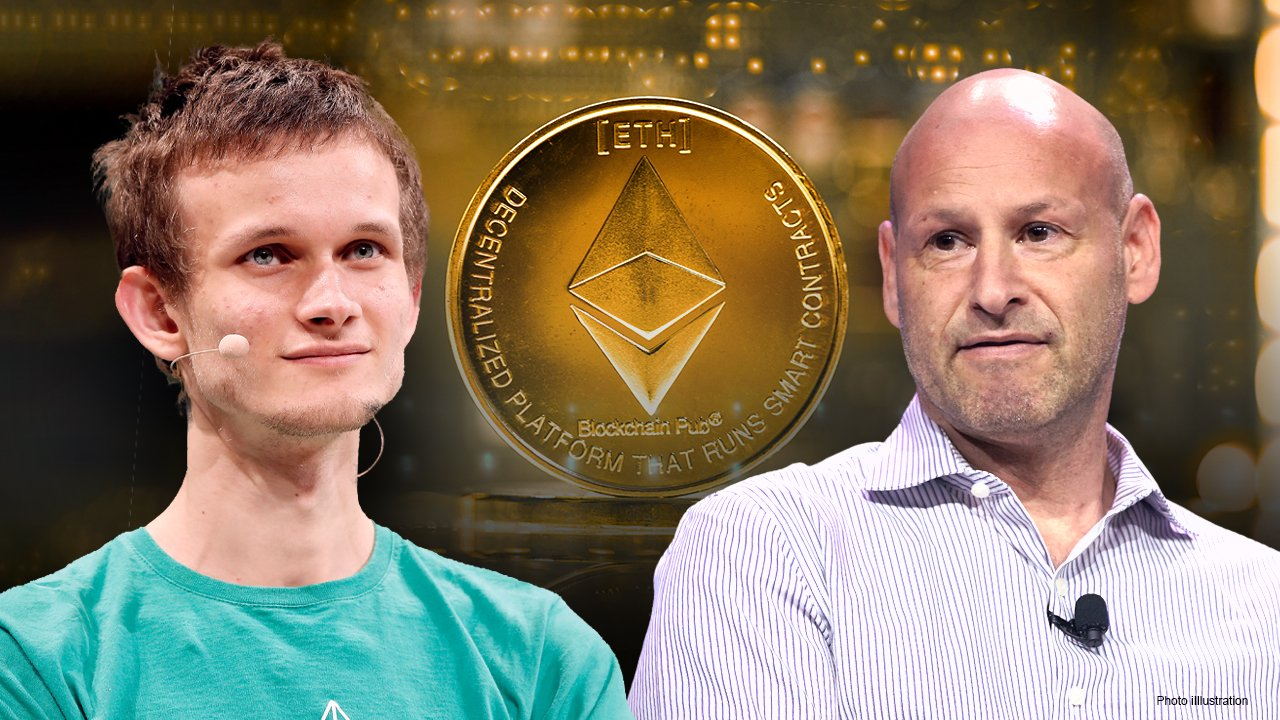
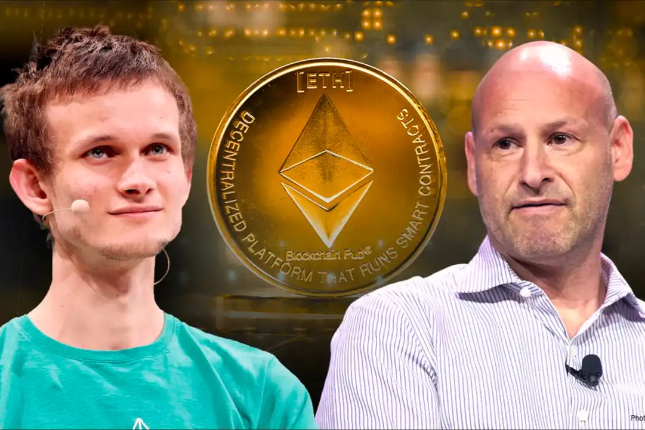
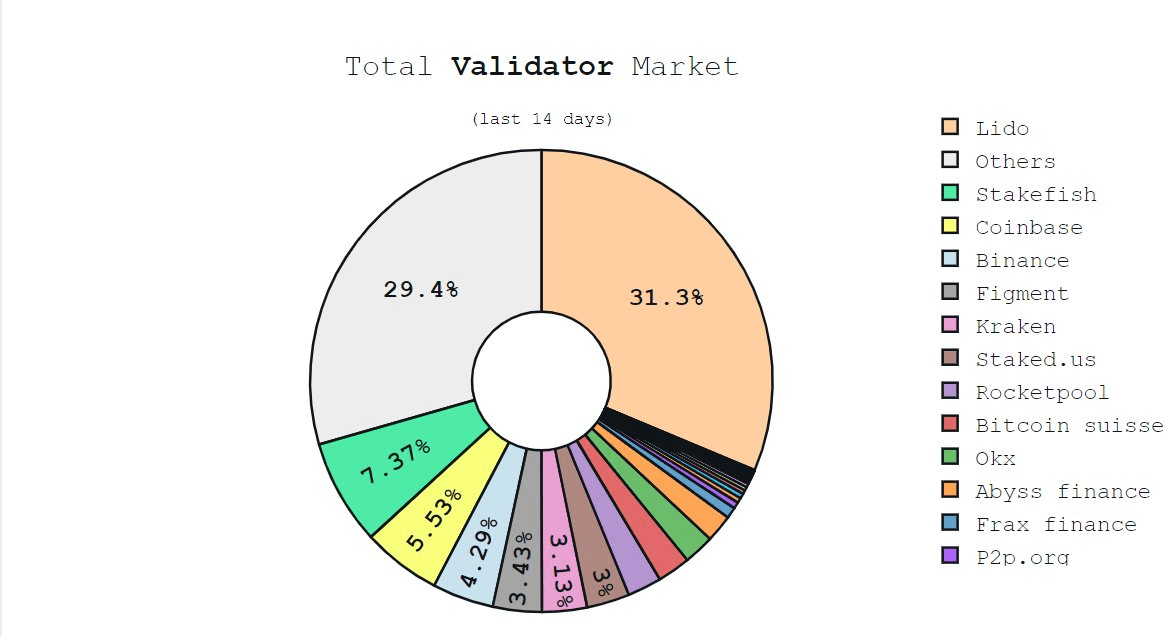
Whether Ethereum is becoming more centralized is becoming a hot topic in the crypto community. Vitalik said in May last year that any liquidity staking pool should not exceed 15%, but now Lido, Coinbase and Binance account for more than 85% of the staking, and the Ethereum Foundation also admits that Ethereum has "corporatization, centralization and systemic threats."
The community's doubts are growing, and some people call Vitalik a dictator. Recently, some active voices in the crypto community have even questioned Vitalik and other Ethereum founders for improper operations and bribery of SEC executives during the Ethereum ICO.
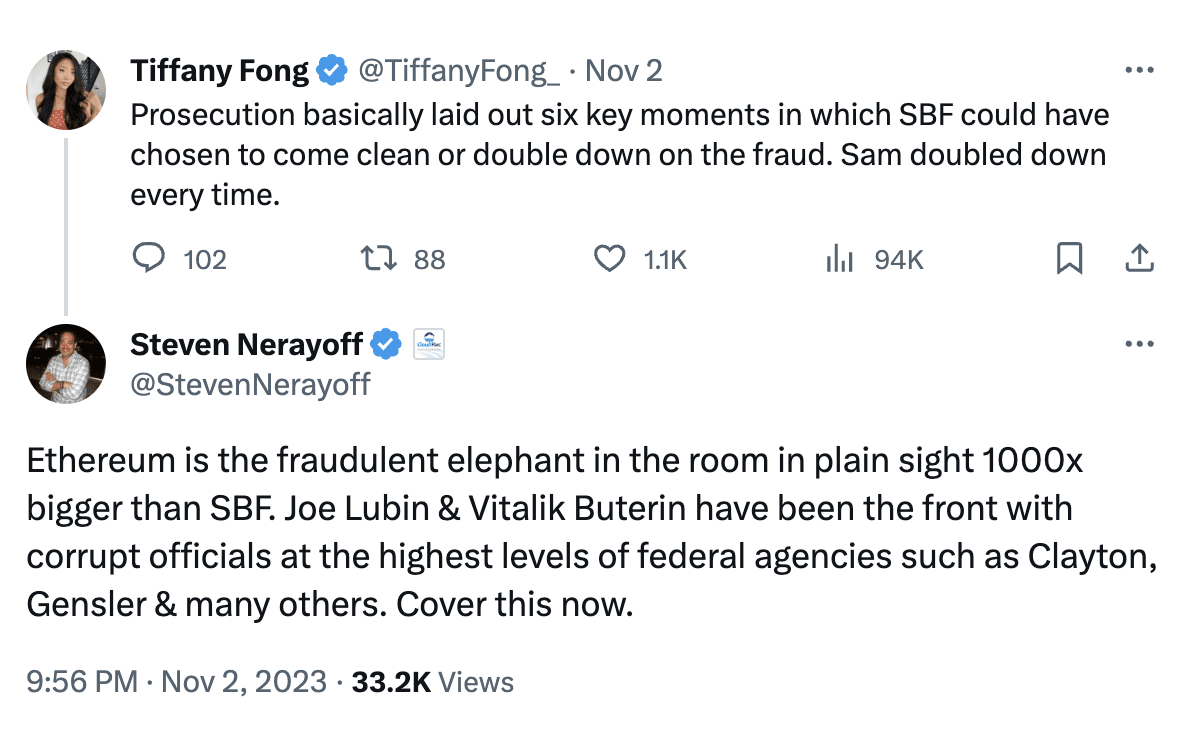
On November 2, under a tweet from crypto KOL Tiffany Fong about the SBF trial, former Ethereum consultant Steven Nerayoff commented, “It’s clear that Ethereum is the elephant in the room, even overshadowing the FTX case. Joe Lubin and Vitalik Buterin have been the front lines for corrupt officials at the highest levels of federal agencies, such as Clayton (former SEC Chairman), Gensler (SEC Chairman), etc.”
Subsequently, the crypto media Bitcoinist published an article titled "Ethereum Insider Drops a Bombshell: ETH founder's fraud is worse than FTX's fraud", which attracted community attention.
Nerayoff retweeted the article and said, "What's interesting is that I haven't talked to any reporters, but they think I wrote these articles. This article doesn't say that I don't have evidence, it just says that I haven't revealed it yet. If they thought I didn't, they wouldn't say that. Although I have revealed a lot to those who pay attention."
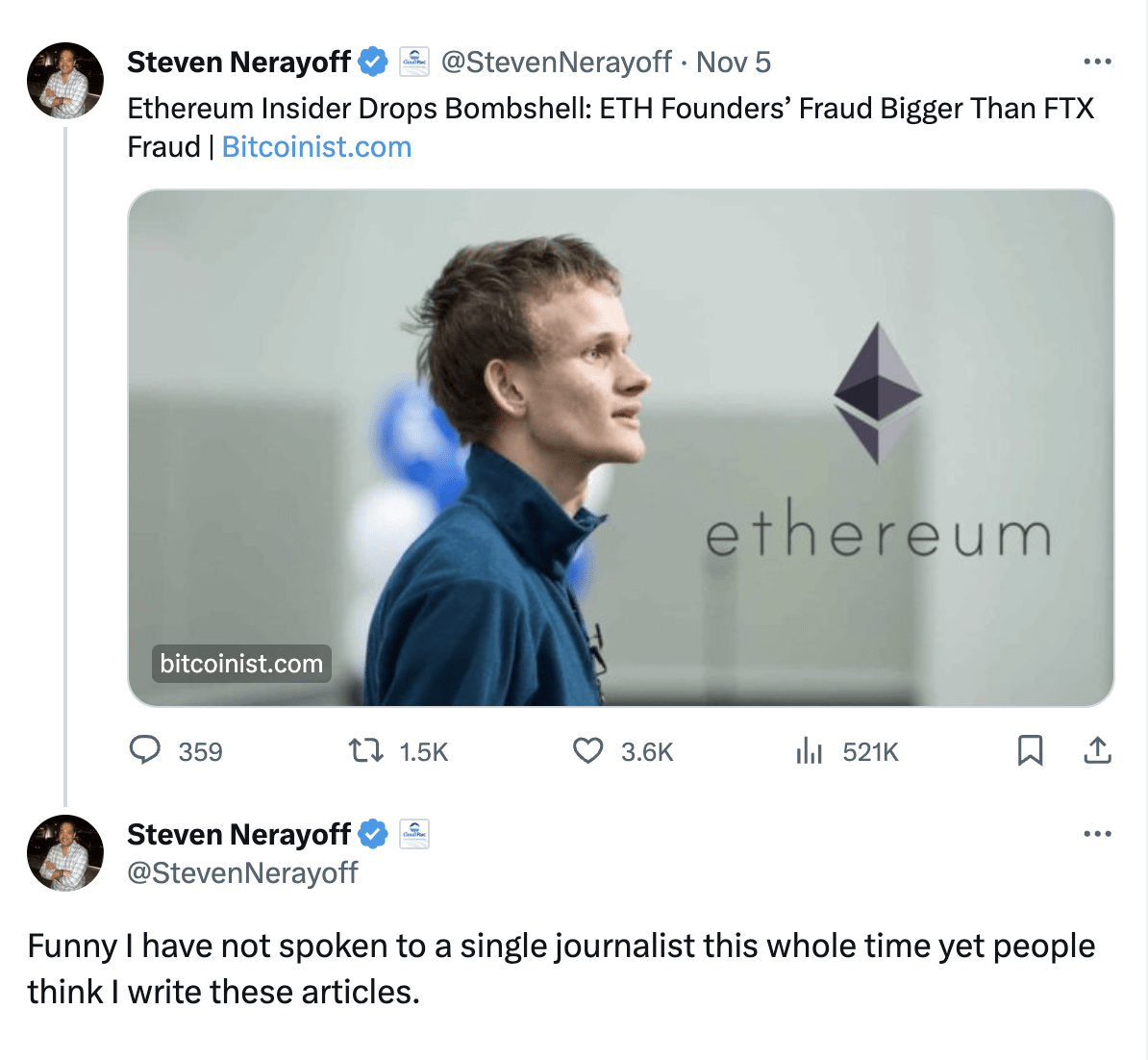
In addition to these latest allegations, Nerayoff also tweeted that someone at Ethereum was hiding the true number of buyers in the Ethereum ICO and that “whales can hide their large positions during ICOs.”
Steven Nerayoff's Disputes Continue, His Identity as an Early Contributor of Ethereum Is in Doubt
Steven Nerayoff is the founder and CEO of Alchemist. According to Linkedin information, Nerayoff has served as a consultant or investor in multiple projects, including Ethereum, tZERO, Polymath, Casper Labs, etc. He also claimed that during the Ethereum crowdfunding, he invented the "Utility Token" and ICO (which later evolved into IEO and IDO), and at tZERO, Steven designed the Security Token Offering (STO) for the first regulated security token (TZROP).
But a 2019 CoinDesk article reporting on Steven Nerayoff’s alleged extortion allegations mentioned that as of March 1, 2018, Nerayoff was a member of the advisory board of tZERO, a security token trading platform owned by retail giant OverStock, and a 2017 OverStock press release described him as the “architect of the Ethereum ICO.”
According to CoinDesk, early Ethereum staff said he was indeed involved and was also involved in the conception of Gas, but those descriptions may be a bit exaggerated and far from the driving force implied by his resume. A tZero spokesperson said tZero also has no relationship with Nerayoff and his company Alchemist, which was previously a paid consultant for the tZERO token issuance, but tZERO has terminated the consulting relationship.
At that time, Steven Nerayoff was facing fraud charges that he planned to extort an American startup company, which Nerayoff was hired to guide the company's ICO in 2017. The accusation stated that he and his employee Michael Hlady demanded $4.45 million from the company, and if convicted, he would face up to 20 years in prison.
In May, a New York judge dismissed the fraud charges against Nerayoff, saying in court documents that they had obtained significant exculpatory evidence and "could not prove the allegations in the indictment beyond a reasonable doubt," ending a three-and-a-half-year legal battle.
However, Steven Nerayoff’s dispute is not over. In September, Nerayoff claimed that Vitalik Buterin and his father Dmitry Buterin jointly accused him of extorting the Ethereum ICO, which damaged his reputation. “This is a coordinated and carefully planned character attack by father and son to make me their scapegoat.” Nerayoff also claimed that Virgil Griffith, a senior researcher and developer at the Ethereum Foundation, was abandoned by Vitalik after being “convicted of helping North Korea evade sanctions.”
Several months have passed, and the community has not seen any substantive accusations from Steven Nerayoff. Nerayoff even said in a recent tweet that Twitter had banned tags on him, "Looking at the early posts in late September and early October, the views were hundreds of thousands to millions, but now only a few thousand?!"
Conspiracy theory? What is ETHGate?
And another keyword is also flooding Nerayoff’s comment section - ETHGate.
ETHGate supporters claim that the Ethereum Foundation and ConsenSys have established close relationships with key figures within institutions such as the SEC and JPMorgan Chase, thereby ensuring a favorable regulatory environment for Ethereum.
The entry came about because the SEC classified Ethereum as a non-security, while treating XRP and other competitors more harshly.
In the SEC v. Ripple case, Ripple’s lawyers seized on an Achilles’ heel of the SEC — a 2018 speech by former SEC Financial Division Director Bill Hinman that ETH should not be considered a security. However, before this ruling, the SEC would choose not to disclose Hinman’s material, insisting on its confidential nature.
In addition, ETHGate supporters also believe that Joseph Lubin, co-founder of Ethereum and founder of ConsenSys, established an insider connection between Ethereum and the SEC.
Within two months of Jay Clayton’s appointment as SEC Chairman, Lubin hired Patrick Berarducci from Sullivan Cromwell law firm, where Jay Clayton had been a partner before becoming SEC Chairman. The community believes this may have provided Ethereum with an inside line, or at least a way to get closer to the SEC.
Those who support ETHGate also place their hopes on Steven Nerayoff, believing that he has more insider information.
Are Bitcoin bulls also involved in this Ethereum farce?
Patrick Byrne, former CEO of OverStock and Bitcoin advocate, also retweeted the news, saying, "Pay close attention to this story and you'll see how it relates to me." Patrick Byrne resigned as CEO of OverStock in August 2019 after admitting his involvement in the FBI's investigation into whether Russia influenced the 2016 U.S. presidential election. In January 2014, Overstock became the world's first major retailer to accept Bitcoin payments.
Some media even claimed that because Ethereum bulls are more favored than Bitcoin in the crypto market, Ethereum maximalists claim that Ethereum can surpass Bitcoin at any time, so Bitcoin extremists panicked about Ethereum's bullishness and filed fraud charges.
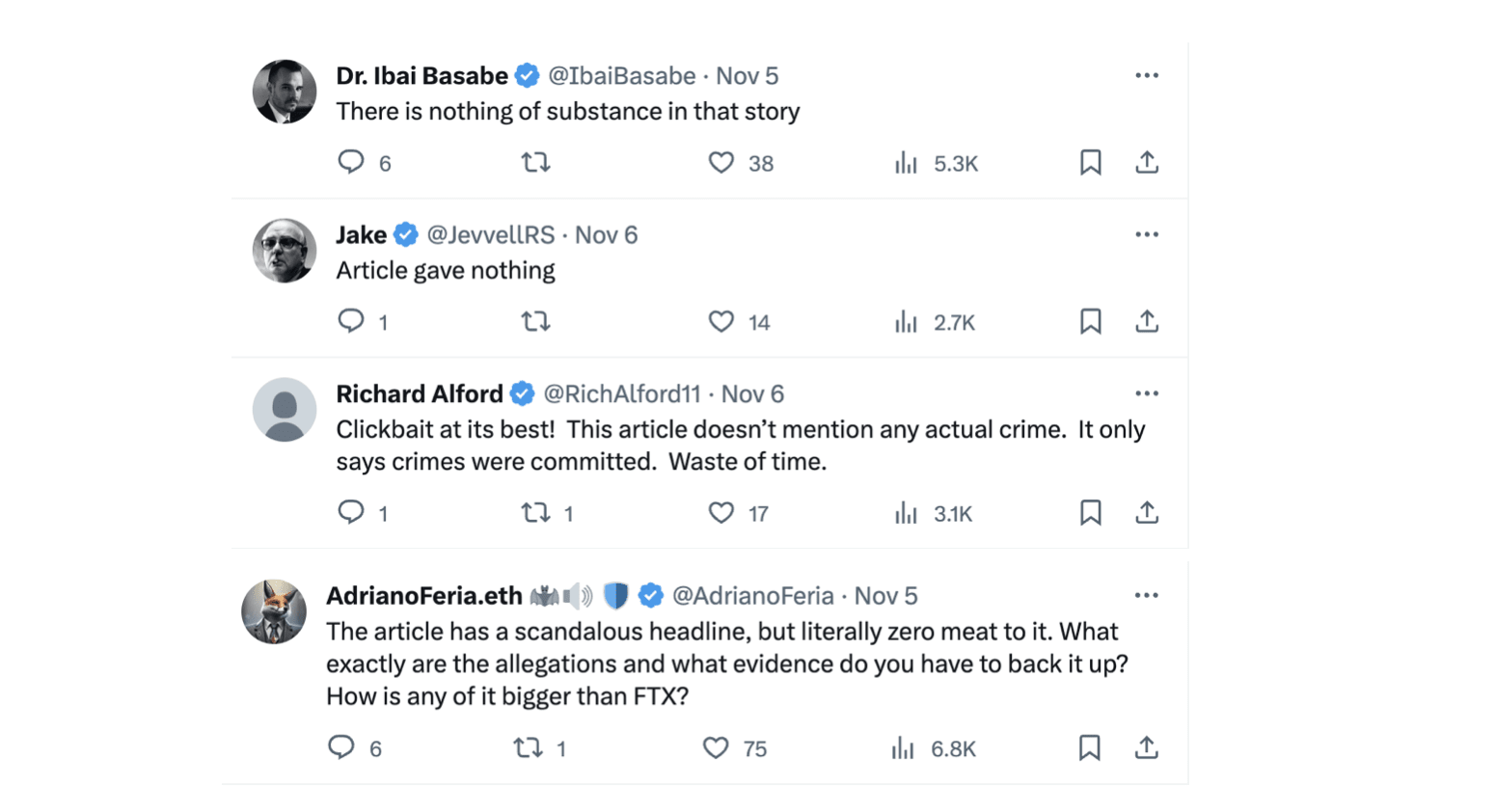
But in the comment section of these questioning and accusatory tweets, most community users took a wait-and-see attitude. Their general voice was that Nerayoff did not provide substantial evidence, and that speculation and hearsay could not affect the status of Ethereum. "The title of this article is shocking, but there is actually zero content. What are these accusations? What evidence do you have to support it? How can it be bigger than FTX?"
Did Ethereum ICO really involve fraud and bribery of SEC officials? Steven Nerayoff said he would give an answer soon, but replied, "My goal is to make everything public as much as I can, and everyone can decide for themselves. I created another platform that cannot be censored, so I will post it here (Twitter) and there (new platform)."
How did the incident finally develop? BlockBeats will continue to follow up and report.