FOLLOW ME FOR MORE ANALYSIS!!!
Algorand (ALGO) is more than just a cryptocurrency; it represents one of the most advanced blockchain platforms currently available. Its innovative approach to scalability, security, and decentralization positions it as a key player in the blockchain space. In this analysis, we’ll delve into Algorand’s technology, its use cases, ecosystem growth, and potential to capture significant market share in the future.
1. Understanding Algorand’s Technology
Algorand was founded in 2017 by Silvio Micali, an MIT professor and Turing Award winner. The blockchain was designed to tackle the "blockchain trilemma" of scalability, decentralization, and security simultaneously.
1.1 Pure Proof-of-Stake (PPoS) Consensus Mechanism
Algorand’s consensus model is a Pure Proof-of-Stake (PPoS) system, which is distinct from traditional Proof-of-Stake (PoS) models. Key aspects include:
Participation Without Barriers: Any holder of ALGO tokens can participate in consensus by staking tokens, with no minimum staking requirement.
Randomized Validator Selection: Validators are chosen randomly, which enhances security by making it nearly impossible for malicious actors to predict or manipulate the network.
Energy Efficiency: Unlike Proof-of-Work (PoW) systems, Algorand's PPoS is environmentally friendly, consuming minimal energy.
This system ensures a high level of decentralization, scalability, and security.
1.2 Fast Transactions and Finality
Algorand’s blockchain achieves finality in under 4.5 seconds, meaning transactions are processed quickly and irrevocably confirmed. This speed makes Algorand highly competitive with payment systems like Visa, which is crucial for real-world adoption.
Transaction Throughput: The network supports over 6,000 transactions per second (TPS), far exceeding many competitors like Ethereum (15–30 TPS in its current form).
Low Costs: Transaction fees on Algorand are extremely low, often less than $0.001 per transaction.
1.3 Layer-1 Smart Contracts
Algorand supports Layer-1 smart contracts, enabling developers to build decentralized applications (dApps) directly on the blockchain without requiring additional layers. This design simplifies development and ensures security and efficiency.
Key features:
Atomic Transfers: Enable seamless transactions across multiple parties or assets.
Algorand Standard Assets (ASA): Facilitate the creation and management of fungible and non-fungible tokens (NFTs) directly on-chain.
1.4 Algorand’s Focus on Security
The platform is designed to be resistant to quantum attacks, future-proofing it against emerging threats as quantum computing advances. This focus on security makes Algorand an attractive option for institutional adoption.
2. Algorand’s Ecosystem Growth
Algorand is building a robust ecosystem that spans multiple industries, from finance to gaming and supply chains. Some of the key areas of growth include:
2.1 Decentralized Finance (DeFi)
Algorand is emerging as a strong contender in the DeFi space, thanks to its speed, low fees, and scalability. Key developments include:
Algofi: A decentralized lending and borrowing protocol on Algorand.
Yieldly: Offers staking and liquidity pools to users.
Total Value Locked (TVL): While still smaller than Ethereum or Binance Smart Chain, Algorand’s TVL has been steadily growing, showing increasing adoption in DeFi.
2.2 Non-Fungible Tokens (NFTs)
Algorand is also positioning itself as a major player in the NFT space due to its efficient and eco-friendly infrastructure. Key highlights include:
Partnerships with artists and marketplaces: Algorand has collaborated with creators to launch NFT collections.
Green NFTs: Its carbon-negative blockchain appeals to environmentally conscious creators and collectors.
2.3 Central Bank Digital Currencies (CBDCs)
Algorand is one of the most prominent platforms exploring CBDC development with governments and institutions.
Marshall Islands: The Algorand blockchain was selected for the development of the world’s first national digital currency, the Sovereign (SOV).
Institutional Collaboration: Algorand has partnerships with organizations like the International Monetary Fund (IMF) and Central Banks worldwide, leveraging its secure, scalable infrastructure.
2.4 Real-World Use Cases
Algorand is also gaining traction in supply chain management, healthcare, and identity management:
Supply Chain Transparency: Businesses use Algorand to track products and ensure authenticity.
Healthcare Applications: Blockchain-based solutions for medical data management are being developed on Algorand.
3. ALGO Tokenomics and Market Dynamics
The ALGO token is central to the Algorand ecosystem, functioning as a utility token for transactions, staking, and governance.
3.1 Tokenomics
Maximum Supply: 10 billion ALGO tokens.
Circulating Supply: Approximately 7.8 billion as of 2024.
Deflationary Pressure: Transaction fees are burned, reducing the supply over time.
3.2 Governance
Algorand’s community governance model empowers ALGO holders to vote on key decisions regarding the network’s development and funding allocations. This decentralized approach ensures community participation in shaping the blockchain’s future.
3.3 Institutional Investment
Algorand has attracted significant institutional interest, with backing from major firms and partnerships. Its high scalability and low fees make it a viable option for enterprise use cases, further driving demand for ALGO tokens.
4. Market Potential and Outlook
Algorand’s combination of speed, scalability, and security positions it as a strong competitor in the blockchain space. Here’s how it stacks up against key competitors and what the future may hold:
4.1 Competitive Advantage
Algorand competes with blockchains like Ethereum, Solana, and Avalanche. Its strengths include:
Ethereum: While Ethereum has first-mover advantage, Algorand offers far superior scalability and lower fees.
Solana: Algorand is more reliable and decentralized, avoiding network outages experienced by Solana.
Avalanche: Algorand’s simplicity in Layer-1 smart contracts gives it a unique edge.
4.2 Price Potential
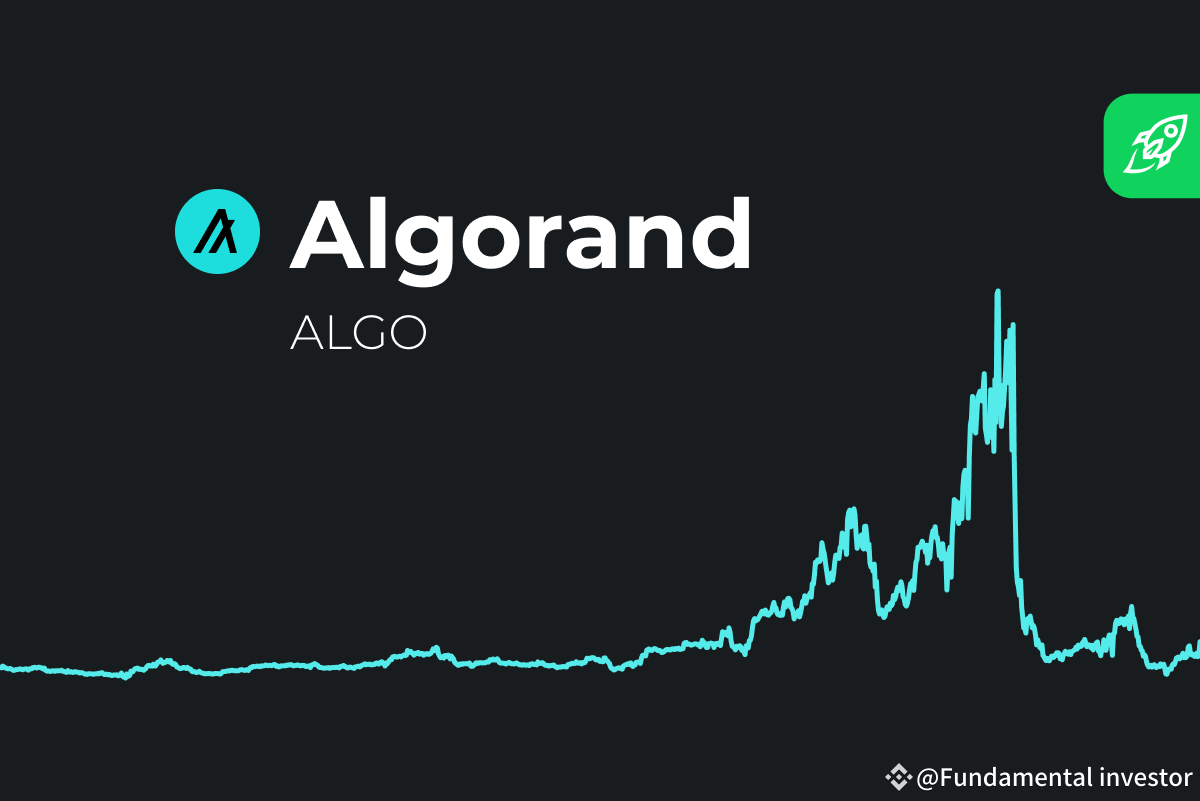
With ALGO currently trading at $0.30, here’s a breakdown of its potential growth:
Short-Term:
If ALGO maintains its momentum, breaking through the $0.35 resistance level could push it to $0.42 and beyond in the next few weeks.Medium-Term:
As adoption grows and more DeFi/NFT projects launch on Algorand, $0.50–$0.75 becomes a realistic target.Long-Term:
With broader blockchain adoption and potential success in CBDCs, ALGO could aim for $3–$5 within the next few years, particularly if it captures significant market share.
4.3 Risks
Competition: While Algorand is strong technologically, it faces stiff competition from well-established platforms.
Adoption Pace: Mass adoption of its ecosystem is critical for sustained growth.
Market Conditions: Broader cryptocurrency market trends will heavily influence ALGO’s price.
5. Conclusion: Why Algorand Has Enormous Potential
Algorand is poised to be a leader in blockchain innovation. Its Pure Proof-of-Stake consensus, fast transaction finality, and low fees make it a perfect candidate for a wide range of use cases. Additionally, its focus on green technology and partnerships with governments and institutions further solidify its place in the market.
Key Strengths:
High scalability with low transaction costs.
Decentralized governance that empowers the community.
Real-world applications in DeFi, NFTs, and CBDCs.
Growing institutional adoption and ecosystem development.
At its current price of $0.30, ALGO is significantly undervalued relative to its technology and potential. Breaking key resistance levels ($0.35 and $0.42) could lead to rapid upward momentum. For long-term investors, Algorand represents a strong opportunity to benefit from the continued evolution of blockchain technology.