

The cryptocurrency world is rapidly evolving, and amidst a multitude of prominent names, Solana is gradually establishing itself as a "new star" full of potential. With super-fast transaction processing speed, low costs, and impressive scalability, Solana is expected to make strong impacts in the blockchain market. So what is Solana? Let's find out together.
What is Solana?
Solana is a layer-1 blockchain platform that combines two consensus mechanisms, Proof of History (PoH) and Proof of Stake (PoS), allowing for thousands of transactions per second at low costs.
Launched in 2020, Solana carries the mission of solving the "blockchain trilemma" – the challenging problem of scalability, security, and decentralization that many other blockchains, including Bitcoin and Ethereum, face.
Solana is a layer-1 blockchain platform that combines PoH and PoS.
With a processing speed of up to 65,000 transactions per second (TPS) and transaction fees of only $0.00025, Solana has demonstrated its potential to become a formidable competitor to Ethereum, even being dubbed the new "Ethereum Killer."
Not only does Solana possess outstanding speed, but it also provides a rich development ecosystem with an SDK and smart contract tools, allowing developers to easily build and deploy decentralized applications (DApps) on its platform. The combination of high performance and diverse ecosystem has attracted community interest in DeFi, NFT, and gaming projects on Solana.
What is the mechanism of Solana?
Solana achieves outstanding performance thanks to the sophisticated combination of many advanced technologies. Let's analyze the 8 core factors that create the strength of this platform:
Proof of History (PoH)
PoH also acts as a clock for SOL.
Not just a consensus mechanism, PoH also acts as a "clock" for the blockchain, accurately recording the sequence of events. By using the SHA-256 hash function and VDF technique, PoH enables efficient verification of the timing between transactions, eliminating the need to wait for consensus from the entire network as in traditional blockchains.
Tower Byzantine Fault Tolerance (BFT)
Built on the pBFT algorithm, Tower BFT leverages PoH to optimize the process of achieving consensus among nodes. This helps minimize the amount of information exchanged between nodes, thereby increasing transaction processing speed.
Turbine
Inspired by BitTorrent file-sharing technology, Turbine breaks data into small packets before transmission. This approach optimizes bandwidth and speeds up information dissemination across the network.
Gulf Stream
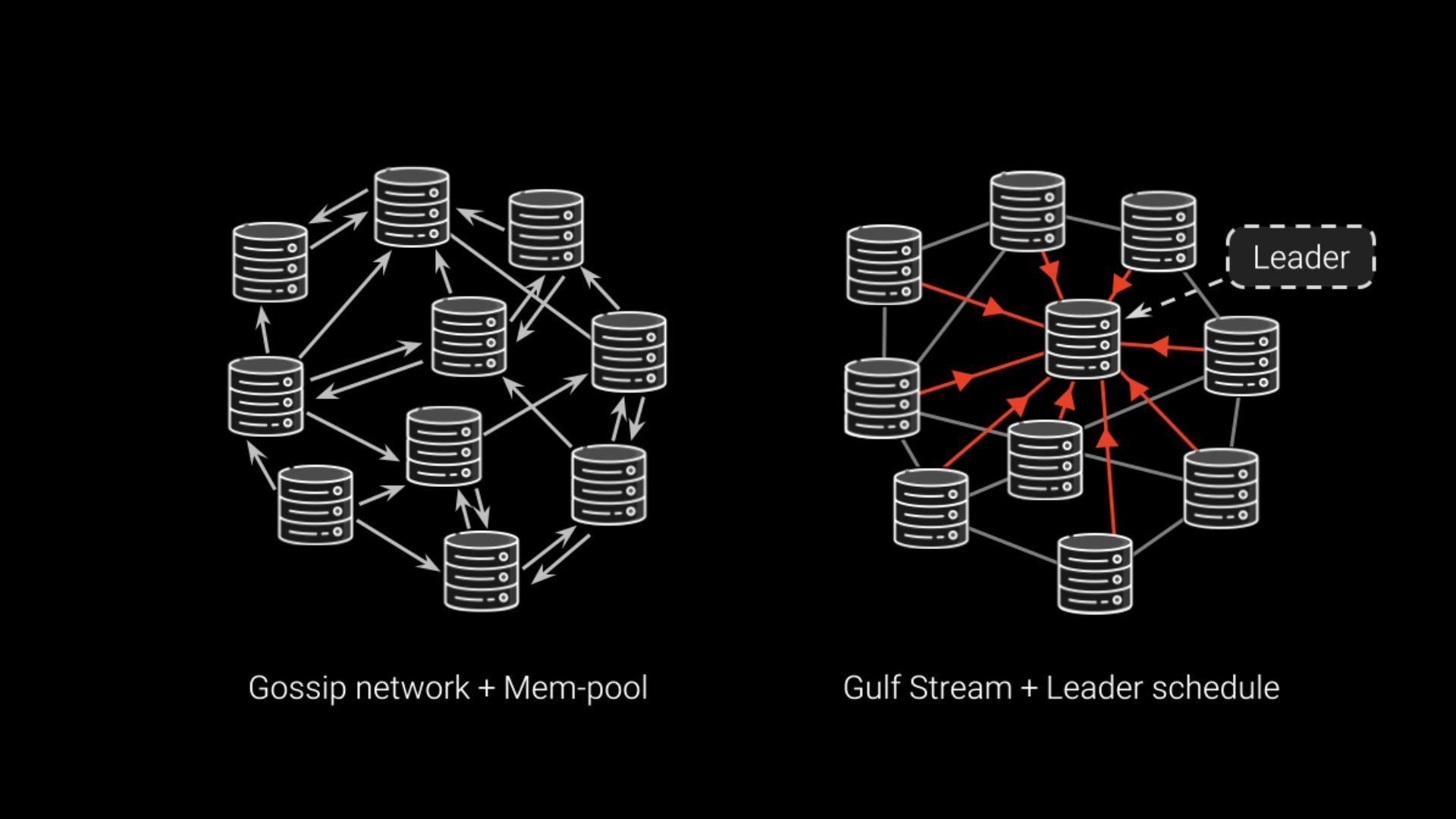
Gulf Stream allows for "foreseeing the future".
Gulf Stream allows for "foreseeing the future" by anticipating the next leader node based on the amount of staked tokens. This enables transactions to be forwarded to this node in advance, increasing confirmation speed and reducing load on the system.
Sealevel
Sealevel is the "key" to Solana's parallel processing capability. This technology allows multiple transactions to be executed simultaneously on the same shard, leveraging the power of GPUs and SSDs.
Pipelining
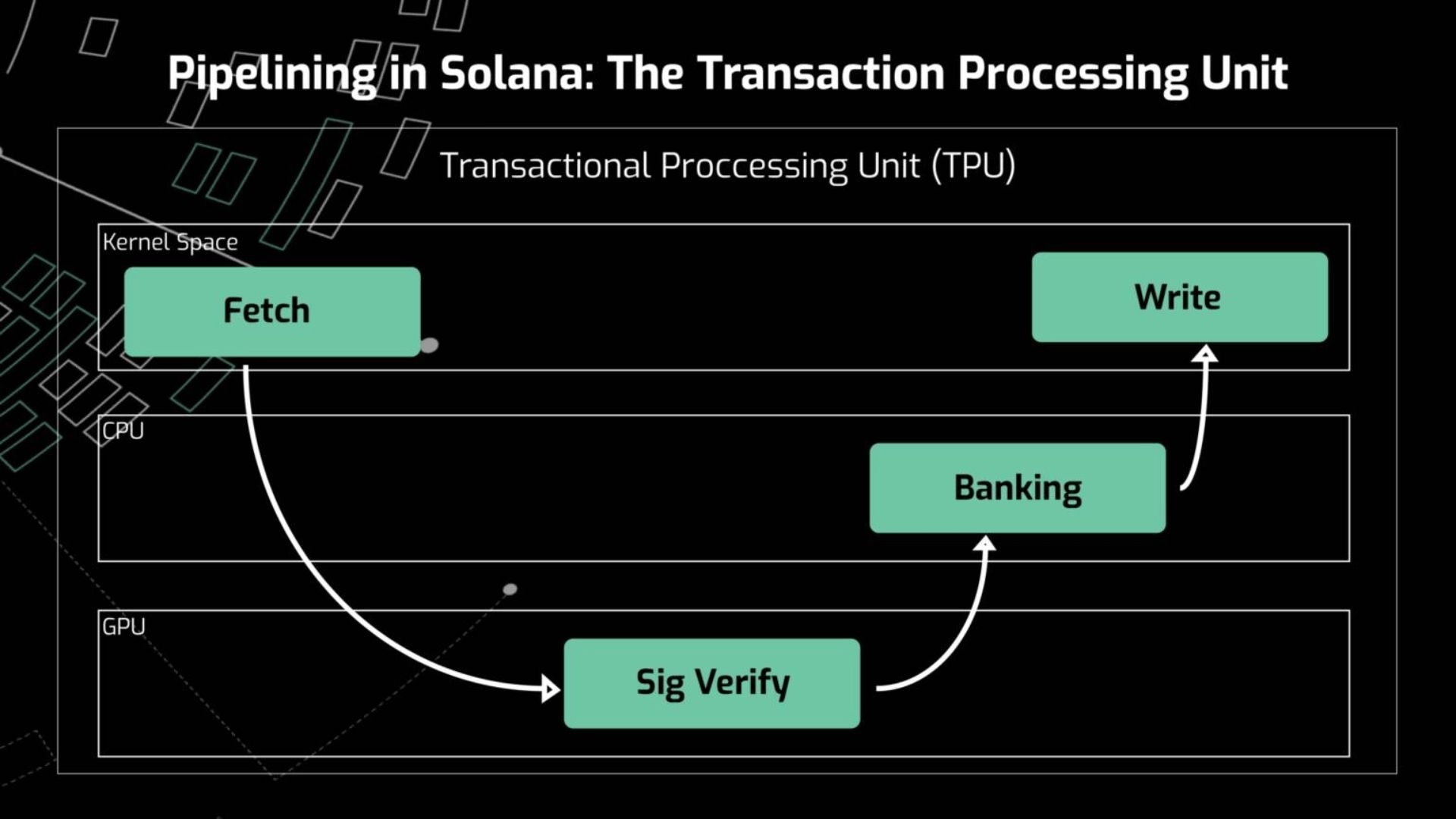
Pipelining optimizes the transaction validation process.
Similar to how a CPU processes data, Pipelining optimizes the transaction validation process by breaking it down into stages and executing them in parallel.
Cloudbreak
Cloudbreak addresses the issue of reading and writing data in a distributed environment. By optimizing storage structure on SSDs, Cloudbreak ensures that data access speeds are always at their highest.
Archivers
Archivers act as "data storers," ensuring the integrity and availability of information across the network. Each node can participate in storing and distributing data, creating a decentralized and secure system.
In summary, the harmonious combination of these 8 core technologies has created a Solana with outstanding performance, ready to meet the needs of high-speed processing applications.
What are the highlights of Solana?
Knowing what Solana is, we see that Solana possesses outstanding strengths that attract the attention of both developers and users:
Solana possesses outstanding strengths
Outstanding performance: Solana can process up to 65,000 transactions per second, providing incredible speed for decentralized applications (dApps). This impressive scalability ensures Solana can meet the growing demand of the blockchain ecosystem.
Optimal costs: With extremely low transaction fees, Solana facilitates users and developers, especially in cases requiring frequent transactions.
Environmentally friendly: Using the Proof-of-Stake (PoS) consensus mechanism, Solana consumes significantly less energy compared to blockchains that use Proof-of-Work (PoW).
Flexible smart contracts: Solana strongly supports the development of smart contracts, allowing for the creation of complex and diverse dApps. The Rust programming language used on Solana is highly regarded for its safety and efficiency.
Fast transaction confirmation: Solana ensures the finality of transactions quickly, meeting the needs of applications that require high processing speed.
These advantages have contributed to Solana's appeal, making this platform one of the top choices for blockchain projects today.
The development team of Solana
Solana was built and developed by a team with deep experience and a solid foundation in technology. Here is information about key members:
Please revise the image to comply with our Community Guidelines.
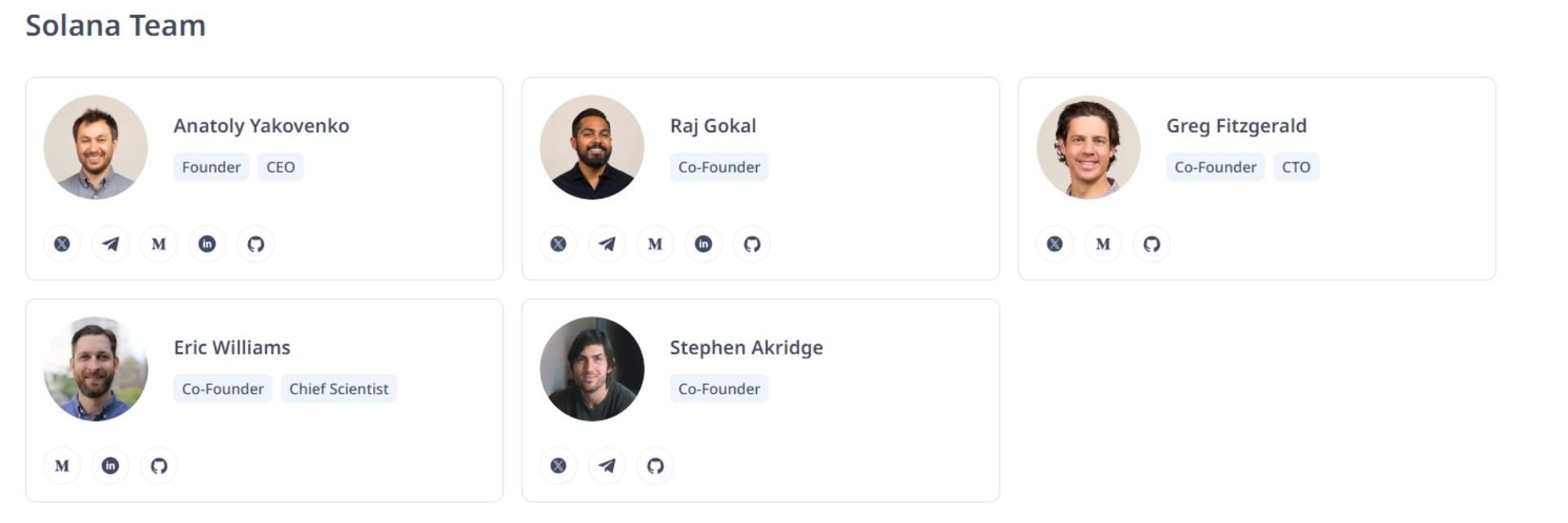
Anatoly Yakovenko (CEO - Chief Executive Officer): As the "brain" behind Solana, Anatoly has extensive experience in software. Before founding Solana, he held key positions at leading technology companies such as Dropbox, Mesosphere, and Qualcomm. Notably, he was a Senior Staff Engineer at Qualcomm Boulder. Anatoly is also a co-founder of Alescere.
Greg Fitzgerald (CTO - Chief Technology Officer): As the Chief Technology Officer (CTO), Greg is responsible for the technical aspects of Solana. Like Anatoly, Greg was also a Senior Software Engineer at Qualcomm Boulder and spent time at Alescere as a systems software engineer.
Raj Gokal (COO - Chief Operating Officer): As the Chief Operating Officer (COO), Raj has extensive knowledge of business and investment. Before joining Solana, he was a venture capitalist at General Catalyst and a Product Manager at Odama Health. Additionally, Raj is an entrepreneur residing at Rock Health and is the CEO and co-founder of Sano.
Eric Williams (Chief Scientist - Chief Scientist): As the chief scientist of Solana, Eric contributes scientific expertise and research to the project. He was previously the Head of Data and co-founder at Motion, Vice President of Data Science and Analytics at Odama Health, and a researcher at CERN - European Organization for Nuclear Research.
Stephen Akridge (Co-Founder - Co-Founder): Stephen is a co-founder of Solana and has over 9 years of experience working at Qualcomm, one of the world's leading chip manufacturing companies. At Qualcomm, he managed a team of engineers, showcasing his leadership and organizational skills.
Anatoly Yakovenko (CEO - Chief Executive Officer): As the "brain" behind Solana, Anatoly has extensive experience in software. Before founding Solana, he held key positions at leading technology companies such as Dropbox, Mesosphere, and Qualcomm. Notably, he was a Senior Staff Engineer at Qualcomm Boulder. Anatoly is also a co-founder of Alescere.
Greg Fitzgerald (CTO - Chief Technology Officer): As the Chief Technology Officer (CTO), Greg is responsible for the technical aspects of Solana. Like Anatoly, Greg was also a Senior Software Engineer at Qualcomm Boulder and spent time at Alescere as a systems software engineer.
Raj Gokal (COO - Chief Operating Officer): As the Chief Operating Officer (COO), Raj has extensive knowledge of business and investment. Before joining Solana, he was a venture capitalist at General Catalyst and a Product Manager at Odama Health. Additionally, Raj is an entrepreneur residing at Rock Health and is the CEO and co-founder of Sano.
Eric Williams (Chief Scientist - Chief Scientist): As the chief scientist of Solana, Eric contributes scientific expertise and research to the project. He was previously the Head of Data and co-founder at Motion, Vice President of Data Science and Analytics at Odama Health, and a researcher at CERN - European Organization for Nuclear Research.
Stephen Akridge (Co-Founder - Co-Founder): Stephen is a co-founder of Solana and has over 9 years of experience working at Qualcomm, one of the world's leading chip manufacturing companies. At Qualcomm, he managed a team of engineers, showcasing his leadership and organizational skills.
The combination of technical experience, business knowledge, and strategic vision of the development team has contributed to Solana's success.
dynamic and promising. Despite facing significant challenges from the collapse of FTX, which caused some projects to leave, Solana has persisted in attracting new developers and projects through Hackathons and Hacker Houses. These efforts have ignited creativity and reinforced trust in the ecosystem.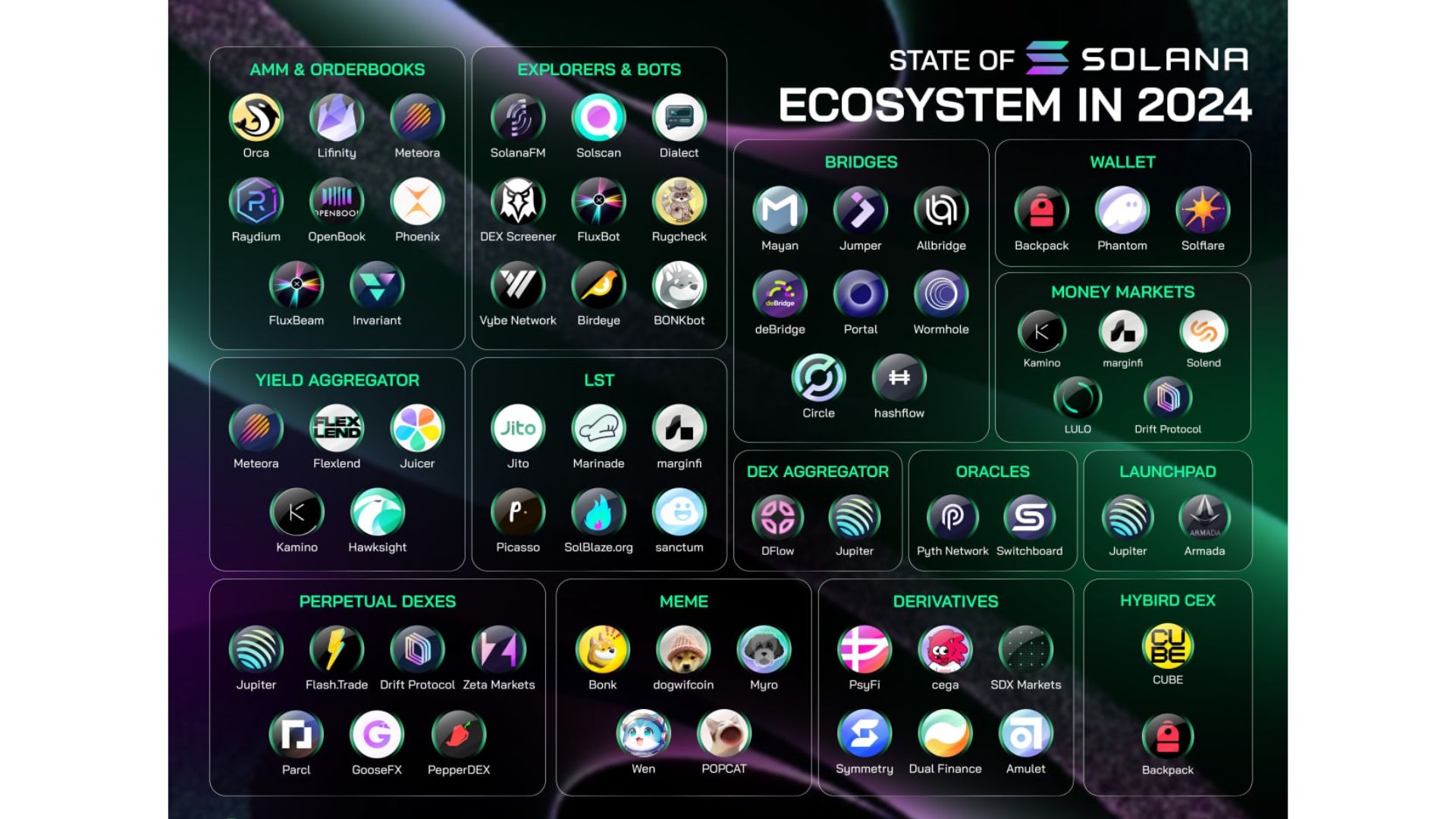
The Solana ecosystem is diverse and promising.
As we approach the end of 2023 and the beginning of 2024, Solana has reaped the deserved "fruits":
The rise of meme coin $BONK: $BONK has created a frenzy in the community, opening up a meme coin trend on Solana and attracting widespread attention.
The Depin wave lands on Solana: Solana's superior technology platform has convinced many Depin projects to choose this as their primary blockchain for development.
The huge airdrop from $JTO: The $JTO airdrop event has created a strong ripple effect, activating the "point" (reward) trend in the ecosystem and attracting more users.
The remarkable comeback of Solana Mobile: After a quiet period, Solana Mobile has made a strong "comeback" with the Solana Mobile 2 version. Over 100,000 orders within a month is a clear testament to this success.
Currently, Solana has completed the fundamental pieces for its ecosystem. The current focus is on developing unique and differentiated features, creating a competitive advantage, thereby solidifying its strong position in the global blockchain market. The impressive growth of Total Value Locked (TVL) from $500 million in October 2023 to $5.4 billion in August 2024 is the clearest evidence of this remarkable development.
Overview of SOL Token
Basic information about SOL Token
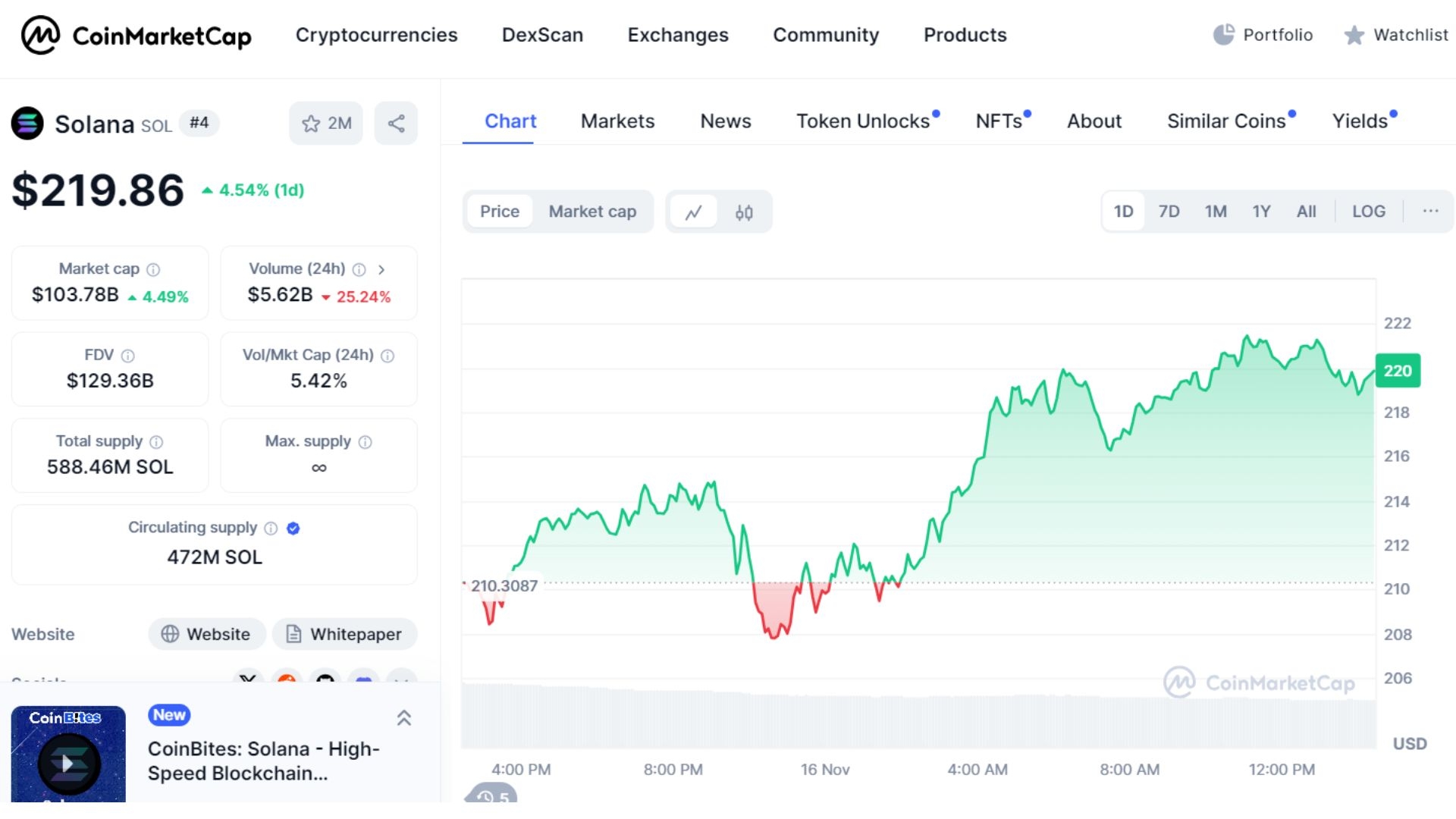
Basic information about SOL Token on Coinmarketcap
Token Name: Solana
Token Code: SOL
Blockchain: Solana
Smart Contract: N/A
Price: $219.87 (as of 11/16/2024)
Market capitalization (MC): $103,772,727,834.31
Fully diluted market cap (FDV): $129,377,448,039.74
Total supply: 588,457,722.54 SOL
Max supply: N/A
Circulating supply: 471,997,740.01 SOL
SOL Token allocation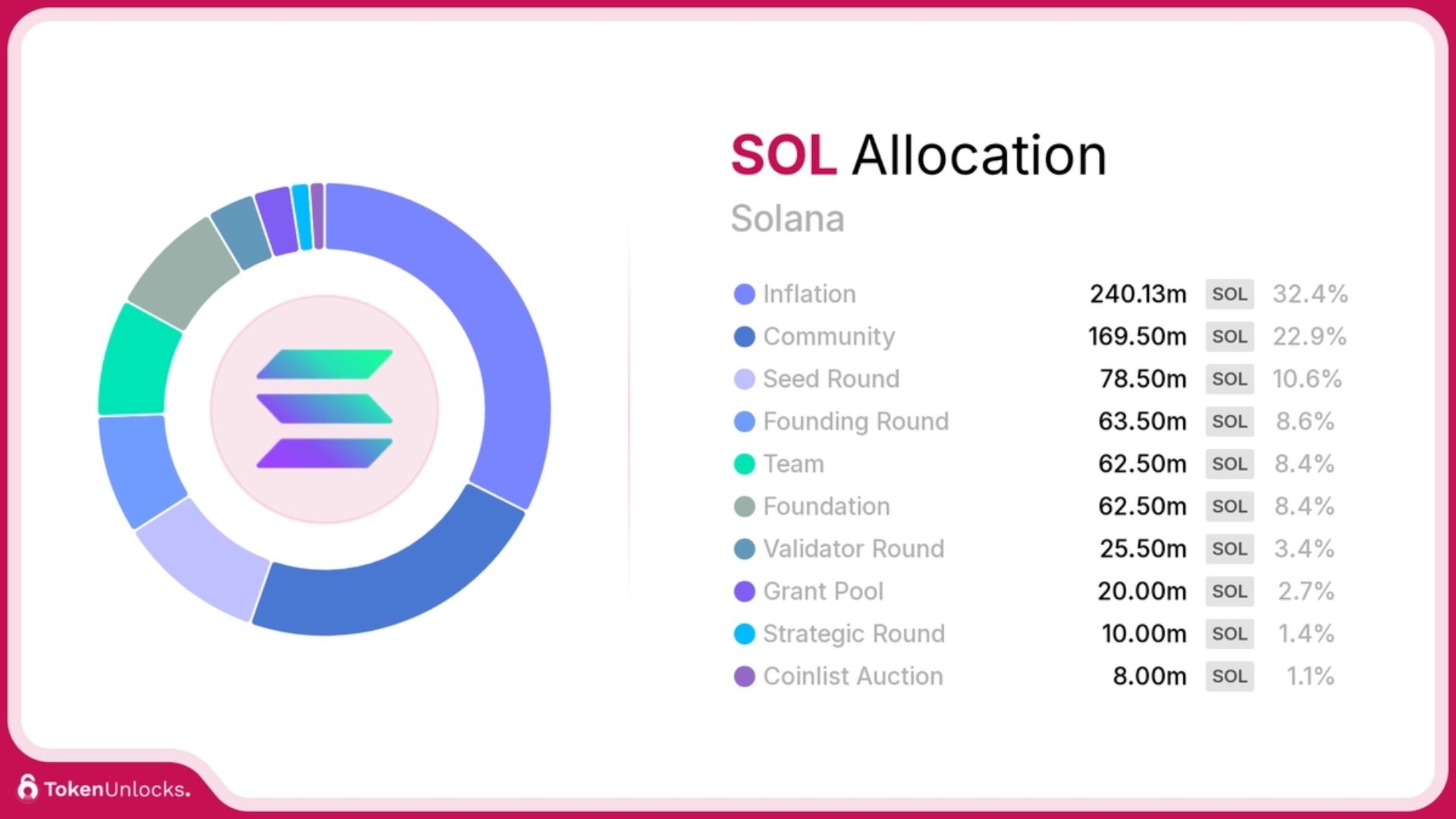
SOL Token allocation
SOL Token release schedule
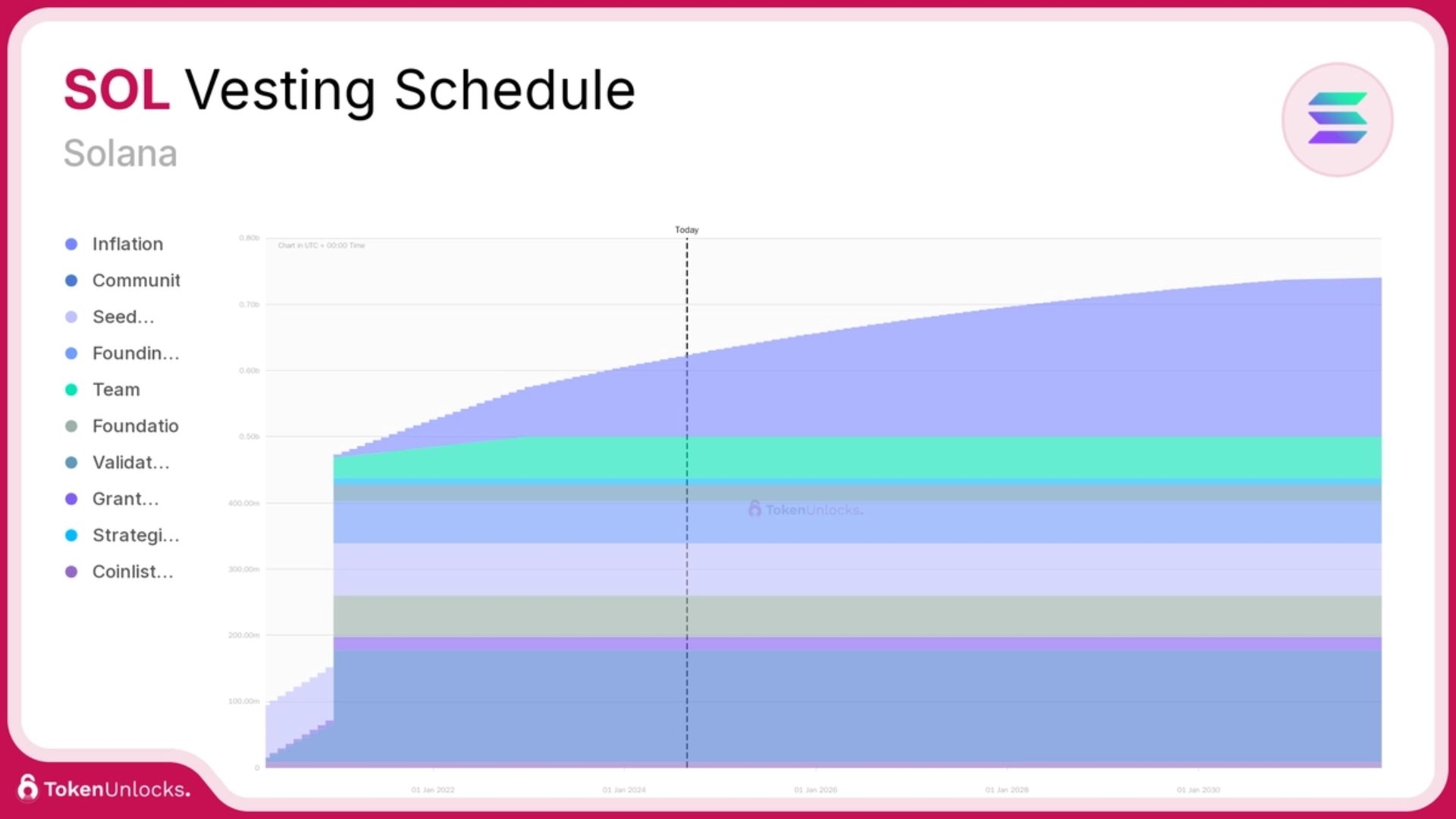
SOL Token release schedule
The SOL token of Solana has gone through a period of high inflation. However, currently, the inflation rate of SOL has been controlled and maintained at a low level.
Function of SOL Token
The SOL token acts as the native cryptocurrency of the Solana ecosystem, providing many important utilities and driving the development of the network. Here are the main uses of SOL:
1. Payment medium: SOL is used to pay various fees within the Solana network, including:
Transaction fees: Each time a transaction is made on Solana, users need to pay a small fee in SOL.
Smart contract fees: Deploying and interacting with smart contracts on Solana also requires payment of fees in SOL.
The SOL token acts as the native cryptocurrency of the Solana ecosystem.
2. Rewards for participants: SOL serves as a reward for those participating in the operation and security of the network, including:
Stakers: Those who hold SOL and participate in staking (locking SOL to validate transactions) will receive rewards in SOL.
Node validators: Validator nodes play a crucial role in maintaining the stability and security of the network. They are also rewarded in SOL for their contributions.
3. Decentralized governance: In the future, SOL is expected to be used to participate in the governance process of the network. SOL holders will have voting rights on important proposals related to the development of Solana.
In summary, the SOL token is not just a cryptocurrency, but a core element that connects and drives the development of the entire Solana ecosystem.
Where to buy SOL Token?
SOL is currently listed and traded widely on most major cryptocurrency exchanges globally such as OKX, Bybit, Binance, ...
[button size="medium" style="alert" text="BUY SOL ON BINANCE HERE!!!" link="https://www.binance.com/en/trade/SOL_USDT?ref=TUT1T2ZT&type=spot" target=""]
Solana review
Solana has emerged as one of the leading Layer-1 blockchain platforms, known for its high transaction processing speed, low costs, and impressive scalability. However, Solana also faces certain challenges.
Potential
Outstanding performance: Solana can process thousands of transactions per second at extremely low costs, thanks to the unique combination of Proof of History (PoH) and Proof of Stake (PoS) algorithms.
High scalability: Solana is designed to meet the needs of large-scale decentralized applications (dApps), with superior scalability compared to many other blockchains.
Diverse ecosystem: Solana possesses a rich and rapidly growing dApp ecosystem, including fields such as DeFi, NFT, GameFi, ...
Dynamic community: Solana has a passionate community of developers and users, actively contributing to the development of the ecosystem.
Support from major investors: Solana has attracted interest and investment from many leading venture capital funds, creating a solid foundation for long-term development.
Potential and challenges of Solana.
Challenges
Downtime incidents: Solana has previously experienced some downtime issues, affecting its reputation and user trust.
Concentration levels: Although Solana is a decentralized blockchain, there are still some concerns regarding the concentration of validator nodes.
Dependence on meme coin projects: Recently, Solana's growth has largely been driven by meme coin projects. This creates risks regarding long-term sustainability.
Intense competition: Solana faces increasingly fierce competition from other Layer-1 blockchains such as Ethereum, Aptos, Sui, ...
Conclusion
Through the article 'What is Solana?', we see that Solana possesses many potential factors to become a leading blockchain platform for decentralized applications. However, Solana needs to address current challenges and continuously improve to achieve this goal. With ongoing innovation and strong community support, Solana promises to continue being one of the most notable blockchain projects in the coming years.
Note: This article is for informational purposes only and does not constitute investment advice; any trading decisions you make should be carefully considered and you may consult experts if necessary. We do not take responsibility for any of your investment decisions!