

1. Introduction to Scroll
Scroll is an L2 public chain based on ZK Rollup and jointly developed by the Scroll team and the Ethereum Foundation team. Its biggest feature is that it is natively compatible with existing applications and tools on Ethereum. This feature allows applications on Ethereum to be easily migrated to Scroll, so Scroll has been attracting attention from last year to now.
Scroll closed two rounds of funding in 2022 totaling $33 million, and in March this year, it secured another $50 million round. It’s valued at $1.8 billion and has raised $83 million in total funding.
The financing sources include Polychain Capital, Sequoia Capital China, IOSG and other well-known institutions, which can be said to be strong.
Not long ago, Scroll announced the official launch of the mainnet. In addition, the recent market has gradually improved, and TIA's large airdrop has also given many players a boost. For a new public chain with such a high level of financing as Scroll, it must be added to the interactive list.
So what projects can the Scroll ecosystem interact with at present? In today’s tutorial, we have selected popular projects in various tracks and will take you through all these projects. I hope you will not miss out on future Scroll airdrops!
2. Cross-chain
Before the interaction, we first need to cross-chain some fees to the Scroll chain, and choose cross-chain bridges, including official bridges and third-party bridges.
If this is your first time using the Scroll chain, I recommend that you use the official bridge once. Usually, the use of the official cross-chain bridge may increase the chance of an airdrop.
1. Official Bridge
https://scroll.io/bridge
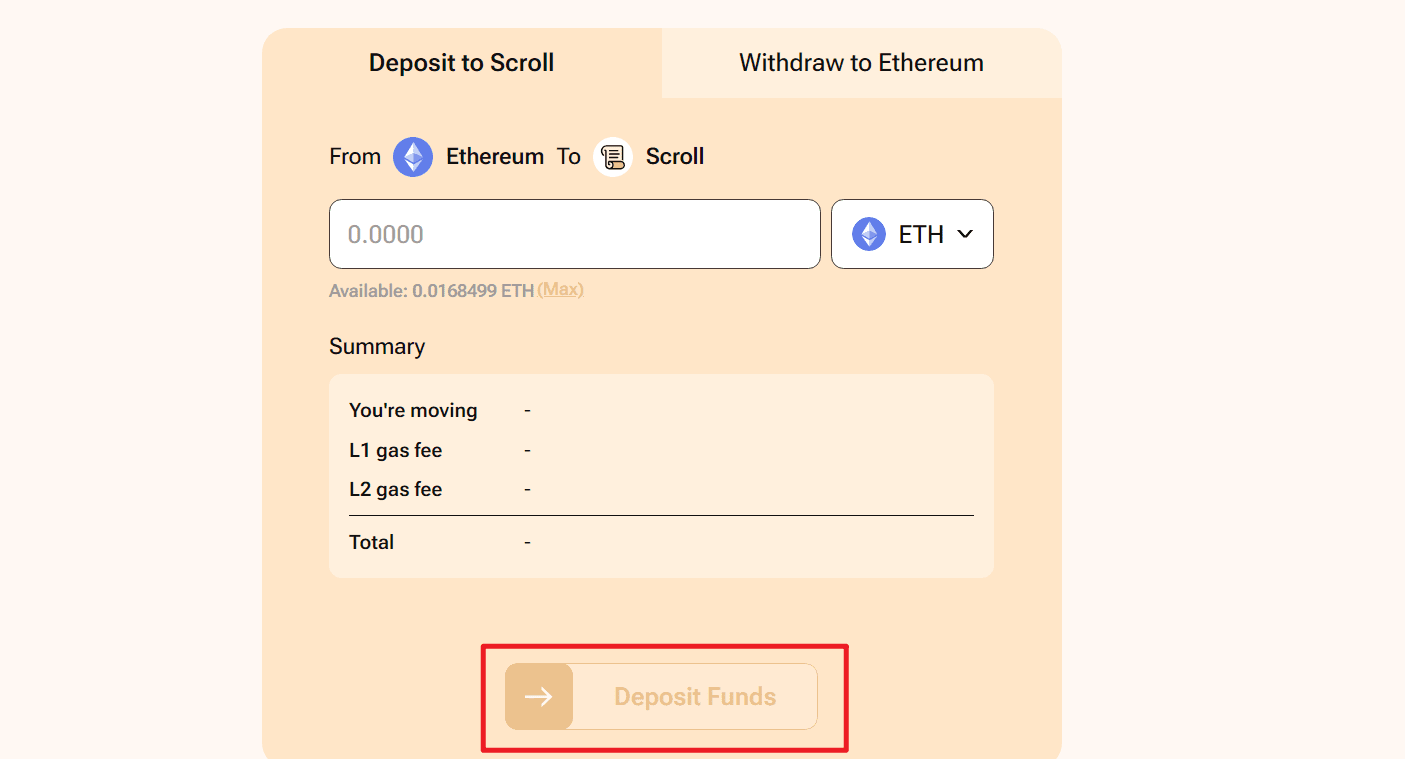 Cross-chain operations are relatively simple. You only need to enter the amount that needs to be transferred across the chain, and then slide "Deposit Funds" to complete the entire asset transfer.
Since the official bridge can only transfer assets from the ETH mainnet to the Scroll network, the required handling fees are very high at the current GAS level of 30~40.
If the transaction fee is very high, you can temporarily choose a third-party bridge for cross-chain, wait until the GAS drops, and then complete the interaction with the official bridge.
2. Mini Bridge
https://minibridge.chaineye.tools/
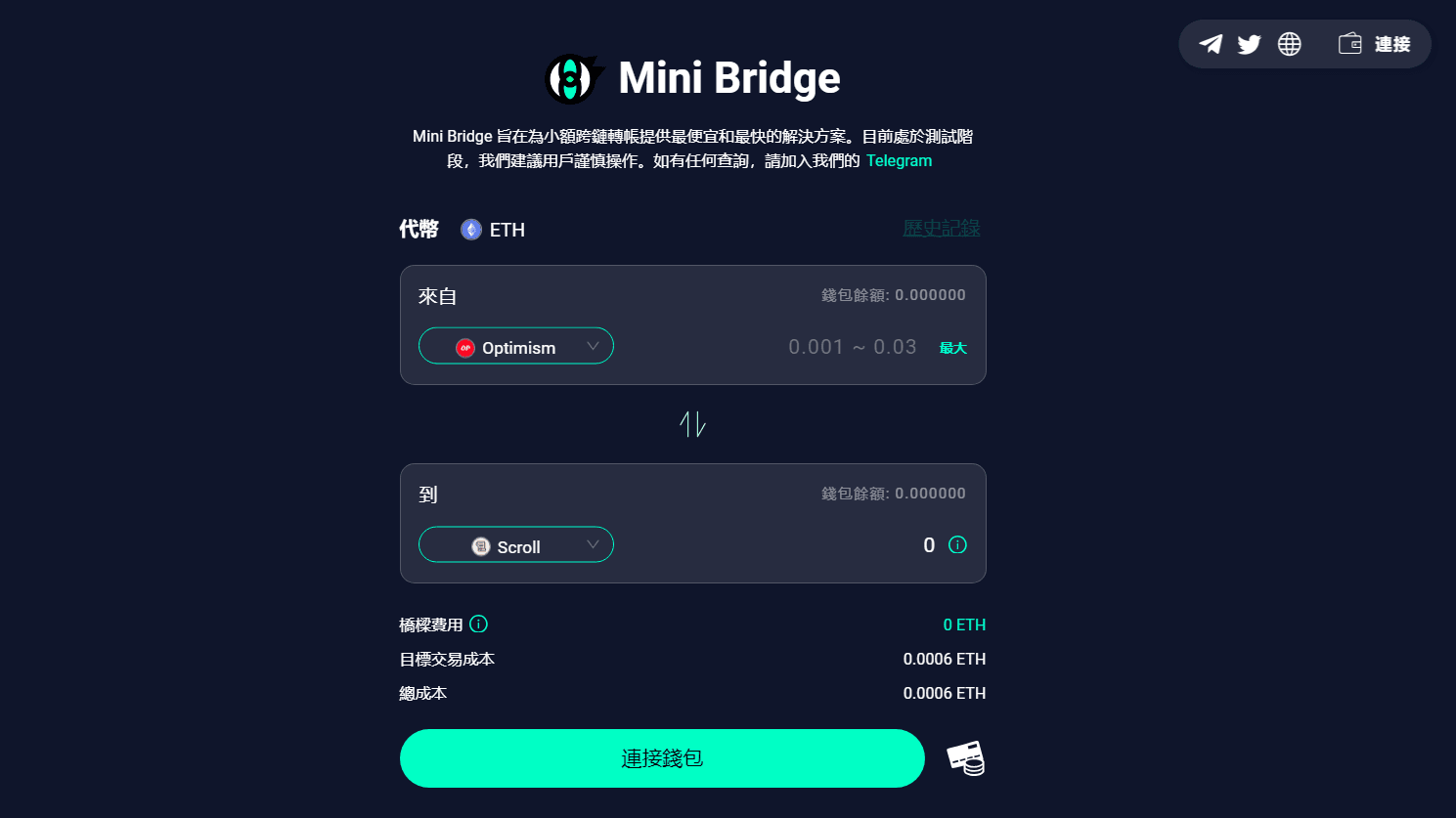 The third-party bridge here can use Mini Bridge, which is a cross-chain bridge specially built by Biteye for small cross-chain transactions. Compared with the 20-minute cross-chain process of the official bridge, the Mini Bridge takes only 10 seconds at the fastest.
In addition, the official bridge can only cross the chain through the ETH main network, while the Mini bridge can complete the cross-chain to Scroll through other L2s. Compared with the current official bridge's handling fee of dozens of U, the handling fee of the Mini bridge is only 0.006E.
If you have been following Biteye and have donated to Biteye in Gitcoin, you will enjoy a discount of up to 20% on transaction fees when crossing chains.
3. DeFi
1. KyberSwap
https://kyberswap.com/
KyberSwap is a decentralized exchange on Scroll. It was launched as early as 2017 and can be said to be an old OG project in the cryptocurrency circle.
Open its official website and you can see that it has been deployed on many chains, including the Ethereum mainnet, a total of 15 chains.
Scroll has also been supported recently, and its TVL currently tops the list in the entire Scroll ecosystem, so we chose to interact with it first.
exchange
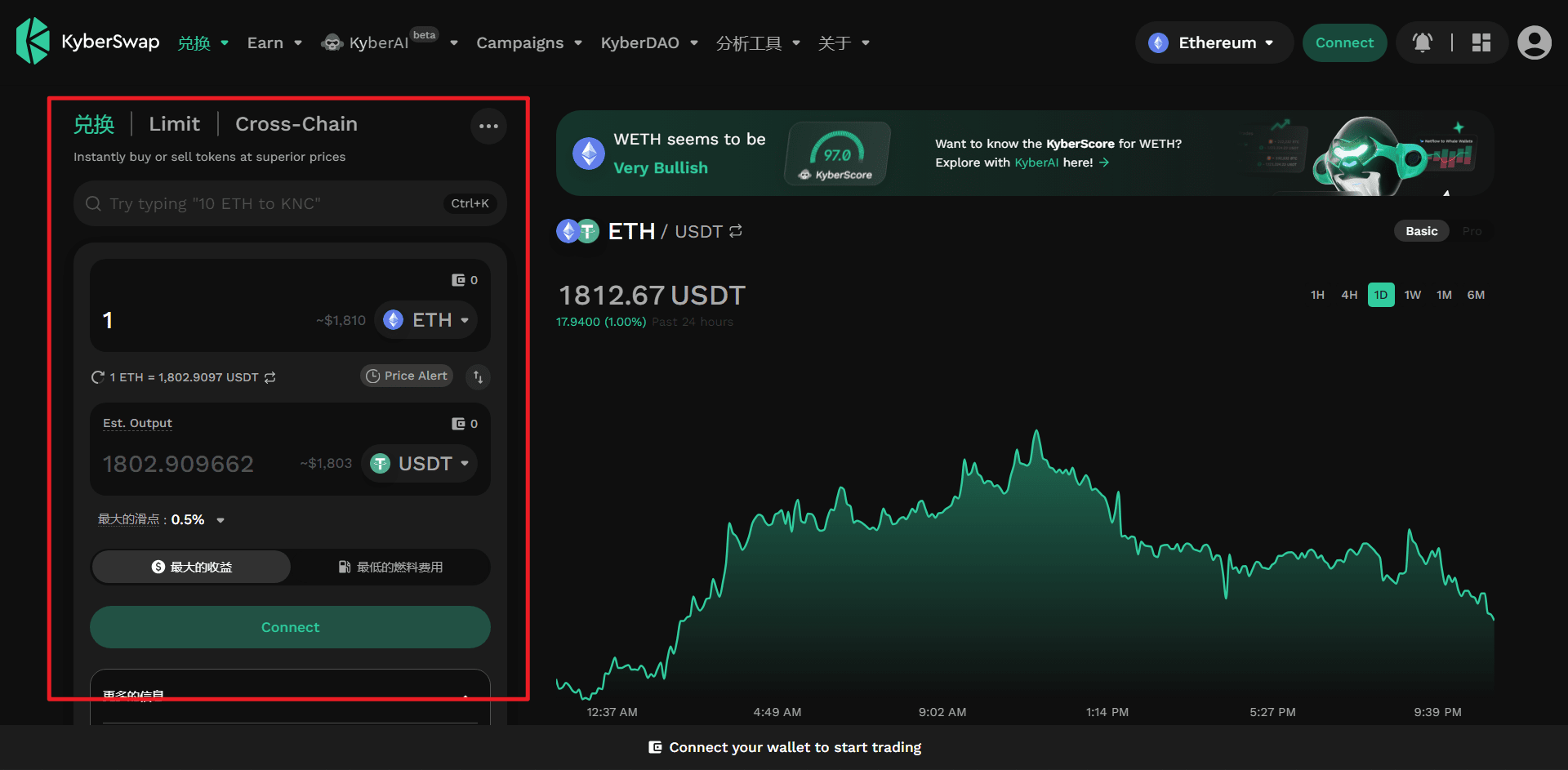 The homepage opens to the exchange interface, where we can complete several transactions and convert the cross-chain ETH into other tokens.
Adding Liquidity
https://kyberswap.com/ethereum/elastic/add/0xA0b86991c6218b36c1d19D4a2e9Eb0cE3606eB48/0xdAC17F958D2ee523a2206206994597C13D831ec7/8
In addition to trading, another interactive operation for DEX is adding liquidity. However, adding liquidity may result in uncompensated losses. Here we directly choose the USDT/USDC trading pair. Both of them are stablecoins. Although the returns are relatively low, they can effectively reduce risks.
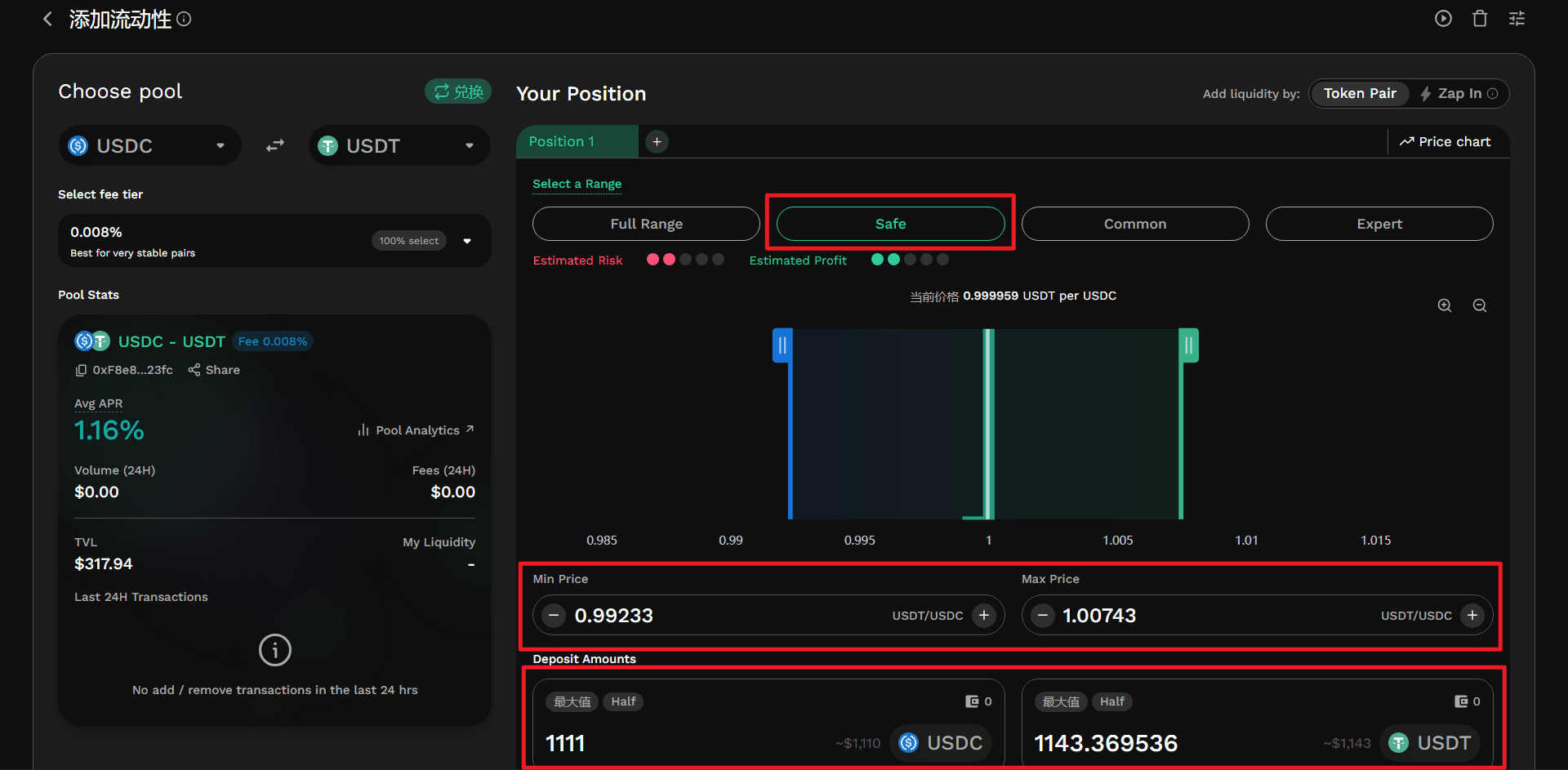 When adding liquidity, there are four options. Just select "Safe" here. You will be given a price range below, which means that your liquidity will only be used when the price of USDC is between 0.99233 and 1.00743. When adding liquidity for other trading pairs, you can also refer to the price range of "Safe".
At the bottom is the amount of USDT and USDC you need to add. Before adding, you need to ensure that there is sufficient USDT and USDC in your wallet, otherwise the addition will fail.
2. Swaps
https://izumi.finance/trade/swap
iziSwap is a decentralized exchange under iZUMi Finance. iZUMi Finance is a multi-chain DeFi that provides one-stop liquidity solutions. It is also an old project and recently supported the Scroll network.
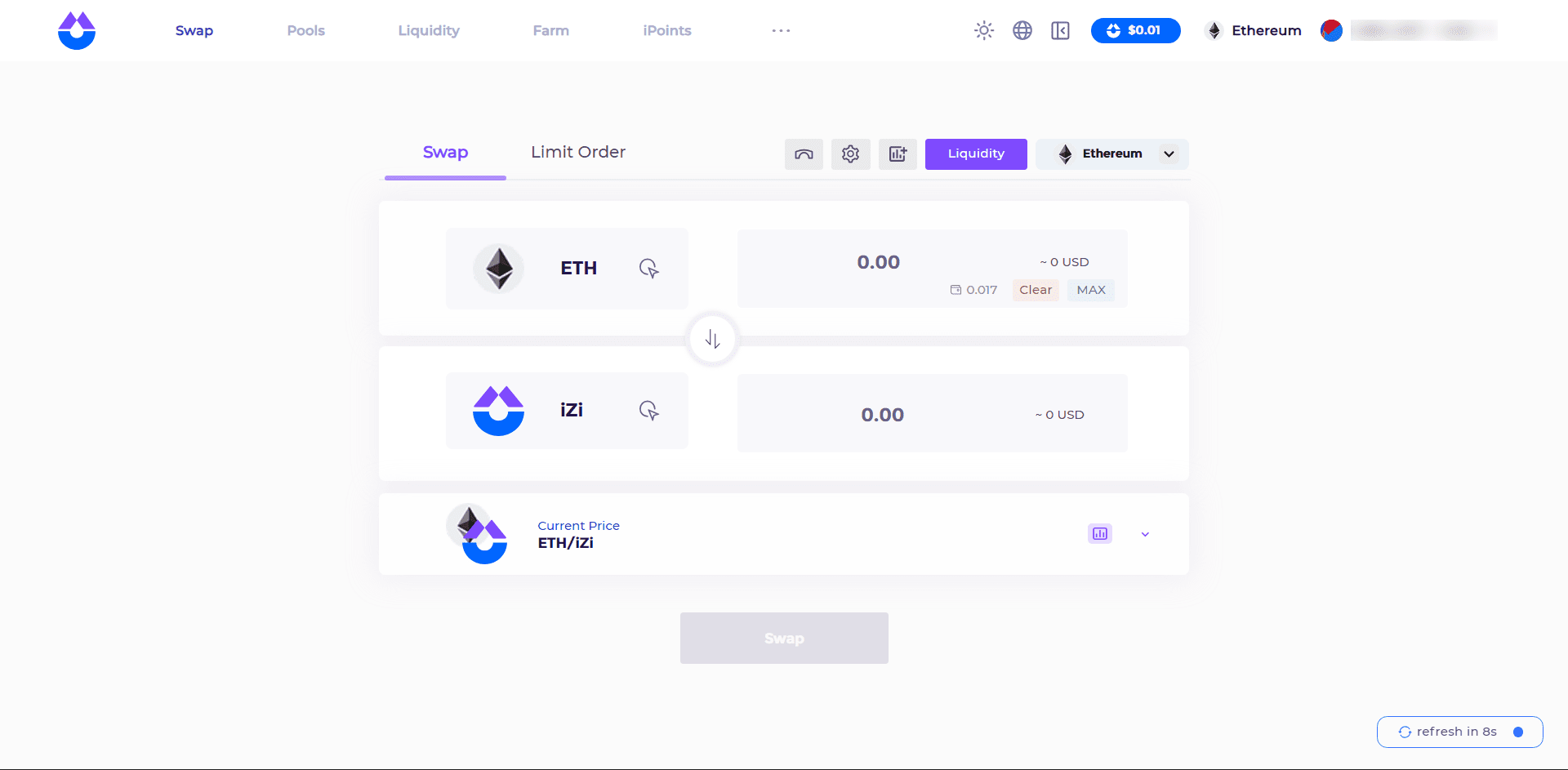 The interaction method is also trading and adding liquidity, which is not much different from the above KyberSwap. Both exchanges can be used to increase the number of transactions, and which one to choose depends on personal preference.
3. Skydrome
https://app.skydrome.finance/swap
Skydrome is a native exchange on the Scroll chain that allows users and DAOs to perform various operations within the protocol ecosystem.
Its biggest feature is that it adopts the ve(3,3) economic model. Users can lock tokens for mining. The more people lock tokens, the less the liquidity of tokens will be. In addition, the LP locked by users can obtain governance rights and decide the token output of each LP pool through voting.
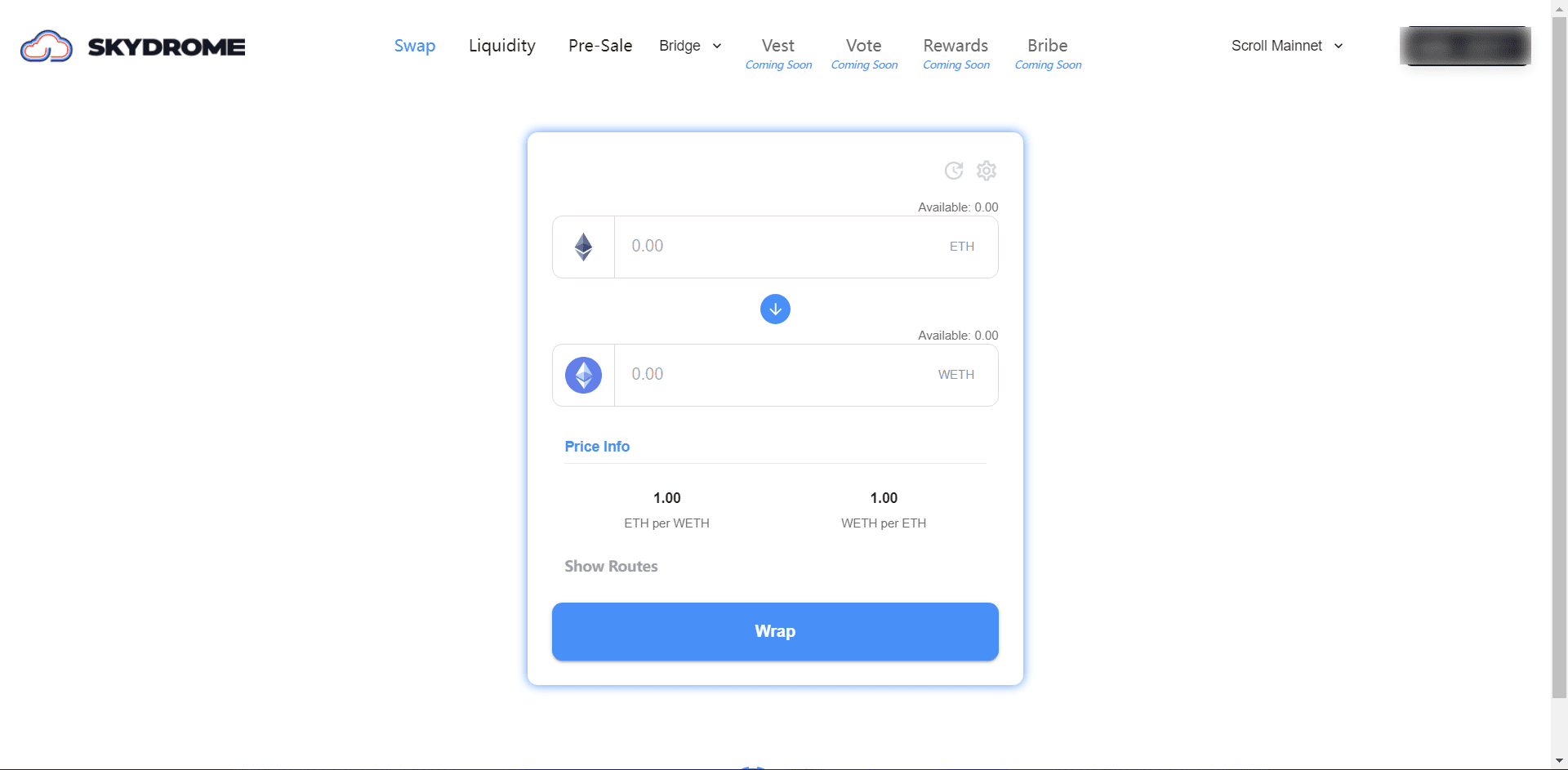 Unlike the above-mentioned DEXs, when you open Skydrome’s official website, you will find that it only supports the Scroll chain, and the main interaction methods are Swap and providing liquidity.
Skydrome has already started the token pre-mining activity. Anyone who provides liquidity can participate. The official also announced at the beginning of the month that the pre-mining activity will be extended by 5 weeks, so users who want to participate still have plenty of time.
https://x.com/skydrome/status/1719757437316616520?s=20
4. CogFinance
https://www.cog.finance/
Cog Finance is a native lending protocol in the Scroll ecosystem designed to maximize decentralization and capital efficiency, which many existing solutions currently lack.
The main goal of Cog Finance is to help users easily deploy permissionless segregated lending pools, protect users from interest rate manipulation attacks, and ultimately improve the extremely limited capital efficiency of segregated lending as a whole.
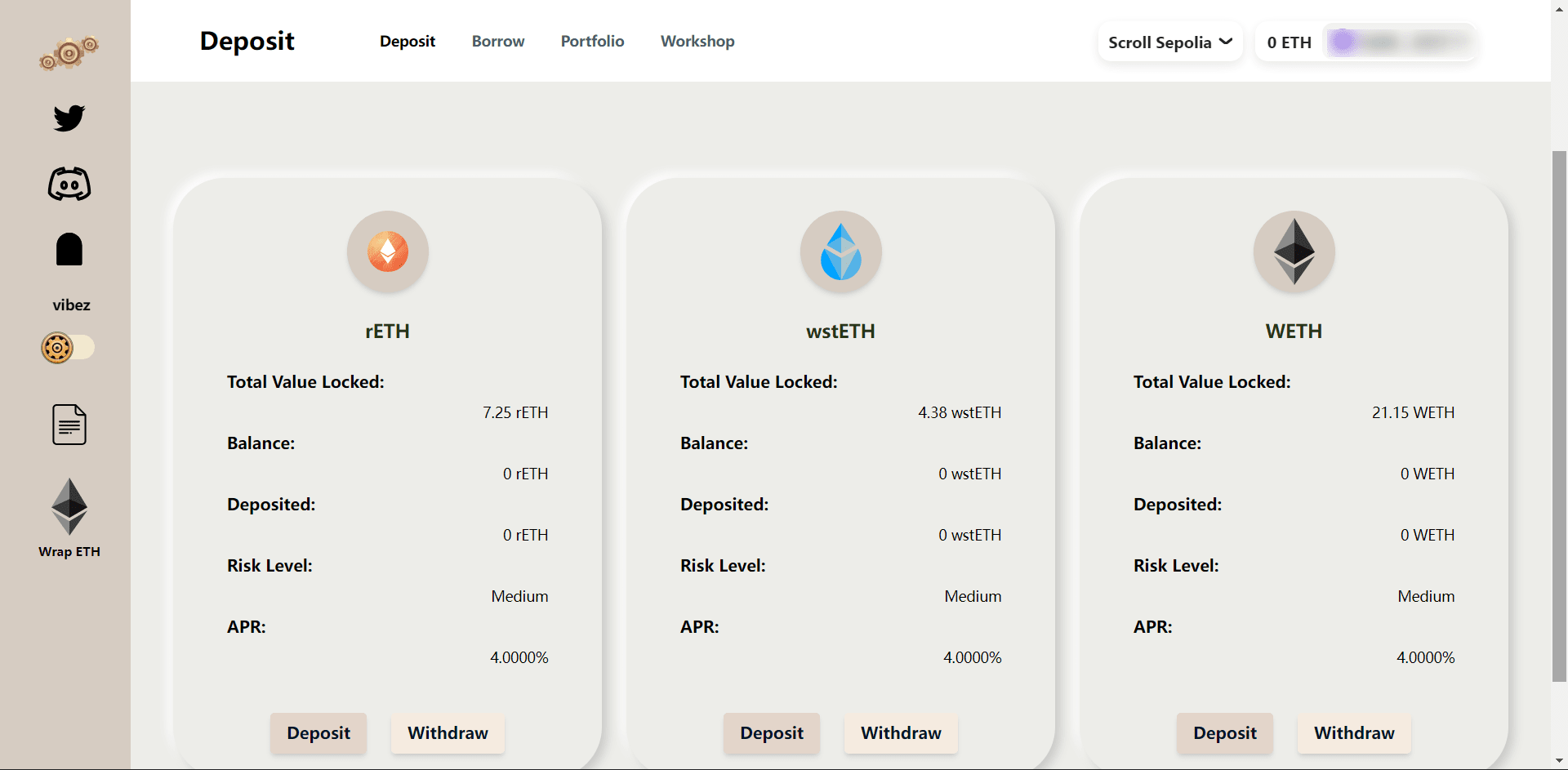 The overall functions of the official website are relatively simple, one is deposit and the other is loan. If we want to interact, there are only these two options.
The deposit here only supports three types of ETH packaging assets, rETH, wstETH and WETH, and the deposit yield is 4%. Since we are only interacting here, we don’t need to deposit too much money to avoid excessive risks.
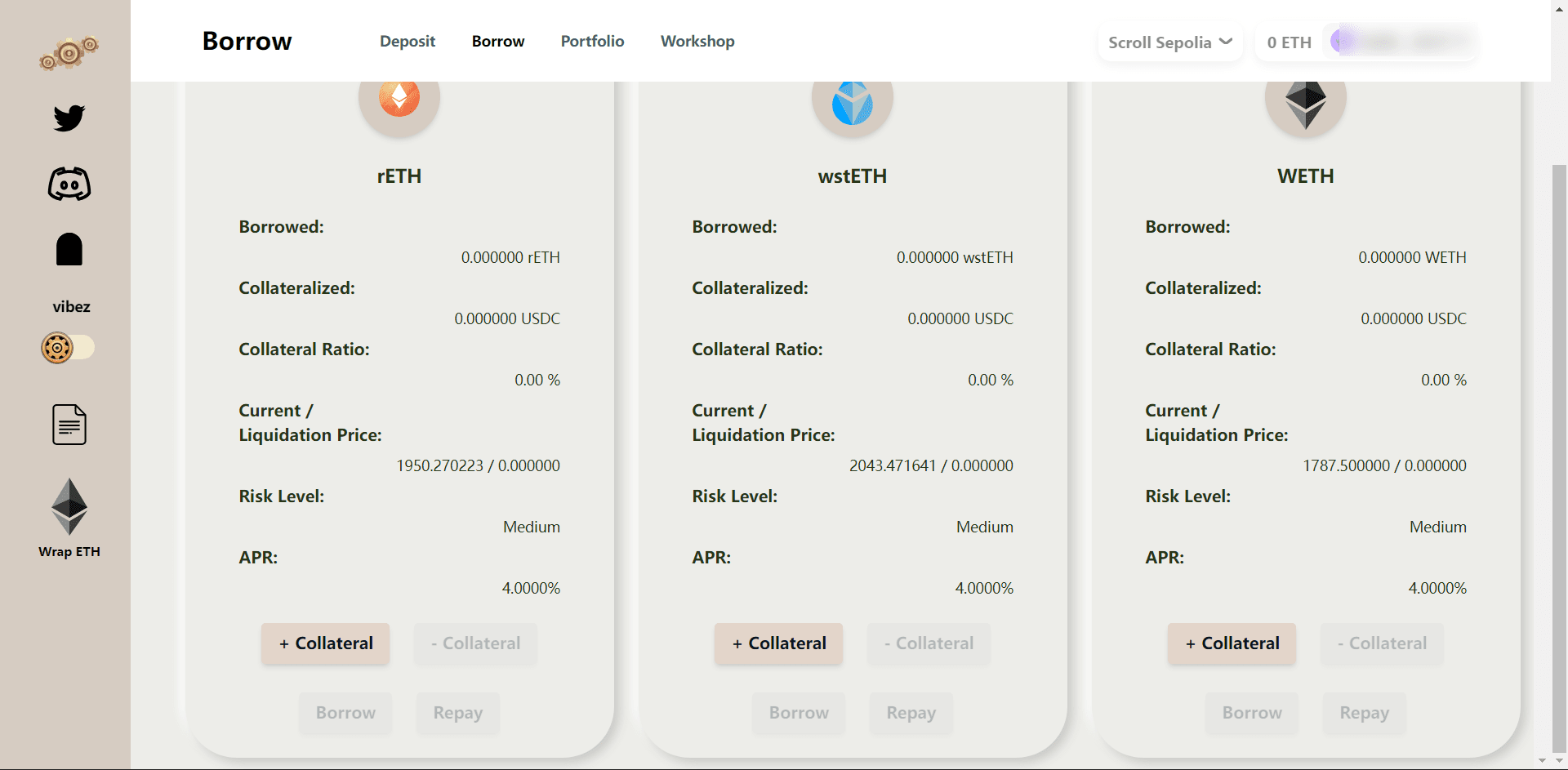 If you want to borrow money, you need to pledge collateral first, and then you can lend out assets. Borrowing money usually has a liquidation price. In the case of mutual exchange, you don’t need to borrow too much to prevent the collateral assets from being liquidated.
5. LayerBankFi
https://scroll.layerbank.finance/bank
LayerBank is a lending protocol that aims to become the liquidity center for all EVM Rollups, providing users with revenue distribution and revenue sharing services. It adopts an overcollateralization model and uses Pyth price oracles to guarantee the pricing of assets.
In addition to basic lending functions, users can also stake governance tokens LAB and add various income-generating activities.
LAB Staking: Staking LAB (governance token) in Locker allows users to earn additional rewards, increase rewards, and receive a share of the protocol's profits.
Automatic buyback: Most of the protocol's profits are used to automatically buy back LAB tokens from the open market. This process happens on-chain and can provide the greatest support for LAB prices.
Regarding LayerBank’s interactions, we can pay attention to their current ongoing activities to kill two birds with one stone.
TIA Celebrations
https://mirror.xyz/0x9f55e251abe51CbFadd06Ca0f4E5DCA0d0CeC20E/dq7970ZQCWoSUi6JAldrYEM5iFA7Bw9doPRPtBmPELw
LayerBank received funding from Manta, which, like Celesita, is also a modular blockchain project. So the main purpose of this event is to celebrate the launch of TIA, after all, it is the first modular blockchain project to issue a coin.
The official will give 10,000 $Manta tokens plus its own 100,000 $Lab as activity rewards to users who deposit or borrow money.
The assets supported by the event include TIA, ETH and USDC. Of course, you can get more points by borrowing money here, which is 4 times that of depositing money.
Token Pre-Mining Event
LayerBank’s tokens are not yet online, so the pre-mine is still ongoing.
https://mirror.xyz/0x9f55e251abe51CbFadd06Ca0f4E5DCA0d0CeC20E/D7cQ3T8Zo1pX2bPx7os1q0PvjuhZ1nwI0IsjrMZPNjU
The pre-mining tokens are 1,000,000, accounting for 1% of the total. The way to obtain tokens is also very simple, that is, to deposit, borrow, recycle, and lock $Lab.s tokens on the official website.
The event will last for one month, starting on October 23 and ending on November 23.
Please note that the revolving loan here requires users to pledge assets. After borrowing funds, they pledge the funds and borrow again, and continue the cycle to improve the efficiency of fund utilization. However, this type of revolving loan has a high liquidation risk. Don't put your principal into it just to participate in the event.
Interaction
The interaction of this project is not complicated. If you participate in the above two activities, the interaction of this project will basically be completed by the way, so you can kill two birds with one stone.
4. NFT
1. Element
https://element.market/
Elelment is a multi-chain aggregated NFT trading market that supports displaying orders from other NFT markets on one page. Currently, Element supports many public chains, and Scroll is also a chain it has recently supported.
The project announced in the first half of this year that it had received a total of US$11.5 million in angel round funding, with the latest round valuation at US$50 million, led by well-known institutions SIG and Dragonfly Capital.
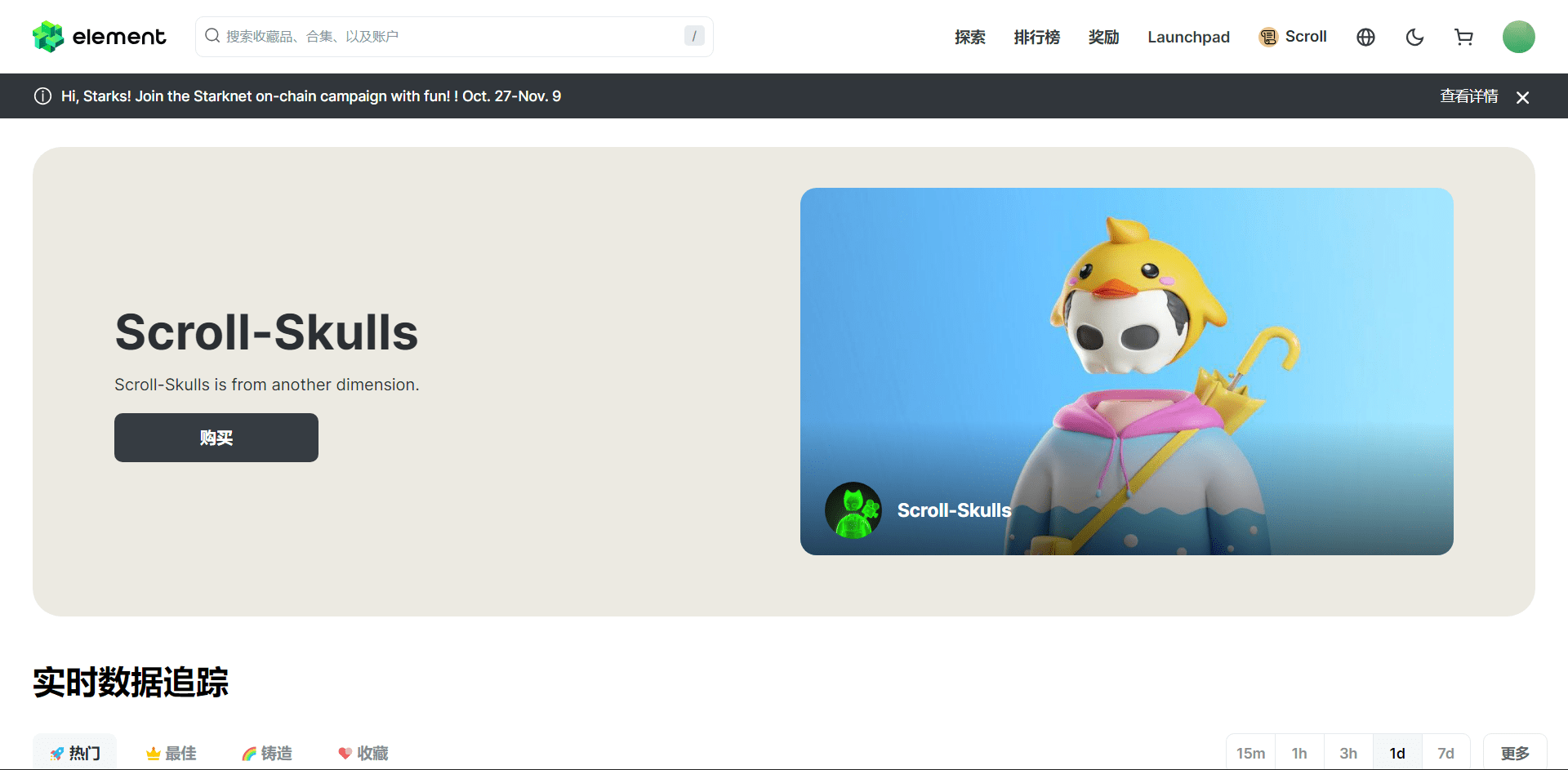 Interacting with Element is relatively simple. We just need to switch to the Scroll chain and purchase NFTs in the Scroll ecosystem. The price of these NFTs does not need to be high, as long as the interaction is completed.
2. Alienswap
https://alienswap.xyz/
Alienswap is an NFT exchange invested by OKX. It has been rumored for a long time that there are potential airdrop opportunities because their tokens have not yet been released.
In celebration of the launch of Scroll on the mainnet, Alienswap has also launched a celebration event, where you can receive an NFT for free. At the same time, by trading NFTs on Alienswap, you can also receive a Scroll points blind box. These points should be related to Alienswap's own airdrop.
https://x.com/AlienSwap_NFT/status/1719711298609356889?s=20
3. Zonic
https://zonic.app/
Zonic is an NFT exchange launched by the Apetimism team that supports various L2 public chains. The main method of interaction is to buy and sell NFTs.
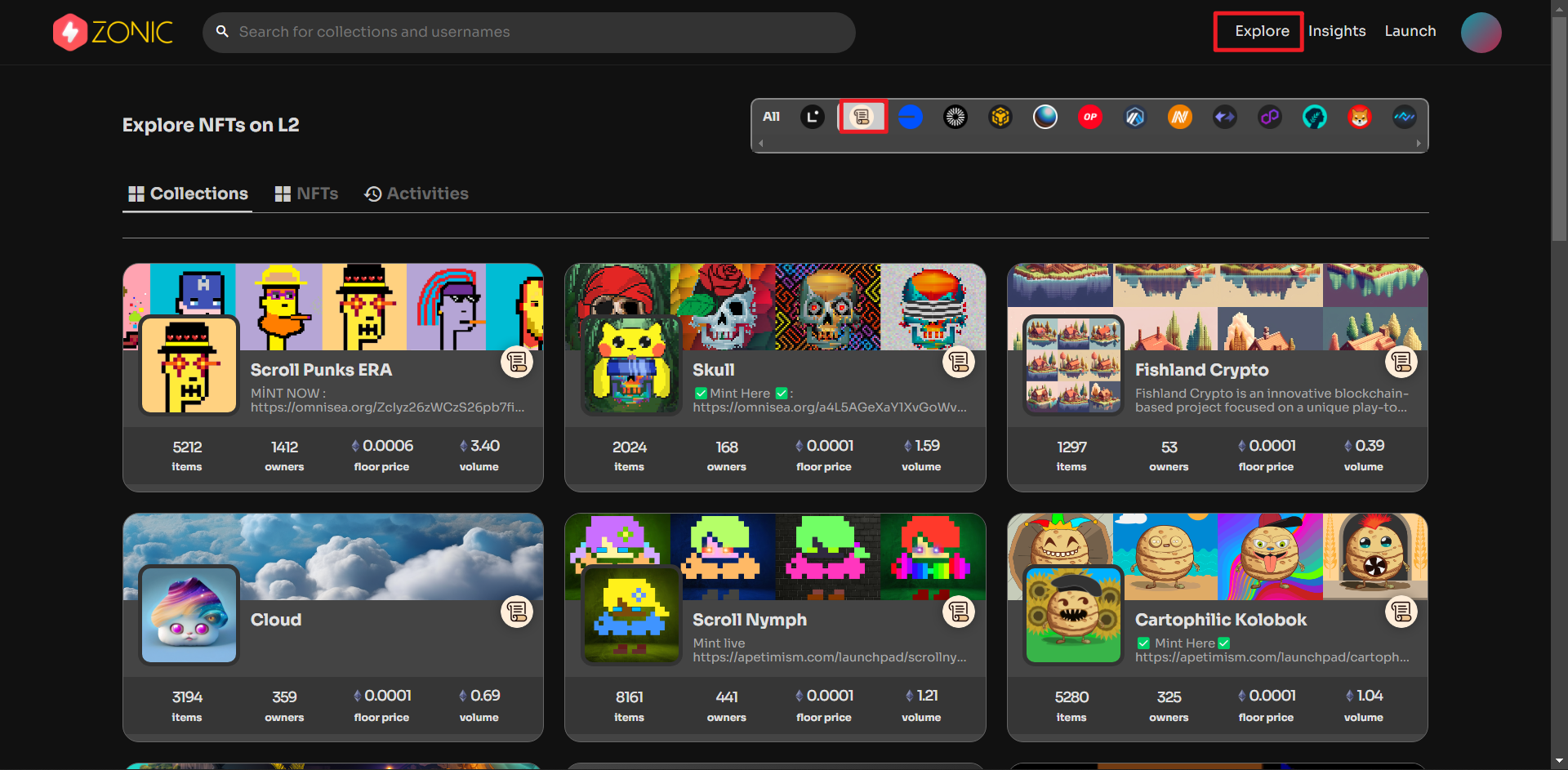 Open the official website, click “Explore” in the upper right corner, then switch to the Scroll network, and you can see various NFTs in the Scroll ecosystem.
Scroll Mainnet Alliance Week Event
 https://taskon.xyz/campaign/detail/15935
To celebrate the launch of the Scroll mainnet, Zonic also has an event to participate in on TaskOn.
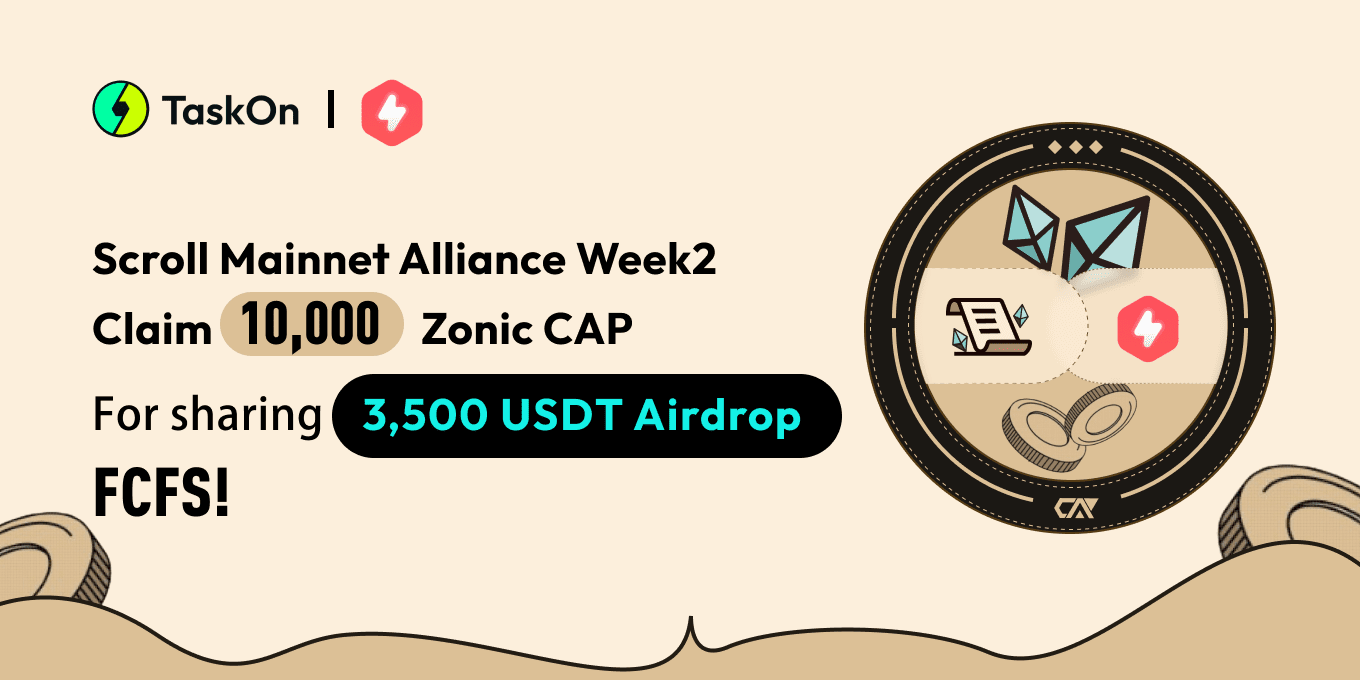 Participate in and complete the corresponding activities to get 10,000 Zonic CAP and share 3,500U airdrop rewards. In addition to social attention tasks, the main purpose is to guide users to mint an NFT.
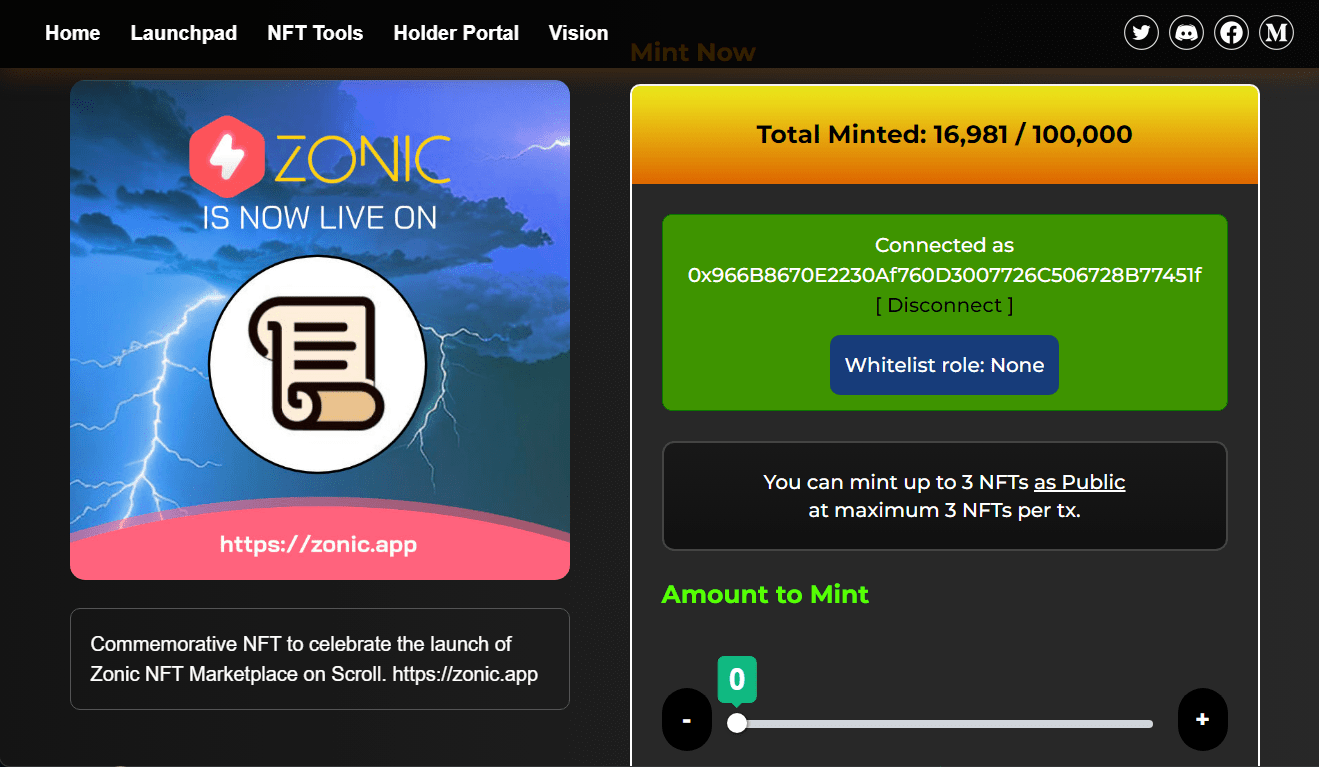 The total amount is 100,000, and each wallet can mint three NFTs, each priced at 0.0001 ETH.
This Zonic task is part of the entire Scroll Mainnet Alliance Week activity tasks, but this series of activities is not officially organized, but organized by the media Scroll Recap. Therefore, users who are not interested can ignore it and only complete the Zonic part of the task.
For the full event, see the Mirror article:
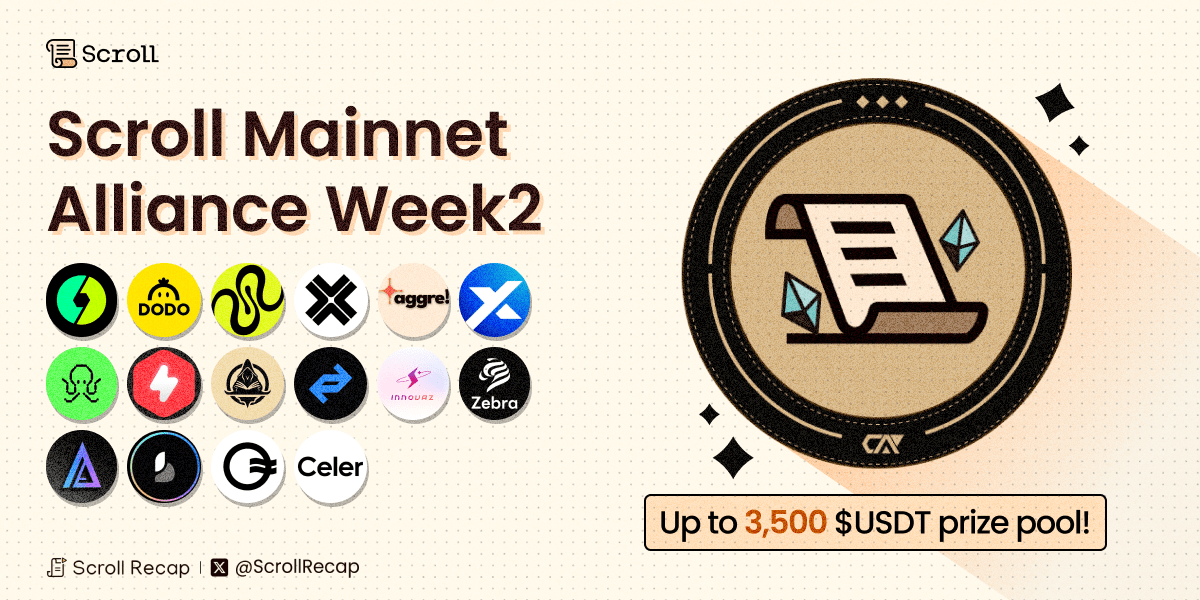 https://mirror.xyz/0xB95b2A048066efDd696eb271FD735818eC0BF1C1/n5bdE_hKDcOjqLwKkTCRdRMPW97Pw1Q8SKOUN1rZWq4
5. Others
1. Contract deployment
On the day when Scroll mainnet was launched, there was a mainnet contract deployment event. Since after the deployment, an official NFT reward can be obtained, many people think that this may be linked to future airdrops.
Biteye also launched relevant tutorials as soon as possible and released them on its official Twitter account. If you missed this event, it’s not too late to catch up now.
https://x.com/BiteyeCN/status/1718925639083061659?s=20
2. Scroll Name Service
https://app.scrollns.com/
A domain name project in the Scroll ecosystem, similar to domain name projects in other ecosystems.
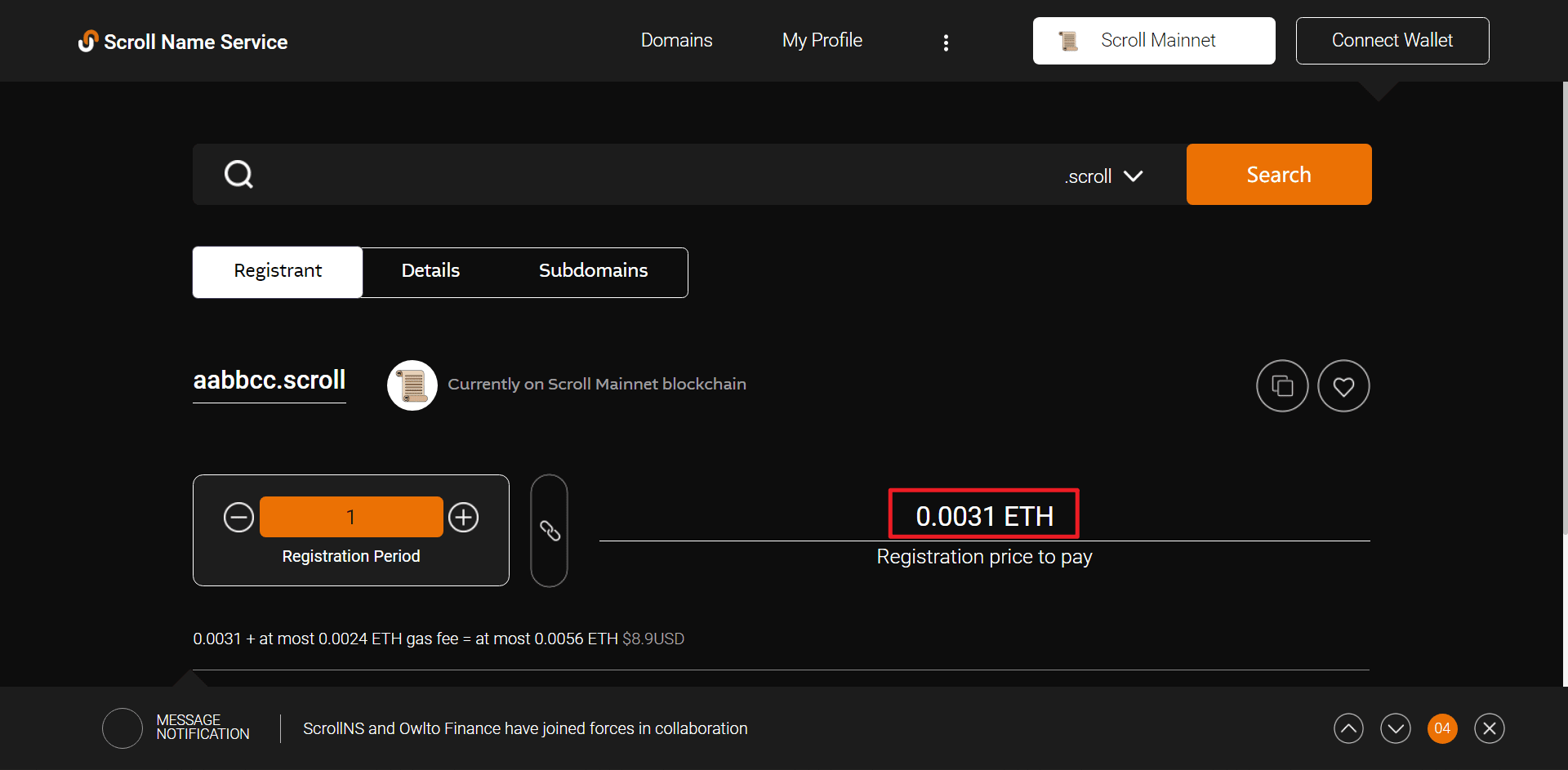
A three-digit domain name costs 0.25E, a four-digit domain name costs 0.065E, and a five-digit domain name costs 0.0031E. The cheapest domain name here is a five-digit domain name, so a domain name costs at least 5U.
 3. Dmail
https://mail.dmail.ai/login
Dmail is a decentralized mailbox. It does not require you to register an account. You can log in directly with your wallet. Dmail also supports the Scroll network, and the interaction method is also very simple.
We just need to use the wallet to log in to the mailbox, and then send the email to others.
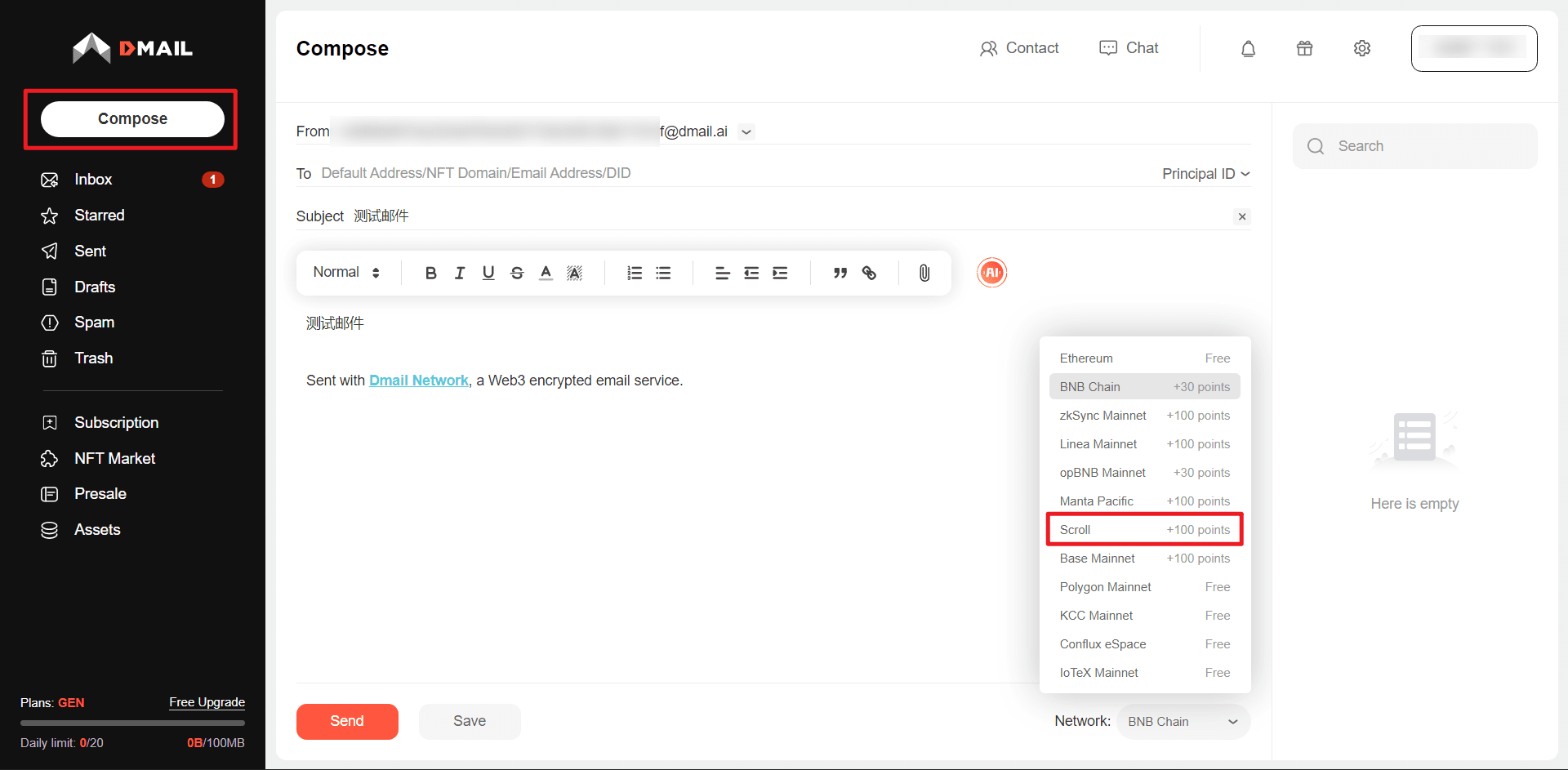 Please note that you should select Scroll network when sending. You need to sign and pay the handling fee once for each sending. Therefore, sending an email can leave a transaction record.
You can also use other free chain operations, but you won't be able to interact with the Scroll chain and won't get extra points.