
With the full rise of the DeFi market, the last bull market reached its peak. In the continuous development of the DeFi field, various new sub-sectors have emerged, including yield aggregators, synthetic assets, various DeFi yield tools, and RWA, which has attracted much attention from the market. Despite the continuous evolution of DeFi, decentralized exchanges (DEX) and lending are still the products with the highest user usage on the chain. Whenever a new public chain appears, DEX and lending applications are usually the first to go online. These two areas have become an indispensable infrastructure for DeFi.
In the field of lending, the crypto market has a long history. As early as 2014, MakerDAO began to build a preliminary architecture; in 2017, ETHLend (later renamed AAVE) was launched on the Ethereum mainnet; Compound V1 began operation in 2018; and Venus officially landed on BSC in 2020. Compared with other sub-fields in DeFi, decentralized lending protocols were deployed earlier, attracted more funds, provided more liquidity to the crypto market, and are an important cornerstone for the booming development of DeFi.
Community-driven money market Venus, as a community-driven decentralized protocol that provides optimal liquidity, has provided core functionality and driven the booming development of DeFi on BNB Chain since 2020. Venus combines Maker's stablecoin minting facilities with the algorithmic money market developed by Compound, simplifying the user experience and lowering the barrier for new users to enter DeFi, quickly becoming one of the most widely used decentralized applications in Web3.
Venus has been committed to becoming the most trusted and secure lending protocol in the DeFi field. Through multiple version upgrades, Venus has released version V4 and optimized three key areas to improve the security and reliability of the protocol.
1. Risk Management: Venus introduced isolated pools and more complex risk parameters, and established risk funds and bad debt processing mechanisms to deal with potential black swan events. This shows that the Venus protocol has a high level of risk management capabilities in the DeFi field.
2. Decentralization: Venus enhances the governance model to make it more decentralized by introducing fast-track VIP, role-based access control, and a fine-grained suspension mechanism.
3. User experience: The latest version provides an enhanced user interface, a more efficient reward system, and isolated lending capabilities. Future versions will introduce stable interest rate lending and Venus Prime Soulbound tokens, aiming to provide a smoother user experience.
Venus regards security as a top priority and strictly reviews its code with multiple contract auditing companies such as Certik, PeckShield, Quantstamp, FairyProof, and Open Zeppelin to ensure the integrity of the protocol. In addition, Venus also cooperates with risk control companies such as Chaos Labs to optimize risk management and capital efficiency and protect the security of users' funds. Every month, Venus invests a large budget to enhance the security of the protocol, a commitment that is decided through VIP governance voting and is highly transparent. Last month alone, Venus invested more than $100,000 in security to emphasize its commitment to maintaining user trust and security.
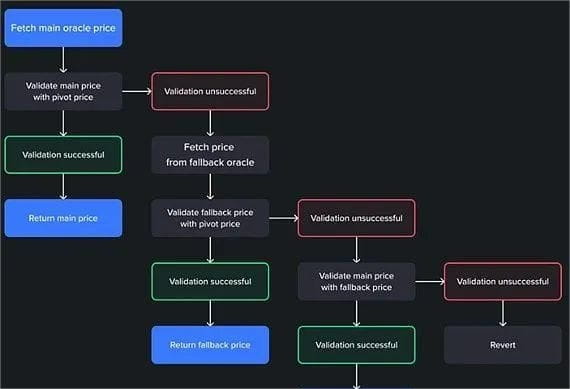
In terms of risk management, Venus adopts a flexible price feed strategy that can use multiple price data sources simultaneously, including Chainlink, Pyth Network, Binance Oracle, RedStones, and TWAP Oracles to ensure the accuracy of token prices. This flexible price feed strategy not only ensures accurate valuation of token prices, but also provides confidence and reliability for institutional investors who are about to enter the DeFi field. This highly accurate and redundant price data source is difficult for other projects to replicate, but Venus has successfully achieved this goal!
The isolated pool introduced in Venus V4 is a new feature designed to overcome the limitations of a single asset pool. Each isolated pool is an independent collection of assets with a customized risk management configuration. This setup enables users to better manage risk and earn returns, while also preventing problems in one market from having a cascading impact on other markets. Isolated pools help ensure that problems with a single asset do not spread to the risk of the entire asset portfolio.
In this case, the risk is limited to the specific asset affected or to other assets within the segregated pool. One of the benefits of segregated pools is to significantly increase user engagement by separating less liquid and potentially more volatile crypto-assets (i.e. long-tail tokens) from the core asset pool. Since the process of listing on the segregated market and onboarding new long-tail tokens is very decentralized and transparent, this makes Venus users feel more involved. These improvements help improve the robustness and reliability of the entire DeFi ecosystem.
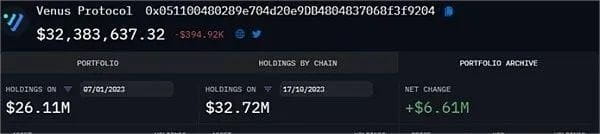
Every XVS token holder has the right to propose and vote in support of new isolated pool proposals, making the Venus protocol more dynamic and directly reflecting user interests and needs. Since the launch of isolated pools, community participation has increased significantly (the total amount of XVS staked has increased by 5%), and all VIP proposals have been thoroughly discussed and audited.
The success of the isolated pool has created an additional revenue stream for users of Venus Protocol. By incorporating diverse crypto assets into segregated pools, Venus Protocol’s deposit size increases significantly, especially since these segregated pools are very effective at mitigating the risk of long-tail tokens due to price fluctuations.
This provides users with more secure and diversified investment options. In addition, the success of the isolated pool also creates opportunities for the Venus Protocol to collaborate with other projects, including the TRON ecosystem, liquidity mortgages, emerging GameFi projects, and projects in the stablecoin field. These collaborations are expected to further promote innovation and growth in the DeFi ecosystem.
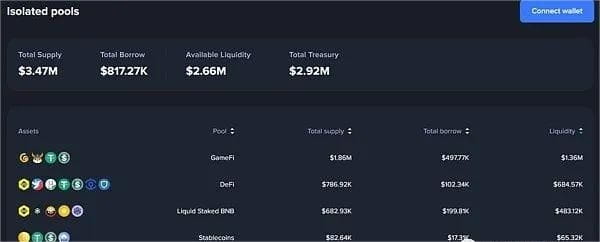
The isolated pool already covers five major asset categories, including tokens in the following areas:
1. TRON: Bittorrent, Wink, USDD and TRON.
2. GameFi field: Raca and Floki.
3. DeFi: Ankr, Biswap, Beefy Finance, Alpaca Finance, THENA and Trust Wallet.
4. Stablecoin protocols: Helio (HAY) and Euro stablecoin (AgEUR).
5. Liquidity staking categories: pSTAKE (stkBNB), Stader Labs (BNBx), Ankr (AnkrBNB), Synclub (SnBNB) and wBNB.
These collaborations not only bring new users to the Venus protocol, but also make the Venus protocol more potential by continuously adding more crypto assets, expanding new uses and adding new sources of revenue, thereby driving the growth and prosperity of BNB Chain.
In addition, the Venus Prime program aims to provide more functionality for the XVS token and encourage more users to participate in the Venus protocol. The program requires users to pledge 1,000 XVS in the Vault and lock it for 90 days to qualify for Venus Prime. Once the program is officially launched, participants will share 10% of the protocol revenue on a pro rata basis. In addition, 10% of the protocol revenue will be used for quarterly buybacks to support governance treasury rewards for XVS token holders. These measures will help further drive the ecosystem growth and development of the Venus protocol.
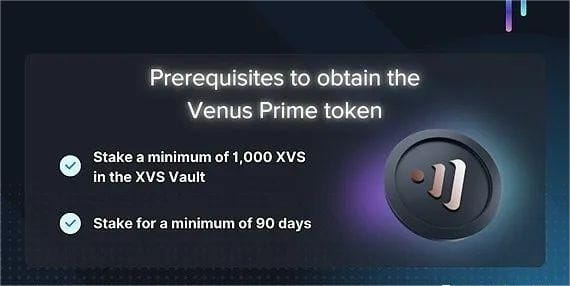
The Venus protocol is currently being fine-tuned and tested based on the latest audit recommendations from Code4rena and OpenZeppelin. The official implementation time of the Venus Prime program will be determined soon, and currently only more than 500 unique addresses are eligible for Venus Prime.
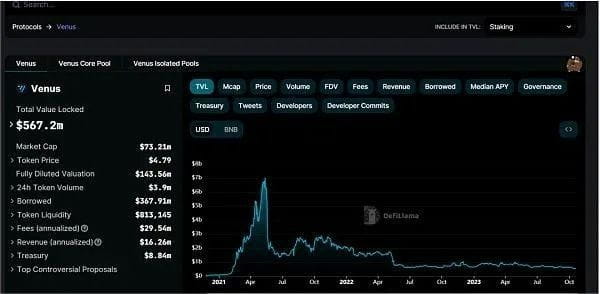
Despite the bear market, the performance of the Venus protocol is still impressive. According to DeFiLlama, the top five lending protocols are AAVE, JustLend, Compound, Venus, and Spark. As the top-ranked lending protocol on BNB Chain, Venus also occupies a leading position in the lending field of the entire chain. Even in the bear market, the total locked value (TVL) of Venus remains at US$5.67 billion, a huge amount of funds that exceeds the overall TVL on many public chains. This further proves the solid position and strong appeal of the Venus protocol.
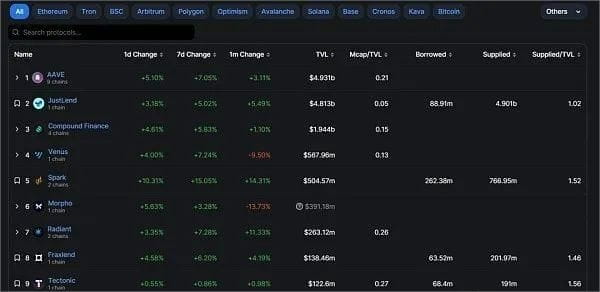
Data is the most intuitive way to express the performance of the Venus protocol. According to DeFiLlama data, Venus has earned $87,897 in interest income in the past 24 hours, and the annualized rate is expected to reach $295.4 million. At the same time, the protocol revenue in 24 hours was $5,079, and the annualized rate is expected to be $162.6 million. Although the market is currently at the bottom of a bear market, the Venus protocol still presents impressive performance.
Looking ahead, the Venus protocol is actively taking a series of measures to ensure that it remains competitive in an ever-changing market. These measures include multi-chain deployment, starting with Ethereum, Arbitrum, and Polygon zkEVM, and then expanding to opBNB. Multi-chain deployment has become a trend for leading protocols in the DeFi field, as the future public chain ecosystem will present multiple strong competitors. Through multi-chain deployment, Venus will be able to provide users with a simpler and more convenient experience, no matter which public chain they choose to use.
For Venus' platform token XVS, the protocol has significantly reduced the daily token issuance and reduced inflation, which not only helps lock the value of XVS, but also increases user returns. In addition, regarding the stablecoin VAI, Venus plans to increase its lending limit to 10 million (currently 4 million) and explore more application scenarios, including integration related to real assets.
In general, the Venus team is actively working to not only improve the security and risk management of the protocol, but also launch the Venus Prime program, reduce the inflation rate of XVS, expand the application scenarios of VAI, and implement multi-chain deployment. These measures are designed to ensure that Venus can quickly adapt to the rapid growth of TVL brought about by the bull market, ensure the safe operation of the protocol, and make all Venus users the beneficiaries of the protocol growth.