

By Rob Copeland
The author is a financial reporter for The New York Times. He is the author of "The Fund: Ray Dalio, Bridgewater Associates, and the Secrets of a Wall Street Legend," from which this article is adapted.
Ray Dalio’s investing strategy has long been a closely guarded secret, even inside Bridgewater Associates. But a few years ago, some of Wall Street’s biggest names began digging for the secrets of his success.
Since founding Bridgewater Associates in his Manhattan apartment in 1975, Ray Dalio is said to have an uncanny knack for spotting big changes in the global economy or politics and making money from them.
For years, these whispers have spread from one trading floor to another on Wall Street.
Global investment force Bridgewater Associates managed $168 billion in assets at its peak in 2022, making it not only the world's largest hedge fund, but also more than twice the size of the second largest.
Ray Dalio, the billionaire founder of Bridgewater Associates, frequently appears in the financial media, publicly stating that he has cracked the so-called “holy grail” of investing, which includes a series of trading formulas that are bound to make money. “I mean, if you find this thing, you’re going to be rich and successful.”
So why doesn't anyone on Wall Street know much about this?
Since founding Bridgewater in his Manhattan apartment in 1975, Dalio has been said to have an uncanny skill at spotting and profiting from big changes in the global economy or politics, such as when a country raises interest rates or cuts taxes. This makes sense, but also makes no sense. How is Bridgewater so much better at predicting than any other investor in the world trying to do the same thing?
Bridgewater is best known for its response to the 2008 financial crisis, when its main fund gained 9% while stocks fell 37%, making Mr. Dalio a sought-after adviser to the White House and the Federal Reserve and attracting new deep-pocketed clients to his firm. Yet the hedge fund’s overall description of its approach can be extremely vague.
Dalio often says he relies on Bridgewater’s “investing engine,” a collection of hundreds of “signals,” or quantitative indicators of rising or falling markets. Bridgewater rarely reveals any details about those signals, citing competitive pressures, but if they point to trouble or even uncertainty ahead, Bridgewater says it will buy or sell assets accordingly — even if Dalio’s own instincts might tell him otherwise.
This so-called conquest of base instincts is central to Mr. Dalio’s identity and is expressed in his book, “Principles,” which lays out a doctrine of “radical transparency” and lists hundreds of rules for how to overcome one’s own psychology. (One rule reads, in part: “Not all opinions are equally valuable, so don’t treat them as such.”)
What puzzles competitors, investors and onlookers is that the world's largest hedge fund doesn't seem like a Wall Street player at all. Much smaller hedge funds can move markets with just rumors of one trade or another. Bridgewater's heft should make it the ultimate whale, making waves every time it adjusts its position. Instead, the firm's footprint is more like that of a minnow.
If the secret is that there is no secret, how will the outside world view this issue?
Wall Street Investigator
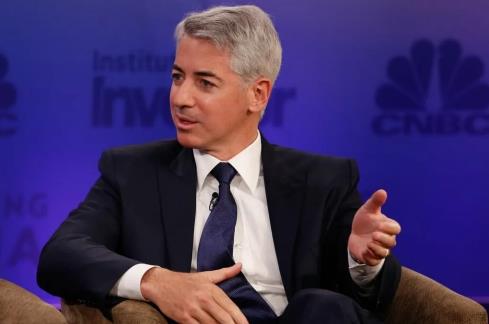
Bill Ackman is among Wall Streeters who have questions about how Bridgewater makes money.
Three people with very different backgrounds take three different approaches to the mystery of how Bridgewater chooses its positions.
Opinionated hedge fund manager Bill Ackman bore the brunt of the criticism in early 2015. The billionaire founder of Pershing Square Capital had long found Mr Dalio’s public pronouncements about his quantitative investing style vague or even meaningless.
During an onstage interview at a charity event in February of that year, Ackman grilled Dalio about how Bridgewater was handling the assets it managed.
Dalio responded: "Well, I think it's because I can go long or short anything in the world. I'm basically long liquidity. And can go short or long anything in the world, and I can go short or long pretty much anything."
He also noted that about 99% of Bridgewater’s trades are automated according to long-unspecified rules.“They are my standards, so I feel comfortable with them,” Mr. Dalio said.
Ackman tried another tactic. He gave Dalio the layup, the kind of question he gets asked half a dozen times an hour on business television. “Suppose you were going to buy an asset, a stock, a market or a currency. Where would you put your money?”
After a pause, Dalio said, “I don’t do that.” He went on to lay out how Bridgewater’s hundreds of investment employees spend their day, describing a data-driven approach.
On stage, Mr. Ackerman called it “one of the funniest conversations I’ve ever had.” But he walked away shaking his head.
“What the hell is he talking about?” he then vented.
Jim Grant, a financial analyst who calls himself the "Prophet of Reason" and whose mysterious newsletter, Grant's Interest Rate Observer, is popular because so many serious investors claim to read it, watched the interview with amazement.
Grant had been privately thinking about murky issues at Bridgewater for years. He assigned his top lieutenants to dig deeper. They fanned out widely, poring over the company’s public filings and secretly talking to anyone who might know something about what was going on.
They were inundated with “all kinds of winks and nods from people who said, ‘Something was wrong,’ ” Mr. Grant recalled. In October 2017, Mr. Grant devoted an entire issue of his publication to Bridgewater, titled “Distraction, Flattery” and “Mystique.”
The newsletter alleges a litany of problems. Shareholders of Bridgewater’s parent company, including employees and clients, do not automatically receive copies of the firm’s financial statements. Five separate Dalio family trusts appear to each hold “at least 25% but less than 50% of Bridgewater, which appears mathematically difficult,” the newsletter says.
The hedge fund, according to public disclosures, had borrowed money from its own auditor, which struck the longtime analyst as volatile and unusual. “We’re going to go all in. Bridgewater will not be around for long,” the newsletter concluded.
At 8:30 p.m. on the day the report was published, Grant and his wife were sitting on the couch at home watching a New York Yankees game. When his home phone rang from an unknown number in Connecticut, Grant let the call go to voicemail. It wasn't until about a half hour later that his wife heard a beep in the distance. She walked over, pressed play on the machine, and put the message on speakerphone. Dario's voice sounded cautiously and calmly:
According to Grant, “I’m not sure if you’ve seen the latest issue of Grant.” Dalio’s call lasted nearly half an hour and detailed his complaints about the article.
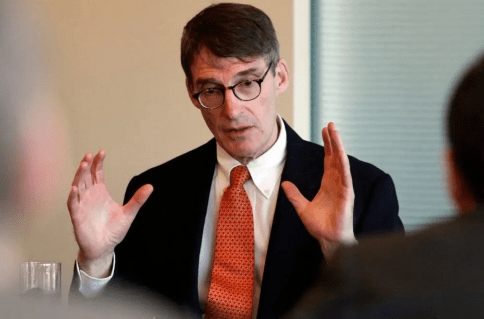
Jim Grant devoted an entire newsletter to investigating Bridgewater Associates.
Over the next week, Grant spoke on and off with various Bridgewater executives. He realized he had made some key errors in the fund’s regulatory filings and audit relationships. Grant called CNBC to apologize, but overall, he said, he was still confused about “how the firm actually did business.”
All this piqued the interest of Harry Markopolos, a Boston financial investigator who was an unknown analyst in the late 1990s when his boss asked him to copy a competitor's trading strategy that seemed to be paying off handsomely. Markopolos couldn't do it, but he had figured it out, so he started talking to the Securities and Exchange Commission. Six years later, when his warnings about Madoff were proven correct, Mr. Markopolos gained national fame.
To Markopolos, what was happening in Westport, Connecticut, where Bridgewater is based, raised serious questions, according to people who worked with him. There was another giant hedge fund here that was investing in a way that no competitor seemed to understand. He got his hands on Bridgewater marketing documents, including summaries of the firm’s investment strategy and detailed charts of the fund’s performance.
Bridgewater describes itself as a global asset manager, but the documents do not list any specific assets that made or lost money for the firm. Graphs of investment performance show that the firm rarely has a down year — Bridgewater’s main fund, Pure Alpha, consistently appears to end the year flat, even if Mr. Dalio’s public predictions are borne out.
As Markopolos flipped through the documents, he felt a familiar flutter in his heart.
According to three members of Mr. Markopolos’s team, his team spoke with Kyle Bass, a Texas hedge fund manager known for predicting the collapse of the subprime mortgage market in 2008. Mr. Bass told colleagues that he, too, had always wondered how Bridgewater traded.
Markopolos also visited David Einhorn of Greenlight Capital, a hedge fund billionaire known for uncovering frauds. Einhorn welcomed Markopolos to his Manhattan office and sat down with a team of Greenlight analysts, who he said were interested in investigating Bridgewater for themselves, two people who were present recalled.
After listening to Markopolos' speech, Einhorn said it was consistent with his suspicions.
That was the encouragement Markopolos needed.
He wrote in a letter to the Securities and Exchange Commission that Bridgewater was a Ponzi scheme.
Circle of Trust
The SEC and other regulators dutifully held meetings with Markopolos and his team. The whistleblower’s report was passed through the organization, and a team from the agency investigated it. (The SEC declined to comment.)
They concluded, in part, that the world's largest hedge funds used a complex array of financial machinations -- including relatively hard-to-track trading vehicles -- to make seemingly simple investments, according to a person briefed on the investigation. That made sense to the SEC. Competitors couldn't track them.
The SEC was satisfied and stopped responding to Markopolos and his team’s requests for updates. The regulator has made no public charges against Bridgewater.
It turns out that by the time the SEC received Markopolos’s opinion, the regulator was already investigating Bridgewater. The SEC never really took a deep look at the world’s largest hedge fund after the Madoff fraud. The SEC didn’t care too much about how Bridgewater made money, just that it did invest its clients’ accounts.
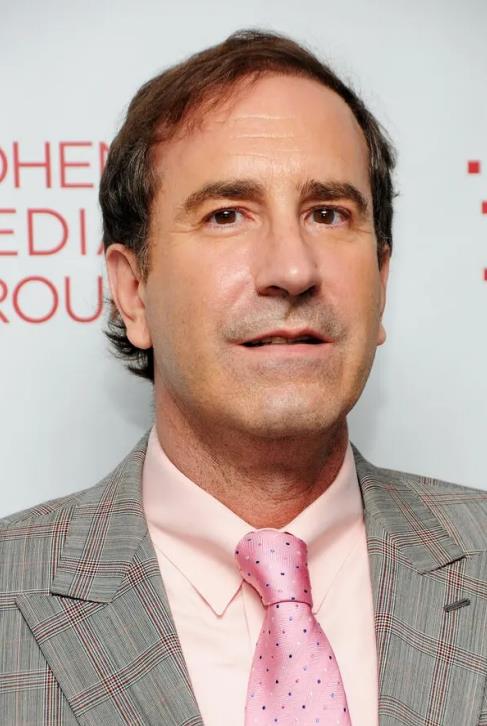
Markopolos, who filed the SEC’s whistleblower report on Bridgewater, had earlier gained national fame when his warnings about Madoff proved correct.
In fact, few people at Bridgewater are involved in the day-to-day work of making money at a hedge fund.
At its peak, Bridgewater had about 2,000 employees, plus hundreds of temporary contractors, of whom less than 20% were assigned to investing or related research. (The rest handled operational tasks, including expanding Mr. Dalio’s “principles.”)
Many of these investors have duties no more complex than those of the average college student: They work on economic history research projects and write papers that are reviewed and edited by Dalio.
As for whether those insights were incorporated into Bridgewater’s trades, most research employees knew not to ask, current and former investment employees said.
At Bridgewater, only a small group of people (no more than 10 people) enjoyed "a different view." Dalio and his longtime lieutenant, Greg Jensen, selected members from the team of Bridgewater investment partners and allowed them into the inner sanctum. In exchange for signing lifetime contracts and vowing not to work at other fund companies, they would see the inner secrets of Bridgewater.
Mr Dalio calls this group his “circle of trust”.
A true wonder
There are two versions of how Bridgewater invests hundreds of billions of dollars in the markets. One version is presented to the public and clients by Mr. Dalio. The other is kept secret, current and former investment employees say.
In its first version, Bridgewater’s hedge funds were models of meritocratic thought: Each investment staffer or researcher could come up with an investment idea, and the Bridgewater team would calmly discuss its merits, coupled with extensive research into history.
Over time, investment employees with a record of accurate forecasts will have greater influence and win the support of more client funds.
Investors flocked to the fund, confident that Bridgewater, unlike other hedge funds, would not rise or fall on a single trade or prediction by the firm’s founder. It was the Wall Street equivalent of Darwinism.
Every Friday, Dalio’s assistants deliver thick briefcases filled with economic research, which are then whisked by a chauffeur to Dalio’s mansion in Greenwich, Conn. The material sets the stage for what Bridgewater calls its “What’s Happening in the World” meetings.
Held every Monday morning, Dalio, Jensen and Bob Prince, Bridgewater’s longtime co-chief investment officer, sit at the front of the largest room, where a river winds around a group of medieval-style buildings. There are rows of staff members sitting in front, along with the odd visiting client who’s invited to watch the show.
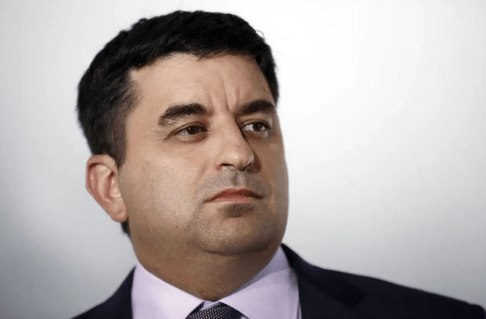
Greg Jensen is one of Dalio's longtime lieutenants and a member of Bridgewater Associates' Circle of Trust among minority shareholders.
Recorded by cameras so the rest of the company could watch later, the people in the room would debate for hours on the day's big topics. It was a real spectacle.
It’s also almost completely irrelevant to what Bridgewater does with its money.
After the meeting, the circle of trust will file into a small corner of the office that few people in the company have access to, and the real work will begin.
Trading Game
There are circles of trust. But while more than one person may weigh in, employees say, only one investment opinion actually carries any weight in the firm’s flagship fund. There is no grand system, no substantive artificial intelligence, no holy grail. Just Mr. Dalio himself calling the shots, by phone, on his yacht or, for many a summer week, at his villa in Spain.
Lawyers for Dalio and Bridgewater said hedge funds “are not a place where one person rules because 98% of the time the system makes the decisions.” They said it was “false to suggest that Mr. Dalio ‘calls the shots’ at Bridgewater.”
Dalio oversees the main fund, Pure Alpha, and has a series of "if-then" rules. If one thing happens, then another will follow. For Pure Alpha, such an "if-then" rule is that if a country's interest rate falls, then the country's currency will depreciate, so Pure Alpha will short the currency of the country with falling interest rates.
Many rules refer only to trends. They believe that short-term trends may indicate long-term trends and depend on the momentum of individual markets.
Bridgewater’s rules gave it an unquestionable advantage during its huge success in the late 1980s and early 1990s, when most people on Wall Street, from junior traders to billionaires, still believed in the value of their own instincts.
Over time, however, Dalio’s advantage waned and seemed to stall in the 2010s and this decade. The rise of powerful computers made it easy for any trader to write rules and trade according to them. Competitors soon caught up with Dalio’s findings, then surpassed them in areas such as high-frequency trading. Dalio still stands by his historical rules to this day. (“They are timeless and universal,” he told one interviewer.)
Even as Bridgewater’s assets under management slowly shrank to below $130 billion in the post-pandemic era, it remains the world’s largest hedge fund given its vastly larger size than any other competitor and its willingness to raise capital from almost any corner of the planet.
Even as Bridgewater’s main hedge fund lagged behind global markets for years, it has still largely avoided negative results. So it’s fair to say it makes money for clients on an absolute basis. Its growth is a testament to the firm’s marketing prowess, which has earned a mystique for Pure Alpha’s hands-off, rules-based approach.
The stagnation led Bridgewater to create “trading games,” which simulate the real world, in which investment staffers bet their best ideas against a pool of Mr. Dalio’s own money. (If the staffers’ ideas win, they get paid in cash.)
For many in the investment division, this was the only time in their Bridgewater careers that they were able to actually execute on an investment idea.
'Give them a helicopter'
Investors say Pure Alpha delivered low-single-digit returns from 2011 to 2016, a boom period for the market, well below historical levels, and the next five years weren’t much better.
Dalio and Bridgewater have gone to great lengths to protect that advantage.
On Wall Street, the term “information advantage” often carries an inappropriate connotation, implying that someone is engaging in insider trading. Yet Dalio’s information advantage was both legitimate and enormous.
Bridgewater’s goal is information about entire countries. According to employees involved in the effort, Mr. Dalio courts well-connected government officials from whom he can deduce how they plan to intervene in the economy — insights that Bridgewater uses to make money in its funds.
It seems to be “fair game” everywhere, even in Kazakhstan.

Bridgewater has established relationships with government officials in Kazakhstan, the second-largest oil producer in the former Soviet Union.
The Central Asian country doesn’t appear on the first page of any Wall Street playbook. It is ruled by an authoritarian government and is the world’s largest landlocked country, but it has a sparse population.
In 2013, Kazakhstan began developing what was then its most expensive oil project, a giant field in the Caspian Sea, helping it build a $77 billion sovereign wealth fund. The money had to be invested somewhere, and Bridgewater’s client services team scheduled a meeting on Dalio’s calendar with the fund’s CEO, Beric Otmurat, a bureaucrat whose career had begun just a decade earlier.
Dalio showed great interest in the delegation. "What were they doing before?" he asked Bridgewater's marketing team.
His staff responded that Mr. Otmurat would be in New York hours before arriving in Westport.
"How did they get here?" Dario asked.
Bridgewater arranged a Mercedes driver.
"Send them a helicopter."
The dramatic entrance was preceded by an unconventional presentation, at least compared with what Mr. Otmurat experienced in New York, where industry titans such as Henry Kravis, a co-founder of KKR, and Stephen Schwarzman of Blackstone Group took turns fawning over him with offers of sea bass, caviar and an orange-hazelnut Napoleon dessert themed after the Kazakh flag.
Dalio drew an illegible chart on a dry-erase board and rambled on about the nature of markets, saying little about what Bridgewater was doing, according to a person who was there. It all came with an undeniable charisma and confidence.
Bridgewater’s marketing team had seen this kind of move before. The ultimate goal would not be cash. So when Otmurat floated the possibility of investing $15 million in Bridgewater’s main hedge fund, representatives of the fund rejected the idea. “We don’t want to do this deal with you right now,” one marketing executive said. “We’re in it for the long haul.”
Inside Bridgewater, relationships mean visits. The country’s new oilfield development has taken more than a decade and has been nearly always delayed. Anyone who knows how the project is going can adjust their bets on oil accordingly. Bridgewater representatives told the delegation that their firm would be happy to provide free investment advice, and the Bridgewater team was equally happy to have the opportunity to ask questions about the local professional industry.
Mr. Otmurat and others in the delegation seemed eager to chat.
Soon, Bridgewater had a two-pronged approach. A few months after Otmurat’s visit to Sihanoukville, the Kazakh fund again asked if it could invest in Bridgewater. This time, it was hanging the hatchet for far more than $15 million, and Bridgewater agreed, former employees said.
A spokesman for Dalio said all of his interactions with government officials were correct.
No one will know
Janet Yellen has maintained greater distance from Dalio than her predecessor did.
Back in the U.S., Dalio’s influence was slowly waning. During and after his rise to fame during the financial crisis, he had no trouble reaching out to Federal Reserve Chairman Ben Bernanke. However, Bernanke’s successor, Janet Yellen, was apparently less interested in the Bridgewater founder. Dalio often complained to others at the firm that Yellen wouldn’t return his calls or meet with him.
But Dalio has continued to have greater success abroad. Mario Draghi, the Italian-born former president of the European Central Bank from 2011 to 2019, often chatted with the Bridgewater founder and sought his advice.
Dalio suggested in the mid-2010s that he was unleashing more stimulus on the European Union, which would boost European stocks and hurt the euro. Bridgewater also was short the euro during much of that era.
In Zurich, Dalio found the ear of the Swiss National Bank. He advised the bank on its efforts to decouple the Swiss economy from troubled Europe as a whole, according to a former Bridgewater employee who helped make the connection. Bridgewater’s funds made a fortune in early 2015 when the Swiss National Bank unpegged the Swiss franc from the euro.
In media interviews, Dalio has consistently praised the leaders of many countries. He said "very capable" over and over again, sometimes repeating this sentence more than once in the interview. He also said within Bridgewater that these leaders quickly sought his advice.
toss a coin
Dalio’s grand automation — his investing engine — is nowhere near as automated or mechanized as advertised. If he wants Bridgewater to short the dollar (as he unsuccessfully tried to do for about a decade after the 2008 financial crisis), the trade will be made. No rules are more important than what Dalio wants.
As 2017 drew to a close, some top investors decided enough was enough. Pure Alpha was up just 2% for the year, far less than most hedge funds.
To turn around the firm's investment performance, members of the Circle of Trust researched Dalio's trades. They delved into Bridgewater's archives, looking for the history of Dalio's personal investment philosophy. The team crunched the numbers again and again.
Then they sat down with Dalio, according to current and former employees who were present. (Lawyers for Dalio and Bridgewater said no research on Dalio’s trades had been commissioned, and no meetings had been held to discuss them.)
A young employee handed over the results with trembling hands: Studies show that Dalio is right as often as he is wrong.
Trading on his ideas is often akin to flipping a coin.
The group sat in silence, nervously awaiting a response from the Bridgewater founder.
Mr. Dario picked up the paper, crumpled it up, and threw it away.