

Author | Huo Huo Produced by | Vernacular Blockchain (ID: hellobtc)
As the Ethereum ecosystem prospers, Polygon (Horseshoe), an infrastructure focused on Ethereum expansion, has also risen strongly. On January 9, according to data from WhaleStats, Polygon became one of the most used smart contracts in top applications, becoming a giant whale in the Ethereum ecosystem. Currently, as one of the Web3 infrastructures that builders vote with their feet, and a leader in the Ethereum L2 sector, it supports the interconnection of multiple blockchains and networks. Around the goal of Ethereum expansion, the technical solution has changed from the gradually eliminated Plasma to today's ZK Rollup, and its market value has also grown from $20 million when it was first listed to more than $8 billion at present. So what is Polygon? How did it come about, and why is it closely related to the crypto ecosystem?
01 Polygon founding team: It started with the CryptoKitties congestion incident
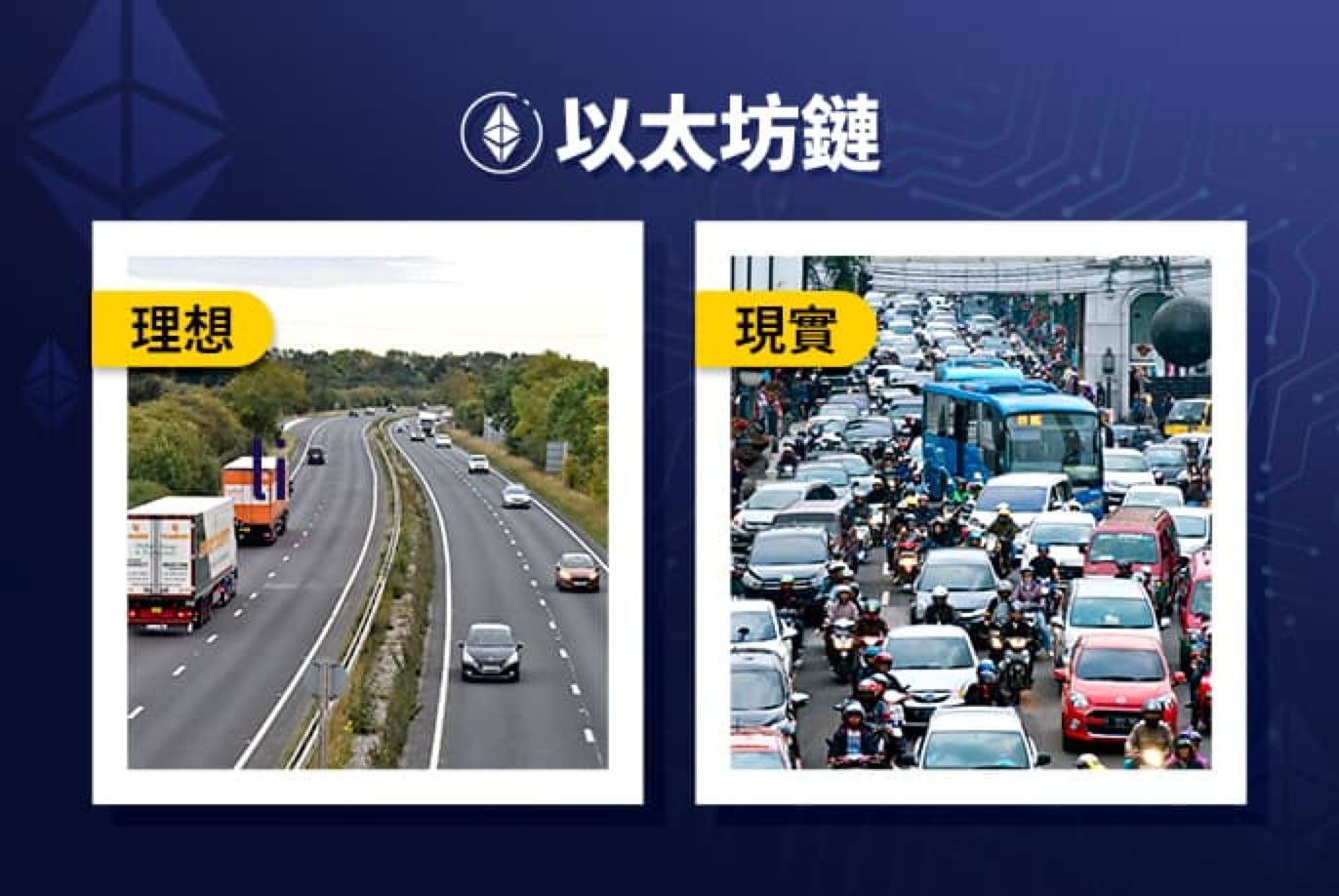
In 2017, Ethereum came into the public eye, but it was criticized for performance issues such as congestion and inefficiency, and users suffered. The famous incident was CryptoKitties, which took off at the end of 2017, causing serious congestion on Ethereum. Therefore, Polygon founder Jaynti Kanani and his friends realized that the cryptocurrency world and its users urgently needed a very important feature - scalability. After several discussions, they decided to create their own project to solve this problem, and the idea of Matic came into being.
So in 2017, several technical experts Sandeep Nailwal, Jaynti Kanani and Anurag Arjun, who met each other in the blockchain industry, created Matic, the predecessor of Polygon, with their own technical and product development experience. Subsequently, Mihailo Bjelic, an outstanding contributor to the Ethereum ecosystem, joined the team as a co-founder in 2020, and the founding team became the "Four Heavenly Kings".
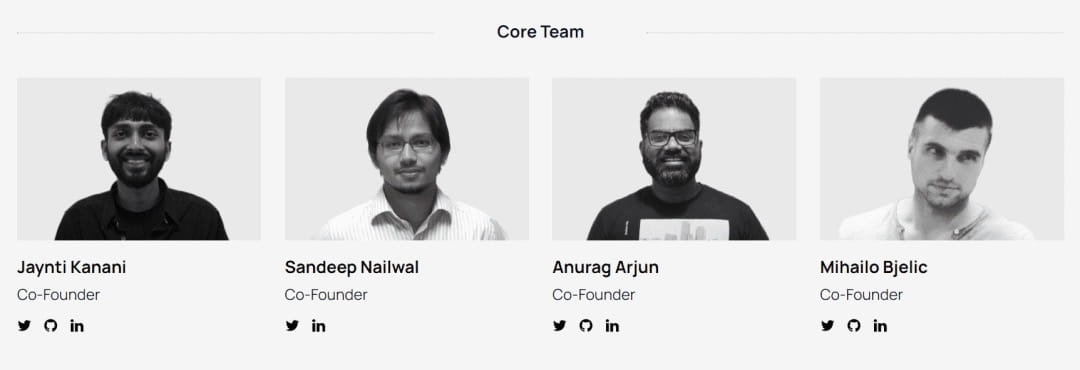
Jaynti Kanani is the main developer of Polygon. He was born in Ahmedabad, the sixth largest city in India. His father was a worker in a diamond factory. Although his family was poor, they worked hard to support his studies.
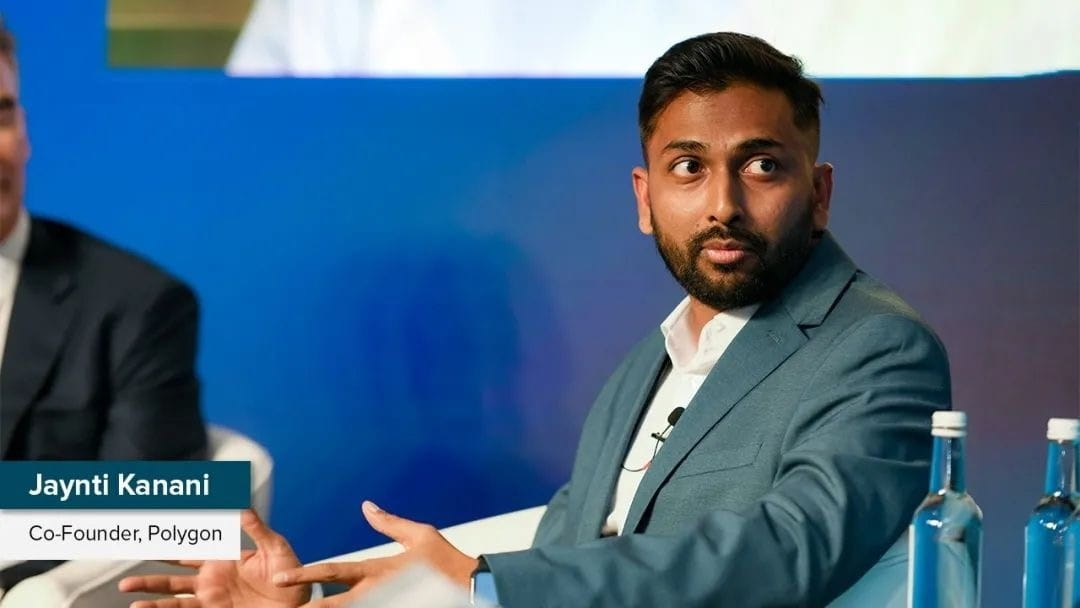
After graduating from college in 2011, Jaynti Kanani joined Persistent Systems, an IT services company in Pune. Since then, he has been exposed to global entrepreneurial cultures such as Hacker News and Y Combinator, which inspired him to start his own business. After hearing about encryption technology for the first time in 2015, I entered the field of crypto assets and made a little money in the bull market of 2017. I happened to encounter the shortcomings of Ethereum, so I proposed the concept of Matic and started a business. Another founder, Sandeep Nailwal, was born in a poor farmer family in India. He grew up in an environment where it was common for children to drop out of school in the 10th grade, and some fell into the habit of drinking and gambling. (Indian junior high school students are aged 11 to 15 years old and are classified into grades 6 to 10)
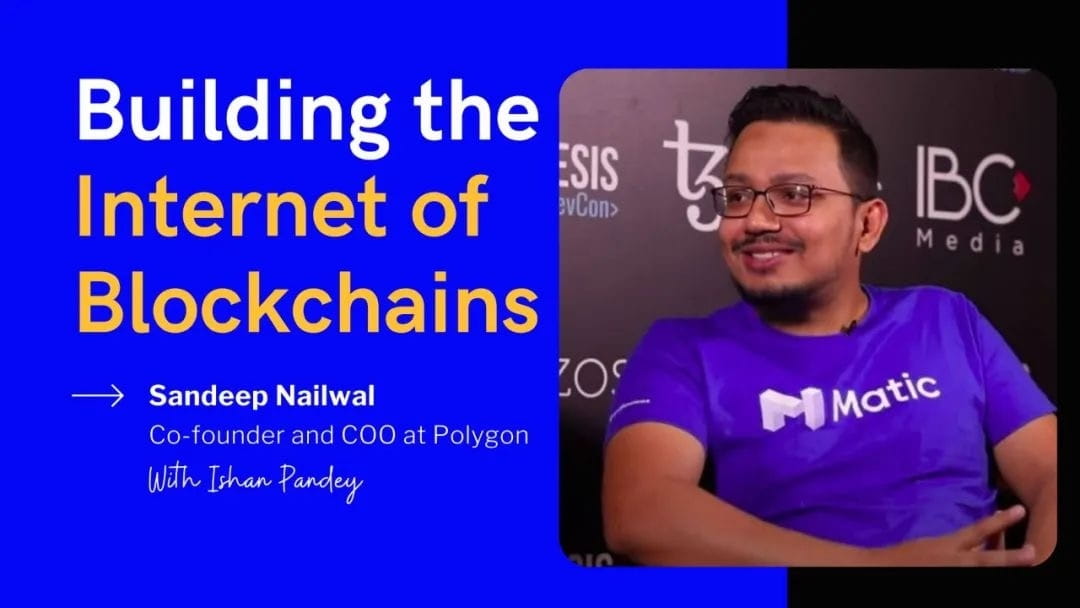
When Sandeep saw his father falling victim to these vices and when he witnessed the domestic profiteering happening at home, he was desperate to escape from this life and he realized that there was only one way out for him and that was to continue his studies and study hard.
Just like many Chinese who hope to change through the college entrance examination, he originally just wanted to find a good job, get a high salary, buy a car, a house, get married and have children. After completing his computer science engineering and MBA courses with bank loans, he began his working life to pay off the loan and buy a house. He has worked in the technical department of Welspun, the largest textile company in Asia. So, Sandeep did not have any entrepreneurial plans in his early years. Before founding Polygon, he was a software developer living in Delhi, India.
At the same time, Sandeep was very active in the entire blockchain community in India, which was also an opportunity for him to meet other co-founders of Polygon. Later, when several people were preparing to start Matic together, he said: "I think I need to buy a house, although it is very cliché, because according to convention, men can only get married after owning a house. My current wife told me, she told me not to pay attention, and said that it would be okay if we lived in a rented house, and she supported me to start a business."
With the support of his wife, and because the idea of starting a business was really exciting, he later quit his job. So he became one of the founders of Polygon, and was later called the Web3 slum version of "multi-millionaire". Today, in addition to serving as the COO of the Polygon project, Sandeep also holds multiple positions, becoming an active guide, mentor and angel investor, and is a founder and builder in Web3. (On December 30, 2022, Polygon co-founder Mihailo Bjelic said that as a decentralized project, Polygon will no longer have C-level positions such as CEO and COO, and Sandeep has deleted the title from his LinkedIn profile.) During the new crown, he founded the Indian cryptocurrency fund Covid Relief Fund in 2021 to help Indian people affected by COVID-19. The fund made donations through a special way to create a multi-signature wallet on the Ethereum blockchain. Anurag Arjun is from Bangalore, India. He also made a fortune through cryptocurrency and later became one of the co-founders of Polygon.
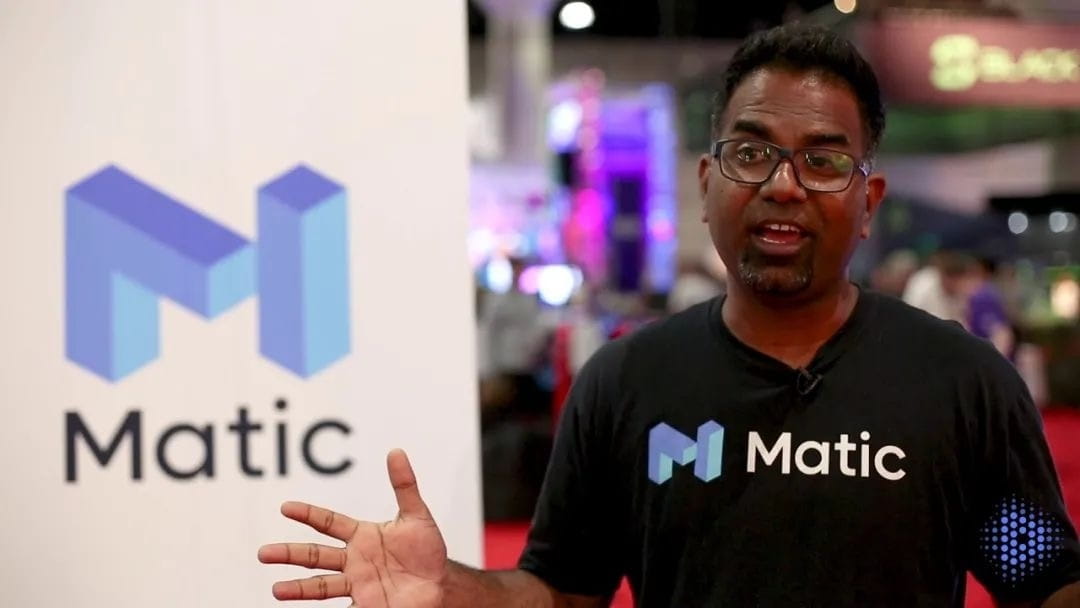
Picture: Anurag Arjun
A graduate in Computer Engineering from Nirma Institute of Technology, he started his career earlier than his peers, working at Cognizant in 2006 and a few years later at Dexter Consulting where he worked as a Product Manager for 5 years.
Prior to founding Polygon, Anurag was an entrepreneur who began his entrepreneurial career with the creation of HealthTrac and HealthOne, two startups active in the health sector. The former provides services dedicated to monitoring parameters obtained through wearable devices, while the latter provides specific services for doctors. After founding Matic in 2017, Anurag became a product manager responsible for developing project roadmaps, managing teams, and integration between Polygon itself and other Dapps. Mihailo Bjelic, also from Serbia, graduated from the University of Belgrade with a degree in Systems Engineering.
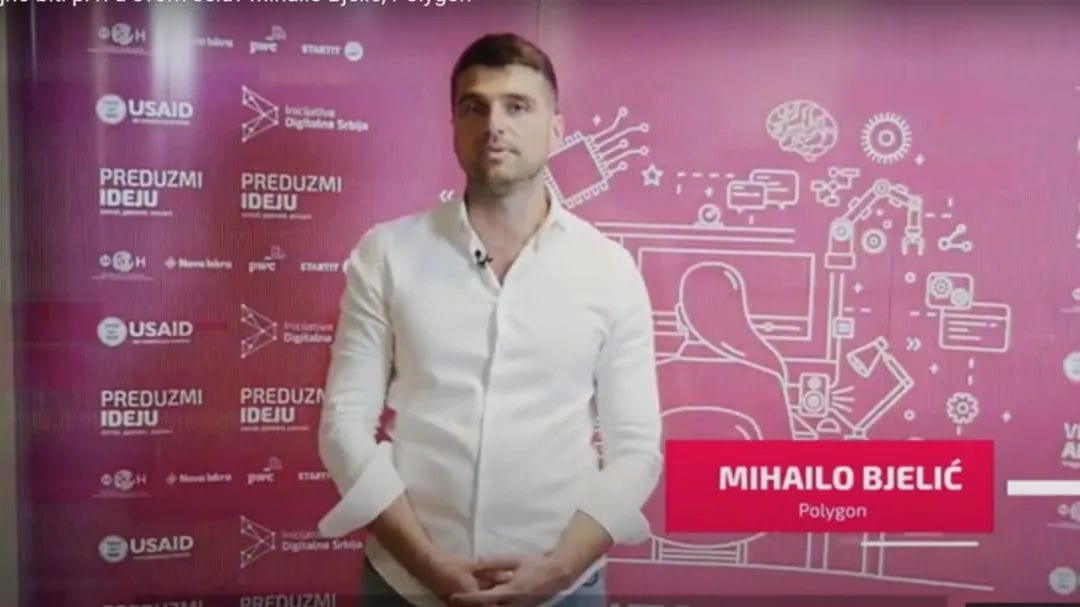
As mentioned above, the first three programming developers founded Matic together in 2017. When Mihailo Bjelic joined Polygon, it was already during the transition period from Matic to Polygon. That is, at the end of 2020, Mihailo joined the team.
02 Polygon’s past and present: From Matic to L2 aggregator
After Polygon was created in India in 2017, the project was initially named Matic Network and positioned as a sidechain of Ethereum. The mainnet was officially launched in 2020, attracting many DeFi projects at the time. As the scope of the project expanded from a single Layer 2 (L2) solution to a "network of networks", it was launched as a single Layer 2 chain under the name of Matic Network in June 2020. After determining that Ethereum could not be served by a single Layer 2 network, the team began to expand its products. In February 2021, Matic Network was renamed Polygon to reflect the project's shift to focus on building a set of Ethereum scalability solutions.
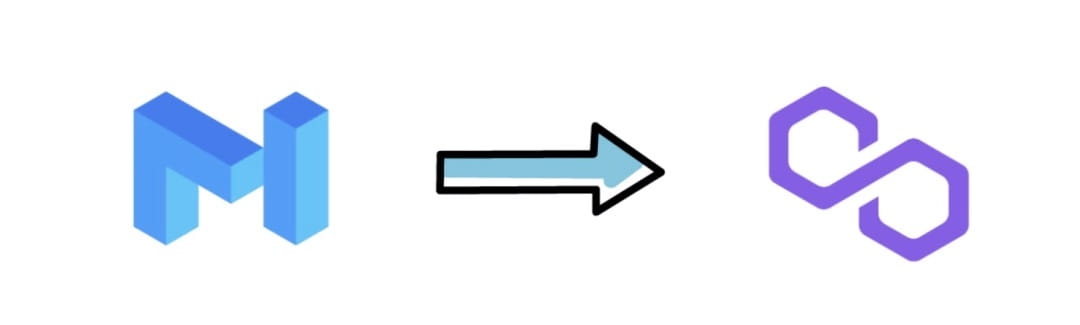
After the name change and rebranding, Mihailo Bjelic mentioned above was added as the fourth co-founder at this time. However, the token code MATIC has not changed. In 2021, Polygon received multiple investments from angel investors, which made $Matic one of the top 10 crypto tokens in the world by market value. But Polygon's achievements are by no means as simple as changing its name.
The Chinese translation of the renamed Polygon is polygon, and its success is more due to the multi-angle change of its role positioning. However, before talking about the success of Polygon, let’s first talk about the background of Ethereum’s expansion plan. The expansion plan is generally divided into three categories:
Use other public chains to connect with Ethereum
Layer2
Upgrading from ETH1.0 to ETH2.0
Polygon was previously a side chain of Ethereum, and in the early days it adopted Plasma's Layer2 solution. Plasma was regarded as the main force for expansion at the time, but problems such as extremely complex fund withdrawal and incompatibility with DeFi smart contracts made Plasma gradually "fall out of favor". After the failure of Plasma, Vitalik promoted the Layer2 solution of Optimistic Rollups. So Polygon changed its role positioning and became an aggregator of Layer2, helping to achieve cross-chain between various DeFi and NFT projects between Layer2. In other words, Polygon proposed the idea of "integration" and began to develop and provide a variety of Layer 2 expansion solutions such as zkRollups, Optimistic Rollups, and Validium, in order to build a modular, general, and flexible expansion framework for Ethereum. After the rebranding of Matic to Polygon, although the direction is still to expand Ethereum's layer2, the specific architecture route has changed. It is no longer just a side chain or Plasma, but to build an expansion layer ecosystem. In other words, it is a diverse solution: in addition to the partially implemented PoS Bridge, plasma extension layer, Zk Rollup, Optimistic Rollup solutions, etc., any other technology that can help the development of encryption should be added. The redesigned Polygon architecture consists of 4 abstract and composable layers:
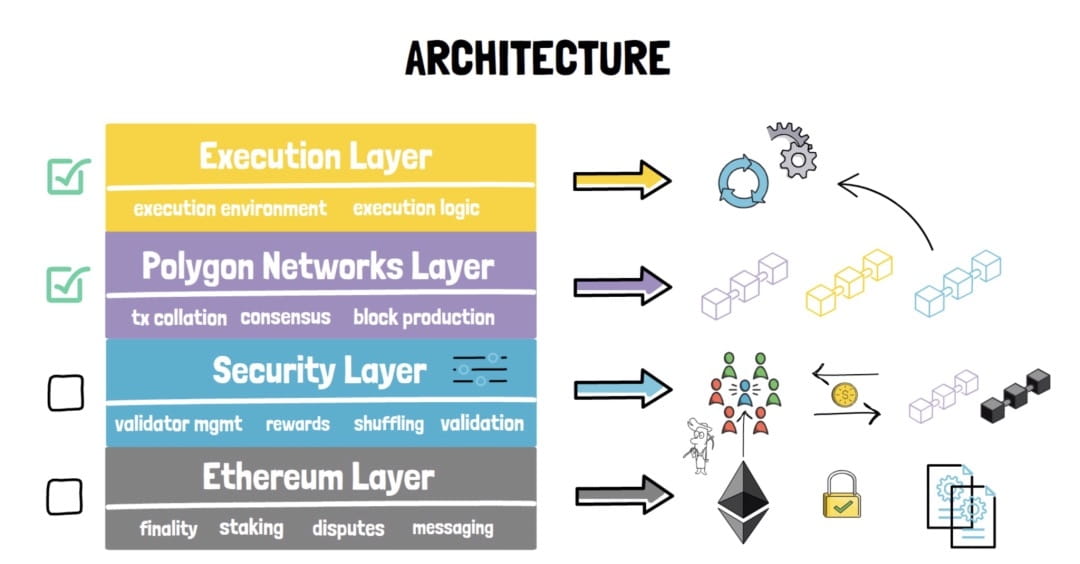
Source: Overseas blogger Finematics
The bottom Ethereum Layer is the Ethereum chain. As the settlement layer with the highest security, the Security Layer is the bottom verification layer. The network layer and execution layer above can realize different expansion solutions and applications. Because the Ethereum ecosystem is diverse, there are DeFi, NFT, and GameFi, and the requirements for different Dapp projects are different. For example, borrowing applications require sufficient security and are not so sensitive to timeliness and handling fees. For NFT or GameFi, low gas and speed may be more required, and transaction verification does not need to be 100% accurate. So for various Dapps, it is very convenient to choose the component interface that suits them in the expansion layer like Polygon. The evolution of Polygon from the original Matic to the current Layer 2 aggregator can be said to be an important turning point in development. From then on, Polygon used the idea of aggregation to open a new door for the expansion track. Polygon is also called the "Swiss Army Knife" on Ethereum by the community.
03 Polygon Ecosystem Status: Polygon Development
Bear market: large-scale deployment of ZK ecosystem
Although the entire Polygon framework is used to provide compatible services for Ethereum's second layer, coupled with low fees and faster transaction processing speeds, its core product, the Polygon PoS equity proof side chain, is currently widely used, but the focus of the future technology ecosystem is still the ZK ecosystem. Currently, Polygon is developing ZK-Rollups to increase Ethereum's throughput without sacrificing decentralization or security. In August 2021, Polygon acquired Hermez for $250 million, a Layer2 expansion solution built on the zero-knowledge proof protocol (SNARK), focusing on crypto asset payments and transfers. Four months later, Polygon acquired the Mir Protocol team, a decentralized application solution based on zero-knowledge proof. After integrating various solutions, Polygon is no longer a simple sidechain network, but is becoming a blockchain infrastructure-type Web3 bottom layer. The corresponding functions include basic capabilities such as the circulation and payment of encrypted assets and the construction of decentralized applications, as well as the ability to customize blockchains on demand.
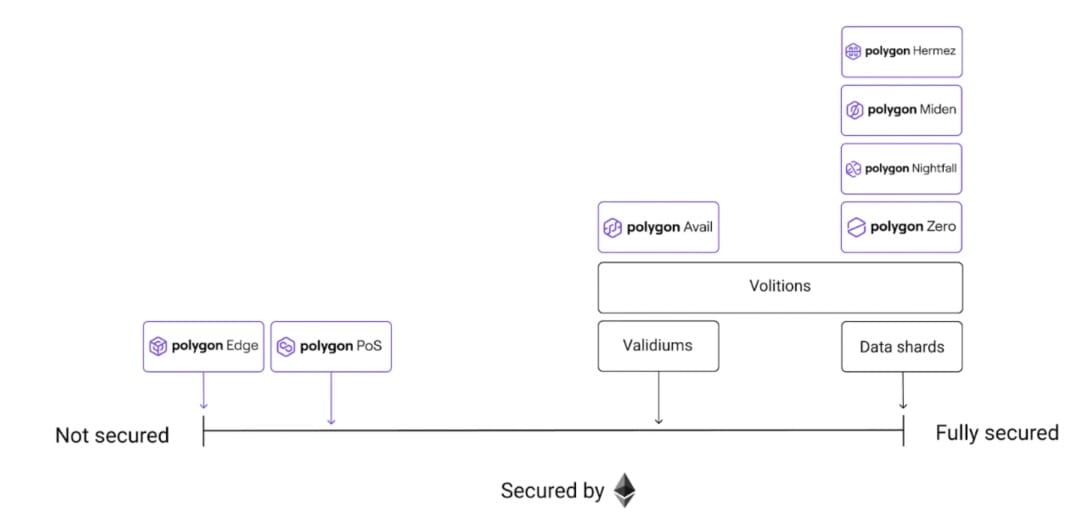
Polygon Technology Ecosystem Overview
At present, the Polygon network revolves around ZK technology. While promoting development, in addition to actively acquiring other Layer 2 networks using ZK, its ZK team has made technical breakthroughs. In July 2022, Polygon zkEVM was released, a solution that provides the scalability advantages of zero-knowledge (ZK) proofs and is compatible with the Ethereum Virtual Machine (EVM), and a public testnet was launched in October. In the future, Hermez, Miden, Nightfall and Zero will be able to collaborate on technical solutions and architectures. It’s just that the competition in this track is currently fierce. The Scroll and zkSync teams, which are also developed based on zk Rollup, have also successfully developed zkEVM. As for the emergence of competitors, Mihailo Bjelic, another co-founder of Polygon, said that their zkEVM is the most complete and open source, while Scroll currently only supports some EVM opcodes, and zkSync has no open source prover.
DeFi and NFT dominate ecological projects
Although Polygon is a second-layer expansion solution built on Ethereum, compared with Ethereum, Polygon has more advantages in speed, scalability and usability; in addition, due to its full compatibility with the Ethereum Virtual Machine (EVM) and ecological support, it has attracted many projects to deploy in Polygon.
Many well-known decentralized financial applications on the Ethereum chain, such as Aave, Curve, Sushiswap, Uniswap, etc., have been deployed on Polygon.
In April 2021, Polygon launched a $100 million DeFi fund to promote ecological development.
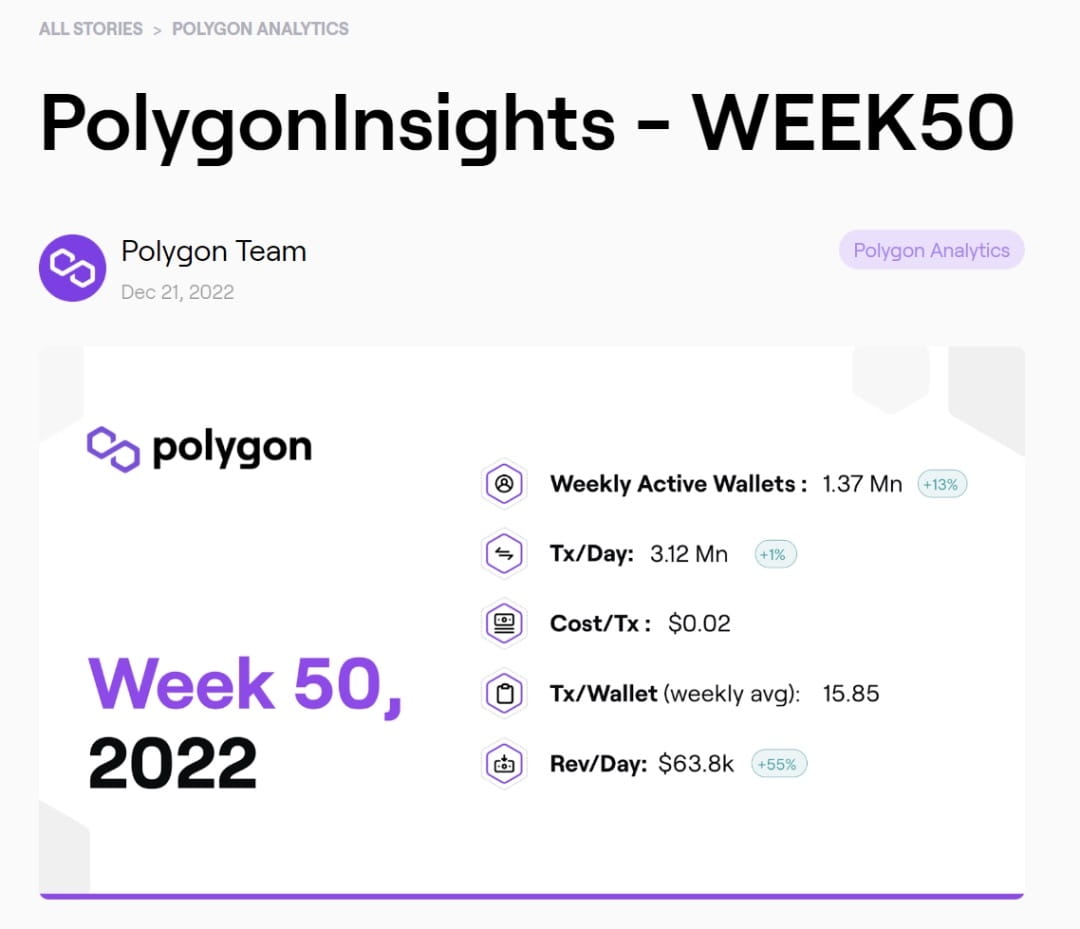
In July 2021, Polygon began to lay out the non-financial chain ecology and established Polygon Studios to support the construction of applications such as NFT, chain games, and the metaverse. In September of the same year, OpenSea, the leading platform in the NFT trading market, deployed cross-chain on Polygon, which was attracted by the low gas fee and fast transactions of this chain. Also in September, Robinhood chose Polygon as the preferred network to launch its Web3 wallet Beta. With scalability and low gas, Polygon has become the first choice for building many Web3 applications. At present, Polygon already has a rich ecosystem, with more than 1,600 smart contracts on the chain. According to the latest official weekly report, the chain has more than 1.3 million active users per week, 3.12 million transactions per day, and the average gas fee per transaction is only US$0.02.
Traditional brands’ entry into the Web3 world
DeFi applications in the Polygon ecosystem have also been seen by traditional financial institutions. In addition, consumer brands have begun to deploy NFTs and metaverses on the Polygon chain. On November 4, 2022, Instagram, a social platform under Meta, announced that it would support users to create, purchase and trade NFTs, with Polygon as the first choice for the underlying layer; earlier in July, Reddit had launched a community avatar NFT project based on Polygon. On November 2, JPMorgan Chase, DBS Bank and SBI Digital Asset Holdings completed on-chain foreign exchange and government bond trading trials using DeFi applications on the Polygon chain. In addition, consumer brands Starbucks, Coca-Cola, Disney, Adidas, etc. are using this blockchain network to try NFT. As the underlying layer of Web3, if blockchain wants to be widely used, it must achieve high speed and low gas fees for on-chain transactions. This has become a practical consensus of the current blockchain network. It just so happens that the compatibility and convenience of the underlying layer of Polygon are gradually being seen by the world outside the blockchain, and more and more centralized corporate entities are beginning to use this network to try Web3. It takes the convenience of application building and use as its direct goal. After being internally compatible with the Ethereum ecosystem, it began to provide performance supplements for other blockchain networks, and finally demonstrated the friendliness of Web3 to the world outside the blockchain. From this point of view, 2022 can be said to be a breakthrough year for Polygon, which brought some of the largest Fortune 500 companies to Web3 and laid a technical foundation for future growth.
04 Summary
It has the security of Ethereum, but is more flexible and open than Ethereum. As Polygon's motto says: "Bring the world to Ethereum". Polygon strives to make all expansion plans easily compatible with Ethereum, and can be connected to each other to achieve cross-chain, and build a multi-chain network around Ethereum like Polygon. This means that it is on top of Ethereum, but it builds a framework of a "multi-chain future".
END