

Chainlink is the infrastructure of the smart contract economy, supporting nearly a thousand oracle networks that collectively protect tens of billions of dollars in hundreds of projects. As the well-deserved leader of oracle machines, Chainlink released the Cross-Chain Interoperability Protocol (CCIP) in 2021 to achieve decentralized cross-chain messaging and token value transfer.
💡Background
The current Crypto market has completely transformed into a multi-chain structure, and the market consensus is that this state will continue to exist in the future, and even more sub-chains and modular blockchains will appear. In such a multi-chain world, the primary problem faced by users is the need to transfer their assets between different chains. In this way, various cross-chain bridge applications have emerged. It is indeed very suitable to use "bridge" to describe it. of. Because most of the current asset cross-chain solutions use this "intermediary" bridging method. Simply put, the two chains are like two countries, linked by a bridge in the middle. When you want to take money from country A to country B, , you need to give the money to the administrator of the bridge first. The administrator will record your money and keep the voucher, and then send you the money from country B. This method is simple and effective, but the administrator needs to manage huge amounts of assets. If the administrator disappears, is corrupted, or is assassinated, it will basically become decentralized, let alone decentralization. Therefore, the current cross-chain bridge solution faces the following problems:
There are bottlenecks in cross-chain infrastructure, making it very difficult to develop cross-chain applications.
The "Bridge" solution is relatively centralized and has fragile security.
If a decentralized solution is adopted, there is a lack of transparent and reliable node operators.

ChainSwap attack: In July 2021, the cross-chain asset bridge project ChainSwap was attacked. More than two dozen projects on the cross-chain bridge were attacked, losing nearly $8 million in assets, causing more than a dozen projects to plummet 99%.
Poly Network attack: In August 2021, the cross-chain interoperability protocol Poly Network was suddenly attacked by hackers. O3 Swap, which uses this protocol, suffered serious losses. The assets on the three major networks of Ethereum, Binance Smart Chain, and Polygon have been almost wiped out. Within 1 hour, $250 million, $270 million, and $85 million in crypto assets were stolen, with a total loss of $610 million.
Wormhole attack: In February 2022, the Wormhole bridges of the two major blockchains, Ethereum and Solana, were hacked, causing losses of more than $320 million.
Ronin Network attack: In March 2022, the Axie Infinity side chain Ronin validator node and Axie DAO validator node were destroyed, resulting in a loss of nearly 173,600 ETH and $25.5 million.
💡What the next generation of cross-chain will look like
Although there are various problems with current cross-chain applications and frequent cases of theft, it still cannot stop users from using cross-chain bridges. Then we can summarize two conclusions:
For the application layer, cross-chain has gradually become an inter-chain infrastructure.
For users, what is really needed is a decentralized infrastructure that can seamlessly use the unique functions and assets on each blockchain in one application.
When a cross-chain facility can achieve these two points, it will be epoch-making for both the DeFi and NFT markets. It will bring more composability and richer application innovations.
💡 ChainLink CCIP
CCIP is a universal cross-chain communication protocol that provides smart contract developers with a common infrastructure with computing capabilities that can transmit data and smart contract instructions across various blockchain networks. CCIP will become the underlying protocol for various cross-chain services, including Chainlink’s programmable token bridge, which allows users to safely and efficiently transfer tokens to any blockchain network with scalability.

On the surface, the logic of the cross-chain process is actually very simple, and there are not many process changes:
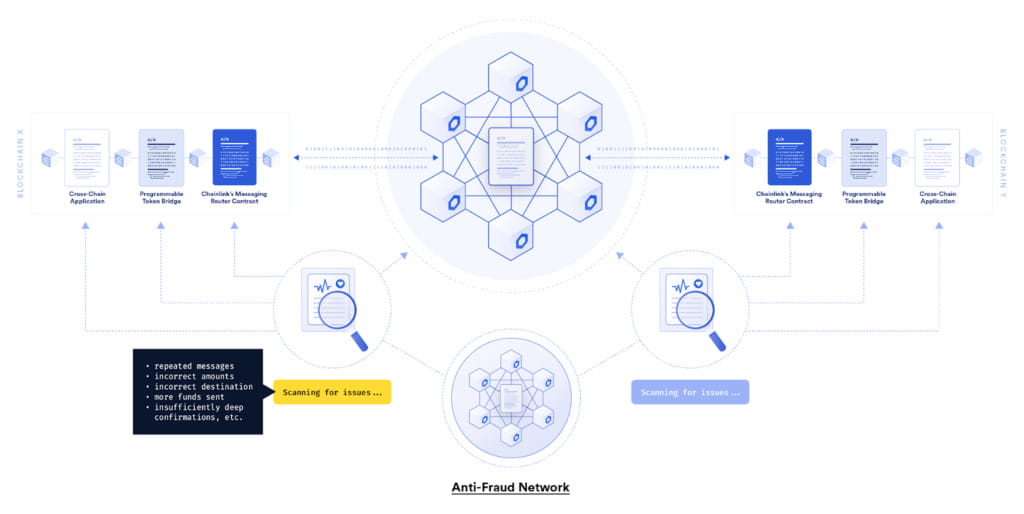
The smart contract from the source chain calls Chainlink's message router, which will utilize Chainlink DONs (Decentralized Oracle Network) to securely send the message to the target chain, where another message router verifies it and sends it It is sent to the target smart contract.
The biggest difference between CCIP and current cross-chain solutions is that the high-quality node operators and anti-fraud networks accumulated by Chainlink DONs network and Chainlink’s own oracle service will provide the most powerful support for cross-chain communication.
🔵 Key point 1: Mature node operators
A cross-chain bridge is essentially a committee of nodes, where all nodes work together to certify information on one chain and then pass it on to another chain. Chainlink relies on mature independent nodes in its oracle network to continuously protect more than 10 billion assets on the chain, and naturally has the most critical conditions for cross-chain information transmission. According to Chainlink, its nodes are roughly composed of three categories:
DevOps nodes: These nodes are organizations that specialize in running blockchain infrastructure, such as PoS verification nodes, PoW mining pools, and full-node RPC providers.
Enterprise Nodes: These nodes are located around the world and are currently running the backend infrastructure for the traditional Web2 economy.
Community nodes: These nodes come from the Chainlink community, focus on supporting ecological growth, and their reliability has been tested in actual combat. These include winners of Chainlink Oracle Olympics, CryptoManufaktur, LinkRiver, and NorthWest Nodes.
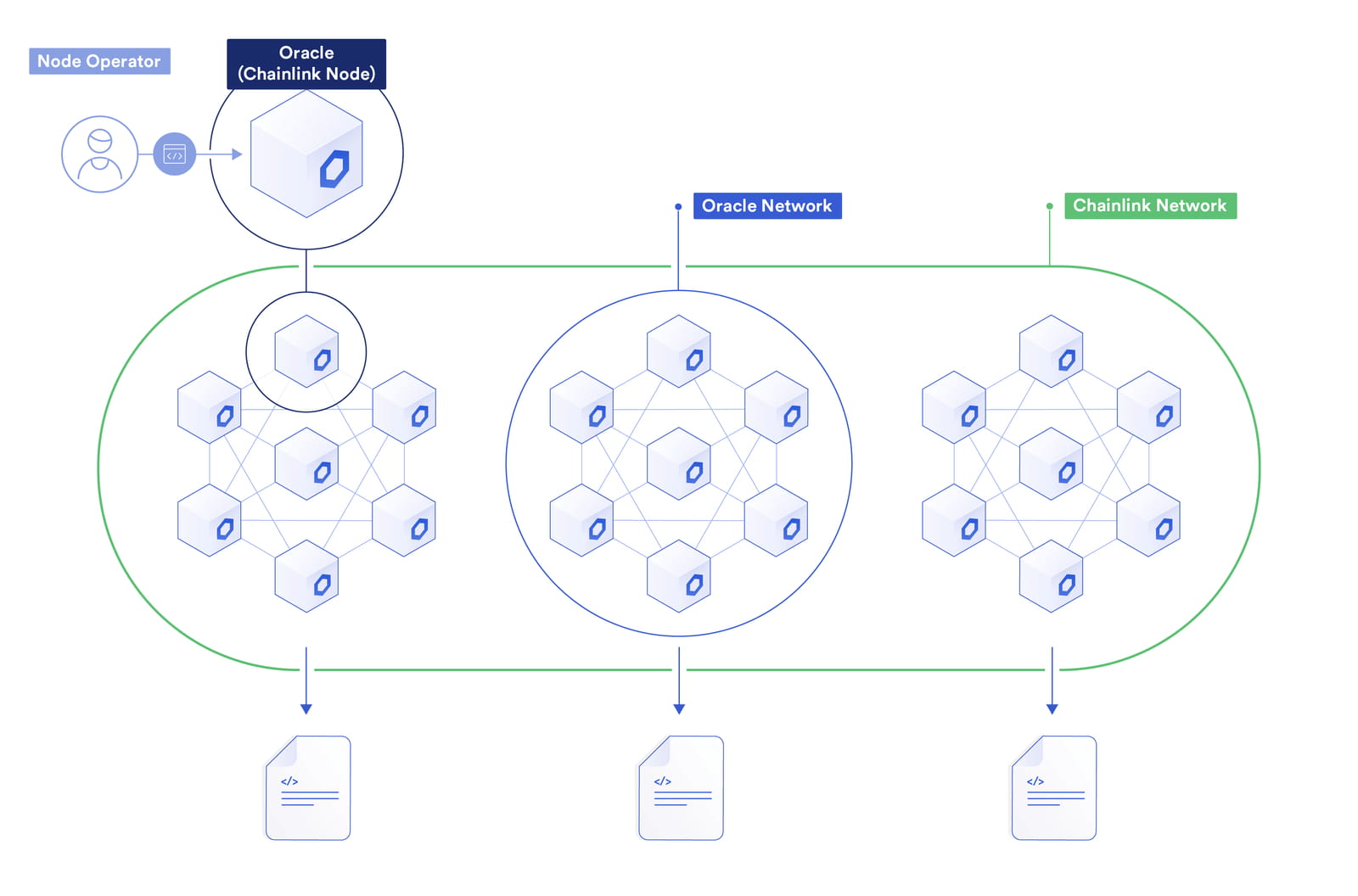
This decentralized and mature node operator structure has been continuously running on the oracle network, is resistant to Sybil attacks, is reliable and verifiable.
🔵 Key point 2: OCR
OCR (Off-Chain Reporting) is Chainlink's off-chain data aggregation computing protocol. It has successfully reduced the on-chain gas cost reported by oracles by 90%, and has significantly improved the scalability, security and performance of the oracle network. Lifting is another key concept to ensure the operation and security of the oracle network.
OCR allows nodes to aggregate data off-chain at zero gas cost using a distributed peer-to-peer network. This involves each node fetching data from one or more data sources, signing it using its unique private key, and broadcasting it to the rest of the off-chain oracle network. Once a sufficient response threshold is generated, a single transaction is transmitted on-chain. At the same time, each node will conduct data observation and monitoring, and then verify the oracle report and node signature on the chain through smart contracts. In this way, it serves as the transparent and tamper-proof attribute of the Chainlink oracle network.
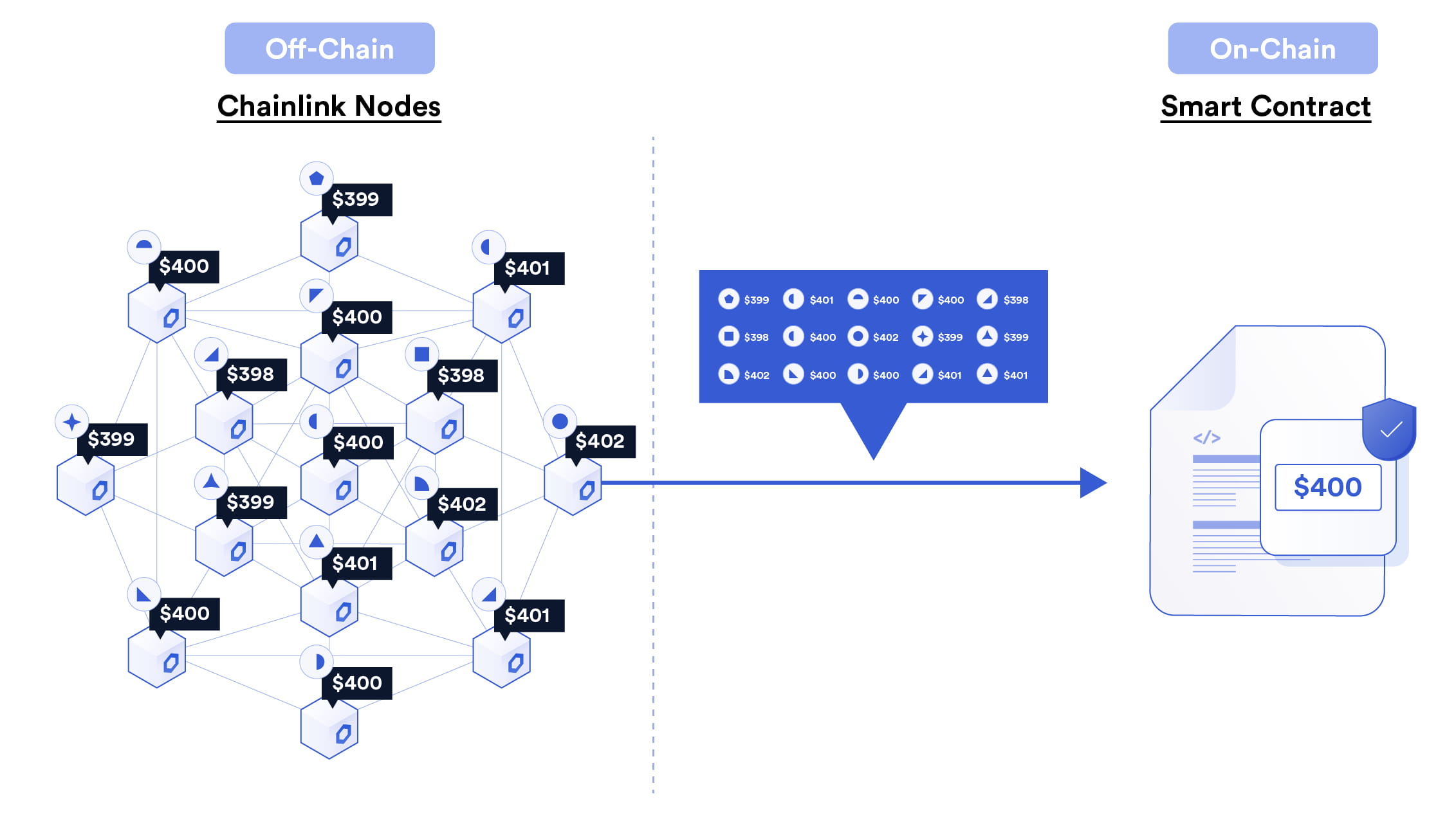
CCIP will utilize OCR 2.0 in its protocol stack and expand the number of committee nodes that sign reports to hundreds to improve the security of locked funds.
CCIP relies on a large and mature security node pool and OCR's off-chain computing capabilities, which will become its strongest barrier in the field of cross-chain communication at the bottom level.
🔵 Key point 3: Anti-fraud network
Security and fraud prevention are the most critical elements of cross-chain services when protecting high-value contracts. Therefore, CCIP will introduce an “anti-fraud network” risk management system. The anti-fraud network consists of multiple decentralized oracle networks, with the sole purpose of monitoring CCIP services for malicious behavior that may lead to loss of funds. It is worth mentioning that the node committee in this anti-fraud network has absolutely no connection with the node committee they are responsible for monitoring in CCIP. Therefore, anti-fraud monitoring and cross-chain services are completely independent.
The anti-fraud network serves as a verification layer and regularly submits heartbeat checks when the system is running normally. If the anti-fraud network stops sending heartbeat messages, or if a node notices any malicious behavior, it will automatically trigger an emergency shutdown mechanism to stop a certain cross-chain service. Shutting down cross-chain services can effectively protect user funds from potential black swan events.
The anti-fraud network will initially be composed of high-quality Chainlink nodes, but these nodes have no connection with the CCIP services they protect; later, dApps that guarantee high value through CCIP services can also join the network to provide users with more effective defense Fraud protection.
💡 Next generation cross-chain standard
The official Chainlink document gives the definition of the ideal "cross-chain technology stack":
Based on a decentralized oracle network, and relying on OCR off-chain computing and mature node operators to build a consensus layer.
CCIP builds an information layer to provide support for cross-chain data and asset transfers.
The application layer supports the construction of programmable cross-chain bridges and cross-chain applications.
The user layer supports access to wallets, DeFi & CeFi and other applications through interfaces.
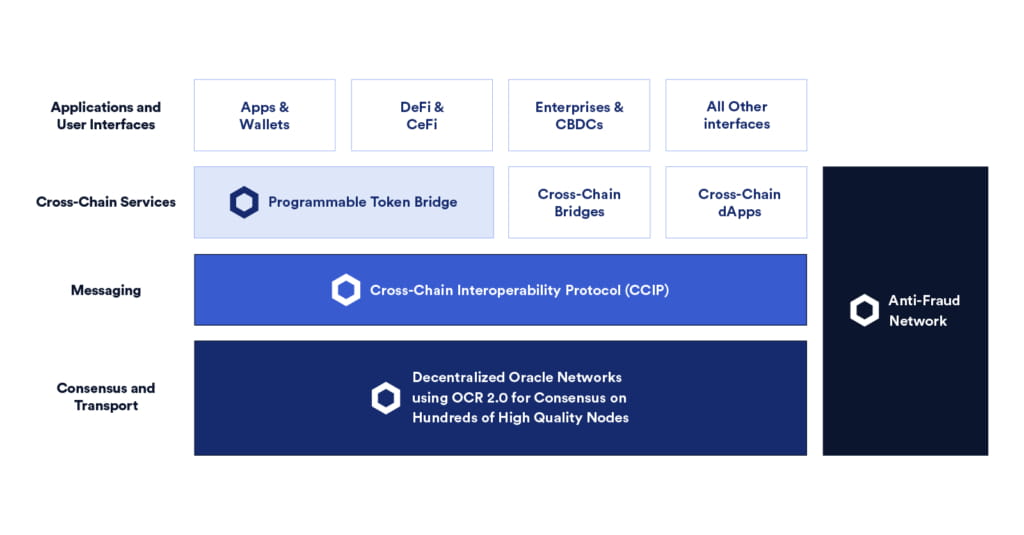
The structure of the cross-chain technology stack basically subverts the concept of the existing cross-chain bridge. Under this structure, developers are allowed to develop programmable token bridges. This is a new cross-chain solution based on CCIP: the token can be used in any area. Seamlessly and securely transfer between blockchains.
Users and smart contracts can not only send tokens, but also send commands to the token bridge and run custom logic that determines how to interact with other blockchains. Instead of knowing how to use other blockchains, users only need to send instructions to the token bridge describing how to interact with other blockchains. Token Bridge will automatically transfer tokens across chains and deploy them to smart contracts on the target blockchain in one atomic transaction. Therefore, users can stay on the original blockchain and enjoy the functions of other blockchain smart contract ecosystems at the same time.
This can be said to be a unified, open source bridging standard structure. In this cross-chain technology stack structure, Chainlink provides its advantages in security and functionality in the consensus layer and information layer. In the application layer, any Independent development teams can easily develop third-party bridge applications.
💡 “Cross-chain applications seamlessly access all blockchains”
In the future, you can store collateral in smart contracts on chain A while borrowing tokens on chain B, which has higher throughput.
In the future, you can farm and aggregate across multiple blockchain networks to optimize DeFi agricultural yields to provide the highest return on assets.
NFT, Metaverse... will also create infinite possibilities.
As the multi-chain structure of the blockchain world is gradually determined, cross-chain communication is like a communication bridge between several countries, and its security, versatility, and scalability will be crucial.
This should be what users are looking forward to, the true cross-chain era in the future. It will unlock more application scenarios for DeFi and even Web3.0.
(Some conceptual content comes from official white papers and other documents at this stage, and there may be lags as the protocol is updated)