

From a childhood in the slums on the east bank of Delhi’s Yamuna River to launching the $6 billion Polygon blockchain, Sandeep Nailwal tells an incredible rags-to-riches story.
Now happily living in the futuristic, air-conditioned cityscape of Dubai, he tells the magazine that he was born in 1987 in a farming village called Ramnagar in the foothills of the Himalayas, where there was no electricity.
His parents married as teenagers and packed up their bags to try their luck in Delhi when he was four. They ended up in the impoverished settlement on the east bank of the river, often referred to disparagingly as Jamnapal.
"Imagine the Bronx in New York," Nerwall said. "It's like a Class III area. Even now, when you go there, you still see a very ghetto place."

He remembers lots of cattle roaming the roads, as well as illegal guns, though he said knives were the weapon of choice. “When something needs to be done, the knife is the best tool,” he said of that attitude.
Nerwall did not go to school until he was five, in a country and period when many schools accepted children as young as two and a half, largely because his parents knew nothing about it.
“My father and mother were kind of illiterate; they didn’t even realize that the kid was supposed to be sent to school after three years or anything. So, someone from the little school in my area said, ‘Why aren’t your kids going to school?’ And I started going to school.”
Waving to a normal-sized room behind him in Dubai, he said the school was “almost the same size”, crammed with 20 kids.Home life was not much better.
"My father became an alcoholic and started gambling. So, he would make $80 to $90 a month, but usually a lot of times, he would lose all his money," Nailwal said. As a result, the family often fell behind on monthly school fees, "so they would make you stand outside, and it was basically a very traumatic experience as a kid."
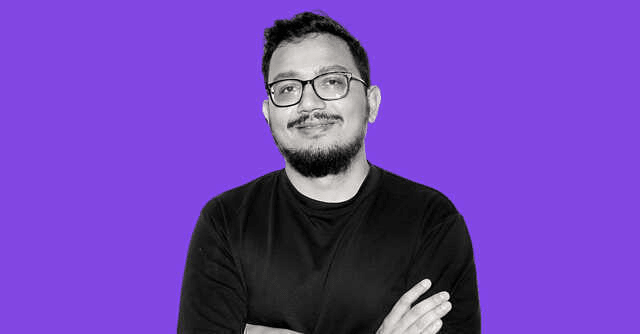
As he grew up, experiences like these helped Nerwall understand the kind of person he didn’t want to be and strengthened his resolve to succeed. Now the head of his household with a child named Adi, he says becoming a dad has made him reflect on how he wants to be better than his own dad. But the conversation took a surprising turn when Nerwall revealed that he was actually thrust into a fatherly caregiving role, taking care of his baby brother when he was ten years old.
"I would say my first son is my own brother in a way," he said, his voice growing emotional. "So, basically, when he was very young, he got into an accident around that time. So, I would say my childhood basically ended there because I had to take care of him."
Young Entrepreneurs
Nerwal started out in business as a teenager, selling pens from a friend’s shop at good prices while in school and tutoring other students. After graduation, he wanted to take the ultra-competitive engineering exams at the Indian Institutes of Technology (IITs), but couldn’t afford the extra tuition fees needed to gain an edge among “a million students vying for about 5,000 seats.”
He eventually got admission to Delhi’s Tier II MAIT College and took out a loan to pursue a degree in computer science and engineering.
Ambitious and perhaps a little overconfident, he sees two possible paths for his future, based on two famous role models: either join a corporation and strive to become a “global CEO” like PepsiCo’s Indra Nooyi, or start a revolutionary Internet business as Mark Zuckerberg did with Facebook.
“I was inspired by the Facebook hype in 2004, 2005,” he said, recalling the intense coverage of Zuckerberg in the Indian media at the time. “I said to myself — and this was very stupid at the time — like I want to build my own Facebook. That’s why I chose computer science.”
During his college degree, his talent for data analysis landed him a job doing voter analysis for the regional BJP (now India’s ruling party). After a brief stint working after college, he returned to pursue his MBA at the National Institute of Industrial Engineering Training (now the Indian Institute of Management), where he met his wife, Harshita Singh.
Even though Nailwal was highly regarded at Deloitte and Welspun Textiles, and quickly rose through the ranks to become head of e-commerce technology, he never stopped working on his projects. He would spend a full day at work and then go home to work on projects like a GPS-based system for optimizing freight vehicle deliveries or a B2B service platform for project management.
Nerwall said he felt he couldn’t start his own business full time because he felt cultural pressure and responsibility to move his family out of their one-bedroom rental home and into their own home. No one would offer a home loan to a 27-year-old with an unstable income from a fledgling business.
But Hashta said one day, "You'll never be happy this way," he recalled. "She said, 'I don't care about my own house; we can stay and rent. It's a big burden for me.'
In his last month at work, he borrowed $15,000 to be able to pay for a wedding one day, and then started working full-time on a B2B services marketplace, which he ran for a year until he realized it would never scale the way he wanted.
Bitcoin Revolution
Instead, he wanted to get into “deep tech,” first considering and then abandoning artificial intelligence because it was beyond his mathematical abilities. Bitcoin was beginning to receive some media attention at the time due to its upcoming halving in 2016.
Nailwal had heard of Bitcoin as early as 2013, but initially dismissed it as “some kind of Ponzi scheme.” After discovering that it had lasted a long time, he decided it was worth investigating further. Reading the “beautifully written” white paper, he realized:
Oh, this is important—this is the next revolution for humanity.”
After converting, he was eager to “get in on the action,” and over the next three months, he converted his $15,000 wedding loan into Bitcoin at $800 per coin. Looking back, he says this was an extremely risky move given his financial situation at the time.
"My level of FOMO, if I was a year late, it would be exactly the same. If I had $20,000, I would have done the same thing. Yeah, I would have lost all my money, and that would have been a really big problem for me."
But as a builder, he wanted blockchain to be more than just payments, which led him to Ethereum’s full programmability. “I felt like that was the thing, that’s what I wanted,” he said.
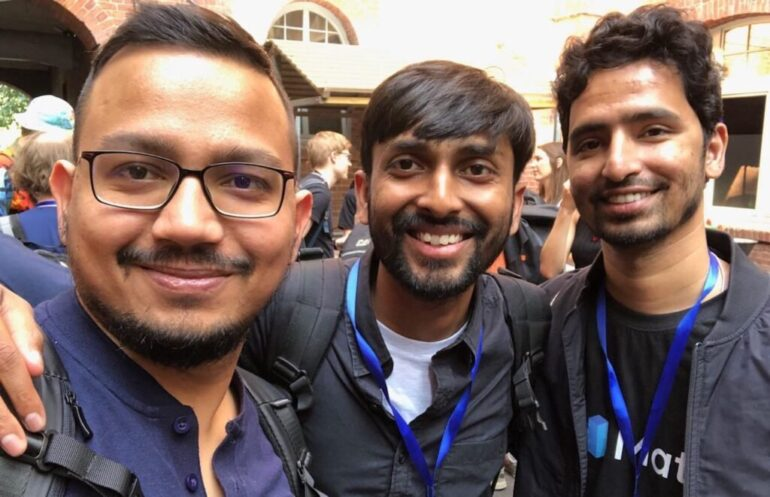
Nailwal dove into the space, founding a blockchain services startup called Scope Weaver in 2016 and making a name for himself as a moderator on a local Ethereum forum, where he met a “hardcore programmer” named Jaynti “JD” Kanan, who kept suggesting he use his $400,000 Bitcoin stash to invest in his startup idea.
Initially, Nailwal wasn’t keen, but then Ethereum began to struggle with its own popularity during the 2017 bull run, most notably when CryptoKitties transaction fees increased 600%, rendering the blockchain virtually unusable.
Kanan suggested they solve Ethereum’s scaling problem by developing the Layer 2 Plasma technology proposed by Vitalik Buterin and Joseph Poon in August of that year, which helps to move transactions to faster, less congested sidechains. Nailwal agreed and helped raise $30,000 in seed funding to develop a product, Anurag Arju joined as another co-founder, and Matic Network officially launched in early 2018. The project was launched under the smell of an oil rag. In total, Matic Network relied on $165,000 in funding to survive the first two years, he said.
Matic Network almost died
After watching numerous projects raise millions of dollars through Vaporware initial coin offerings, the team decided not to launch a token sale until they had a product.
They will deeply regret this decision. Straight into the great cryptocurrency market crash of early 2018, the ICO market was strong for a few months but petered out as the runway got shorter and shorter.
“We kind of overlooked the opportunity,” he said. “It was very, very painful afterwards.”
"We had this huge opportunity to raise $10 million. We walked away from it; we didn't do it. Now we don't have the money to build. I remember at one point I almost had to beg one of the other founders of a project in India to give us $50,000 so we could run for another three months."
Shortly before his wedding, Nerwall went to make a pitch to a Chinese fund that seemed keen to invest $500,000 in the troubled project. He recalled that two days before his wedding, his house was filled with guests and he was happy that everything would be fine.

“Everyone was happy, and I was happy that we now had $500,000 [for Matic Network], and all of a sudden, Bitcoin went from $6,000 to $3,000. The fund then simply said, ‘No, we’re not investing now because we were going to invest 100 BTC; now it’s worth half, so we’re not investing.’”
To make matters worse, the project’s treasury is still in Bitcoin, which has also halved in value.
“That was a very painful experience for me because I shouldn’t have speculated with that money, which was the company’s treasury,” he said, meaning he should have cashed it out or converted it into stablecoins.
"So, I was really mad at myself, and then it just went away. At that point, we [Matic] were about seven, eight, 10 people. They were [at] my wedding, too, and we were enjoying it, but deep down, I knew 'Shit, we might not have this group for the next two or three months.'

Binance is actually very hardworking
The opportunity to conduct an initial exchange offering on Binance Launchpad arose in late 2018 and early 2019. While the CFTC dismissed Binance as a bunch of cowboys who would accept any old bus pass as a “know your customer” verification, Nailwal said the exchange’s due diligence may have been too diligent.
“No one believed that an Indian co-founder could possibly create a deal. Two or three projects had turned out to be scams, and everyone was very wary,” he said. Matic ultimately went through eight months of evaluation before it was approved to raise $5.6 million from a $300 lot to the winner of the vote.
“At the time, $5 million was a very good number,” Nailwal said.
“If Binance said, ‘You can raise $1.5 million or $1 million,’ we would have even accepted it because we were fighting for survival. But once we were listed on Binance, things got much better.”
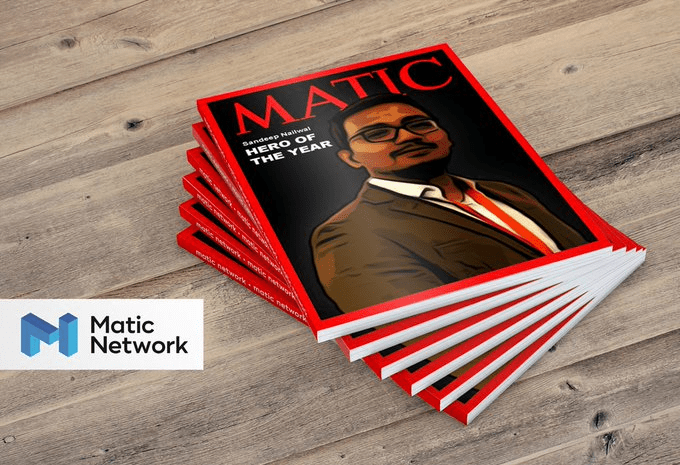
This was a turning point for Matic, which survived the 2020 pandemic market crash and grew from less than 1,000 daily users at the end of that year to 550,000 users in October 2021, surpassing Ethereum. It also reversed Ethereum's transaction volume that year. The company changed its name to Polygon, and its market capitalization soared from $87 million at the beginning of 2021 to nearly $19 billion by the end of the year.
Nailwal is now one of the wealthiest and most successful people in the cryptocurrency industry. But he is far from satisfied.
“Being in the top 10, top 15 projects didn’t give me the satisfaction. I knew in my heart that I wanted Polygon to have the same impact as Ethereum and Bitcoin.”
Stay tuned for part two, which tells the story of how Polygon became one of the key players in the space and Nailwal’s plans to make it a top-three project.