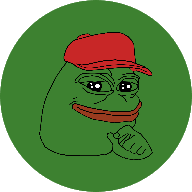
 Pepe the Frog is a fictional character originating from online comics, initially a purely entertaining image, but has stirred waves in American politics multiple times, becoming a highly controversial political symbol. Especially during recent U.S. elections, Pepe has frequently appeared in various political propaganda, online debates, and social media, reflecting the public opinion manipulation and cultural struggles of different political forces.
The origin and politicization process of Pepe
Pepe first appeared in Matt Furie's 2005 comic (Boys Club) as a laid-back, carefree cartoon character. However, as its memes and images spread on the internet, Pepe gradually evolved into a 'subcultural' symbol, widely used for self-deprecation and humor in memes and social media. In the 2010s, Pepe became rapidly popular on the internet due to its diverse expressions and cute appearance, becoming a widely popular meme character on social platforms.
However, starting in 2015, Pepe's image was gradually adopted by some far-right groups and became associated with American politics. In the 2016 U.S. election, Pepe became the unofficial mascot of Trump supporters and was used to symbolize dissatisfaction with traditional political elites. Under the usage by far-right groups, Pepe's image gradually took on political connotations, and it was even once regarded as a 'hate symbol' by the Anti-Defamation League (ADL). Although Matt Furie himself has repeatedly expressed opposition to the misuse of Pepe by extreme groups, its image has been widely disseminated in the political realm.
Pepe and the 'internet celebrity effect' during election cycles
During the 2020 and 2024 U.S. elections, Pepe's image re-emerged, but this time its usage became more diversified. Different political camps began to use Pepe to convey their respective positions, no longer limited to specific extreme groups. Pepe was widely used in political satire, humorous videos, and social media 'meme battles', influencing voter emotions in its unique way.
Pepe's 'internet celebrity effect' is reflected in the following points during the dissemination of the U.S. elections:
1. Low-threshold communication tool: Pepe memes are easy to understand and have no obvious language and cultural barriers, making them suitable for rapid dissemination on various social platforms. This low-threshold communication tool gives Pepe tremendous influence.
2. Emotion-driven communication model: Pepe is often used to express emotional content, such as disappointment, anger, sarcasm, etc., which can directly influence the emotional reactions of the audience. During election cycles, emotional information tends to have greater communicative power, making Pepe's memes an effective tool for spreading electoral emotions.
3. Self-deconstructing political expression: The meme-ification of Pepe makes serious political topics easier to dissolve and deconstruct, allowing voters to participate in discussions in a relaxed manner when faced with complex political issues, while also contributing to the emergence of new internet subcultures.
The political symbolic meaning of Pepe
Pepe's leapfrog evolution is not just a transformation of a frog image, but also reflects the trends of information dissemination and political symbolization in the internet age. The politicization of Pepe makes it an 'open symbol' that different groups can interpret and use according to their own positions and emotions. For young voters, Pepe has become a way to express distrust in traditional politics and self-expression, while for extreme political groups, Pepe has turned into a tool for propaganda and inciting emotions.
At the same time, the widespread dissemination and reconstruction process of Pepe also highlights the cultural struggles and ideological divisions in American politics. It indicates that symbols and memes can quickly transform into effective mobilization tools in the contemporary political environment, transcending geography and class, and becoming an important part of public opinion.
The process of Pepe transforming from a comic character to a political symbol reveals the evolutionary path of internet culture in the political context. During the U.S. election, Pepe became a 'shared language' between candidates, supporters, and opponents, reflecting the profound impact of social media on political communication. The image of this frog, through continuous dissemination and reconstruction, showcases the challenges and redefinitions of traditional politics posed by internet culture.