
On October 26, Arbitrum’s official Twitter account announced that something big would happen the next day.

On October 27, Arbitrum’s official Twitter account announced: Arbitrum Orbit is ready for the mainnet!
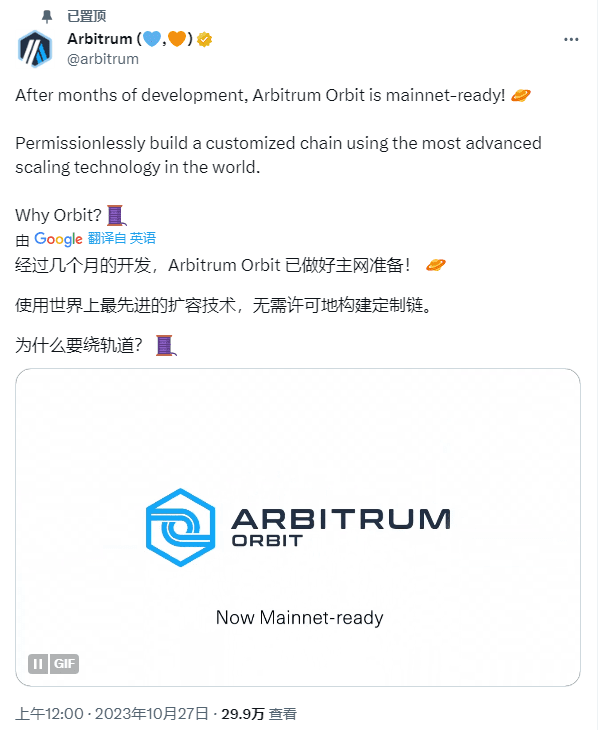
So what is this so-called big event Arbitrum Orbit? Let’s follow the club’s footsteps and take a look!
Orbit's decision
Introduction:
Arbitrum Orbit is a development framework designed specifically for Layer 3 (L3), allowing developers to easily create dedicated chains and customize their own network rules such as privacy, permissions, gas fees, native tokens, governance, etc., while enjoying the network security of Ethereum.
It is a product developed by Offchain Labs, the core team of Arbitrum.
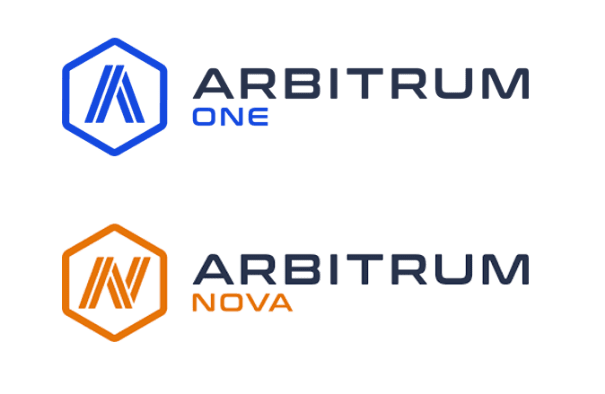
Prior to this, Arbrtium had two main products, namely:
● Arbitrum One (Nirto): Implements Rollup, with security provided by Ethereum.
● Arbitrum Nova: Implementation of AnyTrust, similar to Arbitrum One, but data availability is stored off-chain. The protocol uses a data availability committee (DAC) to store transaction data to reduce transaction costs, making it more suitable for scenarios with frequent transactions, such as games.
Arbitrum Orbit can be applied to existing networks in the ecosystem, such as Arbitrum One, Arbitrum Nova, and Arbitrum Testnet. Developers can freely choose the network that suits their purpose. They can benefit from the network's original security and infrastructure such as Stylus SDK, while allowing developers to set their own network rules (such as data storage methods, governance rules, etc.).
Timeline:
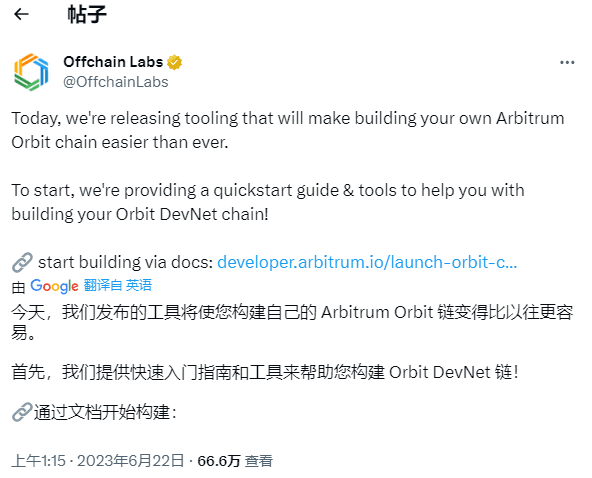
On June 22, Offchain Labs released the Arbitrum Orbit development tool, which aims to help developers develop more easily on the L3 blockchain Arbitrum Orbit and manage their own Arbitrum Rollup and AnyTrust chain. In addition, Offchain Labs also provides a quick start guide and Orbit DevNet on-chain tools.
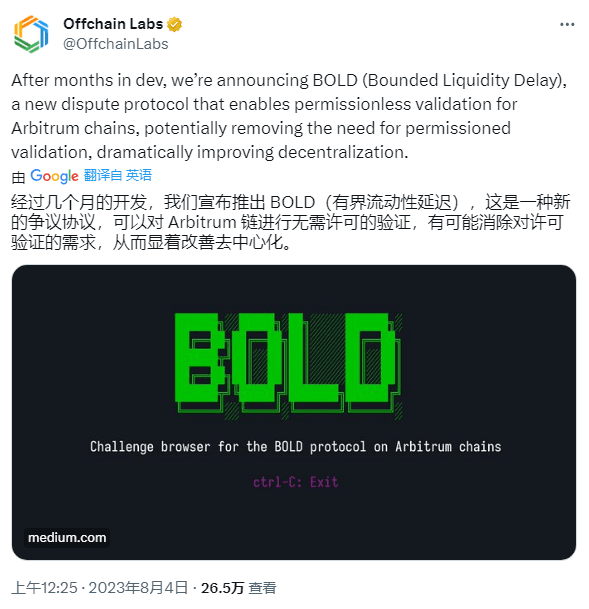
In August, Offchain Labs made intensive updates and released a new verification protocol, Bounded Liquidity Delay (BoLD), at the beginning of the month. BoLD can implement permissionless verification on Arbitrum, aiming to minimize delays in settlement status.
On August 31, Offchain Labs launched the Arbitrum Stylus code and public testnet, allowing developers to build applications on the Arbitrum Nitro chain using traditional EVM tools and WASM-compatible languages such as Rust, C, and C++.
Orbit Chain Ecosystem:
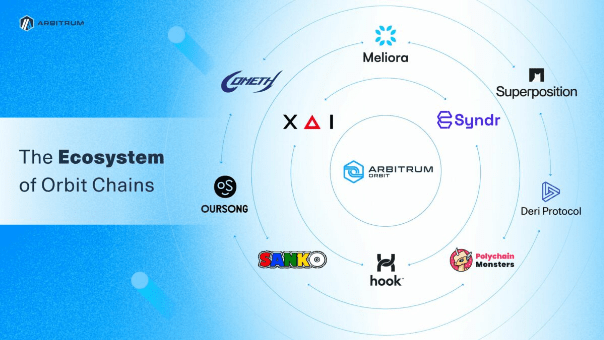
Since the launch of Arbitrum Orbit, multiple projects have joined the Orbit Chain ecosystem.
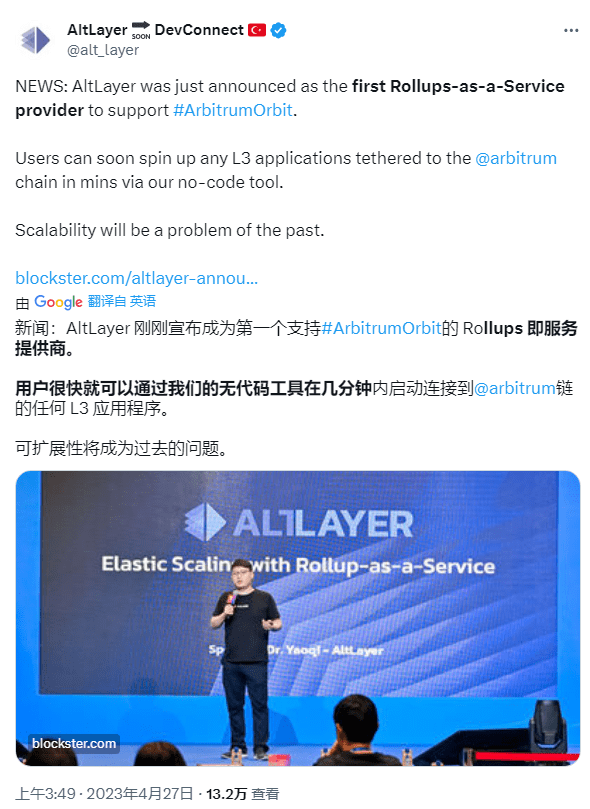
On April 27, Ethereum scaling solution AltLayer's RaaS solution (Rollups-as-a-Service) has supported L3 blockchain Arbitrum Orbit. Users can launch any L3 application bound to Arbitrum in minutes through code-free tools.
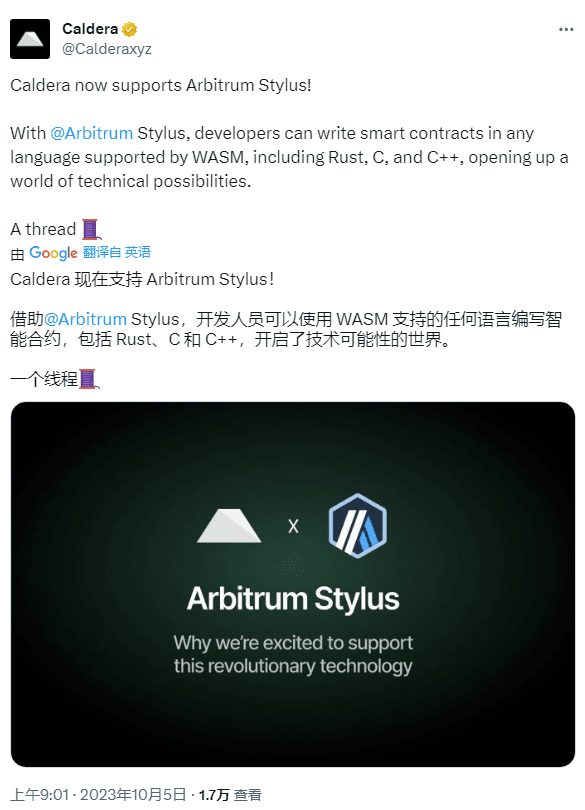
On September 5, Rollup as a Service (RaaS) company Caldera announced the launch of its first batch of Arbitrum Orbit chains. A total of three partners plan to launch production-grade mainnet Orbit chains through Caldera in the coming weeks: Syndr, Sanko GameCorp and Volatilis Technology.
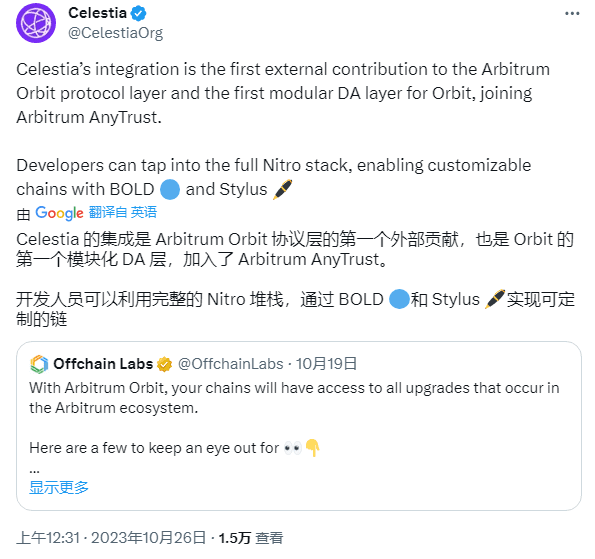
On October 26, Celestia became the first modular Data Availability (DA) network integrated into Arbitrum Orbit and the entire Nitro stack.
Impact on ARB Tokens:
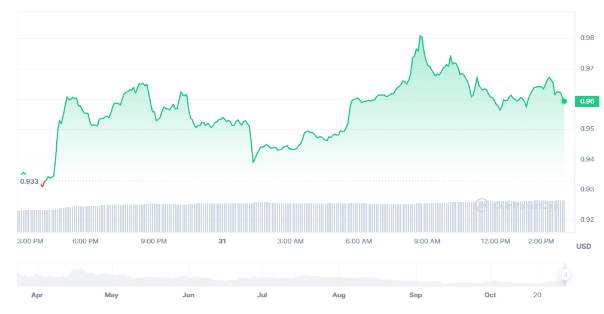
However, despite the positive impact of the launch of Arbitrum Orbit on the development of the Arbitrum ecosystem, the price of the ARB token has not recovered to its previous level. According to data, the ARB token has fallen by 2% in the past 24 hours. Despite the improvement of Arbitrum's ecosystem, the token price has failed to recover.
On the other hand, the ARB platform’s on-chain metrics show signs of increased activity, according to data provided by Santiment. In the month of October, ARB saw significant growth in daily active addresses and transaction volume. This indicates increased activity at ARB and market participants are positive about the asset’s future prospects.
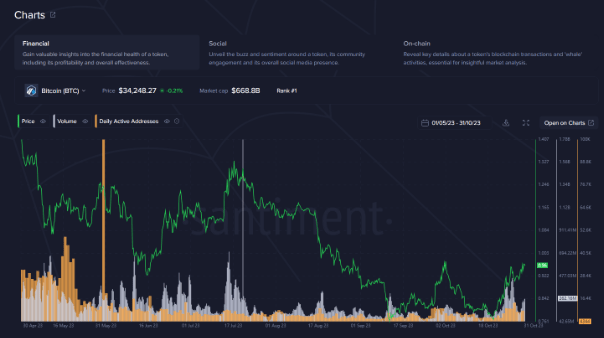
Overall, the impact of Arbitrum Orbit on the ARB token is mixed. Although the launch of Arbitrum Orbit provides opportunities for the development of the Arbitrum ecosystem, the token price has not performed well. However, on-chain indicators show increased activity on the ARB platform, which may provide some support for the recovery of the token price. Further development of the Arbitrum ecosystem and changes in market conditions need to be closely monitored.
Summarize:
Before Arbitrum announced Orbit, its ecosystem was mainly focused on Arbitrum One and Arbitrum Nova, unlike other L2 technologies, such as Optimism and zkSync, which are building a broader L3 ecosystem. However, the launch of Orbit changed this situation, transforming Arbitrum One into a settlement layer similar to Ethereum. This means that the Arbitrum ecosystem will be able to expand in the long term, and Orbit will also build a custom L2 layer within the ecosystem, providing higher throughput and secure bridging. Although the development trend of the specific L2 technology stack still needs to be observed, Arbitrum has begun to make an impact in the market and the broader L2 landscape through the launch of ARB tokens and Orbit, allowing it to regain its competitive advantage.