

Investing, by nature, involves risk, and a major challenge for investors is finding ways to evaluate how well an investment compensates for the risk it carries. One of the most widely used metrics to assess this balance between risk and return is the Sharpe Ratio. This indicator, created by Nobel laureate William F. Sharpe, is a standard tool for measuring the risk-adjusted performance of an investment. In this article, we’ll break down what the Sharpe Ratio is, how it’s calculated, and why it’s essential for anyone looking to make informed investment decisions.
What Is the Sharpe Ratio?
The Sharpe Ratio is a measure that evaluates how much return an investment generates relative to the level of risk it carries. It calculates the excess return per unit of risk and helps investors understand whether a high return is due to wise investing or simply taking on high levels of risk. In other words, it helps separate reward from risk.
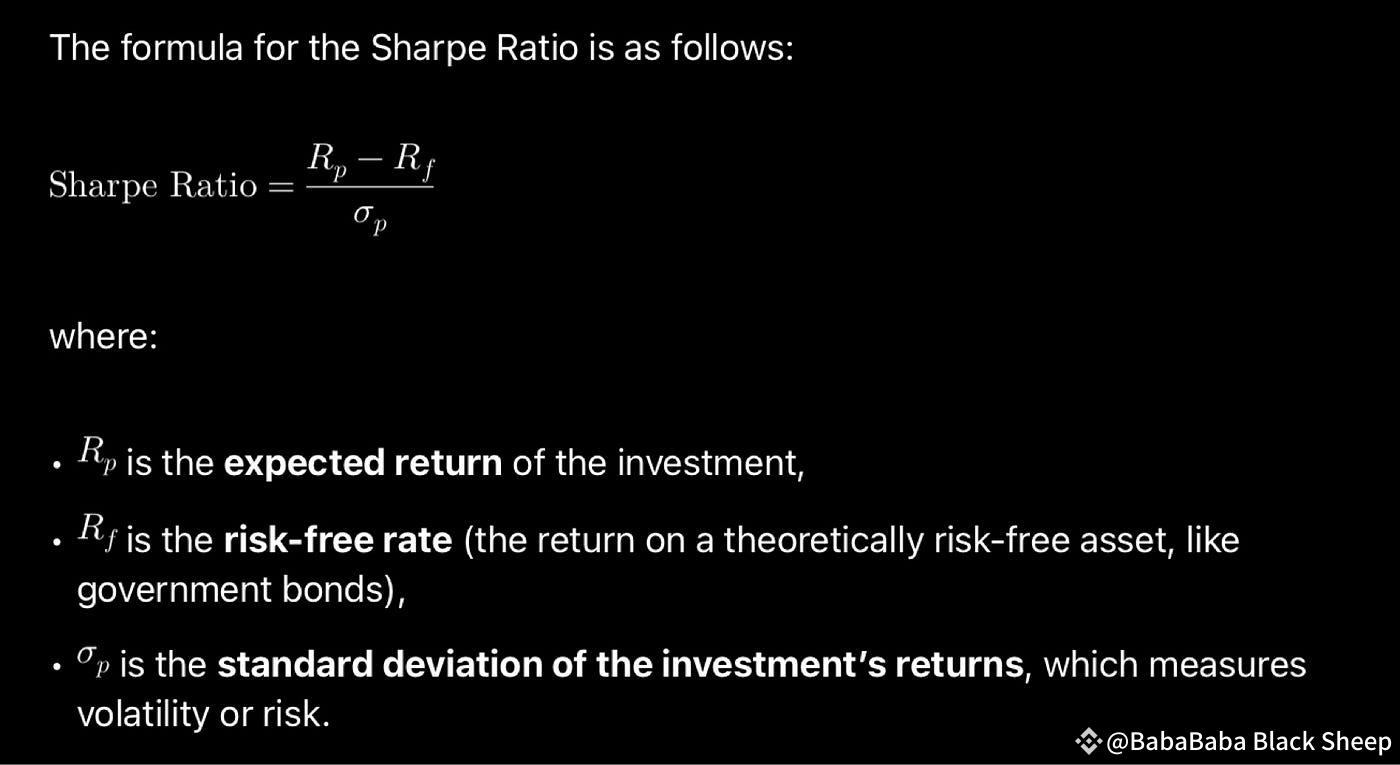
Interpreting the Sharpe Ratio
A higher Sharpe Ratio indicates a better risk-adjusted return, meaning the investment yields a higher return for each unit of risk taken. Here’s how different ranges of the Sharpe Ratio are generally interpreted:
• Above 1: Generally considered good. Indicates the investment offers decent returns for the level of risk.
• Above 2: Very good. Indicates strong risk-adjusted returns and is typically an attractive investment.
• Above 3: Excellent. Indicates exceptional returns for the level of risk and is often very desirable.
• Below 1: Generally considered subpar. Indicates that the risk may outweigh the returns, suggesting it may not be an efficient investment.
Practical Example of the Sharpe Ratio
Imagine two investments, Investment A and Investment B, with the following characteristics:
• Investment A has an expected return of 10% and a standard deviation (risk) of 5%.
• Investment B has an expected return of 15% but a standard deviation of 10%.
• The risk-free rate is 3%.
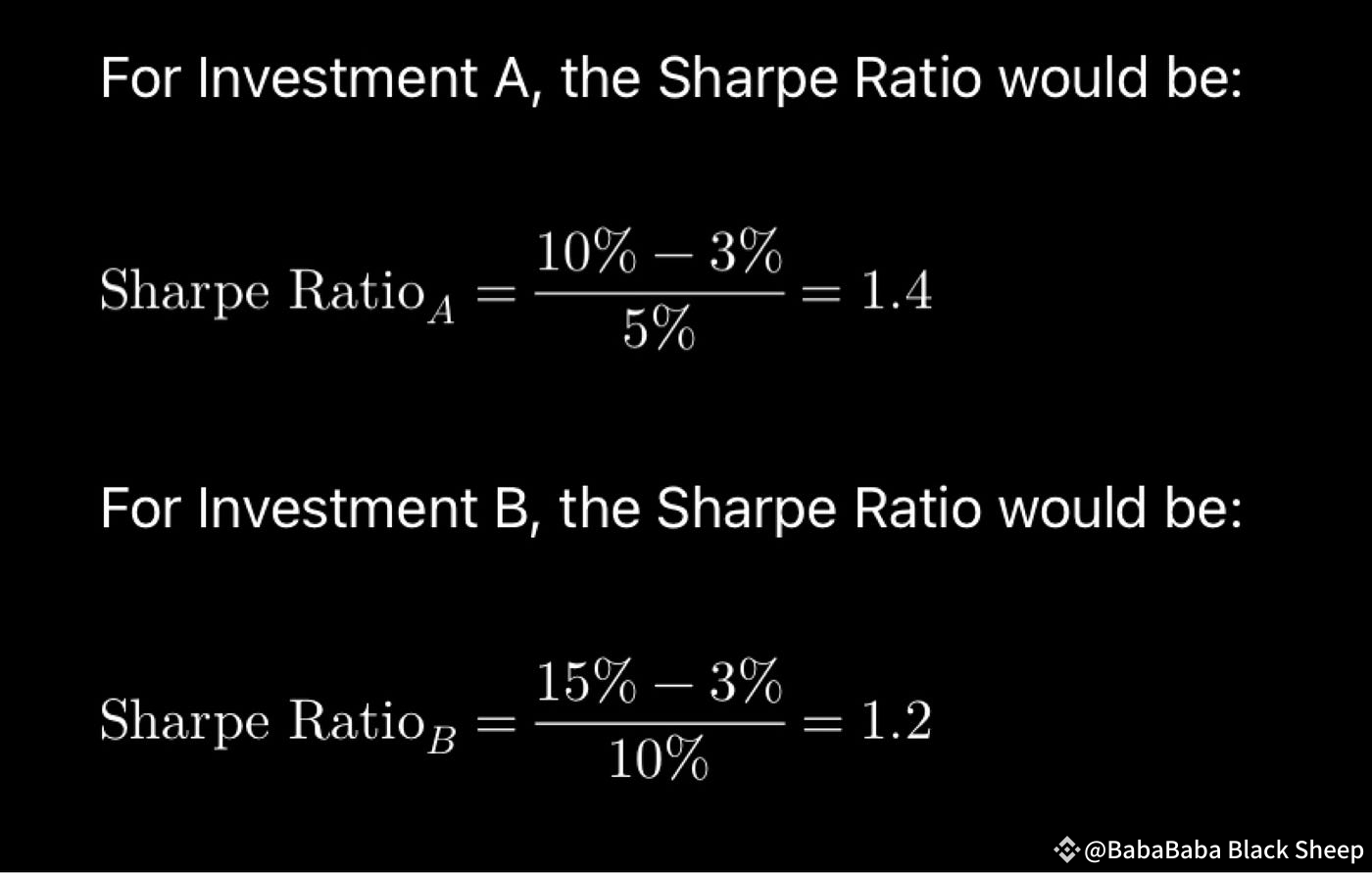
Although Investment B has a higher return, its Sharpe Ratio is lower than Investment A’s. This means Investment A is delivering a better risk-adjusted return, providing more reward per unit of risk taken.
Importance of the Sharpe Ratio
The Sharpe Ratio offers several advantages that make it valuable for investors:
1. Helps in Portfolio Comparison: By assessing risk-adjusted returns, investors can use the Sharpe Ratio to compare various assets and portfolios. Even if two portfolios have the same returns, the one with a higher Sharpe Ratio is preferable as it delivers those returns with less risk.
2. Assists in Risk Management: Investors aiming to maximize returns without exposing themselves to unnecessary risk can use the Sharpe Ratio to identify efficient portfolios that provide favorable risk-return balances.
3. Useful in Market Volatility: In a volatile market, the Sharpe Ratio helps determine if high returns are due to prudent management or excessive risk, making it a critical tool for managing investments during uncertain times.
While the Sharpe Ratio is highly useful, it’s not without limitations:
• Doesn’t Distinguish Between Upside and Downside Volatility: The Sharpe Ratio treats all volatility as risk, even when it results from price increases. Investors sometimes prefer metrics like the Sortino Ratio, which only considers downside risk.
• Relies on Historical Data: The Sharpe Ratio is backward-looking, meaning it depends on past data to measure risk. As market conditions and returns change, the Sharpe Ratio may not always provide an accurate forecast for future risk and returns.
• Assumes Returns Are Normally Distributed: The Sharpe Ratio assumes returns are symmetrically distributed around the mean. In reality, investments like stocks and commodities often have skewed distributions, which can affect the Sharpe Ratio’s accuracy.
Real-World Applications of the Sharpe Ratio
1. Mutual Funds and ETFs: Fund managers often use the Sharpe Ratio to advertise the performance of their funds. Investors can compare funds with similar objectives but differing risk levels to find the most efficient option.
2. Hedge Funds and Alternative Investments: Many high-risk funds use the Sharpe Ratio to balance high returns with high risk. Funds with consistently high Sharpe Ratios are often considered well-managed and less exposed to market volatility.
3. Cryptocurrency: As a highly volatile asset class, cryptocurrencies often exhibit extreme fluctuations in risk and return. A cryptocurrency with a high Sharpe Ratio may indicate that, relative to its risk, it offers more favorable returns than others with similar volatility.
Example of the Sharpe Ratio in Cryptocurrency
Let’s say we’re comparing two cryptocurrencies: Bitcoin and Ethereum. Both have shown substantial returns, but Ethereum has higher volatility.
• Bitcoin: Expected return of 20%, standard deviation of 30%.
• Ethereum: Expected return of 30%, standard deviation of 50%.
• Risk-free rate: 2%.
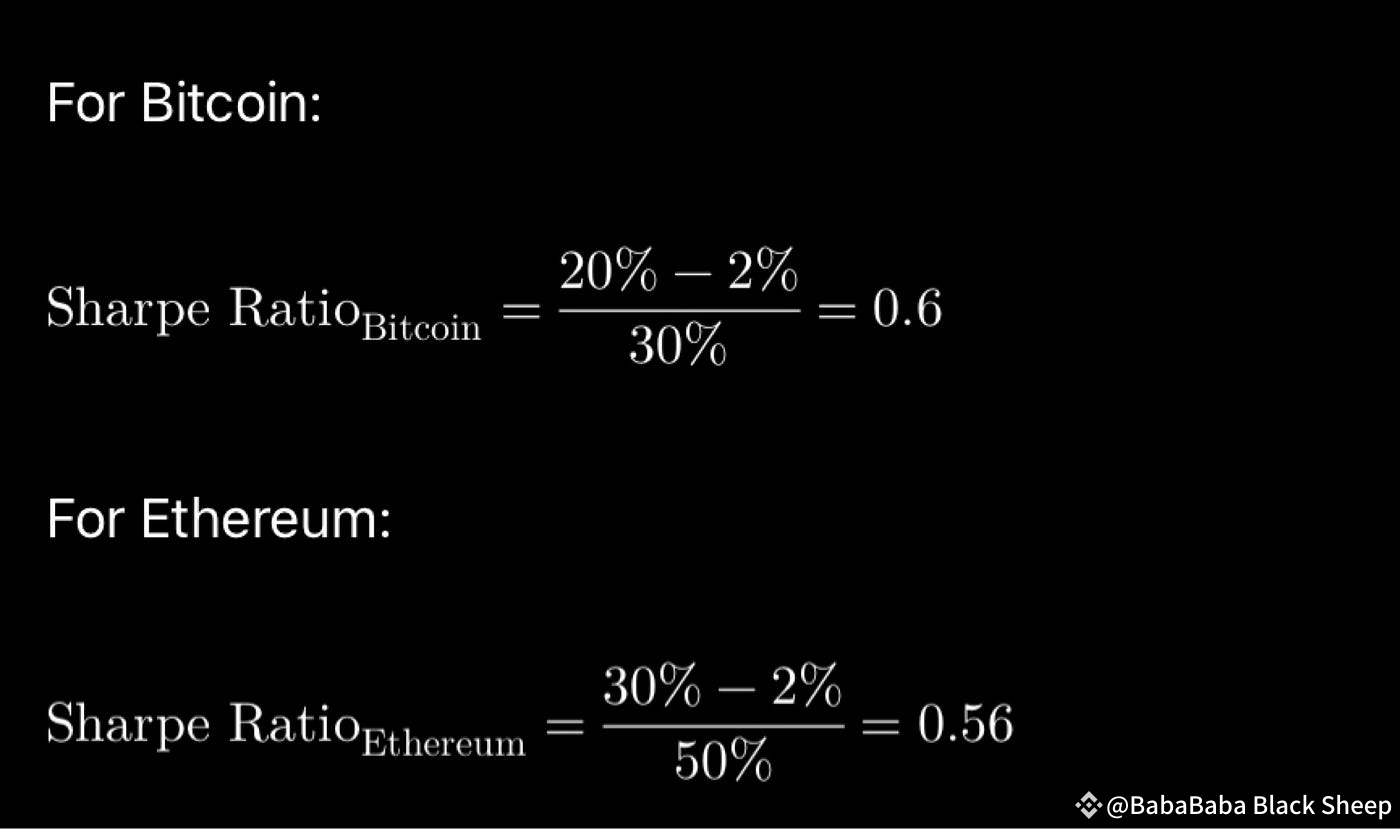
Although Ethereum has a higher return, its Sharpe Ratio is slightly lower, indicating that Bitcoin has a marginally better risk-adjusted return. Investors might prefer Bitcoin if they’re looking for a more stable, risk-efficient investment, while those willing to accept higher risk for potentially higher returns may lean toward Ethereum.
Conclusion
The Sharpe Ratio is an essential metric for assessing the risk-adjusted returns of an investment. It empowers investors to make informed decisions by evaluating whether returns are justified by the level of risk. However, as with any financial metric, it’s crucial to use the Sharpe Ratio in combination with other factors and understand its limitations. Whether used to evaluate stocks, bonds, mutual funds, or even cryptocurrencies, the Sharpe Ratio remains a vital tool for achieving a balanced and effective investment strategy.