
What is zkSync
zksync is an open scaling solution, a trustless protocol for scalable, low-cost payments on Ethereum, powered by zkRollup technology. zkSync is an Ethereum Layer 2 scaling solution launched by Matter Labs in 2019. Matter Labs founder Alex Gluchowski was a Plasma researcher at the Ethereum Foundation in the early days (Plasma is a relatively rudimentary scaling solution). In 2018, he founded zkSync Matter Labs. zkSync received investment from many well-known VCs such as a16z and Dragonfly.
它使用零知识证明和链上数据可用性来保证用户的资金安全,就好像他们从未离开过主网一样。旨在提供高吞吐量和低成本的链上资产转移和交易体验。作为一种Layer 2解决方案,它采用零知识证明技术,允许用户在链下完成交易并将结果提交到以太坊主网。这种方法既能确保交易的安全性,又能极大地提高交易的效率。
The core concept of zksync token is zkRollup - a blockchain-based secondary solution. By packaging a large number of transactions into a single transaction, zkRollup can greatly reduce the on-chain cost of each transaction. In addition, since all calculations are performed off-chain, the entire process will not burden the Ethereum main network and avoid network congestion problems.
Asset transfer using zksync tokens is very easy. Users only need to deposit assets into the zkSync contract and perform transactions or transfer operations through zkSync's API. Due to zkSync's high performance and low cost, users can manage their digital assets more flexibly, whether making large-scale transactions or small payments.
Additionally, zksync tokens provide some other useful features. For example, users can trade on decentralized exchanges through the zkSync contract and exchange tokens directly with other users. At the same time, zkSync also supports the deployment and execution of smart contracts on the chain, providing developers with a platform to build decentralized applications.
ZkSync background and development
As we all know, Ethereum is one of the most popular smart contract platforms currently, but due to limitations of its underlying design, it can only handle 15 to 20 transactions per second. This means that when transaction volume surges, the Ethereum network becomes congested and transaction fees spike. In order to solve this problem, many developers and teams began to explore two-tier expansion solutions.
One of them is ZkSync, which utilizes zero-knowledge proof technology to achieve efficient transaction verification and privacy protection. By packaging large numbers of transactions into a batch and using zero-knowledge proofs to prove the validity of those transactions, ZkSync can increase transaction processing capabilities to 2,000 to 3,000 transactions per second, or even higher. And, because ZkSync is designed to be extremely flexible, it can easily adapt to different application scenarios and needs.
The development of ZkSync dates back to 2019, when it was an experimental project developed by the Matter Labs team. After more than a year of research and development, they finally launched the first version in early 2020 and tested it on the Ethereum mainnet. Although this version still has some problems, it has proven the feasibility and potential of ZkSync.
On this basis, the Matter Labs team continues to improve and optimize ZkSync, introducing more functions and features, such as support for ERC-20 tokens, batch transfers, atomic swaps, etc. They are also working with other teams to integrate ZkSync into various applications and ecosystems, including wallets, exchanges, DeFi platforms, and more. These efforts have been widely recognized and supported, and ZkSync has become one of the leaders in Ethereum layer 2 scaling.
zkSync on-chain data
TVL: $58.33 million. Among them, ETH and stablecoins are the main contributors to locked positions. The total locked-up value of the zkSync ecosystem is at a medium to low level among mainstream Layer 2.
Number of independent addresses: more than 330,000. The number of zkSync independent addresses ranks second in Layer 2, second only to Optimism, but the daily active ratio of addresses is very low, currently only about 0.04%.
This shows that users are optimistic about the overall development of zkSync and have deployed zkSync addresses in advance, but the ecosystem has not yet developed to a stage where it continues to prosper and users trade every day.
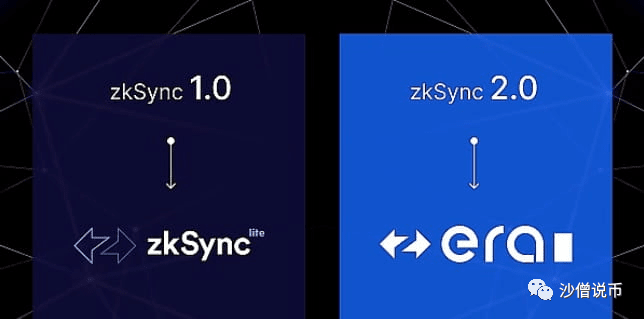
The main differences between zksync 1.0 and zksync 2.0:
Smart contract support: zkSync 1.0 mainly focuses on simplifying payment and asset transfer scenarios and does not support Ethereum Virtual Machine (EVM) compatible smart contracts. In contrast, zkSync 2.0 provides full support for EVM-compatible smart contracts, which means developers can easily deploy existing Ethereum smart contracts to zkSync 2.0.
Composability: While zkSync 1.0 only supports limited cross-contract interactions, zkSync 2.0 improves inter-protocol interoperability by retaining key EVM features such as smart contract composability. This makes zkSync 2.0 more suitable for building complex decentralized finance (DeFi) applications.
Account abstraction: zkSync 2.0 introduces new features of account abstraction, simplifying the interaction between users and smart contracts. Account abstraction improves user experience by allowing users to interact with smart contracts using any signature scheme.
More powerful development tools: zkSync 2.0 comes with a complete set of development tools, including CLI (Command Line Interface) and SDK (Software Development Kit), making it easier for developers to build and deploy zkSync-based applications.
More than 200 projects, including Chainlink, SushiSwap, Uniswap, Aave, Argent, 1inch, Gnosis, and Curve, have expressed interest in deploying on the zkSync Era.
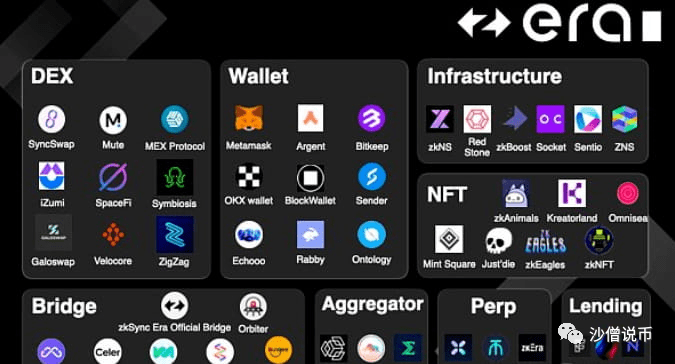
Cross-chain bridge
According to the officially disclosed zkSync ecological map, it is expected that there are 24 cross-chain bridges that support zkSync Era, of which 7 are fully supported and online, namely the official website cross-chain bridge zkSync Era Bridge, Orbiter, Multichain, and Celer Network , Meson, Creco and Bungee.

开发团队
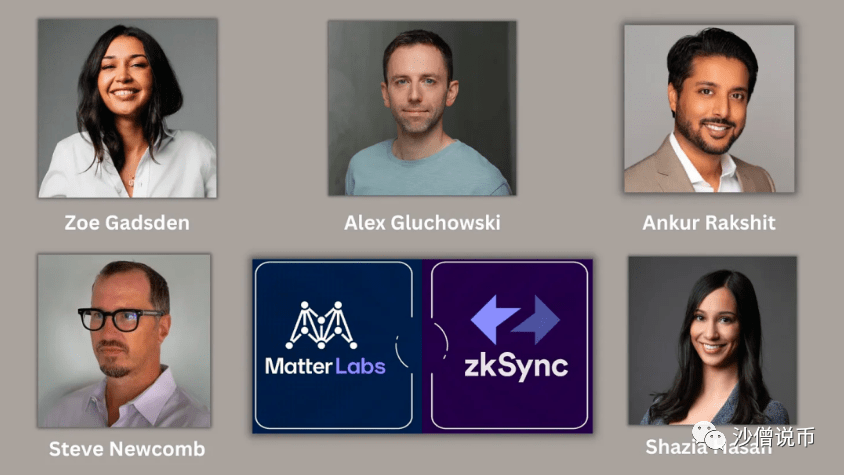
The development team of Zksync comes from Matter labs, a German company, which was founded by CEO Alex G. in 2018 and has grown to more than 50 employees. The team consists of experienced developers, researchers and entrepreneurs as well as core members in communications such as Zoe Gadsden (COO), Ankur Rakshit (CFO), Steve Newcomb (CPO) and Shazia Hasan. The team is working together to create a more efficient, cost-effective, and secure way to transact on Ethereum.
CEO: Alex Gluchowski---He has over 15 years of development experience and continues to evolve as a CTO and entrepreneur. He has a background in cryptography and computer science and has extensive experience working on Ethereum’s scalability issues. He is passionate about personal freedom, self-ownership and decentralization.
COO: Zoe Gadsden---Zoe is a former Google employee with over 10 years of growth and product leadership experience.
CFO: Ankur Rakshit --- has 15 years of experience in the financial field and served as Kraken's head of financial planning and analysis.
CPO: Steve Newcomb --- a successful entrepreneur and product manager with over 15 years of experience in the industry and accelerator programs.
Head of Marketing and Communications: Shazia Hasan --- has various experience in finance and communications.
Thanks to the diverse backgrounds of the team, Zksync’s team is able to handle many key aspects of building a blockchain and operating a company with ease.
Financing situation
zkSync financing:
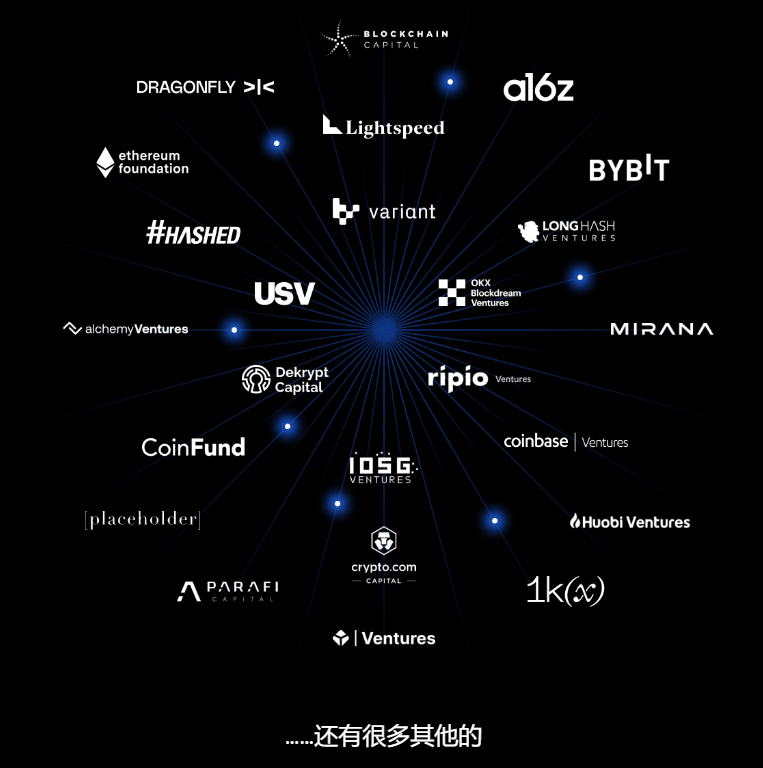
Matter Labs has raised $258 million across five rounds of funding since 2018, with BitDAO committing an additional $200 million in five tranches for a total of $40 million to bootstrap the zkSync ecosystem.
$200 million Series C in November 2022 led by Dragonfly and Blockchain Capital
BitDAO committed $200 million in January 2022
November 2021, $50 million Series B funding round led by a16z
February 2021 $6 million Series A funding round led by Union Square Ventures
$2 million seed round led by Placeholder in September 2019
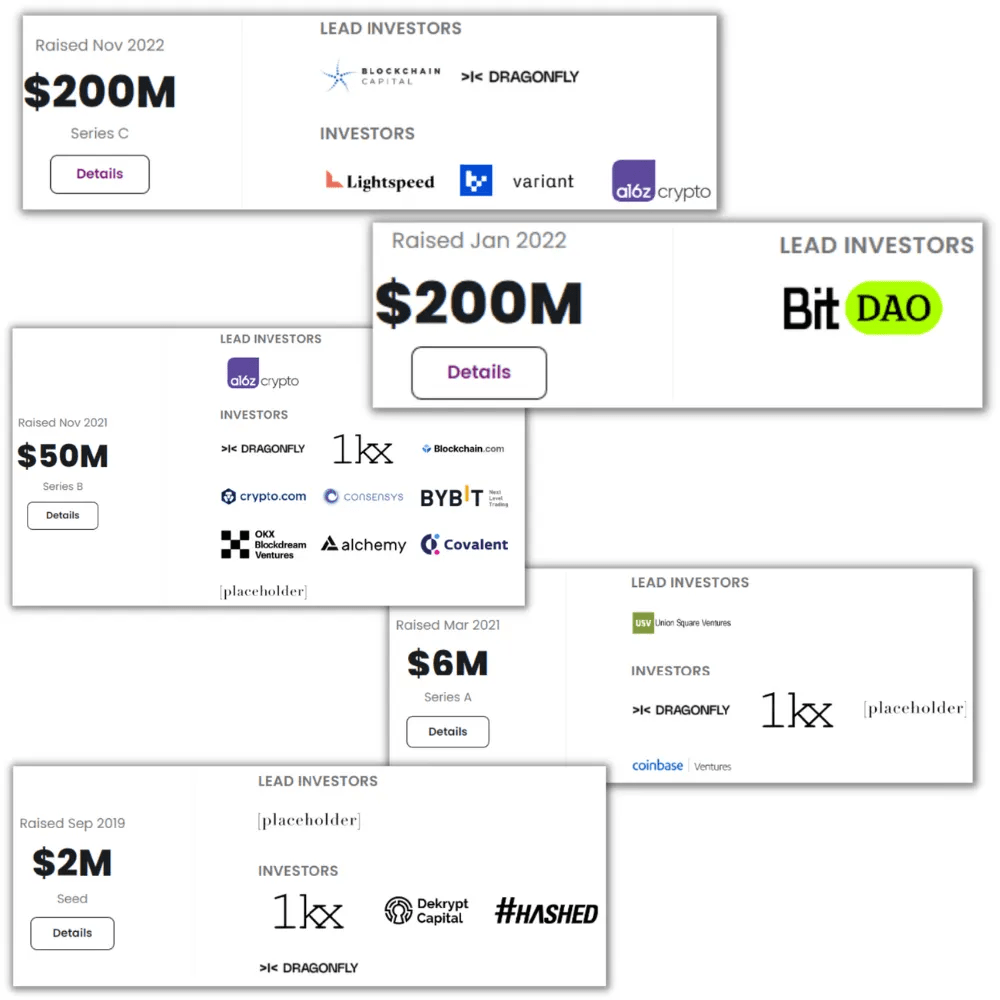
The funding raised by zkSync from top global investors furthers Zksync’s mission to expand the security and value of Ethereum.
route map
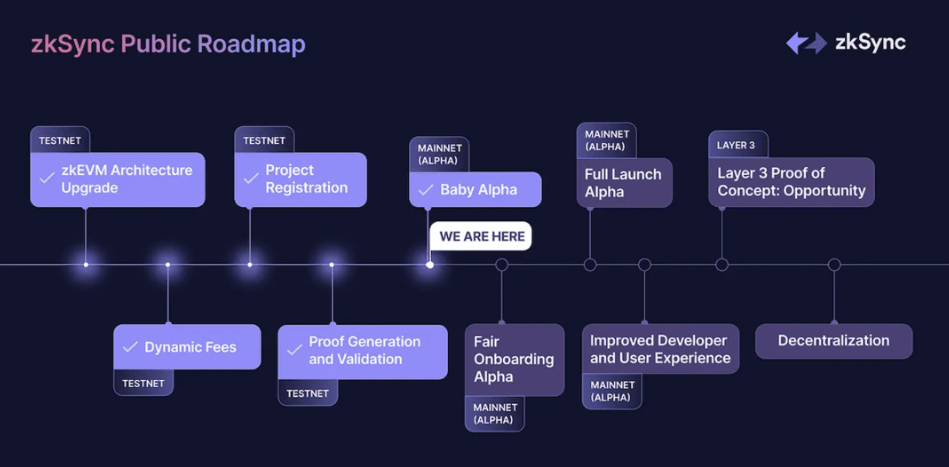
Combined with the public roadmap released by Zksync, the project has now progressed to the Fair Onboarding Alpha stage, which is the Zksync 2.0 mainnet online stage.
The Fair Onboarding Alpha mainnet will be launched on February 16, 2023. At this stage, only registered projects are allowed to be tested and are not open to end users. On March 24, 2023, the zkSync Era mainnet was opened to everyone. At the same time, zkSync2.0 was renamed zkSync Era, and zkSync1.0 was renamed zkSync Lite.
The current Layer 2 is the first step to achieve scalability, developer experience and user experience, and the next step is Layer 3. zkSync's EVM-compatible Layer 3 proof-of-concept "Opportunity" was originally scheduled to be unveiled in the first quarter of this year, but there is currently no further information and is expected to be postponed to next year.
Layer 3 of zkSync will provide:
Layer 3 HyperChain prototype built on top of Layer 2, enabling the ecosystem to conduct research and experimentation. Develop developer tools, including CLI and SDK for creating and interacting with Layer 3.
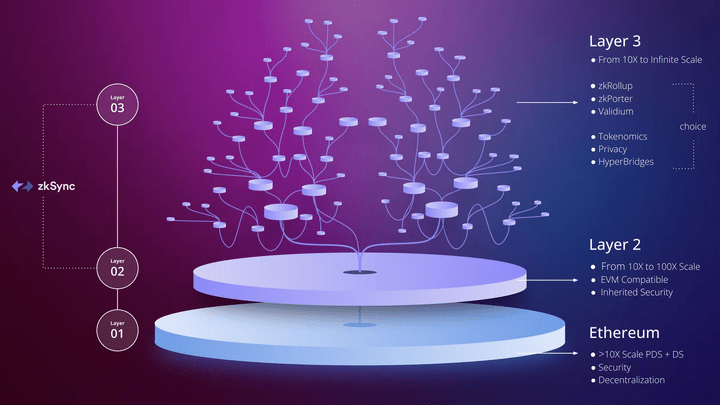
Dubbed "Opportunity", ZKR L3 may be the first L3 ever launched on a testnet, with the vision of having countless fully customizable "HyperChains" all connected to each other via native bridging, thereby bringing The idea of secure interoperability becomes a reality. This L3 will be highly experimental, but will also be a logical next step in research and development of new blockchain scaling architectures.
The ultimate goal of zkSync is: decentralization.
To support Ethereum's mission, the team will decentralize the zkSync 2.0 protocol, including proof generation, block production, and transaction verification. The team is already thinking about how various parts of the decentralized system will be implemented and will provide instructions on how to run a node.
zkSync comparison
zkSync stands out from the security and usability aspects of existing L2 scaling solutions. Thanks to a combination of cutting-edge cryptography and on-chain data availability, zkRollup (the core technology of zkSync) is the only L2 scaling solution that does not require any operational activity to keep funds safe. For example, users can go offline for a year, then come back and securely withdraw their assets without any outside help — even though the zkRollup validator is long gone. At our current stage of development, we encourage users to monitor the chain for upgrades and opt out if they disagree with the upcoming changes — in the future, upgrades will require a strict opt-in.
In summary, zksync token is an innovative Layer 2 solution designed to achieve efficient and secure on-chain asset transfer. It uses zkRollup technology to ensure the security of transactions through zero-knowledge proof, and greatly improves transaction throughput and reduces handling fees through off-chain calculations. This solution not only meets users' daily transaction needs, but also provides developers with a platform to build decentralized applications based on Ethereum. As blockchain technology continues to develop, we have reason to believe that zksync tokens will play a greater role in the future.


