


Author: Spike @ Contributor of PermaDAO
Reviewer: Lemon @ Contributor of PermaDAO
Storage Protocol for the TON Network
On January 4, 2023, the TON Foundation announced the launch of the TON Storage protocol, a distributed storage solution designed to provide data storage services similar to similar projects such as Filecoin and Storj.
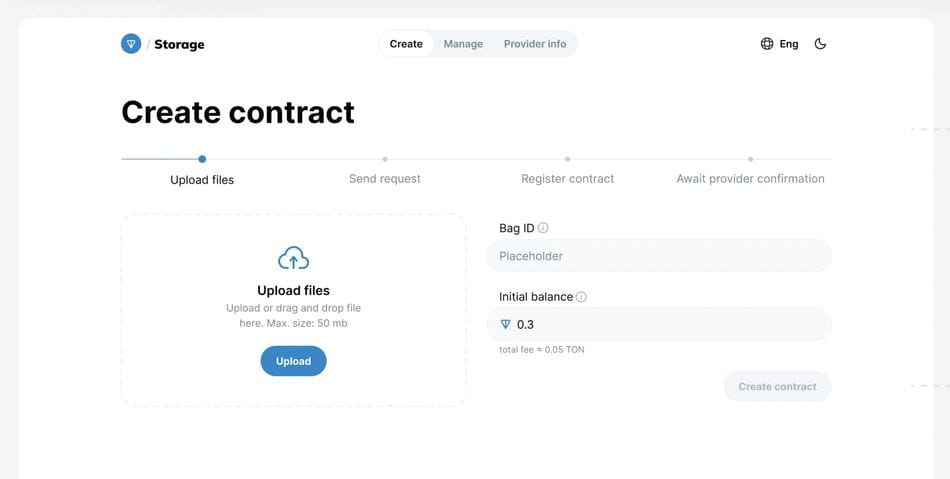
The storage protocol of the TON network has the following characteristics:
Distributed storage: TON Storage uses a distributed method similar to Torrent for data storage. This means that data is stored in multiple nodes in the network instead of being stored on a single centralized server. This distributed storage method can improve data reliability and security, while also improving data access speed and throughput.
Data encryption: In order to protect the security of data, TON Storage uses data encryption. Before the data is stored, it will be encrypted, and only users with the corresponding decryption key can decrypt and access the data. Therefore, TON Storage can also be used to store private data.
Smart contract support: TON Storage supports smart contracts. Through smart contracts, users can define and execute various storage operations in the storage protocol, such as upload, download, delete, etc. For example, a continuous payment agreement can be implemented through smart contracts to achieve permanent storage services.
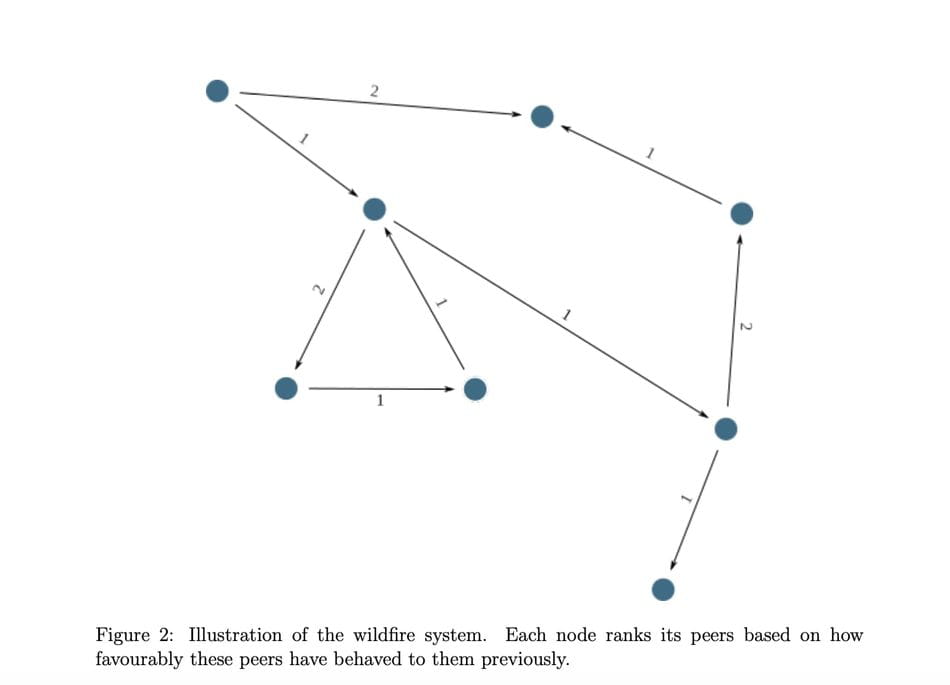
Efficient storage and retrieval: TON Storage uses an efficient storage and retrieval algorithm that can quickly store and retrieve large amounts of data. Network users only need to know the file ID to download the file. After downloading the file, the user participates in the storage, and the next user will be able to download the file from two nodes at the same time, and so on.
Scalability: TON Storage has good scalability. By adding more storage nodes, the storage capacity and performance of the storage protocol can be expanded.
Arweave Storage Protocol Features
Arweave’s storage protocol has the following characteristics:
Permanent storage: Arweave's storage protocol uses a technology called "block spinning", which ensures that data is permanently stored in the network. This means that once data is stored on the Arweave network, it will never be deleted or modified, thus ensuring the reliability and traceability of the data.
Low-cost storage: Arweave's storage protocol uses a continuous profit-sharing incentive mechanism to incentivize nodes to store and maintain data. Users can pay once for permanent storage, and miners will continue to receive income from maintaining file accessibility through the vault, thereby achieving a balance between users and miners.
Verifiability: Arweave’s storage protocol uses a technology called Succinct Proof of Random Access (SPoRA), which ensures the verifiability of data. This means that users can ensure the authenticity and trustworthiness of data by verifying its storage location and integrity. This is particularly important for investment bankers in the financial industry, who need to ensure that the data they are using is accurate and trustworthy.
Comparison of TON Storage and Arweave features
1. Storage method
TON Storage uses Torrent technology to store data in a distributed manner across multiple nodes to improve storage reliability and security.
Arweave uses a storage method called block spinning to permanently store data on the main network, which can basically guarantee the availability of any data.
2. Storage costs
TON Storage aims to do this by providing economic incentives to node operators on the network and by ensuring through smart contracts that users pay nodes a fixed amount of Toncoin for hosting files for a certain period of time.
Arweave's single storage cost is relatively high, but its permanent storage cost is low. According to CoinGecko's calculations, Arweave costs $2 per month to store 1 TB. Users only need to pay a one-time storage fee to permanently store data on the blockchain.
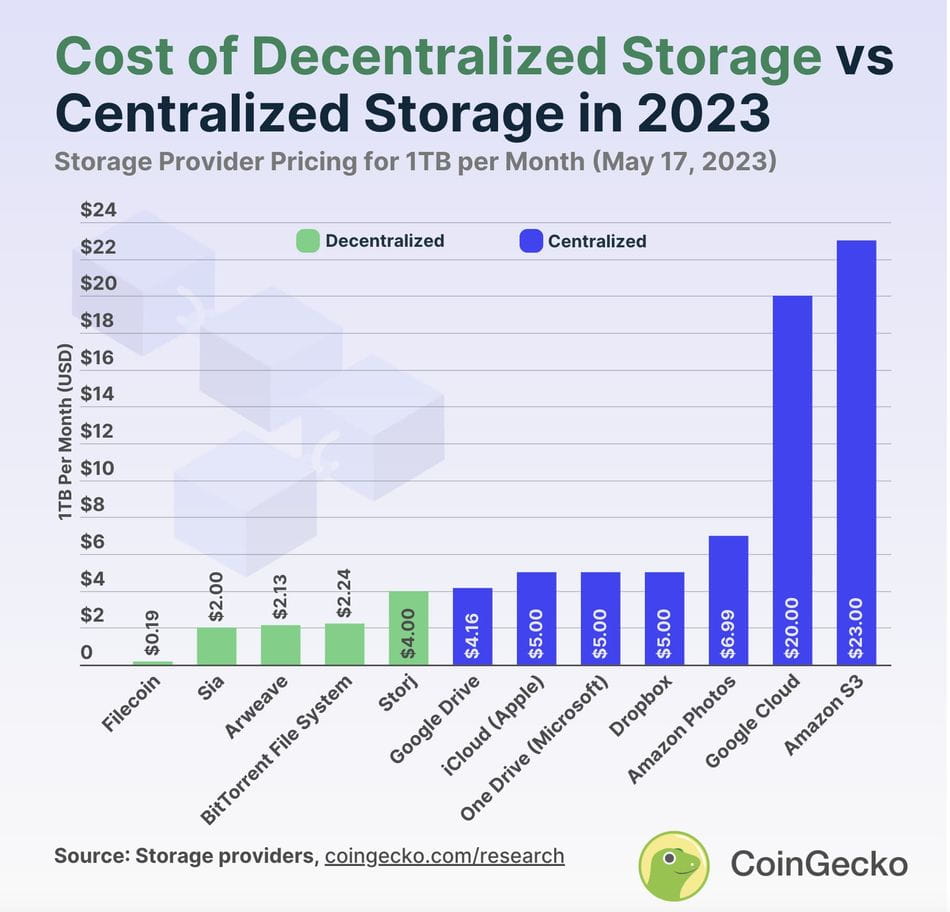
Image caption: Comparison of the cost of various solutions for storing 1 TB Image source: Click link
3. Storage efficiency
TON Storage can improve storage efficiency and throughput by distributing data across multiple nodes. At the same time, due to the use of Torrent technology, data can still be fully restored even if some nodes fail.
Arweave's storage efficiency is relatively high. Since data needs to be permanently stored on the blockchain, each node needs to save a complete copy of the data. Currently, an average of at least 1,000 copies of each piece of data are saved.
The characteristics of the two can be summarized as follows:
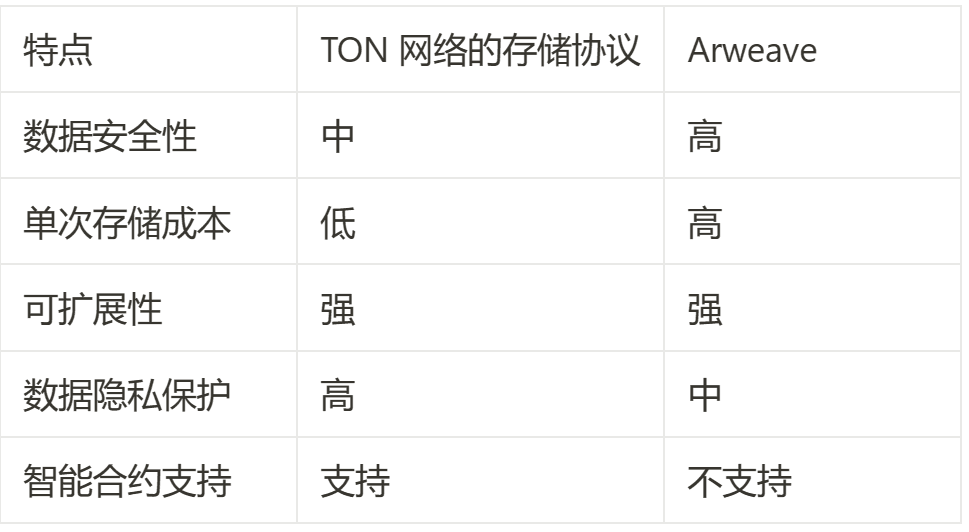
While TON Storage excels in many ways, it also has some limitations.
Higher hardware requirements: Since TON Storage uses a custom storage mechanism, the cost of storing data may be high. Its hardware requirements are as follows:
At least 1 GHz and 2 cores CPU
At least 2 GB RAM
At least 2 GB SSD (not taking into account torrent space)
10 Mb/s network bandwidth for static IP
Storage capacity limitations: Due to the high cost of storing data, TON Storage may be limited by storage capacity.
Data availability issues: Due to the cost and capacity limitations of storing data, data availability issues may occur. If the node cannot store all copies of the data or some nodes are offline, users may not be able to access the data they store.
Centralization risk: Although TON Storage is designed with a decentralized mechanism, the introduction of third-party storage providers may cause some nodes to store large amounts of data in a centralized manner, thereby increasing the tendency towards centralization.
references
TON Storage
Storage daemon
TON blockchain launches decentralized file-sharing solution
Centralized vs Decentralized Storage Cost (2023)